Elon Musk's market magic

Add Axios as your preferred source to
see more of our stories on Google.
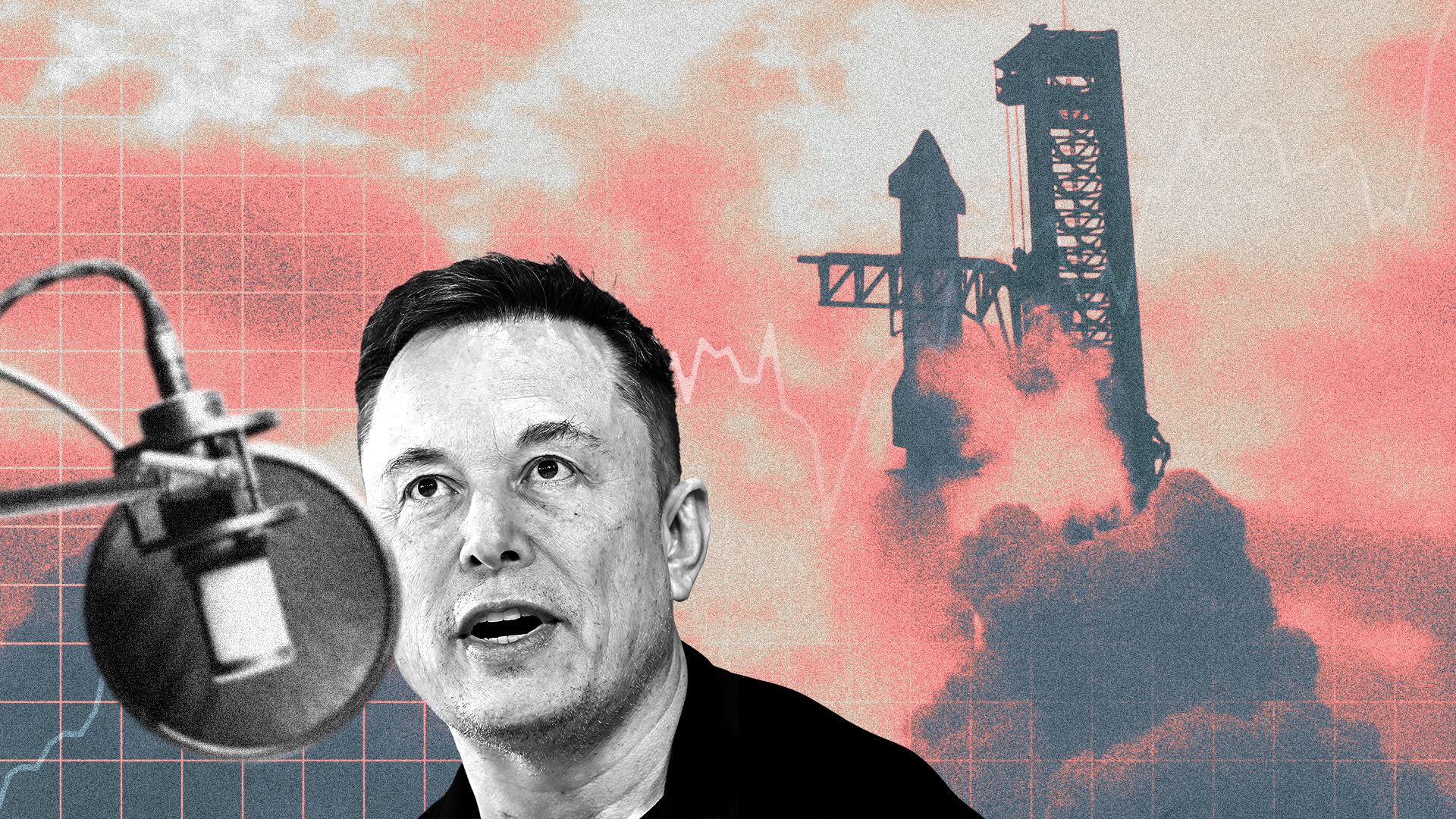
Photo illustration: Brendan Lynch/Axios. Photos: Getty Images
We'll find out this week if Elon Musk still has the magic touch to abracadabra the biggest IPO ever.
Why it matters: A successful trading debut for Musk's SpaceX would confirm his knack for using sci-fi-worthy pronouncements, outlandish personal behavior — and actual innovations — to grab investor attention and turn it into cash for his companies.
The latest: Up to a quarter of the shares set to be sold to the public next week are earmarked for smaller retail traders and individuals, the Financial Times reported, calling it a "record IPO allocation." (Reuters previously reported that roughly 30% could go to retail.)
- Large investors like mutual funds, ETFs and hedge funds, which buy giant slugs of stock, typically receive preferential IPO treatment, with smaller traders largely an afterthought.
- The FT says between 5%-10% of shares are typically reserved for retail.
Between the lines: The decision likely reflects the huge role that individual investors played in the rise of Musk's other $1 trillion-plus company, Tesla.
Flashback: After Tesla's 2010 IPO, the company was embraced by an army of intensely loyal, highly online true believers known as "Tesla fanboys."
- For years, they championed the cars and the shares, even as Tesla posted persistent losses that pushed it toward the brink of bankruptcy.
- Tesla's shares largely held their value, enabling the company to repeatedly raise cash by selling more stock, staving off disaster.
By the numbers: Between 2015 and 2020, Tesla sold over $5.5 billion in stock, which allowed it to not only survive, but achieve steady profitability and eventually be included in the S&P 500.
Fun fact: That partnership worked out, not only for Tesla, but for the fanboys too. Between the end of 2019 and today, Tesla shares are up nearly 1,400%.
- Gains over the last 10 years are roughly 2,400%.
- Since the IPO, the stock is up almost 25,000%.
Yes, but: A lot has changed since the days when Musk was seen as a somewhat dorky purveyor of well-designed, environmentally friendly vehicles.
- Tesla sales have faltered, in the U.S. and worldwide, as a chunk of Tesla's customer base was repelled by Musk's politics and alliance with the Trump administration.
The intrigue: Even so, the company's stock has performed well, with an enduring premium compared with what might be expected of companies with similar growth and earnings outlooks.
- Nobody can clearly explain precisely why that premium, sometimes called the "Elon Premium" exists.
What they're saying: Some see it as a more extreme version of the "founder premium" that academics have studied in the past.
- Others say it could be due to the futuristic nature of Musk's companies, whose prospects are especially difficult to estimate, since few precedents for them exist. Retail investors seem especially attracted to these kinds of companies.
- Or it may be related to the heavier presence of retail shareholders in the companies, or Musk's personal je ne sais quoi.
- It's likely all of the above, to some extent.
The bottom line: One thing we can say for sure is that the premium is real. And it's valuable. But the SpaceX offering will tell the limits of just how valuable.
