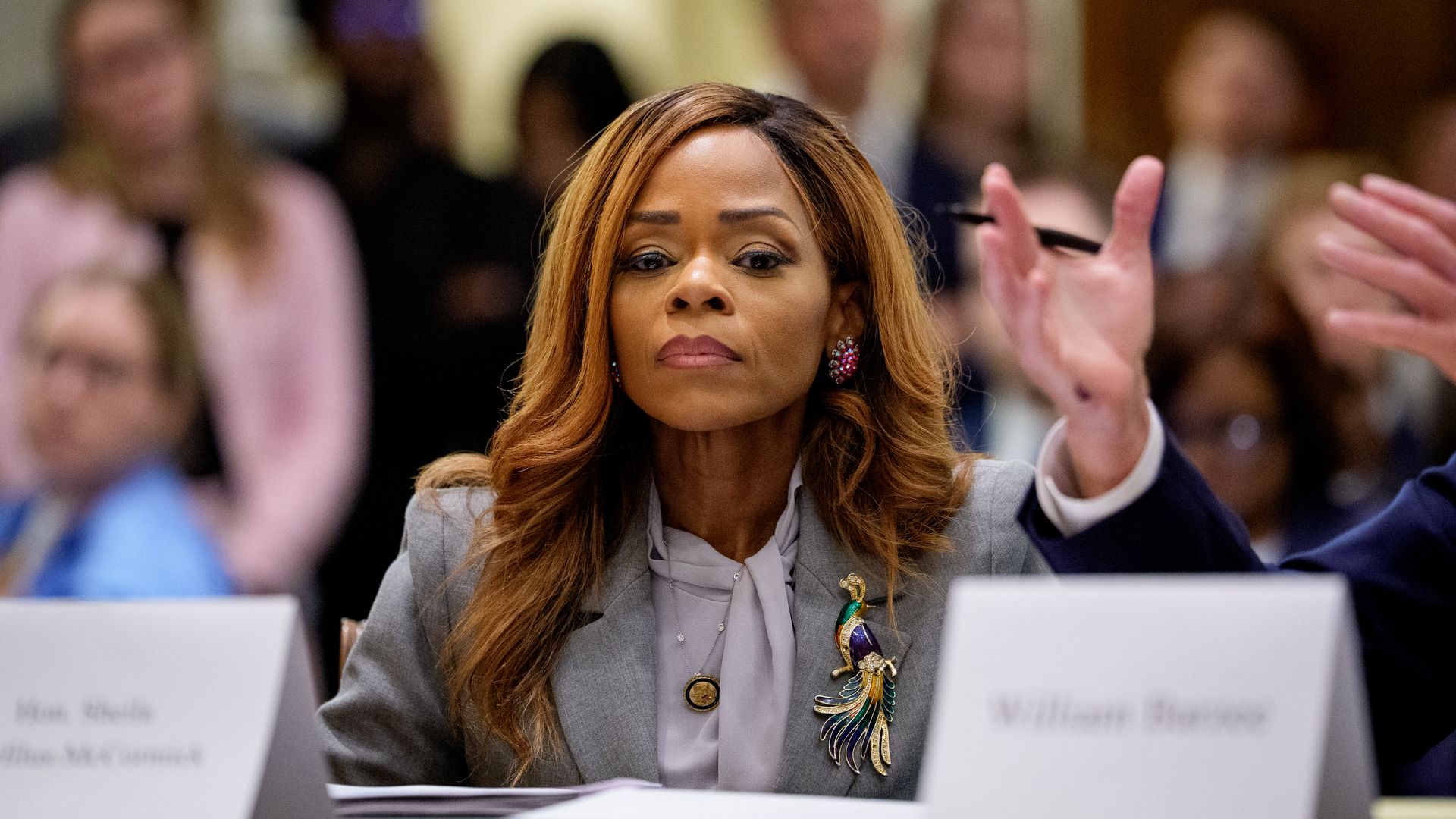
A bipartisan panel of House Ethics Committee members found Rep. Sheila Cherfilus-McCormick (D-Fla.) guilty of financial misconduct and other charges on summary judgment following a testy, hourslong hearing.
Why it matters: The Ethics Committee will meet in mid-April to decide on appropriate punitive action, which could include fines, censure or even expulsion.
In Austin,rising mortgage rates are complicating a housing market that had been cooling after pandemic-era price surges.
Why it matters: Higher borrowing costs could slow a shift toward more buyer-friendly conditions, even as prices fall and inventory improves.
The big picture: The average 30-year mortgage rate climbed to 6.43% last week from 6.3%, while applications fell 10.5%, per the Mortgage Bankers Association.
Zoom in: Refinance applications dropped 14.6%.
What they're saying: "Higher mortgage rates… pushed some potential homebuyers to the sidelines," MBA economist Joel Kan said in a statement.
When the Iran war started, market analysts issued reassuring notes: Short-lived geopolitical shocks don't typically rattle the stock market, they said.
Why it matters: We're now into month two of conflict. Equities are wobbling, and investors are growing increasingly skeptical of President Trump's assurances.
Where it stands: The tech-heavy Nasdaq index is now down 11% from its record-high close on Oct. 29 — officially entering correction territory.
The Russell 2000, an index tracking smaller companies, landed in correctionville last week.
The S&P 500 has held up a bit better, but it's down 7.2%from its closing high.
Catch up quick: Minutes after the market closed Thursday, Trump posted that he was extending the deadline for Iran negotiations.
"As per Iranian Government request, please let this statement serve to represent that I am pausing the period of Energy Plant destruction by 10 days." That would bring his latest deadline to Monday, April 6.
The latest: That statement didn't calm the markets for long. Oil prices spiked to around $110 a barrel when the market reopened.
"While the delay might reduce some of the immediate escalation risk, it offers no new visibility on the path toward resolution," Deutsche Bank analysts wrote in a note this morning.
The big picture: If the market does take a another leg down, the effects on American households would be more pronounced than in previous oil price shock moments.
Nearly 40% of household wealth in the U.S. is tied up in stocks — compared with about 10% during the 1990 oil price shock, UBS economist Arend Kapteyn said in a note yesterday.
That means Americans would be hit with a double whammy from the geopolitical conflict: higher energy prices and lower brokerage account balances. That in turn would be a drag on overall economic growth, as households cut back on spending.
It would also be another downer to the consumer mood.
Zoom out: The stock market doesn't typically take kindly to long periods of high oil prices stemming from Middle East Conflict.
Over the past 50 years, there were nine oil price shocks, where prices rose 20% or more, according to an analysis from Joe Seydl, a senior markets economist at JPMorgan Private Bank.
Zoom in: Four of those shocks led to a selloff in stocks — an S&P decline greater than 10%:
The 1973 oil embargo, the Iranian hostage crisis, the 1990 Gulf war and the Russian Invasion of Ukraine in 2022.
In each case, oil prices rose more than 50%.
Stunning stat: The price of Brent crude is up nearly 40% from the beginning of the war.
Yes, but: It's not just the oil price that triggered the selloff, Seydl writes. Each of those selloffs coincided with either a recession in the six months after the shock or Federal Reserve interest rate increases.
The past doesn't predict the future.
What to watch: Weekend postings by Trump. The president has had a tendency to escalate the conflict with Iran with social media posts on Saturdays and Sundays that in turn has driven a lot of market volatility.
California Gov. Gavin Newsom told Axios he doesn't believe artificial intelligence will lead to an apocalypse for humanity.
"I'm not a 'doomer.' I can't live like that," he said during an interview for "The Axios Show."
Why it matters: Newsom, a potential contender for president in 2028, has a more optimistic view of AI than many in the Democratic Party's left wing, but wants to shape the future of tech through regulation rather than trying to halt the development of AI — or let it run amok.
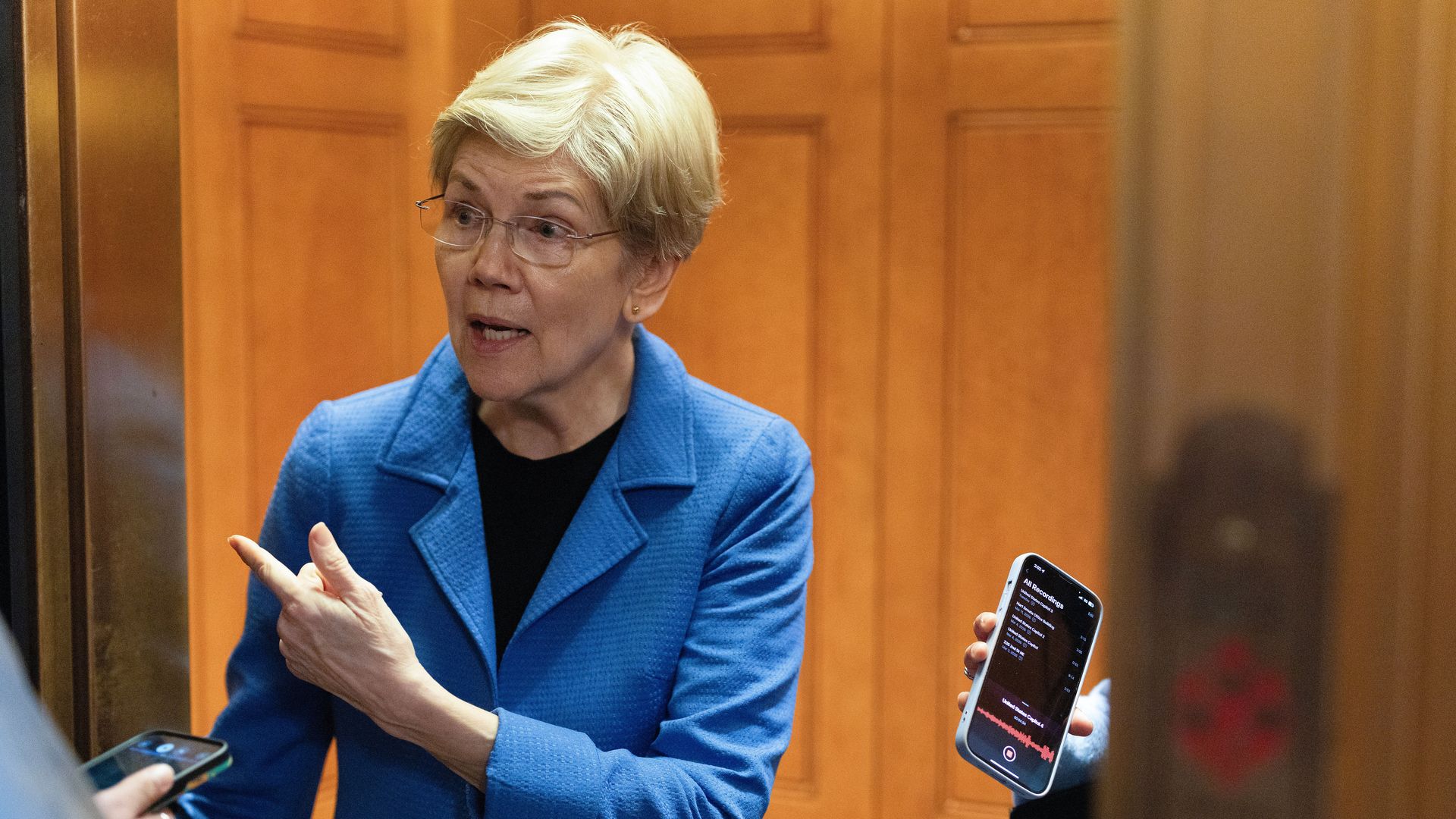
Following the Senate's push to ban institutional investors from owning single-family homes, Sen. Elizabeth Warren (D-Mass.) is now pressing the corporate landlords that hold multifamily apartments and manufactured homes.
Why it matters: These companies, including private equity and publicly traded real estate firms, are taking heat from lawmakers and the president over a housing affordability crisis that's gripped the country in recent years.
Where it stands: This week, Warren sent letters to 14 corporate landlords, including Blackstone, Starwood and Invitation Homes, seeking more information on:
The number of properties they or their affiliates own or have sold, rents charged, evictions conducted and more. The letter asks for a detailed accounting of complaints by renters across their properties.
The letter to Starwood, viewed by Axios, also requests information on any communications the company has had with the Trump administration.
Catch up quick: Earlier this month, the Senate passed the ROAD to Housing Act by a 89-10 vote. The product of negotiations between Warren and Sen. Tim Scott (R-S.C.), the bill would ban large institutional investors from buying single-family homes.
The provision is getting big pushback from House conservatives who are calling it "socialism." The big housing companies also say they're being unfairly targeted.
Institutional investors hold just 3% of single-family homes in the U.S., Warren notes.
Yes, but: Blackstone has said that the number is even smaller — with investors owning 0.5% of single-family homes and it holding just 0.06%. "Far too immaterial to impact rents or markets," it said in an earlier release.
The firm argues that single-family rental homes enhance housing affordability.
Zoom in: These companies play a bigger role in manufactured housing and multifamily rentals.
In her letter, Warren says they are responsible for higher rents and eviction rates.
What they're saying: "America is facing a housing crisis with skyrocketing costs and a severe shortage of affordable housing supply," she writes.
"Wall Street and giant corporate landlords are making the crisis worse by gobbling up homes and apartment complexes, jacking up housing costs across the country, and using aggressive and discriminatory tactics to push up profits at the expense of families."
The other side: "Our members offer quality homes to hardworking families who prefer the flexibility of renting or who are not yet positioned to buy," said the National Rental Home Council, a trade association that represents Invitation Homes and other big institutional landlords.
Meta's court losses this week are adding urgency to lawmakers' push to pass legislation that could reshape how social media platforms are designed.
Why it matters: Plaintiffs in New Mexico and Los Angeles successfully tested a new legal theory that treats social media more like products that can cause harm — rather than protected speech — and chips away at tech's long-standing liability shield.
A new type of community is emerging for working moms who want to connect with each other beyond parenting and their careers.
Why it matters: Many women are simultaneously managing households, careers and social lives —and searching for community with others navigating a similar reality.
A federal judge on Thursday paused the Trump administration's designation of Anthropic as a supply chain risk, marking an early legal victory for the embattled company.
Why it matters: Anthropic argued that the designation was causing immediate and irreparable harm as business partners rethink their contracts and federal agencies remove Claude.
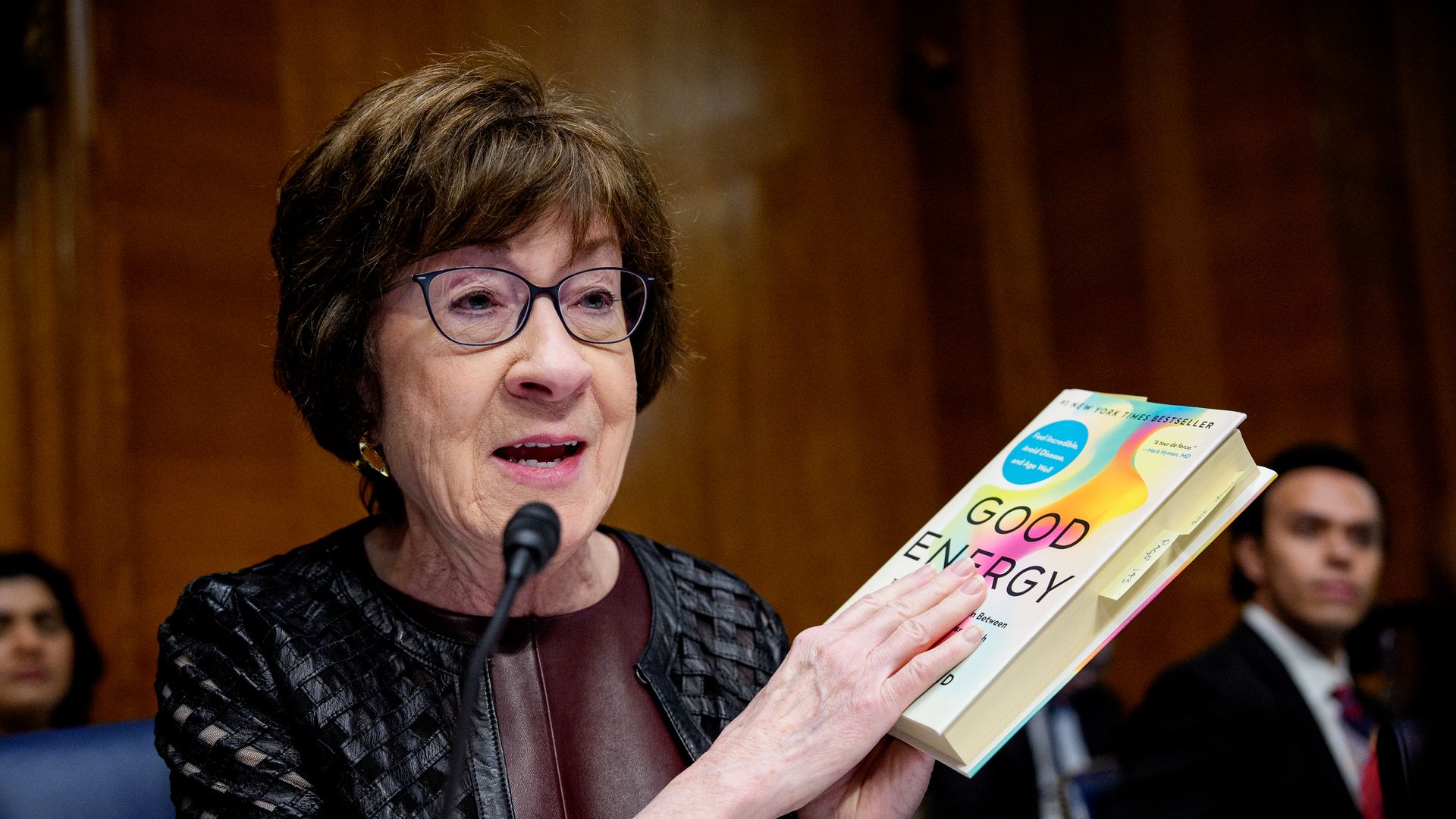
A super PAC supporting Sen. Susan Collins (R-Maine) has reserved $12.5 million in airtime for two months this summer, according to a person familiar with the matter.
Why it matters: Pine Tree Results will use the ad buy to try to define either Gov. Janet Mills or oyster farmer Graham Platner immediately after Democrats vote in the June 9 primary, which has already turned nasty.
Crypto investors will soon have a new path to home financing, as Better Home & Finance and Coinbase today introduced a new product tied to Fannie Mae-backed mortgages.
Why it matters: The move is the latest sign of crypto pushing further into mainstream finance — and shows how digital assets are beginning to plug into traditional systems like the U.S. mortgage market.
HOUSTON — Several top energy executives and a federal regulator had a message Thursday for Americans angry about soaring electricity bills: Help is on the way.
Why it matters: The cost of electricity — which has spiked across much of the country over the past year — has become a top-tier political issue, with Democrats making it a focus of their affordability push.
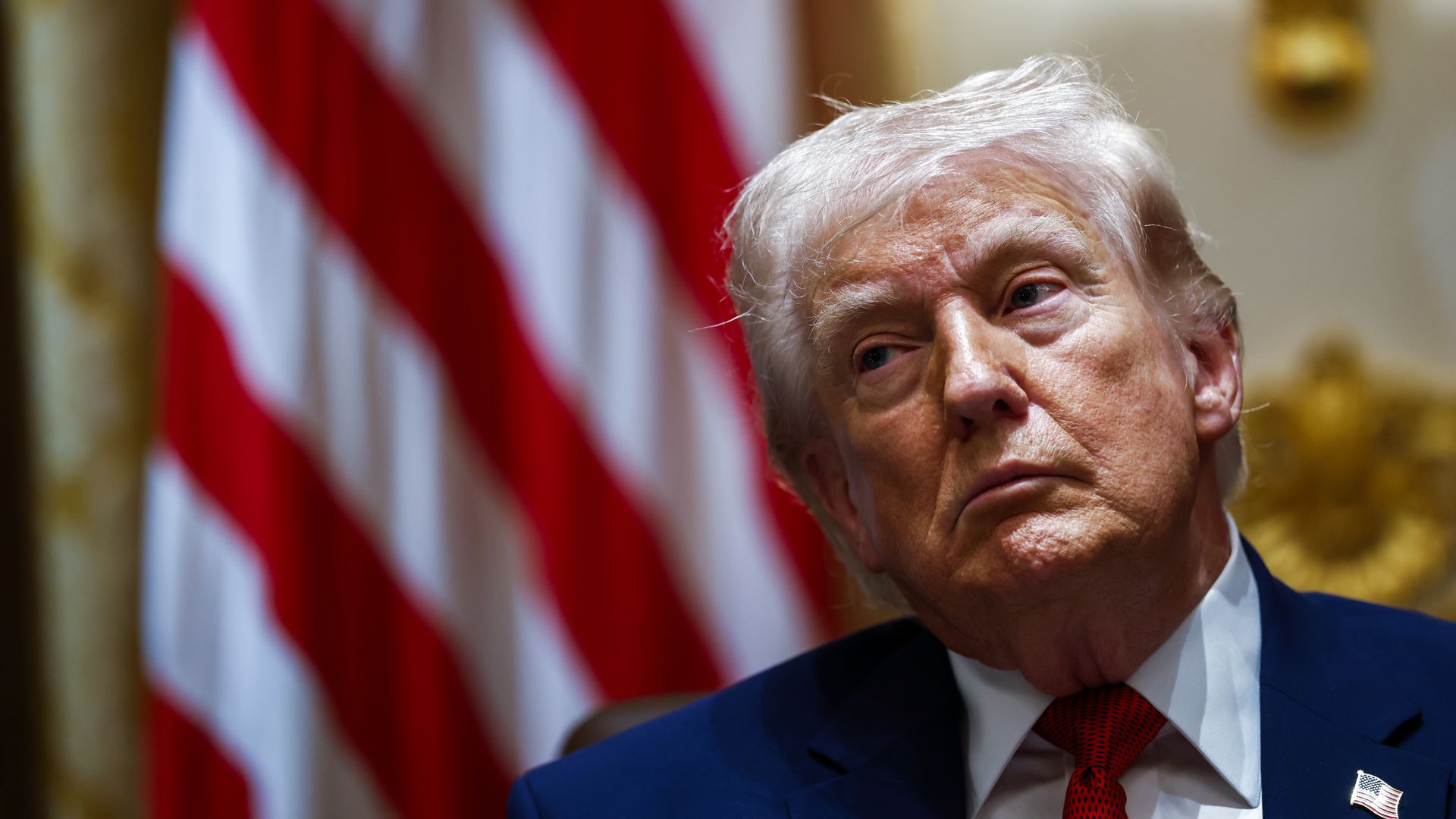
President Trump extended the deadline for negotiations with Iran and paused his threat to bomb Iranian energy facilities by another 10 days.
Why it matters: The Trump administration through a group of mediators, Pakistan, Egypt and Turkey, has asked Tehran to hold a high-level meeting this week to discuss a U.S. proposal for ending the war.
As chief marketing officerof Samsung Electronics America, Allison Stransky oversees the company's corporate marketing team and is responsible for the Samsung brand.
Why it matters: Samsung is trying to position itself as the companion to AI living through its electronics and home products, and Stransky's team is responsible for sharing that narrative with a skeptical consumer base.
Owned media — a company's website or self-published blogs — is rising in importance in the age of AI, according to a recent analysis by Penta Group.
Why it matters: Communications teams must structure their websites in a way that can be optimized for large language models like ChatGPT, Gemini and Claude.
As the Company Formerly Known as Twitter prepares to go public, its former CEO is raising money for a very different venture.
Driving the news: eMed, an employee telehealth company led by Linda Yaccarino, this morning announced $200 million in new funding at a post-money valuation north of $2 billion.
HOUSTON — The stunning Middle East supply disruption could lower hurdles to building a long-planned Alaskan gas pipeline and export project that the White House covets.
Why it matters: "That's probably our single most important energy infrastructure project of this whole administration," Energy Secretary Chris Wright said at CERAWeek on Tuesday.
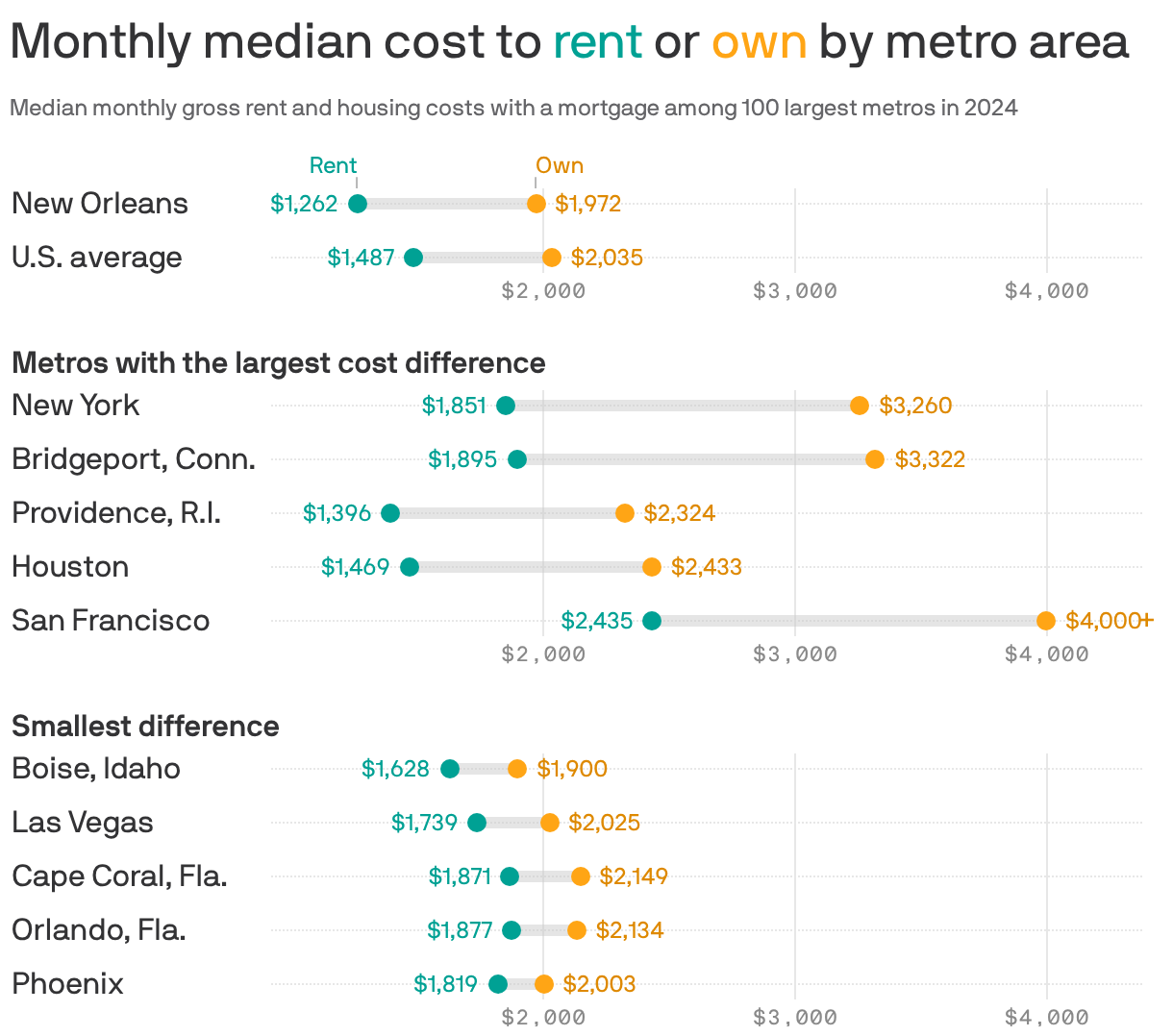
Data: LendingTree analysis of U.S. Census Bureau data; Note: Monthly costs include utilities, fees, and/or taxes; Median housing costs above $4,000 are recorded as "$4,000+" by the Census Bureau; Chart: Jacque Schrag/Axios
Renting is cheaper than owning a home in New Orleans, according to a new LendingTree analysis.
Why it matters: Housing costs have soared nationwide, with stubbornly high home prices and mortgage rates weighing on would-be buyers.
Starbucks is leaning on protein to help drive customer traffic — and new data shared with Axios shows demand peaking Friday mornings.
Why it matters:Protein coffee and drinks are emerging as a key part of Starbucks' turnaround — driving people to try new products and make repeat visits, as demand grows for quick, functional options.
Here are two hard truths the Pentagon and Anthropic won't state bluntly about their feud over unfettered AI use in warfare:
Anthropic's AI is vastly better for warfare than any other AI on the market. It could take ChatGPT, Gemini or Grok months to come close, insiders tell us.
Anthropic will take a massive, long-term financial hit if it remains blacklisted by the government as a "national security supply chain risk." We're talking tens of billions of dollars in direct and indirect contracts in the coming years, the insiders say.
Why it matters: Anthropic is suing the Trump administration for nixing use of Claude, the company's large language model, after the company refused to allow its AI to be used for fully autonomous warfare or mass surveillance of Americans (which the Pentagon says is already illegal).
The average annual bonus on Wall Street last year was $246,900, up 6% from 2024, according to data out Thursday morning from the New York state comptroller's office.
Why it matters: Higher bonuses are a sign that finance had a good year — the market turmoil and uncertainty caused by the Trump administration's tariffs only helped boost business across Wall Street trading desks.
Opposition to prediction markets is gathering pace in Congress, with another bill set to be introduced Thursday that would impose a sweeping ban.
Why it matters: Prediction markets now offer the chance to risk money on sports, politics, news and entertainment throughout the country — but critics say it is gambling and is rife with insider trading.
Silicon Valley confidence and Washington anxiety clashed at Axios' AI+DC Summit on Wednesday.
Why it matters: The AI industry says this technology will create new jobs, boost productivity and transform daily life for the better. But Americans are worried about their kids, their power bills and their livelihoods.