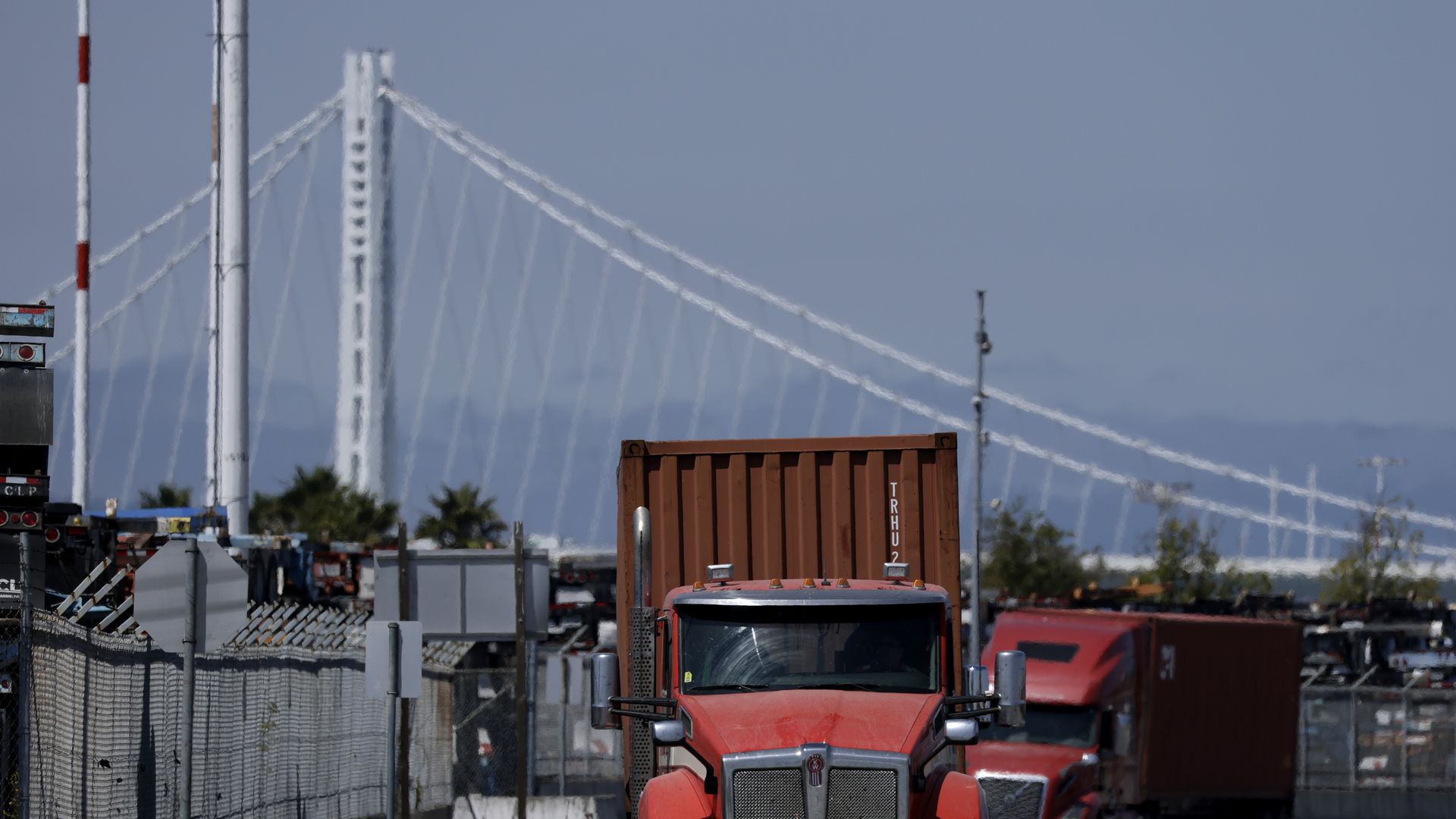
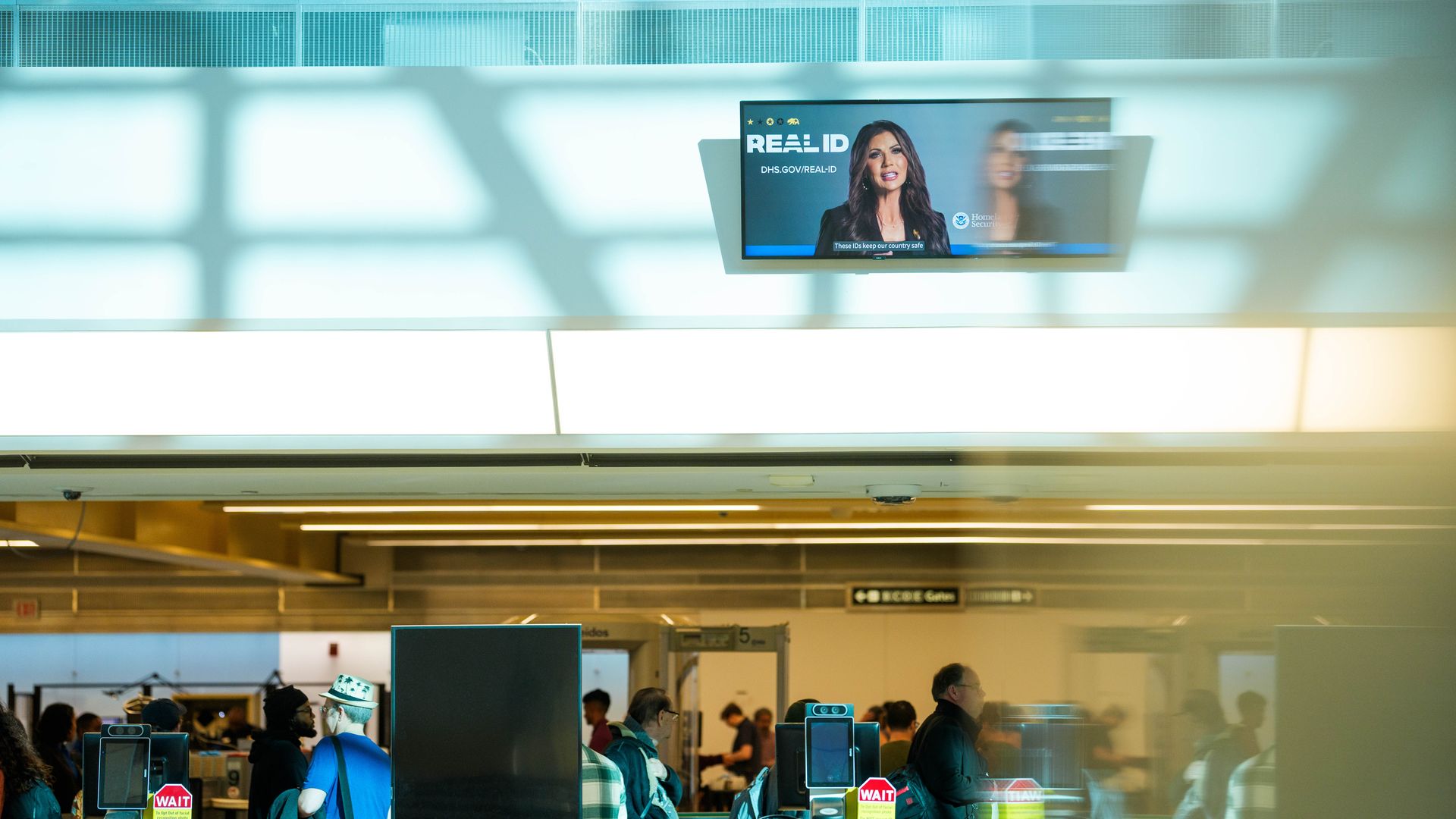
Around 9,500 truck drivers have been pulled off the road for failing to meet English-language proficiency requirements reinstated by the Trump administration.
The big picture: Immigrants account for an estimated 18% of all truck drivers, and some estimates show that the industry is already short tens of thousands of drivers.
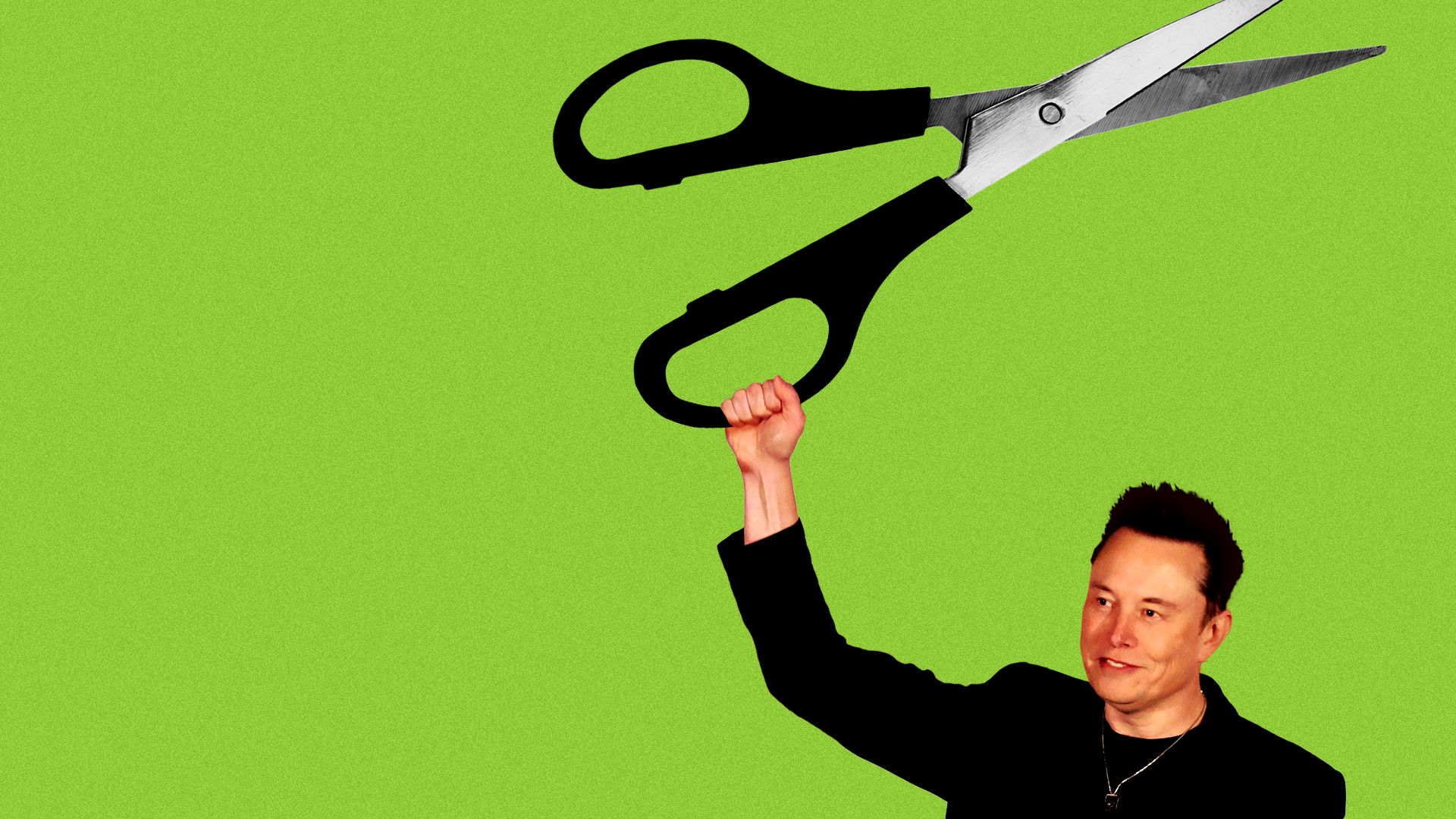
Elon Musk dubbed the Department of Government Efficiency only "somewhat successful," but his meme turned real government agency leaves behind a wrecking ball legacy Washington will feel for years.
President Trump is granting China access to more of Nvidia's advanced AI chips, he announced this week, a partial win for Nvidia which has lobbied against U.S. export restrictions first put in place in late 2022.
The big picture: Nvidia warns that blocking its sales has accelerated China's domestic chipmaking push — creating new global rivals and threatening the U.S. lead in the AI race.
The Trump administration has announced plans to revamp the way HR works across the federal government, per a memo shared with Axios, part of a push to reshape the bureaucracy.
Why it matters: DOGE may be in the rearview mirror for Elon Musk, but the administration is plowing ahead with its overhaul of the federal workforce.
Why it's important: Advances in AI allow for faster, smarter and more scalable fraud — but Visa's teams and technologies are working just as quickly to block it.
Besides the headlines about President Trump's effort to make cars affordable again — or his surprising tiny car infatuation — the administration's rollback of certain fuel economy standards could also change the mix of cars on dealer lots.
Why it matters: Reclassifying what constitutes a "car" or a "truck" for fuel economy purposes could mean the return of the traditional station wagon, Transportation Secretary Sean Duffy recently mused.
The University of Utah's board of trustees on Tuesday unanimously approved the creation of a for-profit company in partnership with private equity firm Otro Capital.
Why it matters: Private equity is becoming part of college sports, after several stalled attempts.
Foreign tourists from dozens of countries that typically enjoy easier entry requirementsmay soon have to provide five years of their social media history when entering the U.S., according to a U.S. Customs and Border Protection notice published Wednesday.
The big picture: The Trump administration has erected new barriers to legally immigrating and obtaining visas — but this plan, published to the Federal Register, targets tourists who generally don't need a traditional visa to enter the U.S.
Conversations with more than a dozen strategists and investors on their 2026 outlooks reveal that Wall Street is not worried about an AI bubble, but wants to add portfolio protection just in case.
Why it matters: Hedging was not very profitable in 2025,but the mix of macro uncertainty and AI concerns next year has investors worried that skipping protection could be costly.
2026 is going to be the year for the forgotten 493: the overwhelming majority of companies in the S&P 500 that are not the core tech stocks powering this bull market, according to Wall Street forecasts.
Why it matters: This view could lead to a rotation in market leaders next year, as investors seek out AI super users rather than just AI leaders.
Hypersonic missile-maker Castelionanticipates pumping out Blackbeard munitions at its to-be-built New Mexico factory as soon as 2026, with the ultimate goal of producing thousands per year, according to CEO Bryon Hargis.
Why it matters: "If you want to achieve deterrence, you have to make a lot of munitions," he told Axios on the sidelines of the Reagan National Defense Forum in California.
"It's not suitable to just have high-capability munitions, which is what the country's done a very good job of to date."
Google has been on an AI roll, with the latest release of its image and text models beating a host of rivals.
But judging who is winning the AI race is a nuanced exercise; business models and balance sheets are at least as important as who's topping the performance charts.
Why it matters: For all the bravado from across the sector, the generative AI boom won't stay frothy forever. Tech companies are spending billions with little proven revenue, setting the stage for clear winners — and spectacular failures.
Small-business owners were excited for Trump 2.0. Now, tariffs and inflation are causing headaches and eroding optimism.
Why it matters: Main Street's pain is a negative for the entire economy.
The waning confidence of small-business owners, typically a conservative group, is also another political headwind for the president, who has been getting low marks on the economy.
Instacart orders for cold and flu medicine, cough suppressants and other sick-day essentials tend to spike around Christmas, per new data the company shared with Axios.
Why it matters: It's a way of seeing how our shopping patterns are affected by outside factors — in this case, cold and flu season.
What they found: Orders for cold and flu medicine and cough suppressants both peaked on Dec. 26 last winter, per Instacart.
Facial tissues peaked on Dec. 27, while "immune support" products peaked on Dec. 28.
How it works: That's based on each category's daily order share between July 1, 2024, and June 30, 2025.
Between the lines: Some relevant items had definite wintertime spikes, but others — like hand sanitizer and wipes — saw steadier demand over the covered period.
What's next: Experts are warning of a new flu outbreak tied to an emerging version of strain H3N2, Axios' Herb Scribner reports.
Construction work at the White House for President Trump's $300 million ballroom is well underway — and all that's left of the site where the 123-year-old East Wing once stood is rubble, photos taken this week show.
The big picture: Trump said on Truth Social over the weekend that the ballroom would be "double the size" than was originally planned and the "column SPAN has been substantially increased for purposes of viewing," but the project was "under budget and ahead of schedule."
Elon Musk told Katie Miller in an interview for her podcast on Tuesday that DOGE, the Trump administration's cost-cutting department he spearheaded, was "somewhat successful."
Why it matters: It's a rare comment from Musk regarding the work DOGE did earlier this year, and hints at his lingering dissatisfaction with the inner workings of U.S. politics.
Why it matters: The Tennessee-based chain was pulled into a political firestorm that shook its core customer base and forced a redesign reversal — fallout still shaping its recovery.