Stablecoin supply just passed $300 billion, another milestone making one claim increasingly hard to deny: stablecoins are a success story destined for big things.
Why it matters: These instruments will soon emerge from a legal gray area in the U.S., with the potential to profoundly change how money moves around the world.
FICO shook up the credit reporting world Thursday with plans to sell credit scores more directly to mortgage lenders.
Why it matters: The move bypasses the major third-party credit bureaus — TransUnion, Experian and Equifax — creating new competition in that slice of the business, and potentially crimping their bottom lines.
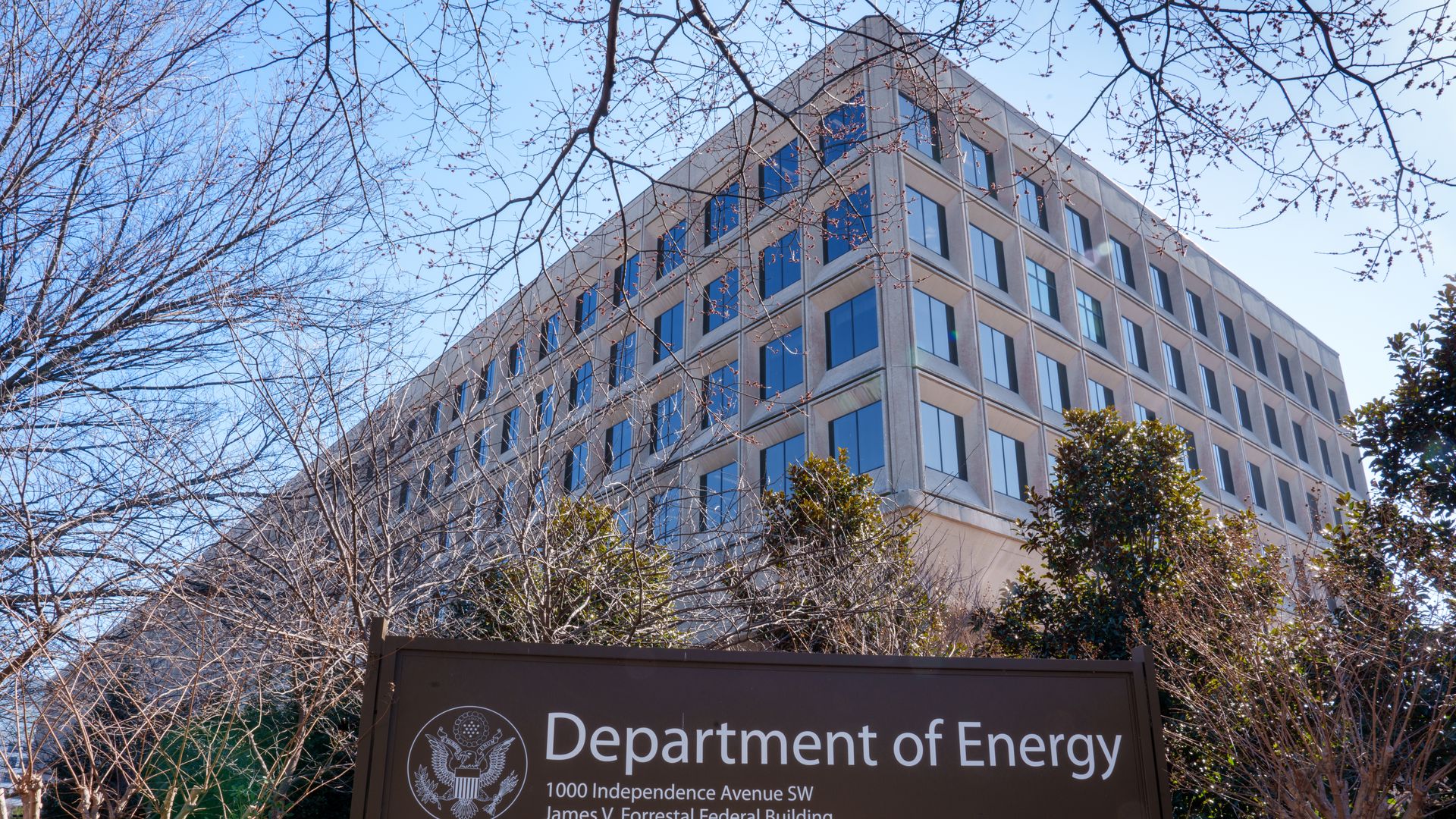
The Energy Department's termination of $7.56 billion of financial awards includes cuts spanning renewables, hydrogen, transmission, cleaner use of fossil fuels and more.
Why it matters: The cuts — aimed mostly at Democratic-led states and announced in broad strokes on Wednesday night — speed the reversal of Biden-era climate and clean energy finance.
As vice president of corporate affairs and sustainability at Mars, Inc., Andy Pharoah is responsible for communicating with employees, consumers, governments and local communities on behalf of the packaged food giant.
Why it matters: Several of the company's core shareholder objectives are directly tied to the work of comms and corporate affairs.
It has never been easier to gather information about a company through disclosures, regulatory filings, statements, commitments, internal communications and brand campaigns.
But what happens when there's even the smallest discrepancy in what a company is saying and what it's doing?
Why it matters: Narrative inconsistencies are not just PR glitches, they are the next big governance risk.
Power and data center developer Fermi saw its share price jump 55% on its first day of trading Wednesday, giving it a market cap in the $18 billion range.
Why it matters: Fermi's IPO is the latest sign of capital confidence in power and AI — and not even the only one to emerge over the last day or so.
The Energy Department said Wednesday night it's terminating $7.56 billion worth of financial awards that support 223 projects funded via several of its clean-energy offices.
Why it matters: It's among the starkest reversals of Biden-era DOE financial support for low-carbon energy and manufacturing initiatives.
Nearly half of big businesses raised prices in the last six months due to tariffs, and a large majority expect to do so in coming months, a new KPMG survey out Thursday finds.
Why it matters: Tariff-driven inflation once looked like it would be a shock to the economy. Instead, it has turned into a slow burn that has no signs of abating.
Investors got their interest rate cut wish in September. The market is now pricing in more than 100% odds of another cut this year, after private data indicated further weakness in the labor market.
Why it matters: Investors are expecting more rate cuts even as there's evidence that the economy is reaccelerating. Additional rate cuts could fuel a new leg higher for stocks — or it could stoke inflation as well as investors' fears of a market bubble.
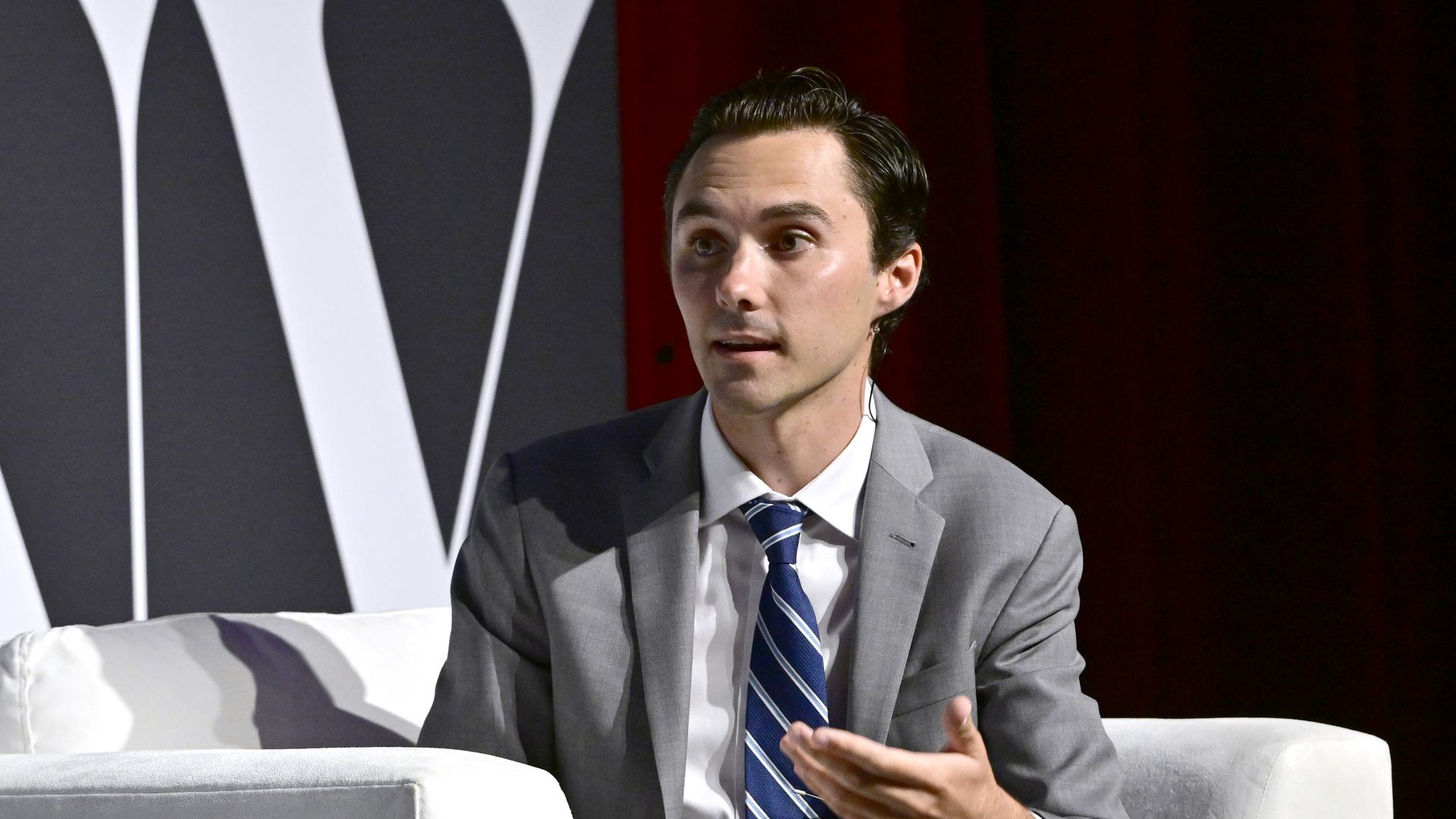
Liberal activist David Hogg's political group is off to a shaky start in his mission to knock out Democratic incumbents and usher in a new generation of leaders.
Why it matters: Hogg, 25, was elected the Democratic National Committee's vice chair this year before resigning amid an internal rebellion. He's one of the most divisive figures in the party's civil war over why it lost the 2024 election and how to move forward.
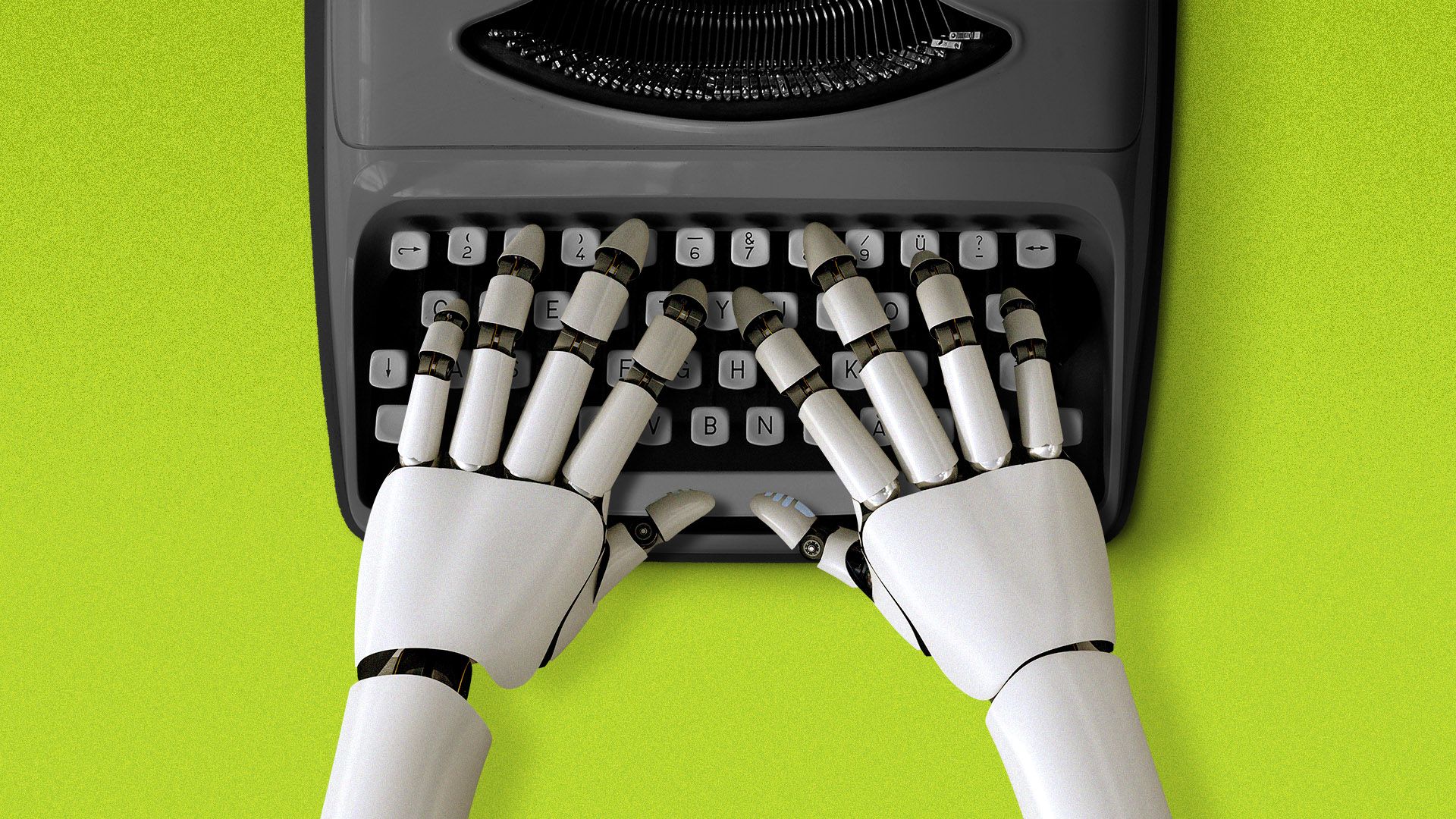
Ahead of Yom Kippur, the Jewish Day of Atonement, I asked ChatGPT to reflect on the harms it has caused, with the chatbot offering up a candid list of its shortcomings.
Why it matters: ChatGPT seems to openly acknowledge what the industry often glosses over — that even on its best day, its downsides are significant.
OpenAI's new Sora app gives us a fast-forward view of a future in which AI video, social media and the attention economy fuse into one giant mucky, murky, reality-corroding pool of virality.
Why it matters: Feeds, memes and slop are the building blocks of a new media world where verification vanishes, unreality dominates, everything blurs into everything else and nothing carries any informational or emotional weight.
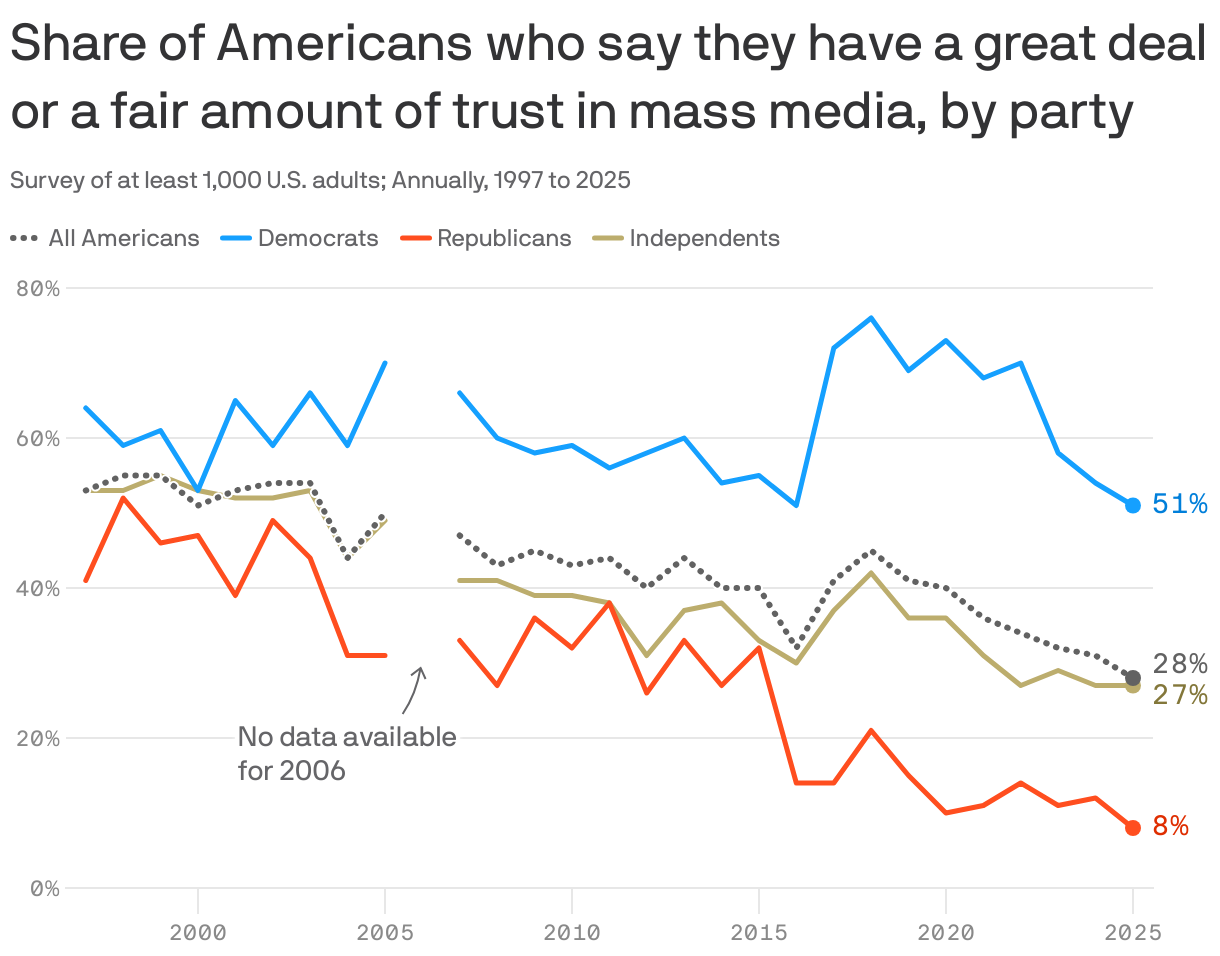
For the third year in a row, the percentage of Americans who say they have a great deal or a fair amount of trust in the mass media has fallen to a record low, according to a new Gallup survey.
Startling stat: Today, only 28% of Americans say they have a great deal or a fair amount of trust in the mass media, down from 68% in 1972.
Billionaire businessman Mark Cuban tells Axios that AI is leveling the playing field for young, low-income entrepreneurs
Why it matters: The longtime "shark" and Cost Plus Drugs co-founder tells Axios the free and low-cost AI tools are giving disadvantaged teens the chance to compete with seasoned pros — and it's changing how he does business too.
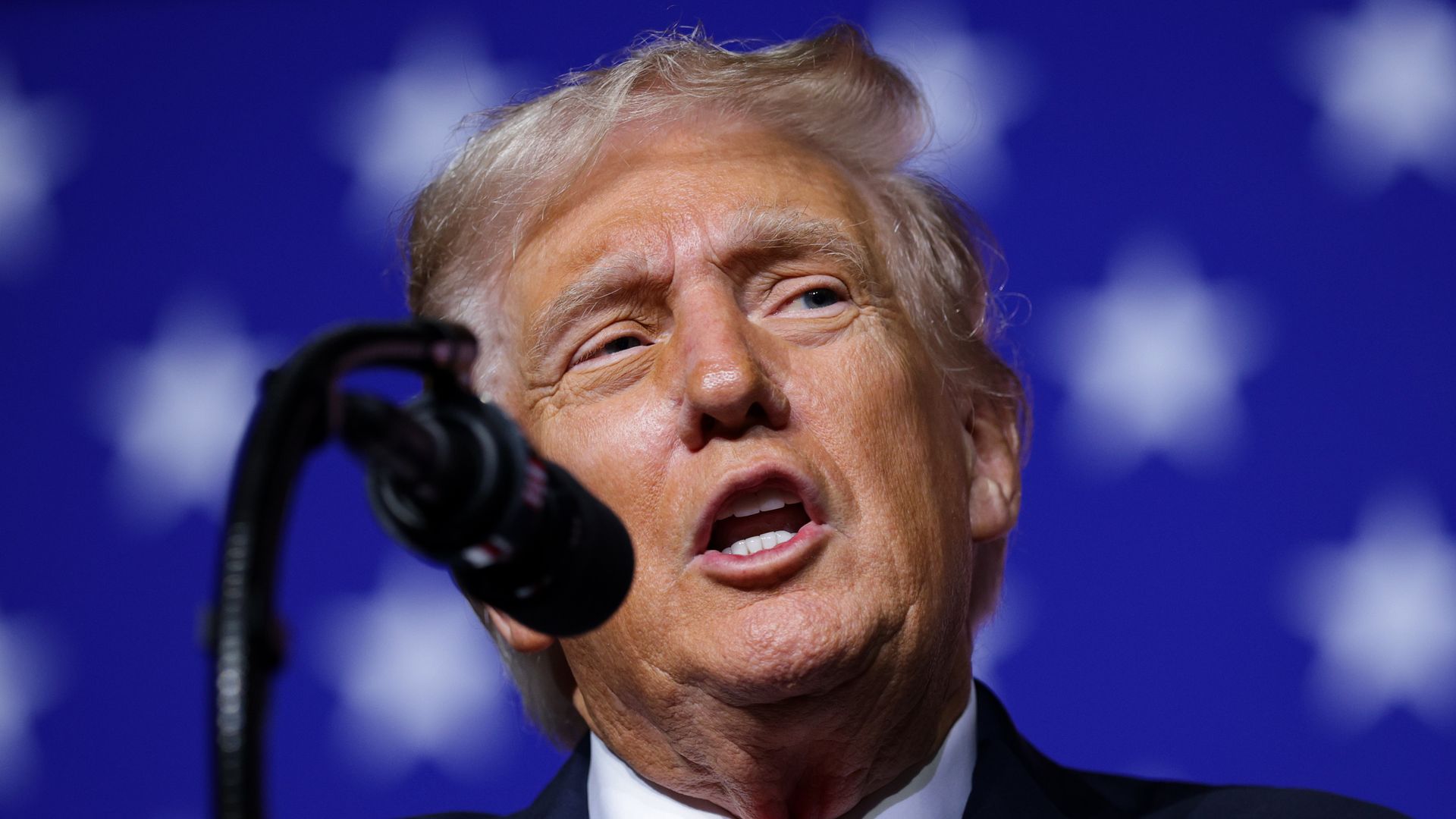
The big picture: But with the GOP controlling the White House and Congress, they're using government websites to air their grievances — and in doing so consumer advocacy group Public Citizen alleges the Trump administration has violated the Hatch Act, which limits federal workers' partisan political activities.
Commerce Secretary Howard Lutnick called Jeffrey Epstein, his former neighbor, the "greatest blackmailer ever" during a new interview.
Why it matters: The top Trump secretary's comments contrast with the Justice Department's and FBI's July findings that there's "no credible evidence" that the sex offender blackmailed prominent individuals or kept a "client list."