Axios Macro

March 19, 2026
Oil prices spiked following a new volley of attacks on energy production facilities in the Middle East.
- That sent bond yields up, as the prospect of yet another wave of inflation driven by supply shocks has traders seeing a hawkish pivot from global central banks.
- We connect the dots below, including a look at the latest developments through the lens of the Federal Reserve's communications yesterday.
Situational awareness: The Fed and other financial regulators released the latest plans to loosen rules for banks, which would lower capital requirements for the biggest financial firms by nearly 5%, among other proposals. Go deeper.
Today's newsletter, edited by Jeffrey Cane and copy edited by Katie Lewis, is 1,044 words, a 4-minute read.
1 big thing: The energy shock gets worse
Nearly three weeks into the Iran war, the risk of sustained disruption to global energy supplies is getting worse, not better — and that's raising the possibility of tighter money and higher borrowing costs worldwide.
The big picture: Global policymakers can't wave a magic monetary wand and fix a breakdown in the key supply chains for oil and natural gas. All they can do is try to contain the inflationary fallout.
- Financial markets today are waking up to that possibility — and repricing global assets accordingly.
Catch up quick: After an Israeli attack on an Iranian gas field, Iran attacked the Ras Laffan complex in Qatar that includes the world's largest liquefied natural gas plant — one of several apparently successful attacks on oil and gas facilities around the Middle East, including in Saudi Arabia and Abu Dhabi.
- Those attacks compound the temporary impact on oil supplies from Iran's blockade of the Strait of Hormuz.
- Multibillion-dollar projects to extract and refine oil and gas can't be rebuilt overnight, and the prospect of ongoing tit-for-tat attacks on energy-related targets raises the risk of investing in that capacity at all.
Driving the news: Brent crude oil, the benchmark for Europe, was up $4.64, to $112 a barrel as of 11:30am ET, and earlier in trading climbed above $119.
- West Texas Intermediate crude, the U.S. benchmark, was up less (87 cents, to about $97 a barrel) this morning, but natural gas futures were up 5.77% on the New York Mercantile Exchange.
- The developments prompted a hawkish turn from the Bank of England, and markets repriced the possibility that the Fed will forestall interest rate cuts. The CME FedWatch tool now puts 6% odds on a rate increase by June, up from zero yesterday.
Of note: The Bank of England said it "stands ready to act" against the energy-driven inflation surge, and in a unanimous statement dropped language that said its benchmark interest rate was "likely to be reduced further."
- After a furious bond market response, however, Bank of England governor Andrew Bailey seemingly tamped down rate hike expectations.
- "I would caution against reaching any strong conclusions about raising interest rates," he told the BBC.
The European Central Bank took a more measured approach to the energy shock, saying the war has made things "significantly more uncertain," with risks of both higher inflation and weaker growth.
- President Christine Lagarde emphasized that the war might trap the ECB in a tough scenario, with "a prolonged disruption in the supply of oil and gas [that] would result in inflation being above and growth being below the baseline projection."
Between the lines: Monetary policy can be effective at managing the demand side of the economy. It is comparatively impotent at managing the supply side.
- This supply shock is coming at a particularly inopportune moment — after five straight years of elevated inflation amid a series of other shocks.
- Coming after the pandemic disruptions, the Ukraine war, the imposition of large-scale tariffs — it's gotten harder and harder for central bankers to look through the disruption of energy supplies from the Middle East as a one-off event.
- It was one thing to mistakenly view the 2021 outburst of inflation as "transitory," as the Fed famously did. Now, it's been one inflation battle after another.
2. The frozen Fed
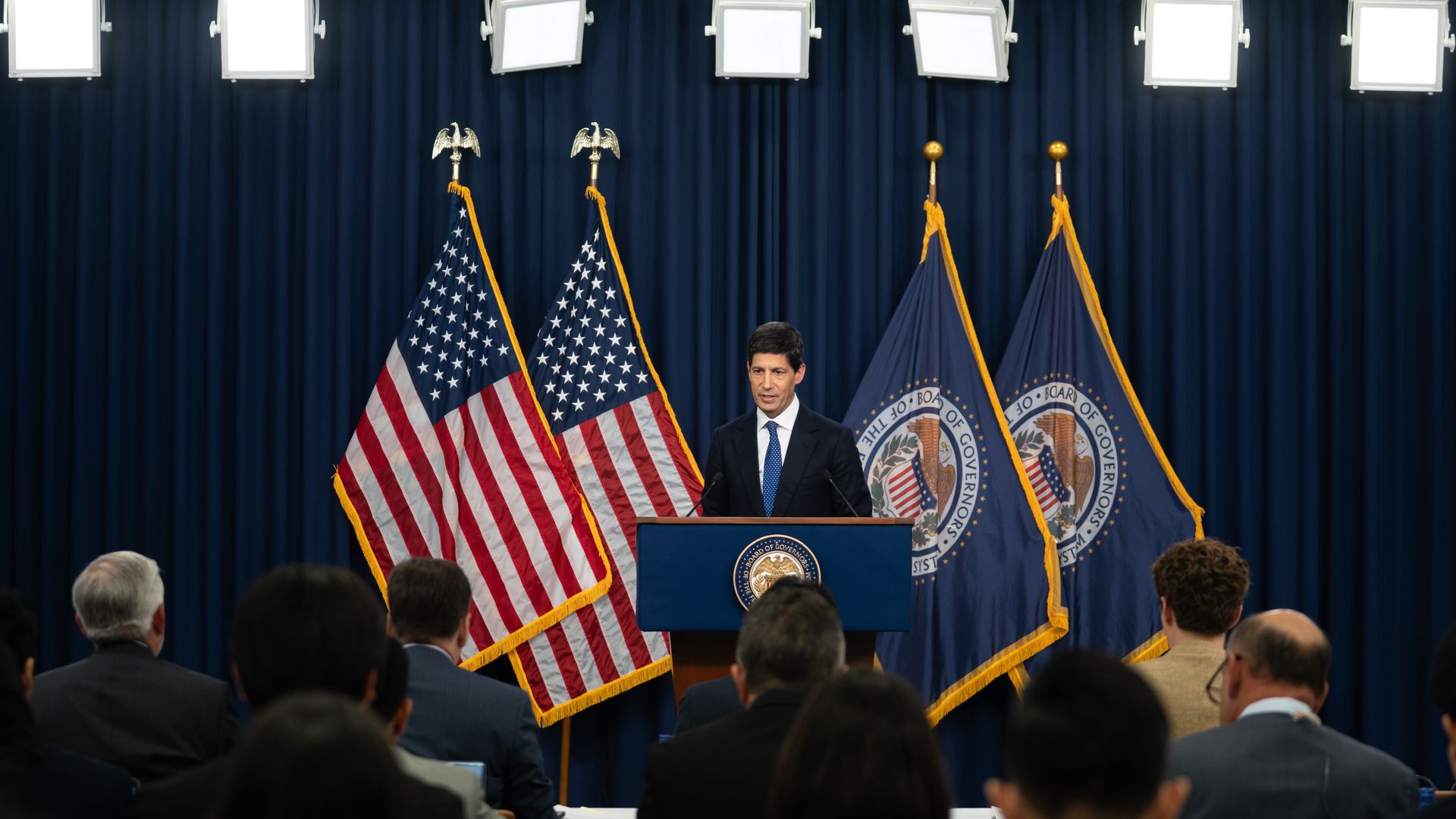
Yesterday's Fed news conference came before the latest round of Middle East disruptions, but the new developments only ratify chair Jerome Powell's message: This is a moment of extreme uncertainty in which the Fed is likely to wait for the dust to settle before making any moves.
- The press conference was the closest thing to the shruggie emoji we can remember, in terms of what Powell and his colleagues expect from the economy, interest rates and even who will be in charge two months from now.
The intrigue: Powell's term is up May 15, and President Trump has nominated Kevin Warsh to succeed him. Powell said he will remain in place as chair pro tempore, however, if Warsh is not yet confirmed.
- Sen. Thom Tillis (R-N.C.) is blocking Warsh's confirmation pending resolution of the Justice Department's investigation of Powell and the Fed.
- In effect, Tillis and Powell are playing hardball with the Trump administration, indicating that the only way they can replace a Fed chair Trump has come to loathe is by relenting on the DOJ investigation.
- Powell received a bit of a boost this morning, as the John F. Kennedy Library announced that the Fed chair will receive its Profile in Courage award "for protecting the independence of the Federal Reserve ... despite years of personal attacks and threats from the highest levels of government."
Zoom out: Powell was downright dismissive of the quarterly economic projections issued yesterday, which include officials' forecasts for growth, inflation and rates policy.
- If ever there were a good occasion to skip it, he said, yesterday would have been it.
- In response to numerous questions — about the inflationary and growth effects of the energy shock, tariff impacts, the drivers of services inflation, and more — Powell emphasized what the Fed doesn't know more than what it does.
What they're saying: Regarding the war's energy shock, he said, "the economic effect could be bigger, they could be smaller, they could be much smaller or much bigger."
- "I wouldn't say there's a conviction that this is going to go too quickly or not quickly," he said.
The bottom line: The Fed is on hold until it sees compelling evidence of which way the war's effects tilt — and whether pain shows up more in the form of higher prices or lower growth.
Sign up for Axios Macro

Stay ahead of the curve on the most important economic developments with reporting and analysis on how business, policy, and markets collide.