Wall Street cops propose new slate of easier big bank rules

Add Axios as your preferred source to
see more of our stories on Google.
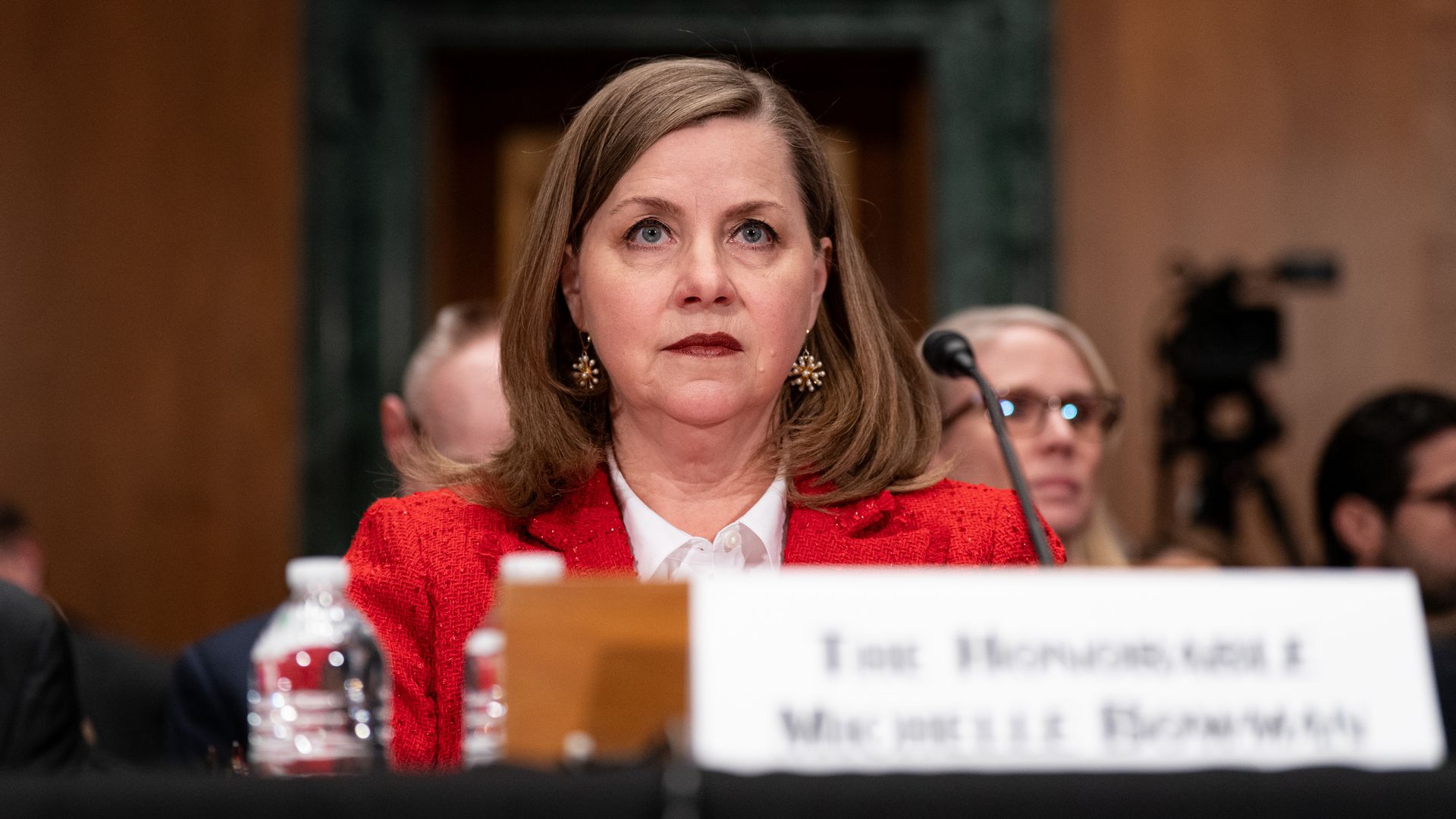
Federal Reserve vice chair for supervision Michelle Bowman testifies before Congress last month. Photo: Al Drago/Bloomberg via Getty Images
America's financial regulators released a package of proposals on Thursday that would ease regulations for the nation's banks.
Why it matters: This is the biggest swing yet at bank deregulation efforts in the Trump 2.0 era, which administration officials see as key to moving its economic agenda forward.
- The officials behind the proposal say the looser requirements will unlock a flurry of lending.
- But the looser rules, if adopted, could leave the financial system with less of a buffer in the face of an unforeseen shock. Recently, there have been concerns about stress in private credit — to which the banks are notable lenders.
The big picture: The proposals from the Federal Reserve, the Office of the Comptroller of the Currency and the Federal Deposit Insurance Corporation would lower bank capital requirements — that is, the financial cushion that regulators require banks to hold against potential losses — for the largest and most systemically important firms by nearly 5%.
- Bank capital requirements for the smallest banking organizations would fall by almost 8%.
Flashback: The proposals are a reversal from the end of the Biden administration, when financial regulators tried to tighten the screws on the banking system.
- In 2024, banking regulators proposed increasing bank capital requirements by 9%. Even that was a whittled-back proposal to bring the U.S. in step with a set of international rules known as Basel III Endgame.
- But those proposals faced unprecedented pushback from the banks, as well as a bipartisan group of lawmakers.
What they're saying: "A strong capital base protects depositors from losses, supports confidence in banks and the broader financial system, and allows banks to operate through economic cycles," Michelle Bowman, the Fed's vice chair for supervision, said in a statement.
- But requirements that are too stringent "can harm bank competitiveness and the ability to serve customers, limit the availability of credit, and stifle economic growth," said Bowman, who was elevated to the post by President Trump last year.
- Bowman said that the requirements have "pushed activity into the less-regulated non-bank sector," making the financial system riskier.
The intrigue: In a separate statement, Fed governor Stephen Miran — who Trump appointed to the Fed last year — raised the possibility that the proposals might not go far enough in easing regulations.
- "I will be eager to hear the public's view of whether the proposals achieve that balance, or if there is further capital relief that can and should be provided," Miran said.
The other side: Fed governor Michael Barr, who served as the central bank's Wall Street cop under former President Biden and led the charge on tightening bank regulations in 2024, called the "significant reductions in capital requirements ... unnecessary and unwise."
- "Today's proposals, if adopted, would harm the resilience of banks and the U.S. financial system," Barr said.
The bottom line: The latest proposal, alongside separate efforts underway to ease rules for Wall Street banks, amount to the most significant overhaul of regulations since the 2008 financial crisis.
