Bank regulators propose easing capital rule, a win for Wall Street

Add Axios as your preferred source to
see more of our stories on Google.
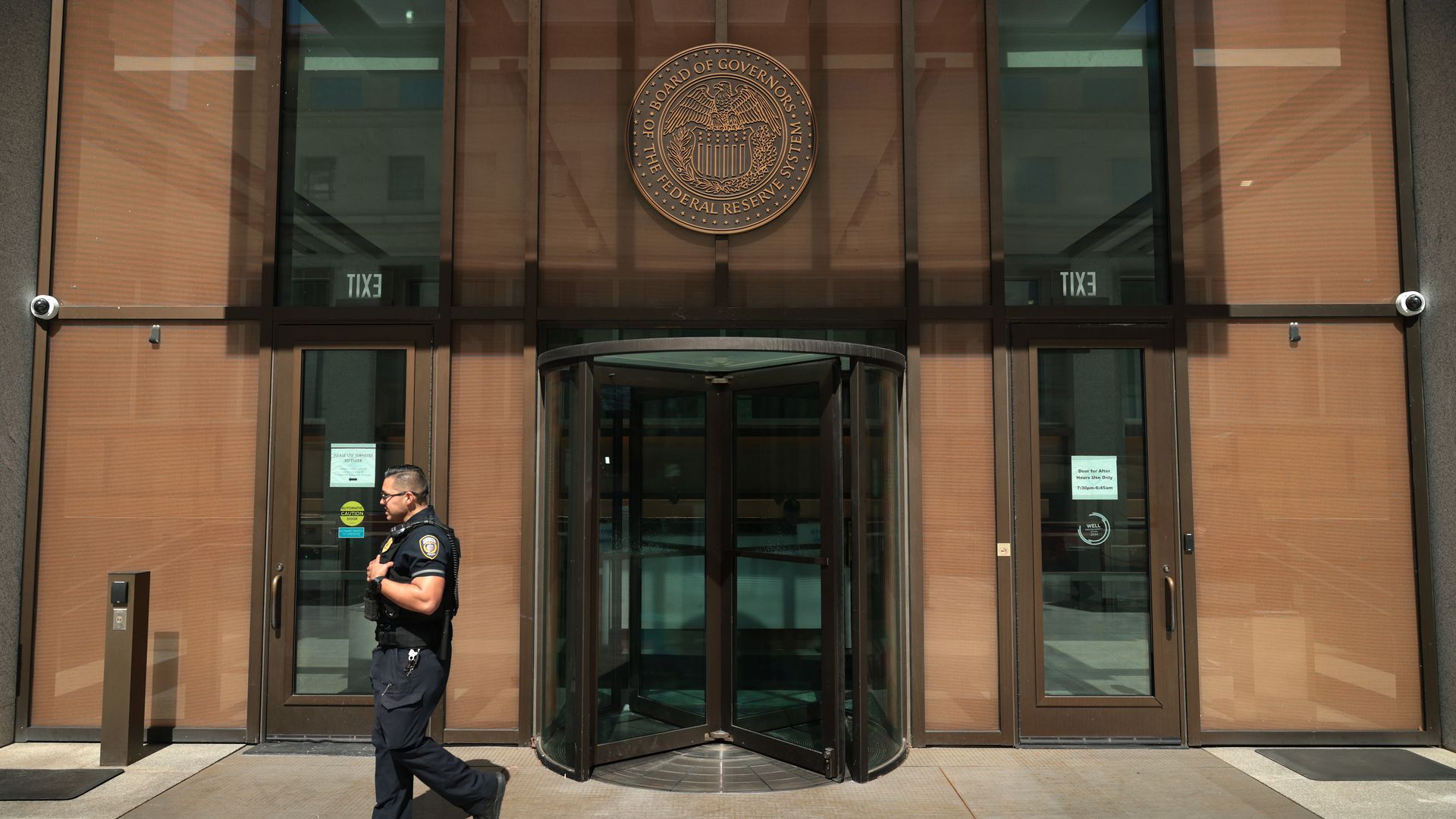
A security personnel in front of the William McChesney Martin Jr. Federal Reserve Board Building. Photo: Alex Wong/Getty Images
A trio of financial regulators on Wednesday proposed relaxing how much banks have to hold against their investments.
Why it matters: It is the most significant rule revamp yet for Wall Street in the Trump era, one that loosens requirements for America's largest financial institutions.
Driving the news: If finalized, the proposal would be the latest regulatory win for big banks, as well as Republicans in favor of easing the requirement.
- The big banks argue the requirement, called the Supplementary Leverage Ratio, deters financial institutions from pursuing "safe" investments, including U.S. treasuries.
- Treasury Secretary Scott Bessent said last month that the tweak would encourage banks to increase their holdings of U.S. treasuries, which would put downward pressure on interest rates.
The other side: Opponents say the proposal — put forth by the Federal Reserve, the Federal Deposit Insurance Corporation and the Office of the Comptroller of the Currency — risks weakening a backstop for risky investments.
By the numbers: As it stands, all banks are required to hold 3% of capital against assets, including any levered bets. Big banks have to hold an additional 2%.
- Instead of that 2%, the new regulation would take an existing and standardized surcharge, tied to the bank's size, and levy the bank half of that number. (The surcharges can range from 1% to 3.5%; a bank would pay half of that.)
What they're saying: Michelle Bowman, the Fed's top bank cop, said the requirement has become "a binding constraint," not the backstop regulators originally intended.
- "When leverage requirements become binding, banks are incentivized to reduce engagement in lower-risk, lower-return activities including intermediating the U.S. Treasury market," Bowman said in a statement.
- Trump appointed Bowman to the Fed in his first term. The administration nominated her to be the central bank's vice chair for supervision earlier this year.
- Fed governor Christopher Waller — also appointed by Trump — said he supported the proposal."The leverage ratio treats a Treasury bond the same as a junk bond, but we know they're not the same," Waller said in a statement.
- Fed chair Jerome Powell also favored moving the proposal forward, saying that "conditions have changed" over the last decade, when the requirement was first adopted.
Yes, but: Two of seven Fed officials voted against putting the proposal out for public comment — including Bowman's predecessor, Michael Barr.
- In a statement, Barr said the proposal "would significantly increase the risk" of a big bank failure, noting that "orderly resolution would not be possible."
- Fed governor Adriana Kugler, appointed by former president Joe Biden, also opposed the proposal, saying in a statement that it "will increase systemic risk in a manner that is not justified by the benefits cited in the proposal."
Editor's note: This story has been updated with additional comments and voting details.
