There's a new fear among investors and CEOs: flying blind on investments without sufficient data on the economy's health.
Why it matters: The U.S. government produces some of the world's premiere economic data. The future of those indicators looks murkier than ever, with no private sector source readily available to replace them.
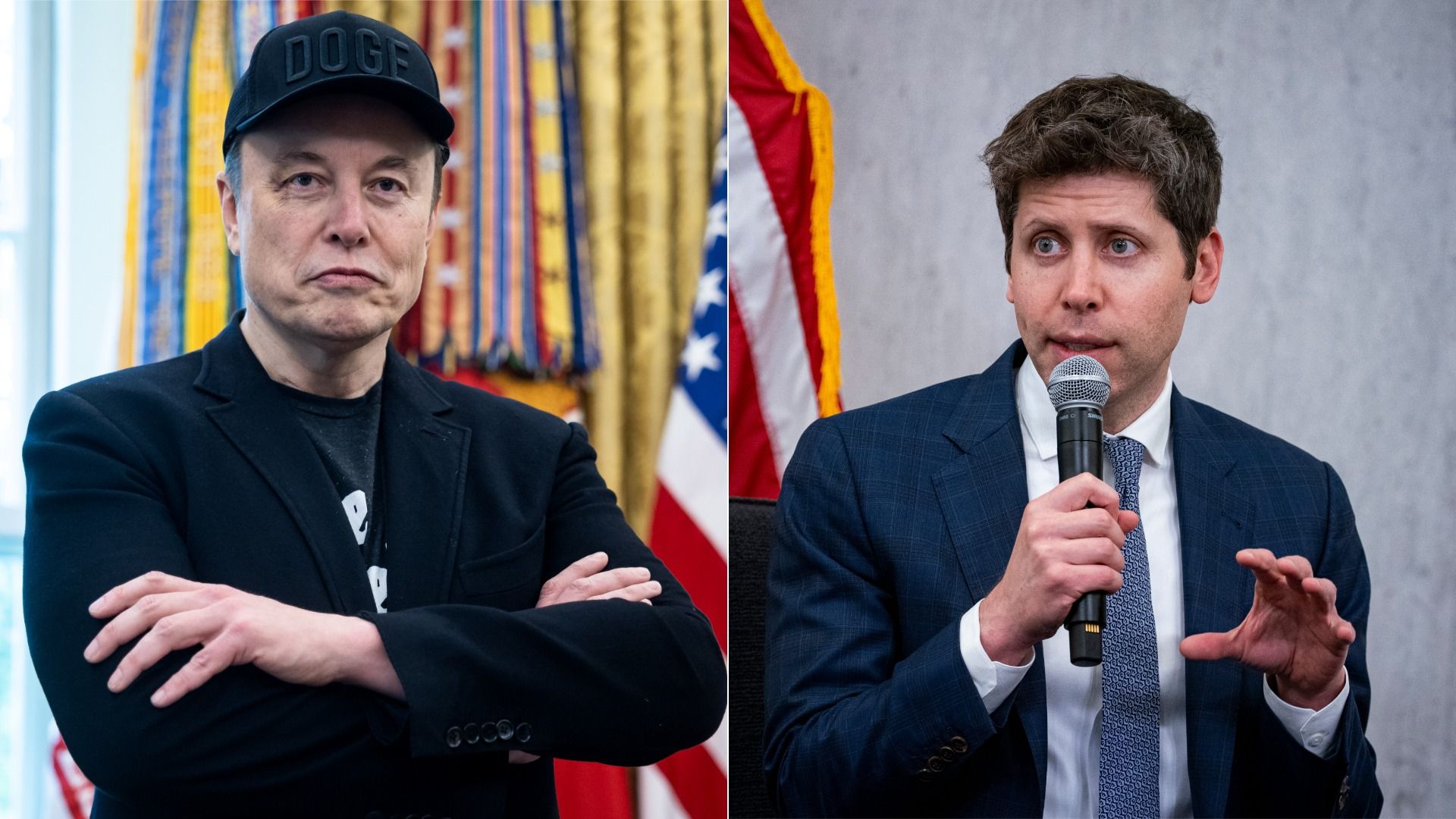
Tech titans Elon Musk and Sam Altman bickered over their relative trustworthiness on Tuesday, with each of their artificial intelligence platforms contributing to the feud.
The big picture: The two tech giants' acrimonious relationship has become increasingly public since Musk sued Altman for breaching OpenAI's founding mission last year.
President Trump prides himself on being a dealmaker, but some eye-popping dealmaking of late comes thanks to his predecessor's administration.
Why it matters: The Biden administration's antitrust crackdown, at the time sharply criticized by many in Silicon Valley, has now spawned a few interesting deal scenarios in tech.
Do Kwon, co-founder of the company behind the collapsed Terra blockchain and its algorithmic stablecoin TerraUSD, has pleaded guilty to conspiracy to commit fraud and one count of fraud.
Why it matters: Kwon is accepting responsibility for a fraud that has driven more losses than almost any other similar crime in history, one that impacted thousands of people around the world.
If you're a knowledge worker on the job hunt, you might want to upgrade your interview wardrobe to include pants.
Why it matters: Companies are bringing back in-person interviews after years of virtual hiring since the pandemic. That's because artificial intelligence — which is upending the labor market — also makes it easier for candidates to cheat.
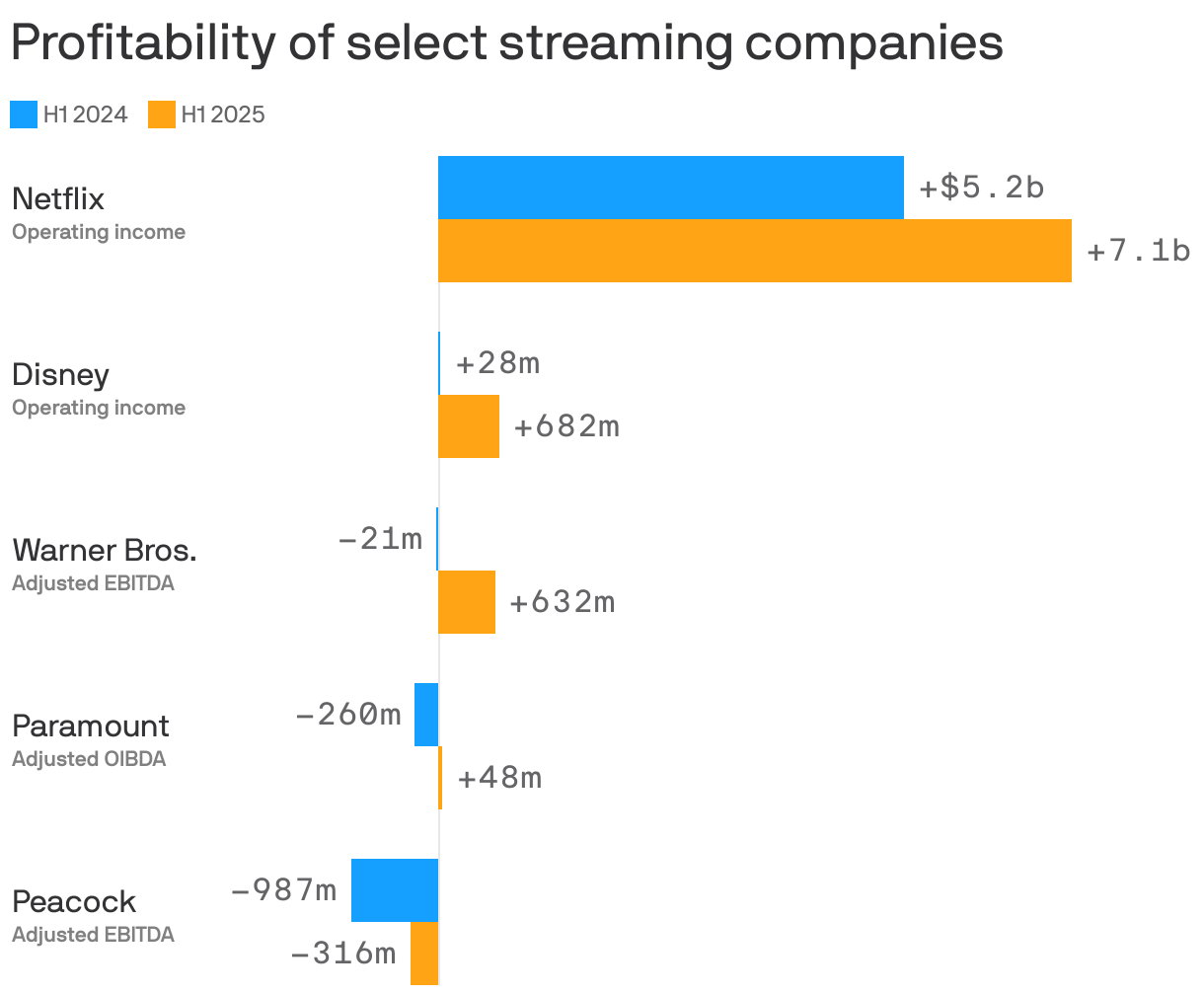
With the exception of Comcast's Peacock, most major streamers in the U.S. have started to turn a steady profit, which means the streaming wars have officially entered a new era of maturity.
Why it matters: To expand margins and compete with Netflix, traditional media companies are looking to streamline their services and bundle them.
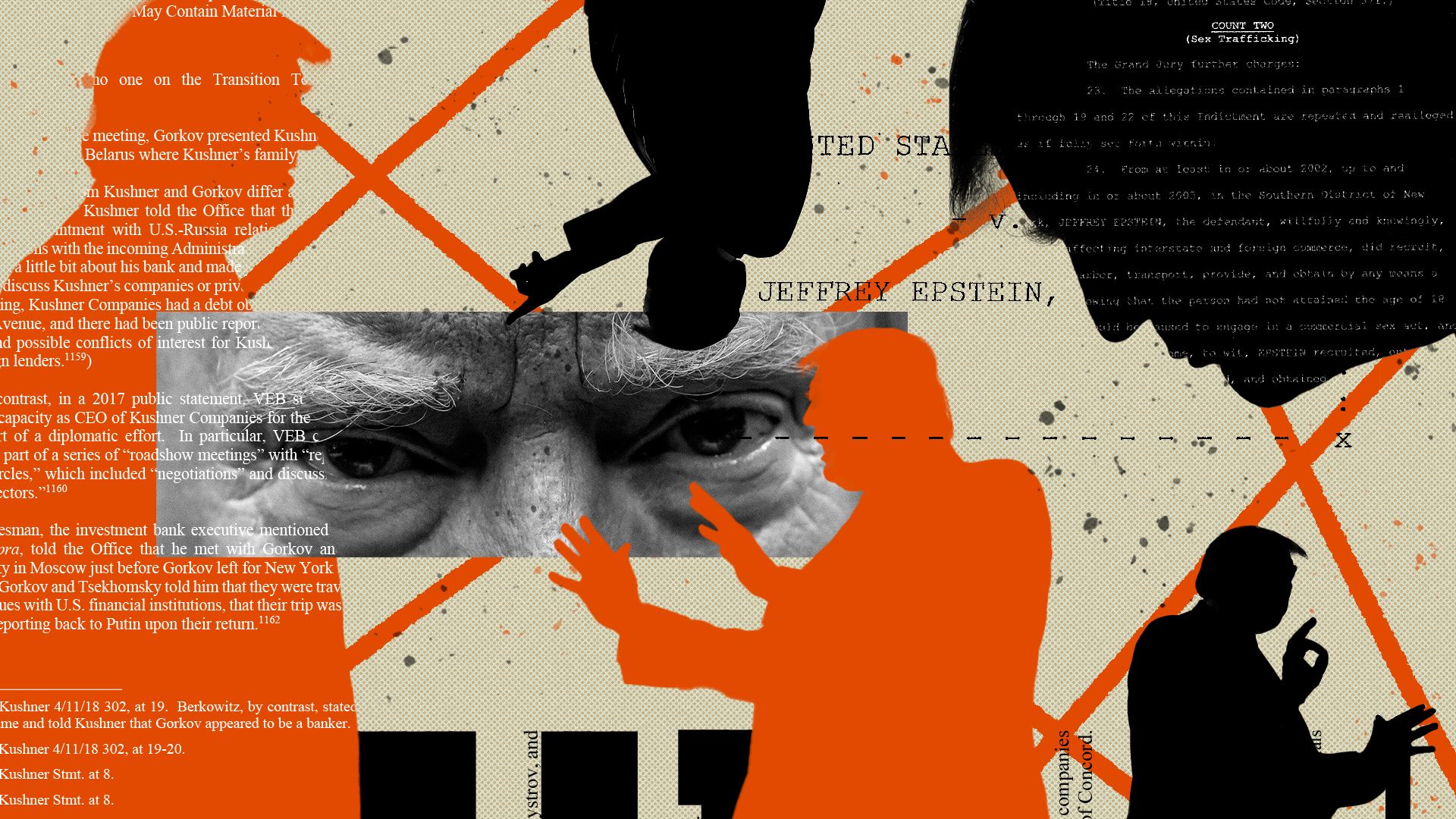
The White House Wire, a news headlines outlet run by the White House, and President Trump's Truth Social account avoided linking and citing the Wall Street Journal last month after WSJ's blockbuster report on the president's relationship with Jeffrey Epstein.
Why it matters: By comparison, the White House and Trump continue to cite the Journal's sister outlet Fox News more than any other outlet by far, according to an analysis from The Righting and Axios.
Federal law enforcement took down servers and web domains and seized roughly $1 million worth of cryptocurrency tied to the BlackSuit ransomware gang, authorities announced Monday.
Why it matters: BlackSuit had quite the rap sheet, hitting more than 100 companies in the last year across industries including manufacturing, education, research, health care and construction.
The global share of demand for adult animated TV series has been consistently trending upward over the past five years, according to new data from Parrot Analytics.
Why it matters: "South Park's" massive $1.5 billion streaming deal with Paramount shows how the genre can drive eyeballs in a competitive streaming landscape.
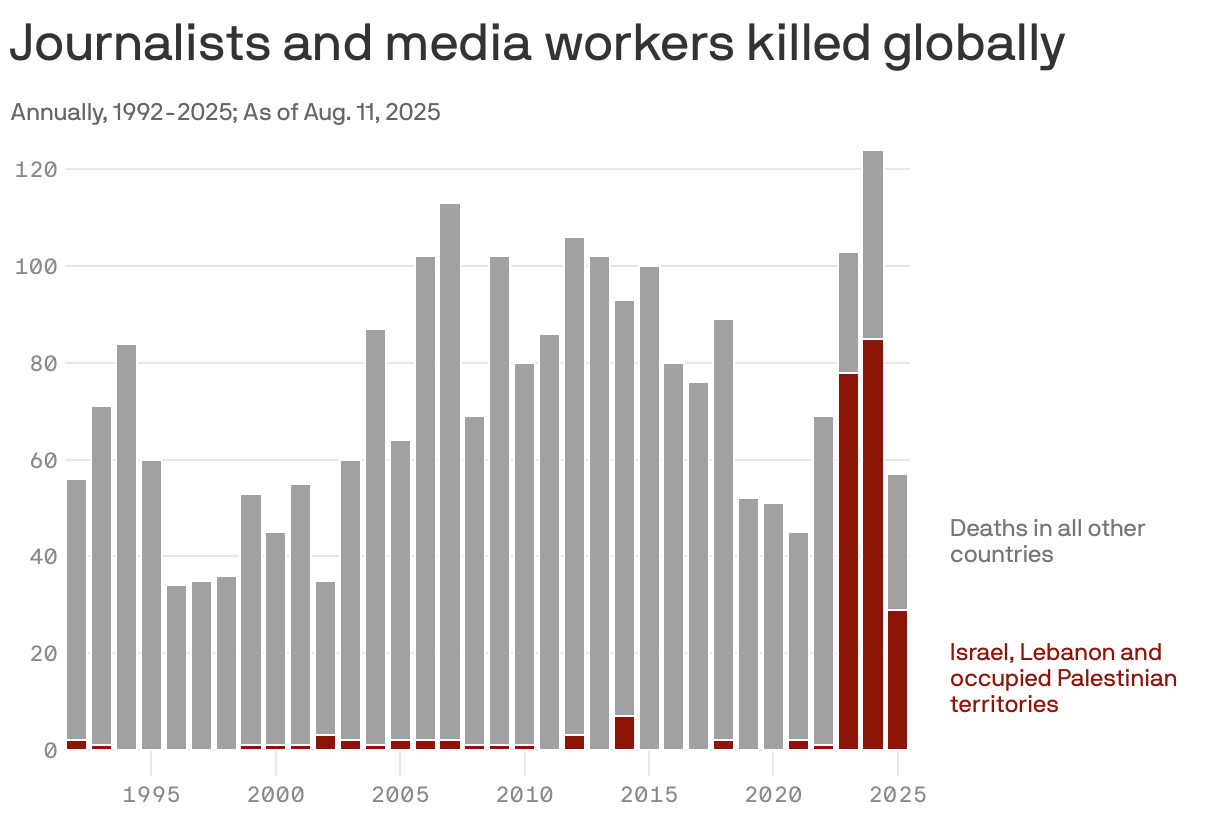
Data: Committee to Protect Journalists; Chart: Axios Visuals
The killing of six journalists in Gaza by Israeli forces over the weekend sparked an outcry from press freedom experts who argue the deaths were unnecessary and only add to the grim totality of what's become the deadliest conflict for journalists in recent history.
Why it matters: Since the conflict began with Hamas' terrorist attack on Israel on Oct. 7, 2023, the vast majority of journalists killed globally (67%) have been in Israel, Lebanon and occupied Palestinian territories, per the Committee to Protect Journalists.
Ether, which powers the Ethereum blockchain, has in recent weeks abruptly caught up to bitcoin's rally, driven by digital asset treasury companies accruing over 2 million ether since June.
Why it matters: In past bull markets, the prices of the world's two biggest cryptocurrencies have made very similar moves, but that correlation broke down quite a bit over the last year.
Spirit Airlines has warned that it may not survive on its own if it's unable to improve its finances.
Why it matters: The ultra-low-cost carrier emerged from Chapter 11 bankruptcy protection less than six months ago with hopes of becoming a more competitive and financially stable operation.
Eastman Kodak is warning that it faces a serious risk of going out of business.
Why it matters: The iconic American company is famous for its film products but has more recently pursued different businesses, including specialty chemicals and commercial printing.
Sinclair has launched a strategic review of its broadcast business, which includes 178 television stations in 81 markets.
Why it matters: The U.S. broadcasting industry appears to be starting a new game of musical chairs, as Sinclair's announcement comes just days after a WSJ report that Nexstar is in talks to acquire Tegna.
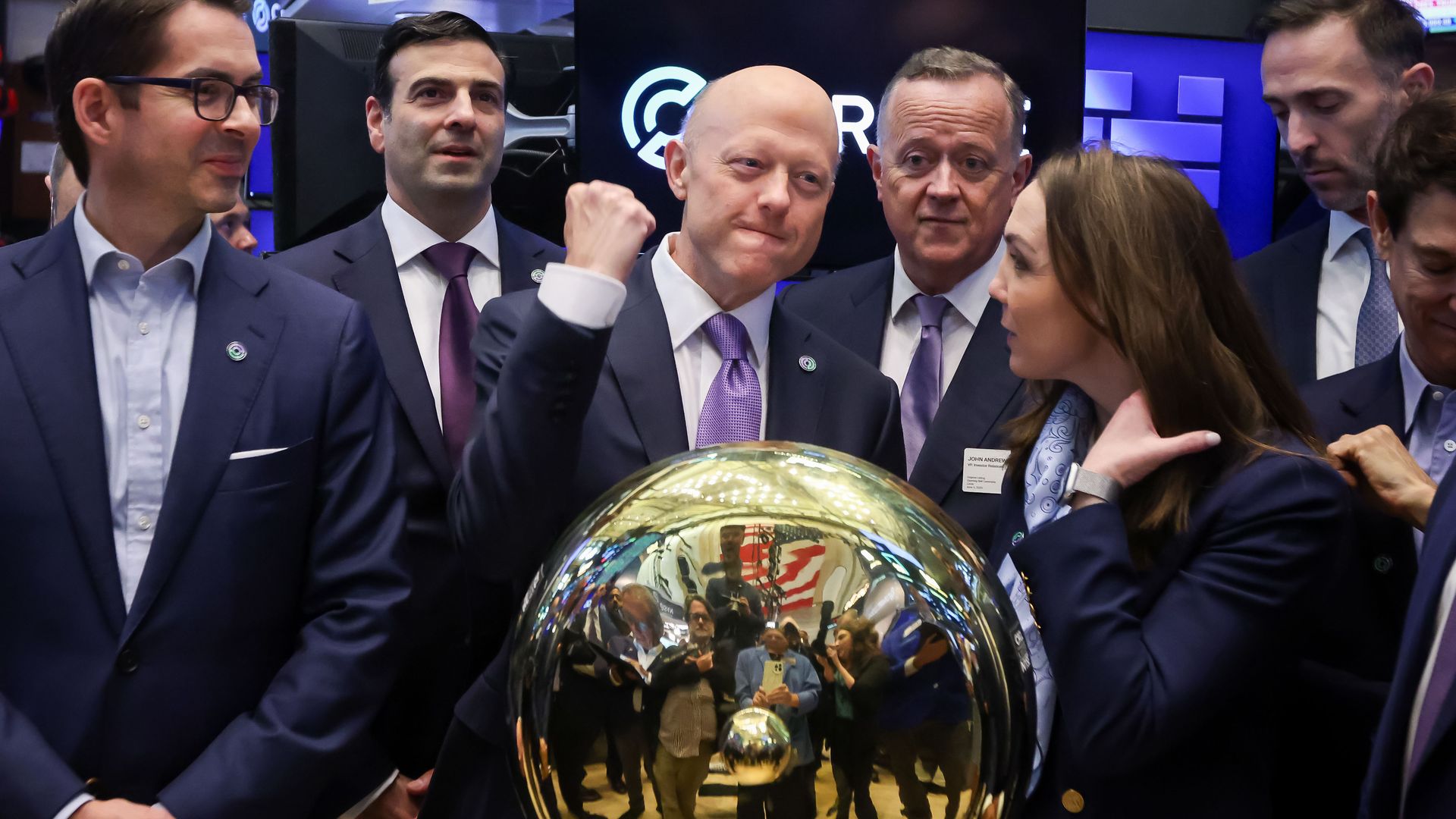
Circle has completed its first quarter as a public company, reporting $658 million in returns on its stablecoin reserves — its main source of profit — while holding onto $251 million of that after distribution costs.
Why it matters: Circle, based in the U.S., is the world's second-largest stablecoin issuer after Tether, one that is moving fast to establish a beachhead in a new regulatory landscape as many larger players are expected to enter the space.
Computer-driven traders are jazzed about this bull market, and if you ask ChatGPT, it will quickly tell you to invest in the S&P 500. Machines and AI driven by patterns and data seem to lack what makes human investors more cautious: fear.
Why it matters: Artificial intelligence is to retail traders what computer-guided, algorithmic trades are to financial firms. Both technologies are proving to be more optimistic investors than their real-life counterparts. The consequences of that bullishness could be severe for retail traders.
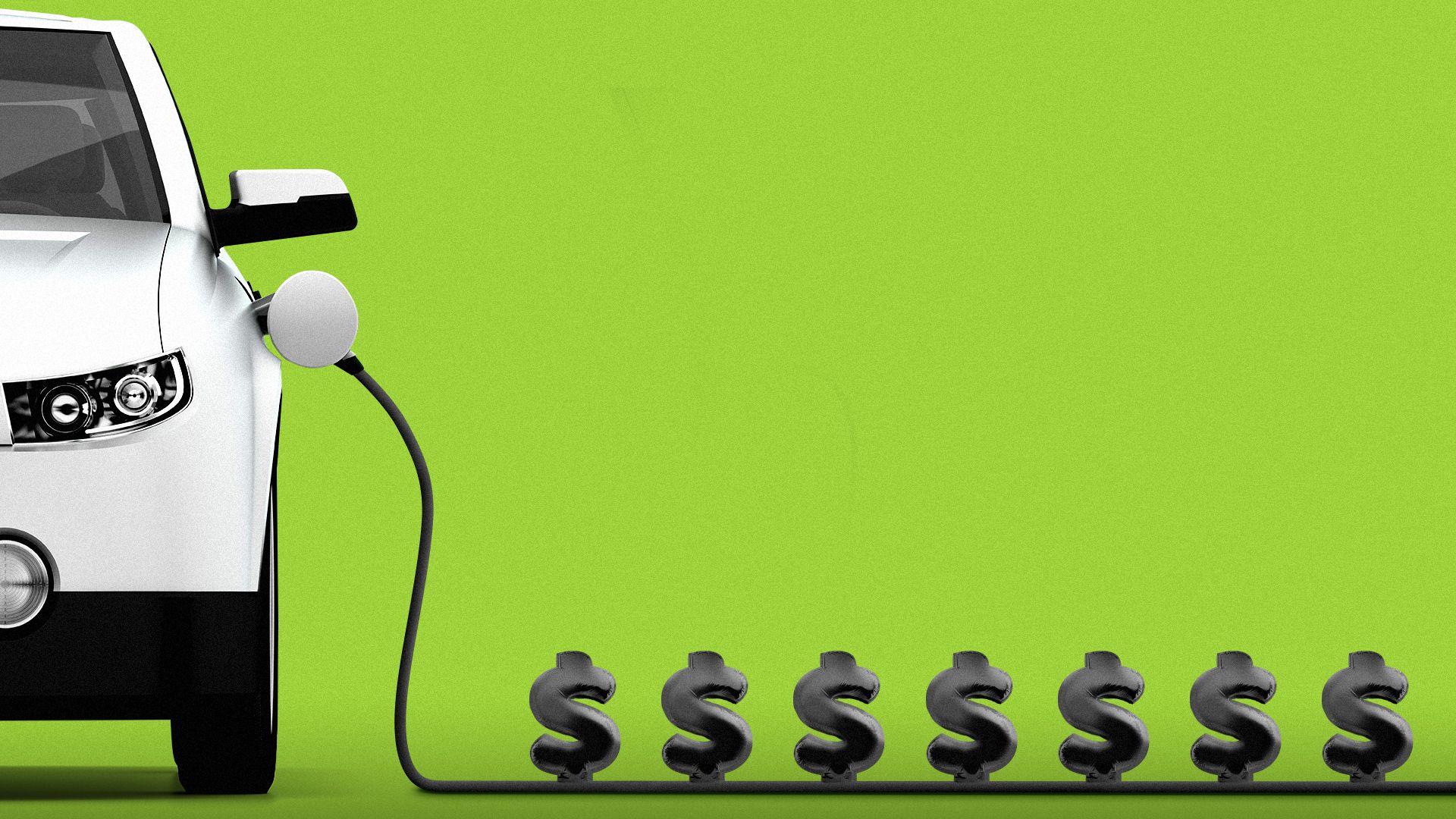
Ford's decision to invest $5 billion in a new family of electric vehicles might seem crazy at this point, given how much the political winds have shifted against EVs since President Trump took office.
Widen the lens, however, and Ford's big bet is the only natural choice in the face of existential threats to its business.
The big picture: More and more mainstream car buyers can't afford to buy a new Ford, which sells for an average of $56,000.
The U.S. construction, agriculture/mining and accommodation/food services industries have the greatest shares of foreign-born noncitizen workers, per census data.
Why it matters: President Trump earlier this summer acknowledged that his massive immigration crackdown is "taking very good, long time workers away from" the farming and hotel industries, and promised changes.
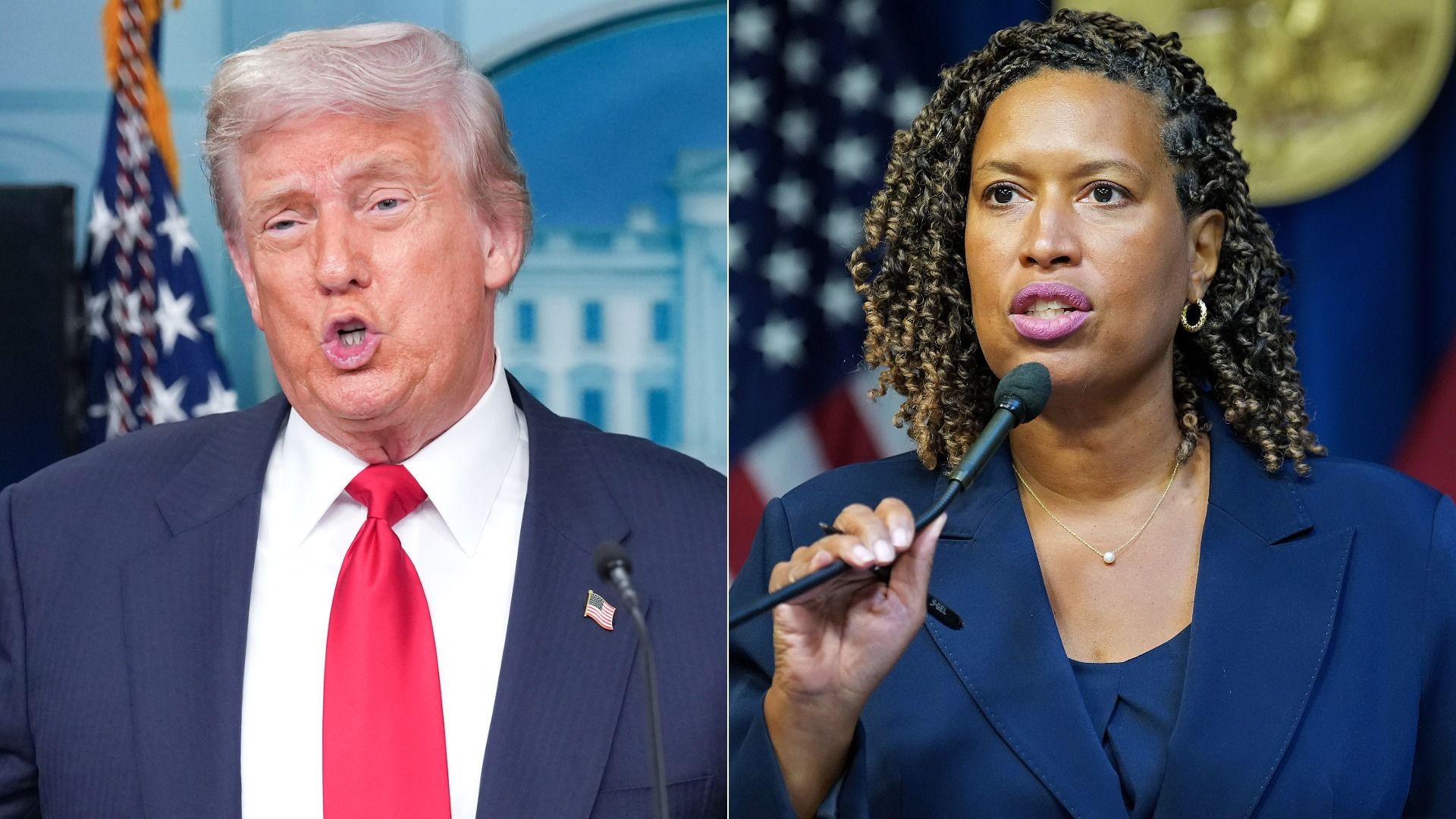
When President Trump announced a federal takeover of D.C.'s law enforcement Monday, he figured it would draw muted opposition from the city's mayor — and was likely to garner support among many residents.
Why it matters: Trump's move marked an unprecedented peacetime expansion of presidential control of the capital city. It was widely condemned by national Democrats as an authoritarian overreach — and a prelude to takeovers of other cities in blue states.
OpenAI's GPT-5 has landed with a thud despite strong benchmark scores and praise from early testers.
Why it matters: A lot rides on every launch of a major new large language model, since training these programs is a massive endeavor that can require months or years and billions of dollars.
The Trump administration continues to find new forms of revenue, the latest being a 15% fee on chip sales to China for Nvidia and AMD. The new income could have big implications for the bond market.
Why it matters: The billions of dollars in revenue from tariffs and from companies paying the administration to do business could allow for less Treasury issuance, which would be bullish for the longer end of the yield curve.
The U.S. and China have extended their tariff truce for another 90 days, President Trump confirmed Monday.
Why it matters: The extension comes hours before the truce was set to expire. It pushes off a huge, open question for U.S. businesses and investors on the future of trade with China.