The Securities and Exchange Commission's lawsuit against the U.S.-based cryptocurrency exchange, Kraken, may proceed, a judge in the U.S. Court's Northern District of California ruled on Friday.
Why it matters: It is a victory for the agency, which has argued that its efforts to regulate cryptocurrency fall well within its existing powers, delegated by Congress.
Nestlé's shares in the U.S. jumped today after the sudden exit of the company's CEO.
Why it matters: The Swiss food giant — whose wide-ranging products include Kit Kat candy bars and Pellegrino water — suffered a series of missteps as it ventured into various health care products.
Driving the news: CEO Mark Schneider is being replaced with Laurent Freixe, who has been with the company for nearly three decades.
Rescue crews on Friday ended the search mission of a capsized luxury yacht off the coast of Sicily, multipleoutletsreported. British tech tycoon Mike Lynch's body was recovered on Thursday.
The latest: The sixth and final missing body was found on Friday, Lynch's 18-year-old daughter Hannah. She was the last person unaccounted for aboard the ship.
The Department of Justice on Friday filed an antitrust lawsuit against RealPage, a property management software company, for an alleged "unlawful scheme" to reduce competition in the apartment rental market and secure a monopoly for itself.
Why it matters: RealPage uses a trove of data to help some of the country's biggest landlords set apartment rental prices. According to the suit, it's helping them to artificially inflate prices for renters all across the county.
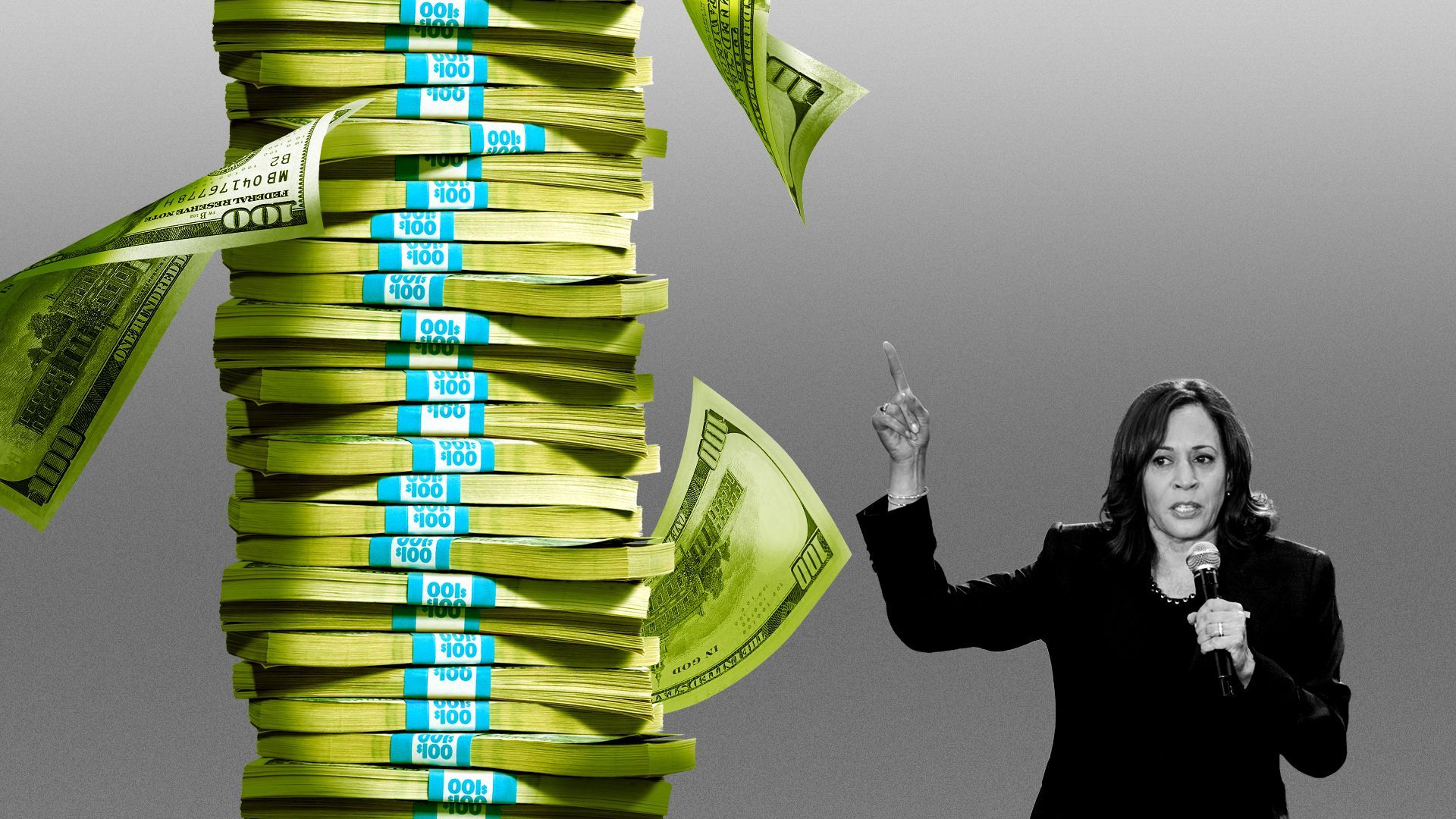
Silicon Valley was burning up the socials this week, after learning that Kamala Harris has tacitly endorsed a tax on unrealized capital gains. Lots of what was shared was inaccurate.
Reality check: This only would impact a small subset of America's wealthiest people, and most tech founders and investors would be spared.
Earlier this week a federal judge in Texas stopped the FTC's banon noncompete agreements from taking effect nationwide.
Why it matters: It's increasingly unlikely that a national ban on noncompetes will ever happen. That doesn't mean employers can run wild, however, locking down workers in contracts that bar them from taking jobs with rival firms.
To find out how Kamala Harris might approach climate issues, check out the latest issue of Foreign Affairs, where Harris adviser Brian Deese offers an aggressive plan to get countries to buy much more U.S.-made technology.
Why it matters: The idea is to position the U.S. and its allies — rather than China — as the partners of choice for developing countries looking to invest in climate resilience.
Canada's two largest railroads formally locked out more than 9,000 workers at midnight on Thursday — grinding freight rail in the country to a halt — as labor talks with the Teamsters reached an impasse.
The latest: On Thursday evening, Canada's labor minister ordered employees back to work and both sides into binding arbitration — bringing the work stoppage to end.
Go ahead and take a whiff of a crayon, but don't even think about trying to make money off it.
Crayola recently secured a trademark for the smell of its wax coloring sticks after a six-year legal battle.
Zoom in: It's "a scent reminiscent of a slightly earthy soap with pungent, leatherlike clay undertones," according to a trademark document noting that it dates back to 1905.
Crayola's boss "imagines one day pumping it through the aisles of retailers, triggering nostalgia while shoppers are browsing and hopefully buying more crayons," Bloomberg reported today.
💭 Nathan's thought bubble: To me, the smell of crayons triggers back-to-school shudders.
Former congressional candidate Michelle Bond, who unsuccessfully sought to represent the eastern portion of Long Island in Congress in 2022, has been charged with four counts of campaign finance violations.
Why it matters: Bond is the fiancée of Ryan Salame, formerly an executive of the defunct cryptocurrency exchange, FTX, and the charges link her to his actions.
Here's what's new on Peacock, Netflix, Fuse, Hulu and Apple TV+.
What we're watching: A documentary about the death of Laci Peterson, a new season of "Like a Girl" and a new documentary covering the life of Tennessee Titans legend Steve McNair.
Corporate executives and boards are ramping up communication efforts to prepare for attacks from activists linking business performance to DEI policies.
Why it matters: For some public companies, it is not a matter of if these politically motivated attacks will come, but when.
WeRide, a Chinese autonomous driving startup, has postponed an IPO that was seeking to raise around $110 million at a $5.7 billion market cap.
Why it matters: This would have been the first significant U.S. IPO in nearly a month, and there's not currently anything on the post-Labor Day calendar.
Investors in checkout tech company Bolt Financial have until the end of next week to say if they plan to participate in a massive new funding round that would include the return of controversial company founder Ryan Breslow as CEO.
The intrigue: They aren't being told the lead investor's identity.
Palantir Technologies has hired former Rep. Mike Gallagher (R-Wisc.) to run its defense business, charged with identifying contract opportunities and guiding R&D.
Why it matters: Gallagher is an outspoken critic of China, and will reinforce the company's pick-a-side mentality.
California lawmakers are debating whether to go where Congress won't and pass legislation that would give the state the ability to block private equity acquisitions of health care facilities or providers.
Why it matters: It's the latest example of states trying to regulate deals valued at $1 trillion over the past decade that critics have linked to staffing shortages and poorer patient outcomes.
Reproduced from Public Citizen; Chart: Axios Visuals
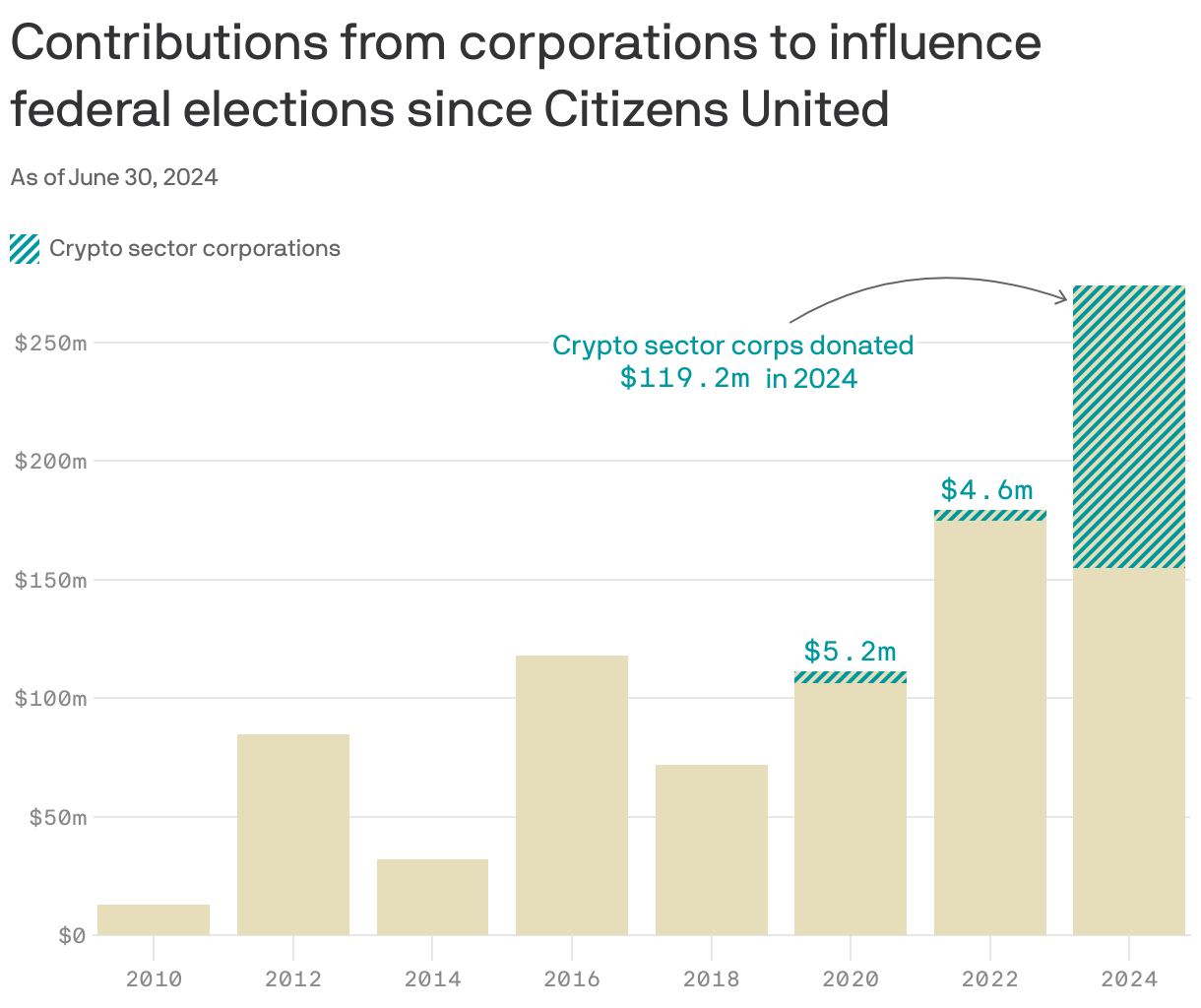
The crypto industry accounts for almost half the money contributed by corporations to political action committees so far in 2024, according to a new report from Public Citizen, a consumer advocacy group.
Why it matters: Crypto is pioneering a strategy for direct corporate election spending that could usher in a new era of spending by big companies to get the outcomes they want in elections, the organization argues.



















/2024/08/22/1724338007356.gif?w=3840)