Harris' pivot: I'm the one for hope and change


Add Axios as your preferred source to
see more of our stories on Google.
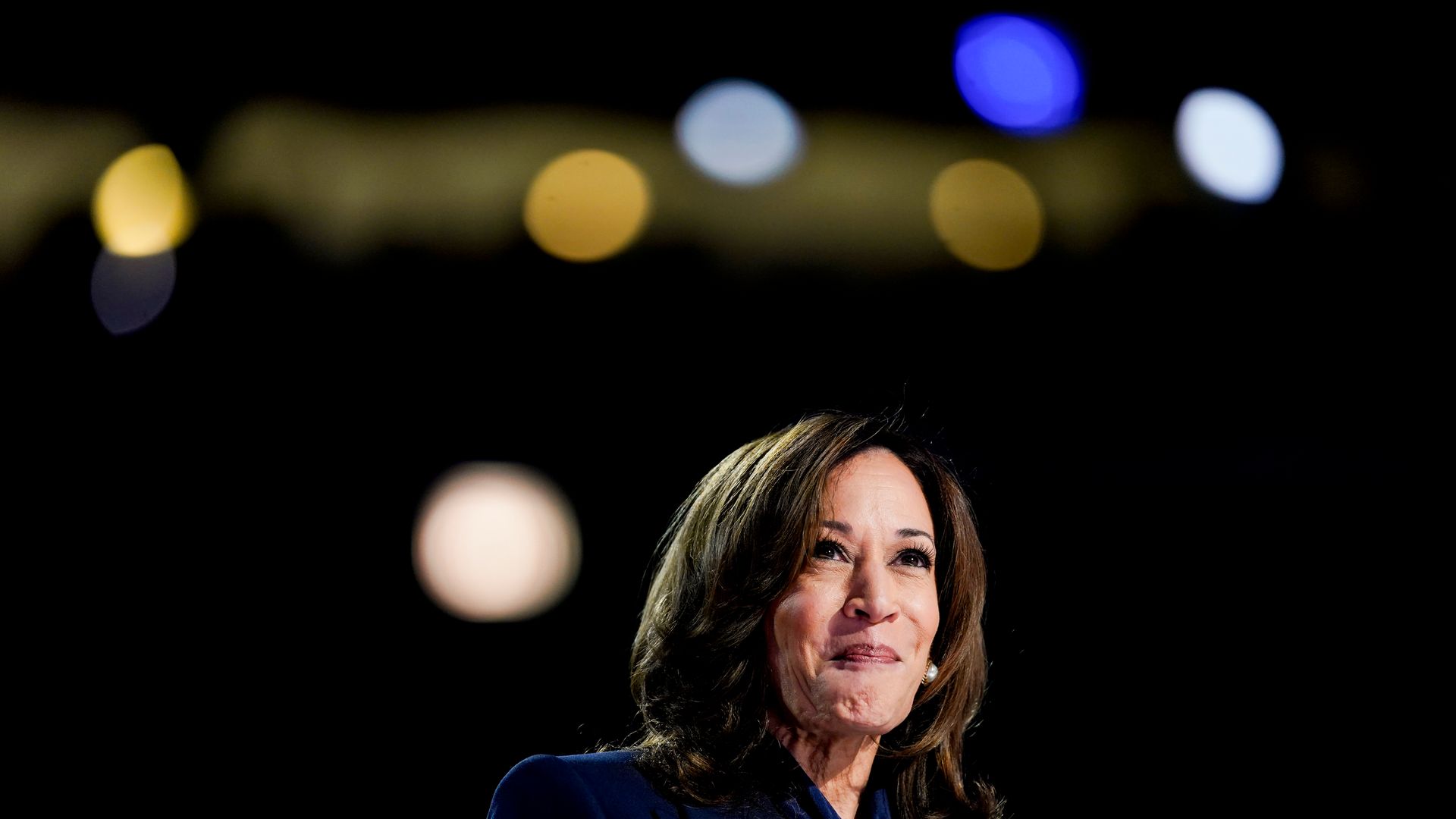
Photo: Al Drago/Bloomberg via Getty Images
CHICAGO — She's been vice president for 3½ years, but this week Kamala Harris re-introduced herself to the nation as an agent of hope and change — and cast former President Trump as yesterday's news.
Why it matters: Harris' promise of a "new way forward" — wrapped in "joy" and an optimistic America defined by freedom, equality and opportunity — is meant to contrast with Trump's dark view of what he calls a nation in decline.
- For Harris, it also carries some risk: She's touting her accomplishments working for an unpopular president, while trying to convince voters that a White House led by her and Minnesota Gov. Tim Walz offers the country a fresh start.
"With this election, our nation has a precious, fleeting opportunity to move past the bitterness, cynicism, and divisive battles of the past," Harris said Thursday night as she accepted the Democratic presidential nomination.
- "A chance to chart a new way forward," she added. "Not as members of any one party or faction, but as Americans."
- "I'm ready to turn the page on these guys," Walz said Wednesday of Trump and his running mate, Ohio Sen. JD Vance.
Zoom out: The Harris and Trump camps have radically different views of the country, but they share the same theory of the campaign: The incumbent — whichever side that is — will lose.
- That has turned the campaign into dueling arguments over who the real change candidate is.
- Almost every move the Harris-Walz team made this week in Chicago was designed to focus the country's attention on the future — and not dwell on the last four years.
Delegates to the convention understood the assignment, and responded enthusiastically to a parade of speakers who led the crowd in chants of "We're not going back!" — a signature slogan of Harris' young campaign.
- Along the way, Harris transformed a somewhat dour outlook — one motivated partly by fears the chaos Trump could cause chaos if he's re-elected — into a campaign of "joy" that is more prone to mock Trump than cast him as a demagogue.
Zoom in: For most of the year, Republicans framed the 2024 contest as a change election against an older opponent on his last legs — President Biden.
- Their hope was that the public's deep frustration over inflation and immigration would convince voters to turn against the man who has led the country nearly four years.
- But then Democrats essentially fired Biden from his re-election campaign before Trump could get the chance.
- And since Harris replaced Biden a month ago, Republicans have struggled to adapt their message to a new — and younger — candidate.
The other side: Trump understands Harris' strategy and is working to foil it.
- "Kamala say(s) she wants to talk about the future," Trump said Thursday during a visit to the border in Arizona.
- "We don't have a future with open borders and all the other problems this country has."
The intrigue: After the first night of the convention, Biden — the actual incumbent — was nearly absent from the convention, with several marquee speakers giving him only a perfunctory mention.
- In her full-throated push to elect Harris, former first lady Michelle Obama didn't mention Biden (she has also had tensions with the Biden family).
- Walz mentioned Biden at the top of his speech Wednesday, but didn't mention him again.
What we're watching: Along with trying to co-opt Trump on the change issue, Democrats also tried to cast their party as the truly patriotic one.
- From the chants of "USA, USA" to an obvious effort to reclaim the word "patriot" from Trump's Republicans, Democrats wrapped their optimism in national pride.
- "We're all here tonight for one beautiful, simple reason — we love this country," Walz told the convention.
- "We've got something better to offer the American people. It starts with our candidate, Kamala Harris."
The bottom line: Democrats got a quick divorce from one presidential candidate, quickly celebrated their marriage to another — and now are running what amounts to a challenger's race with their candidate still based in the White House's West Wing.
