Paddy Cosgrave, the CEO and co-founder of Web Summit, one of the world’s biggest tech conference companies, resigned on Saturday, following blowback to comments he made last week about the Hamas-Israel war.
Why it matters: The remarks led a slew of major companies, speakers and sponsors to withdraw from the event, including Amazon, Meta, Google and Intel.
The Israeli military found a USB key with instructions for the production of a "cyanide dispersion device" on the body of a Hamas operative who participated in the Oct. 7 terrorist attack, according to twoIsraeli officials and a copy of a classified Israeli Foreign Ministry cableobtained by Axios.
The big picture: It is not clear from the file whether Hamas had any serious or operational plan for using makeshift chemical weapons or whether the group had attempted to produce them.
The big picture: The U.S. supports Israel but doesn't want to get drawn into another large or protracted military operation in the Middle East. Threading that needle is the Biden administration's biggest challenge right now.
The big picture: Israel has also imposed a "complete siege" of Gaza — worsening what were already dire conditions due to Israel's 16-year blockade. The Israeli military is now beginning ground operations in the small coastal enclave that could descend into prolonged urban warfare.
The war between Israel and Hamas has already spilled into neighboring countries in the form of street protests and even cross-border strikes.
Why it matters: Israel’s neighbors fear the prospect of further domestic unrest and a massive influx of refugees as the conflict deepens. Israel, meanwhile, fears that a second front could open on the border with Lebanon.
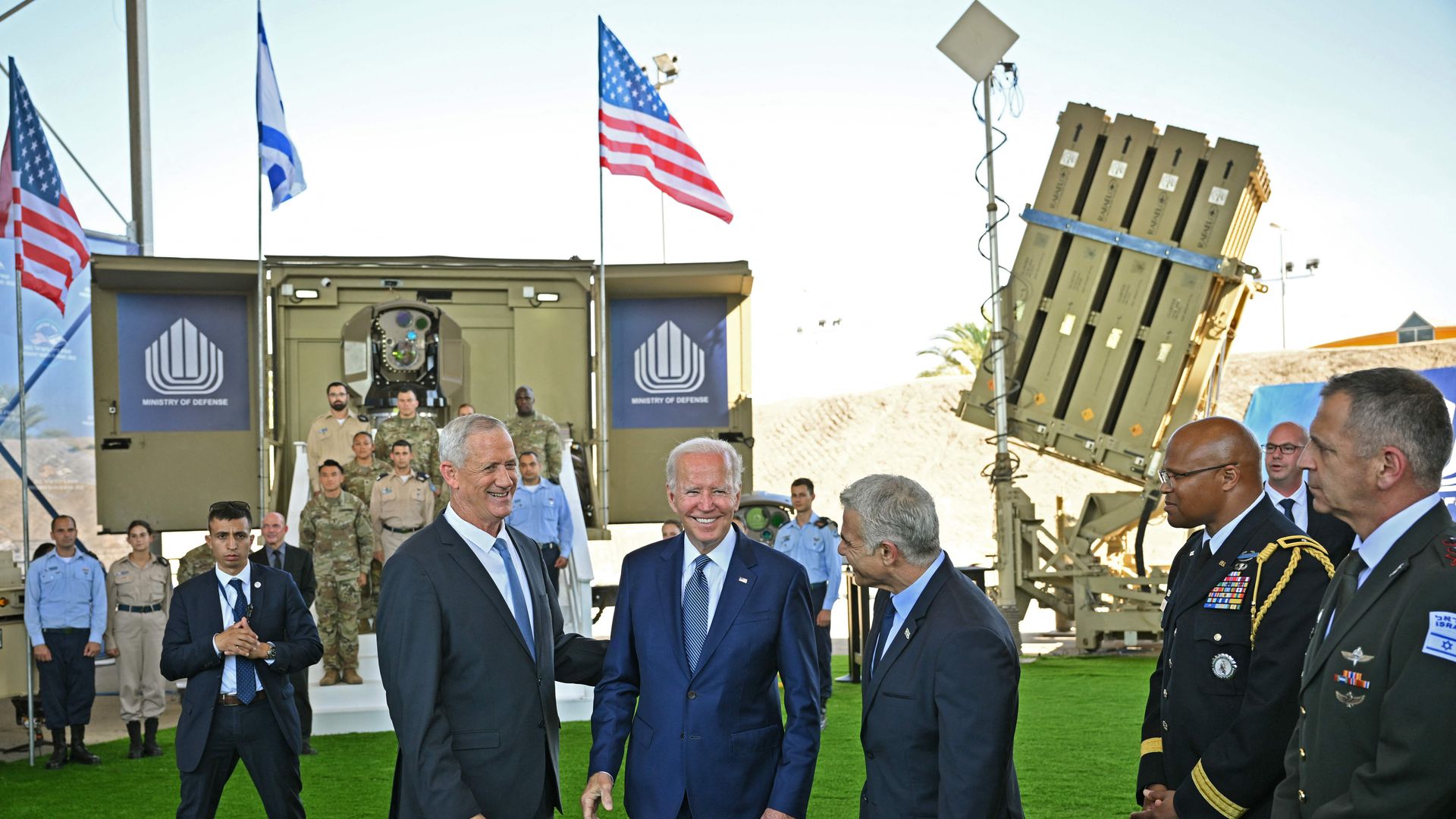
Israel has for decades established itself as one of the most formidable and technologically advanced military powers in the Middle East.
Why it matters: With an annual military budget exceeding $20 billion and access to some of the most advanced U.S. military hardware, Israel controls the skies and much of the sea around its territory, and it has superior cyber capabilities.
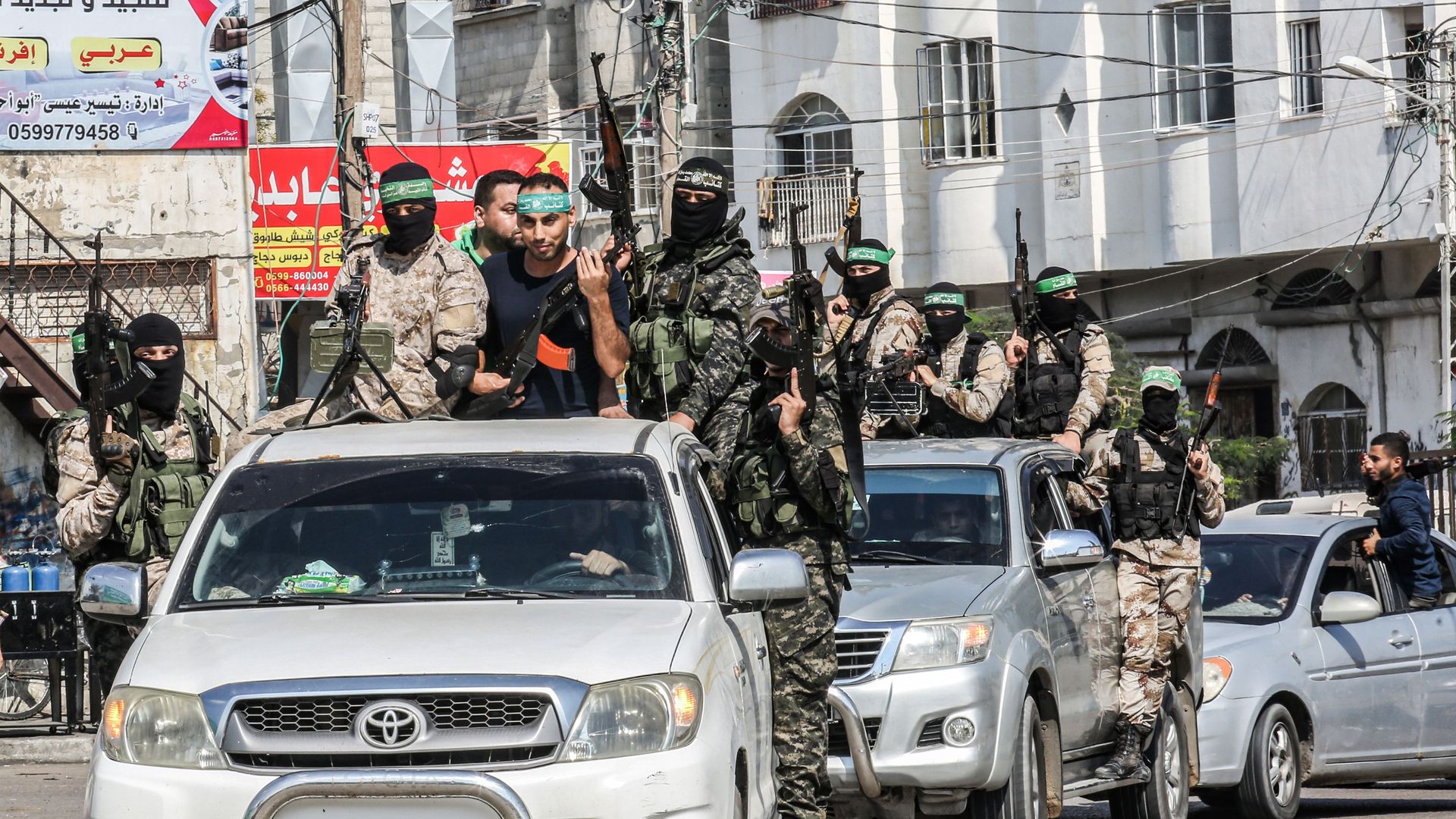
The military arm of Hamas has for more than three decades relied on guerrilla warfare-style tactics in its attacks against Israel, using rockets, snipers, improvised explosive devices and underground tunnels.
Driving the news: The multipronged terrorist attack on Oct. 7 from land, air and sea was unprecedented in its scale and sophistication. Now Hamas is facing what is likely to be an equally unprecedented Israeli ground offensive.
Hamas on Friday released two U.S. citizens it was holding hostage in Gaza, the Israeli Prime Minister's Office confirmed.
The big picture: Hamas, which is considered a terrorist organization by the U.S., said it released a mother and her teenage daughter on humanitarian grounds following Qatar mediation efforts. Hamas took roughly 200 people hostage during its Oct. 7 terrorist attack on Israel, according to Israeli officials.





/2023/10/15/1697411155826.gif?w=3840)