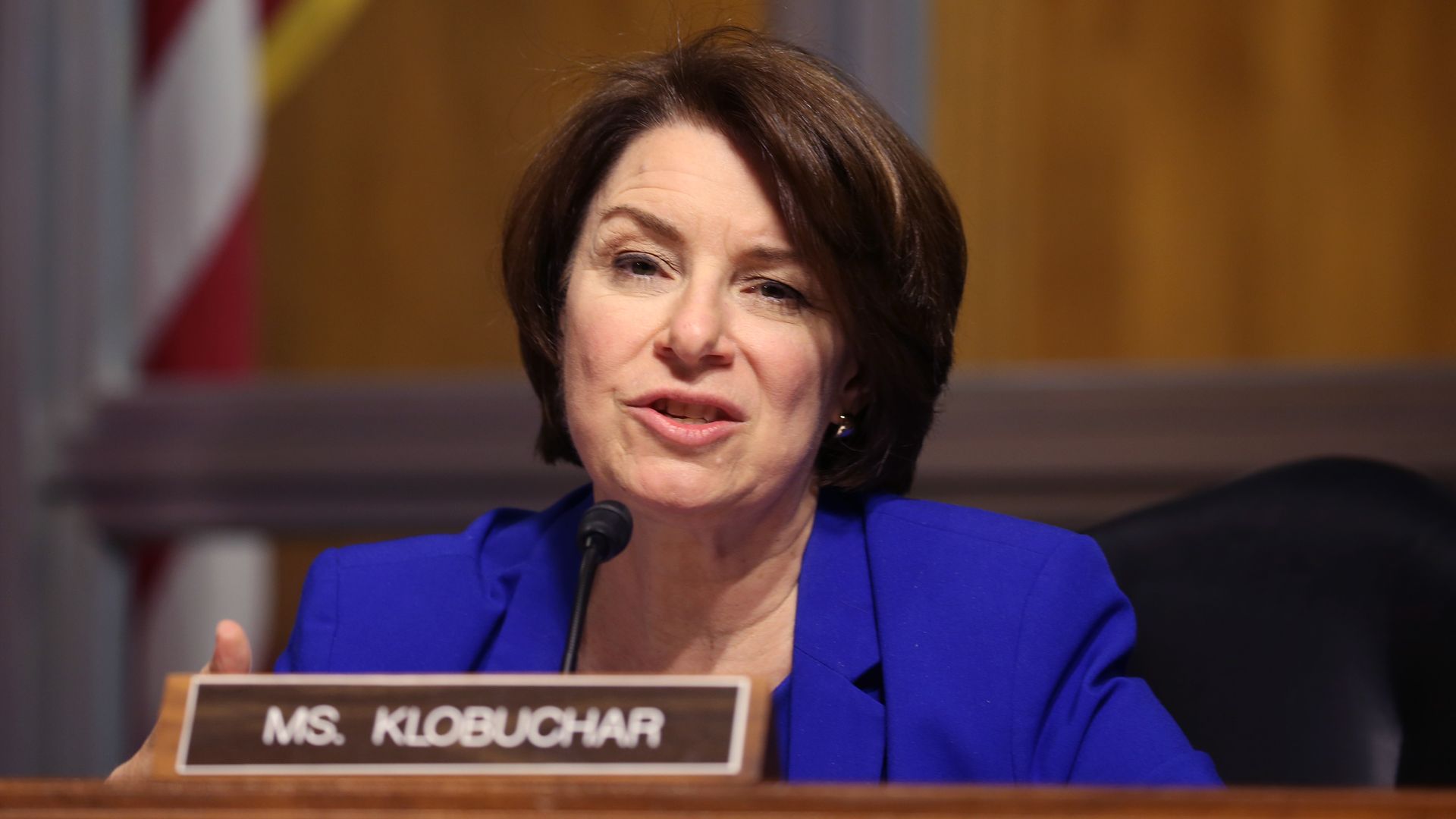
A bipartisan group of U.S. lawmakers led by Sen. Amy Klobuchar (D-Minn.) is urging the State Department to help American families waiting to be united with their adoptive children in China.
The big picture: The coronavirus pandemic has halted intercountry adoptions, leaving hundreds of families and children in limbo.
Tel Aviv — With Israel and Hamas now engaged in their most destructive fight in seven years, the Biden administration is dispatching a State Department official to join the de-escalation efforts.
The latest: The Israeli air force attacked a meeting of senior Hamas military leaders on Wednesday in Gaza and reported it had killed the Gaza City Brigade commander and the heads of Hamas’ cyber arm and weapons research and development department, along with at least three other senior officials.
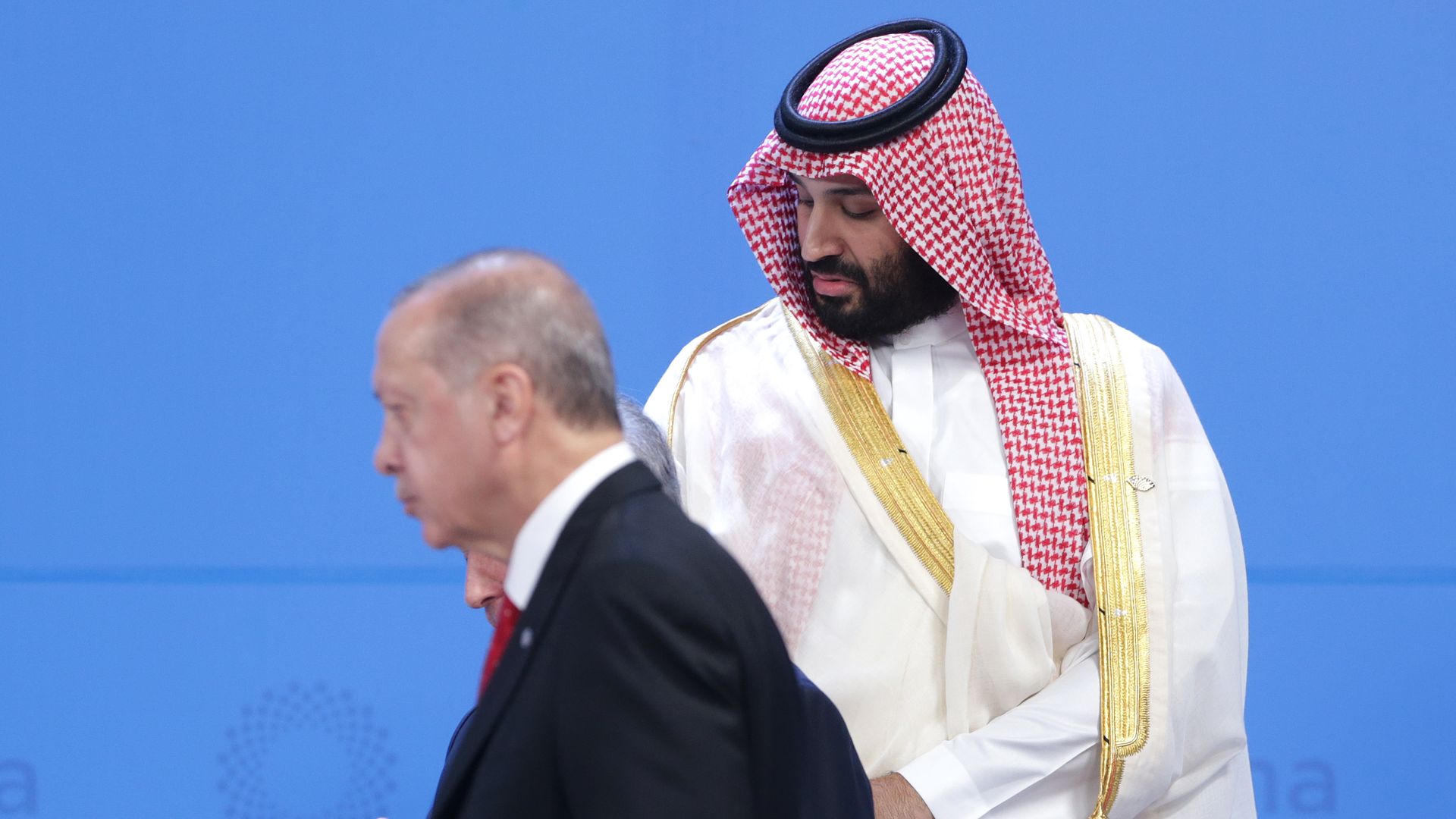
Ankara — Turkey has gone on a charm offensive in Egypt and Saudi Arabia in an attempt to break its regional isolation and end a harmful economic boycott.
Why it matters: The response to these olive branches will depend on the extent to which Turkey is willing to fulfill Egyptian and Saudi demands in terms of its regional interventions and policies toward the Muslim Brotherhood and the Jamal Khashoggi case.
Efforts to form a new Israeli government and oust Prime Minister Benjamin Netanyahu have come to an almost complete halt amid the escalation with Hamas.
Why it matters: Opposition leader Yair Lapid is six days into a 28-day mandate, and seemed on track to strike a coalition deal with Naftali Bennett, a right-wing kingmaker. But the latest crisis could make those efforts nearly impossible.
China released its censusreport on Tuesday, showing that the number of births in the country last year dropped 18% from 2019. And China isn't alone — populations have been stagnating globally for decades, including in the U.S.
Why it matters: China has long relied on its large population — the biggest in the world — as a core engine for economic growth. The way that it, and officials across the globe, deal with changing demographics will lead to shifts in the economy and geopolitics.
India's health ministry reported Wednesday the country's highest-ever number of deaths from COVID-19 in 24 hours.
By the numbers: The 4,205 virus fatalities confirmed in the past 24 hours take the official death toll past 250,000 since the pandemic began. The ministry reported 348,421 new cases as the official caseload surged past 23 million.
Tel Aviv — The Hamas and Islamic Jihad militant groups fired dozens of rockets from the Gaza Strip toward Tel Aviv and other cities in central Israel on Tuesday night, a new step in the current conflict that is likely to be followed by increased Israeli air strikes in Gaza.
Why it matters: The current crisis began in Jerusalem but has evolved into a military conflict across Israel and Gaza that remains on a path of escalation.
India is dealing with daily new COVID cases well above 300,000, and a new variant, first detected in India, has been declared a global concern by the World Health Organization. Political blowback and calls for a nationwide lockdown are proliferating, even after Prime Minister Narendra Modi had critical Facebook posts removed.
Axios Re:Cap discusses the difficult and deadly situation in India, the political tensions that continue to escalate, and the role of social media during the crisis with New York Times reporter Karan Deep Singh, who is based in New Delhi.
Anthony Fauci and Sen. Rand Paul (R-Ky.) got into a heated debate at a Senate health committee hearing on Tuesday, clashing over whether funding from the National Institutes of Health was used for risky "gain-of-function" research at the Wuhan Institute of Virology.
Why it matters: Questions remain about the origins of the coronavirus and the so-called "lab leak hypothesis" — the theory that the virus resulted from experiments in the Wuhan lab that accidentally spilled over, which the head of the World Health Organization has said should be investigated further.
South American governments need to do more to protect their sovereign waters from illegal fishing, Pablo Ferrara tells Axios.
Ferrara is an arbitrator at the Permanent Court of Arbitration for the UN Convention on the Law of the Sea (UNCLOS) and a professor at the Universidad del Salvador in Argentina.
Why it matters: A surge in illegal fishing around the world is depleting fisheries and threatening ecosystems and the livelihoods of local fishers. Chinese fishing fleets, benefitting from government fuel subsidies that allow them to traverse distant oceans, are now a primary culprit.
A showdown between courts in Texas and Wuhan over an intellectual property dispute demonstrates how China is working hard to present itself as a champion of intellectual property (IP) protection.
Why it matters: As China's global influence continues to grow, its domestic regulatory and legal regimes are gaining more international sway as well.
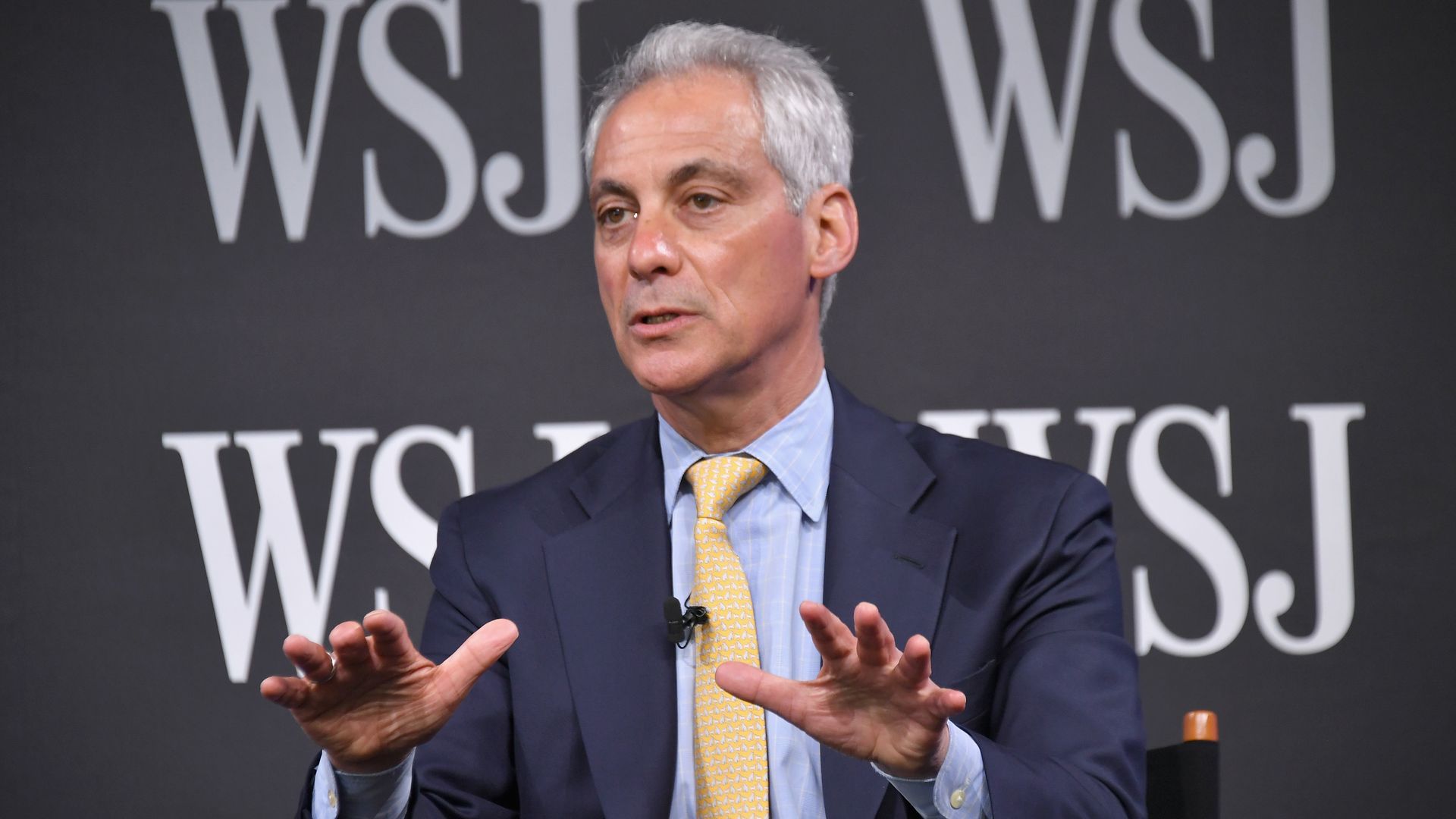
President Biden plans to nominate Rahm Emanuel, former President Obama's chief of staff, as U.S. ambassador to Japan, the Financial Times first reported and Axios has confirmed.
The state of play: Biden plans to announce the nomination later this month, along with a slew of other ambassadorship nominations, per FT.
Russian President Vladimir Putin on Tuesday ordered the Russian Federal Service of National Guard Troops to start working on new gun regulations following a school shooting that left at least eight people dead, according to the Kremlin.
Driving the news: A gunman on Tuesday morning attacked a school in the city of Kazan and killed seven students and one teacher, while leaving 21 other people hospitalized, AP reports.
Queen Elizabeth II laid out the U.K. government's agenda at the State Opening of Parliament on Tuesday, marking the first Queen's Speech since the pandemic began and her first major public appearance since the death of her husband, Prince Philip.
Why it matters: In a pared-back ceremony, the queen set out Prime Minister Boris Johnson's vision for recovering from a pandemic that inflicted the worst death toll in Europe and worst recession in 300 years.
China's population increased 72 million over the past 10 years to 1.41 billion in 2020, with an annual average growth rate of 0.53%, data published by the country's National Bureau of Statistics Tuesday shows.
Why it matters: It's the slowest population growth for over half a century. The birth rate also dropped for the fourth consecutive year in 2020, with 12 million babies born, raising the prospect of a "demographic crisis that could stunt growth in the world’s second-largest economy," per the New York Times.
New foreign-agent filings are finally detailing a massive Beijing propaganda operation that's fueled a sixfold increase in disclosed Chinese foreign influence efforts in the United States in recent years.
Why it matters: Propaganda is central to China fulfilling its geopolitical aspirations, and its efforts to sow discord and disinformation in the U.S. have very real consequences for the American business, political and social climates.