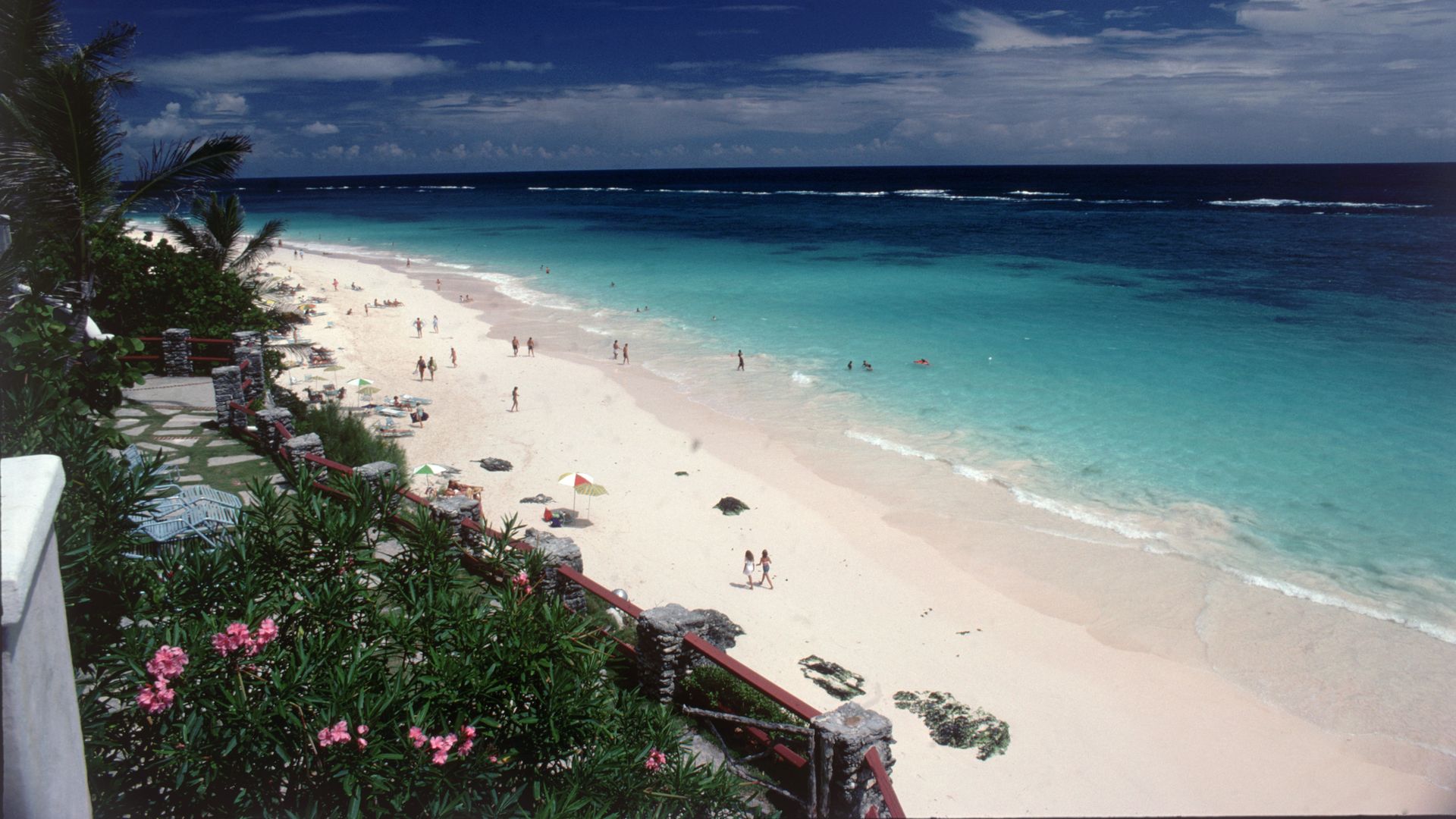
The CDC has lifted its coronavirus warning against nonessential travel to Bermuda, as the island ramps up a scheme to attract foreign workers on year-long residencies and marks 57 days with no detected community spread.
Driving the news: Over half of the British Overseas Territory's population has been tested for COVID-19 since on-island capabilities were set up on March 17. Premier David Burt told Axios the strict testing has left him "confident that we are going to be able to catch any clusters before they spread."
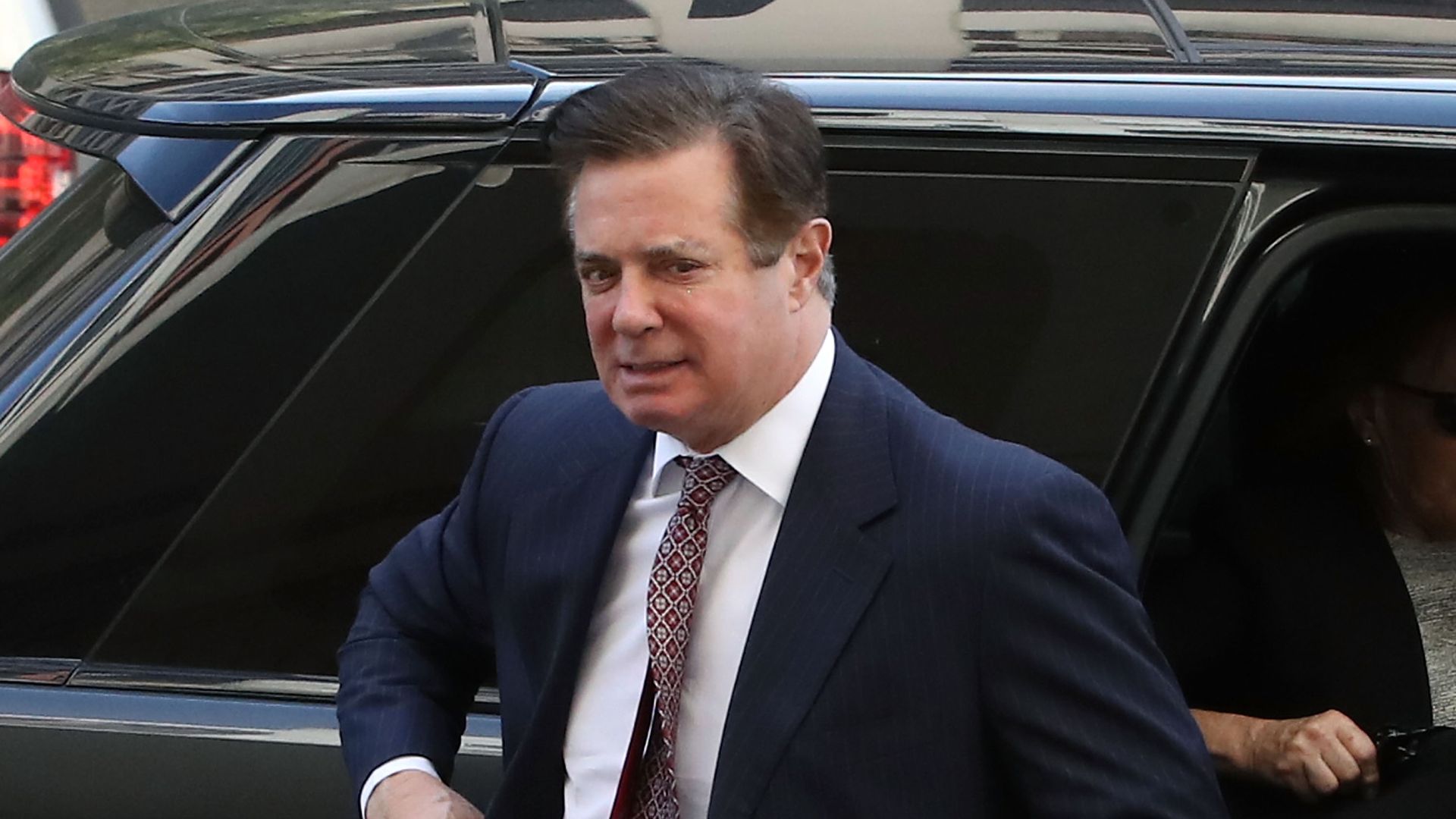
The Senate Intelligence Committee on Tuesday released the fifth and final volume of its report on Russian interference in the 2016 election, which details "counterintelligence threats and vulnerabilities."
Why it matters: The bipartisan, 966-page report goes further than the Mueller report in showing the extent of Russia's connections to members of the Trump campaign, and how the Kremlin was able to take advantage of the transition team's inexperience to gain access to sensitive information.
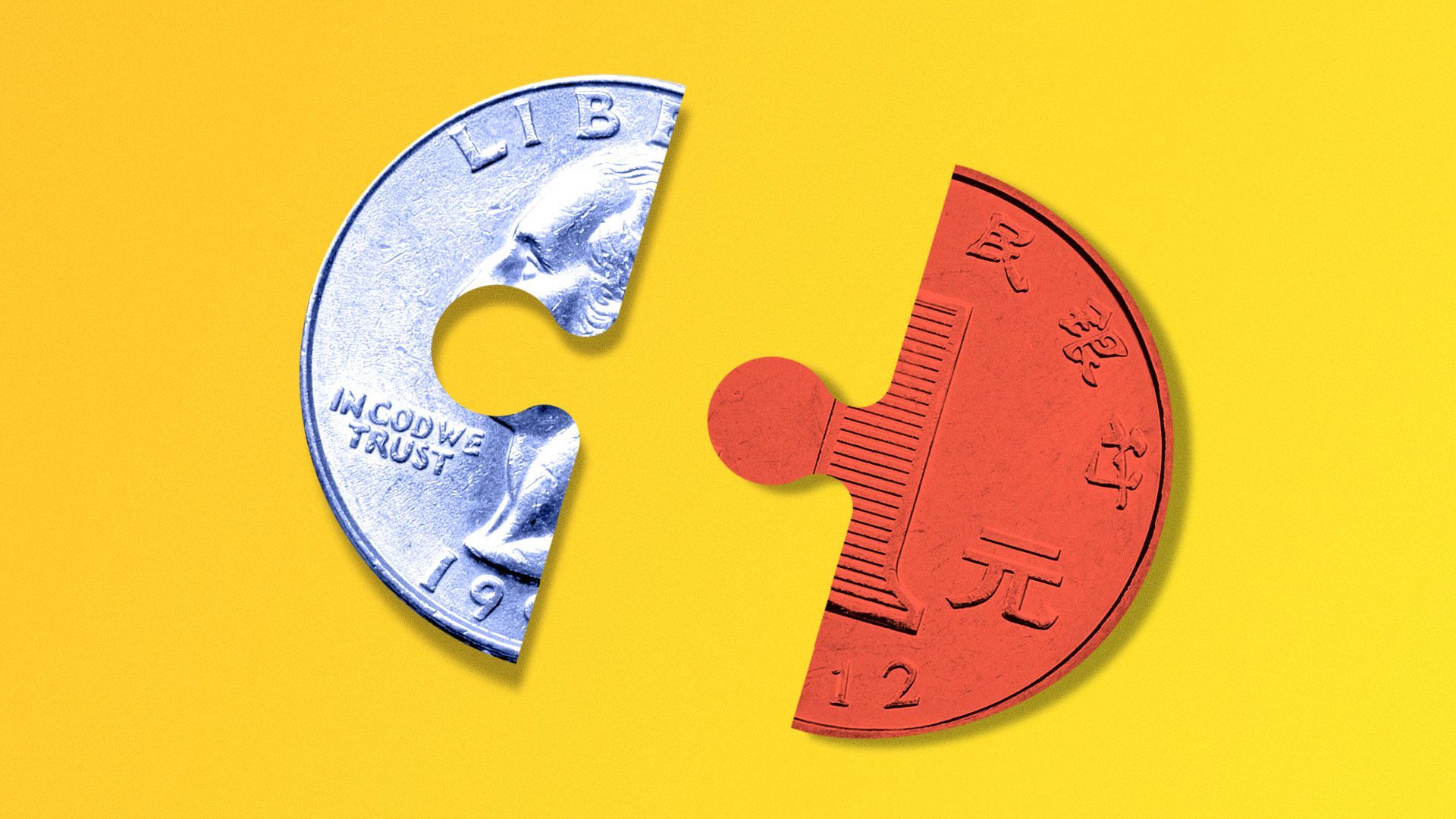
Trade is the last major area where the U.S. is still relying on traditional diplomacy to work through problems with China.
Why it matters: U.S.-China relations are at their lowest point in decades, as both sides have taken an increasingly harder line over Hong Kong, Xinjiang, the South China Sea and other issues. The desire to keep the trade deal alive seems to be keeping the relationship from unraveling entirely.
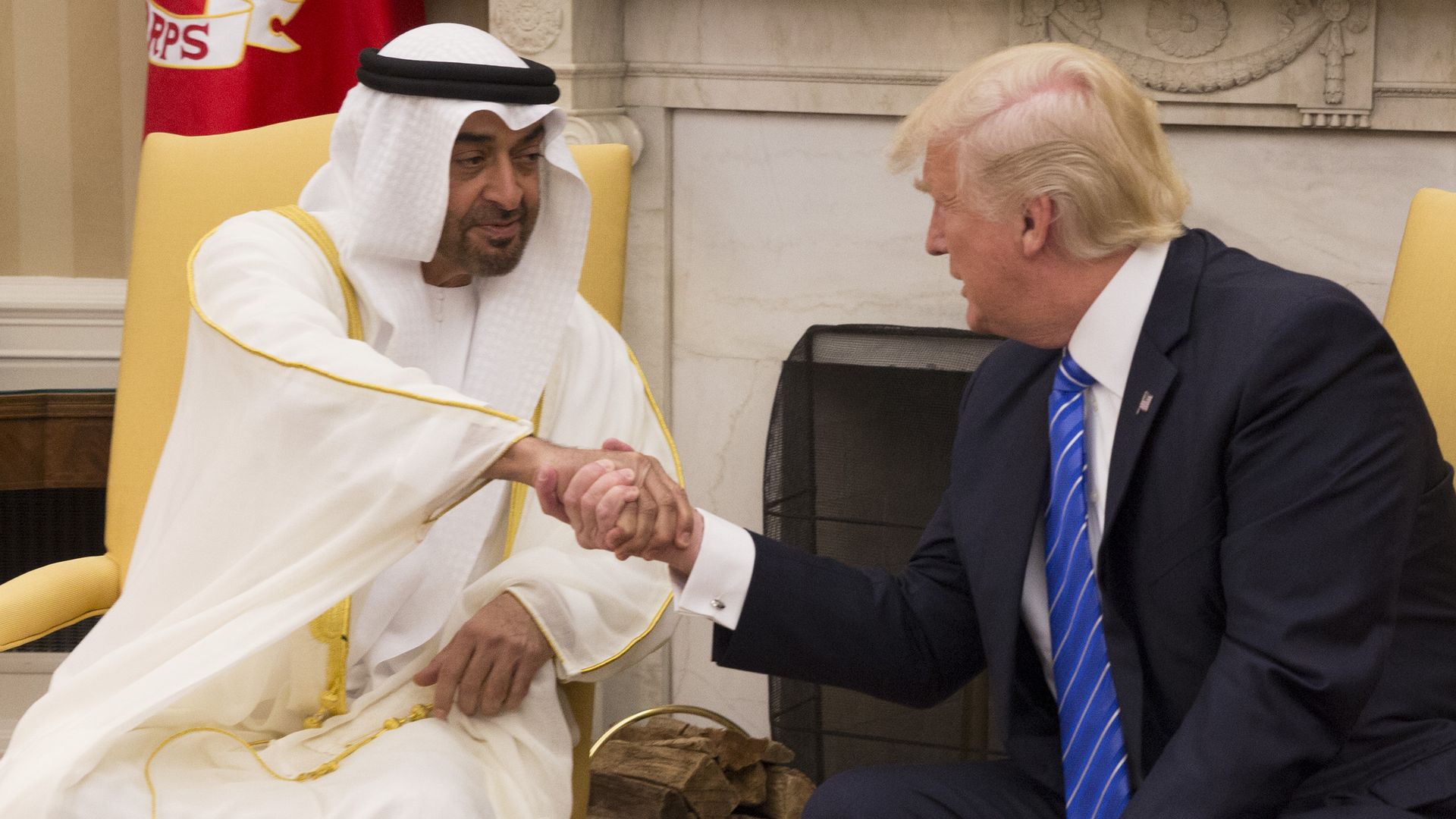
Israeli Prime Minister Benjamin Netanyahu has denied reports that he gave the Trump administration a green light to sell F-35 fighter jets to the UAE as part of a normalization deal announced last Thursday.
Why it matters: U.S. law requires the administration to consult with Israel before selling arms to any Arab country to ensure Israel can maintain its qualitative military edge. It must also report to Congress on the matter.
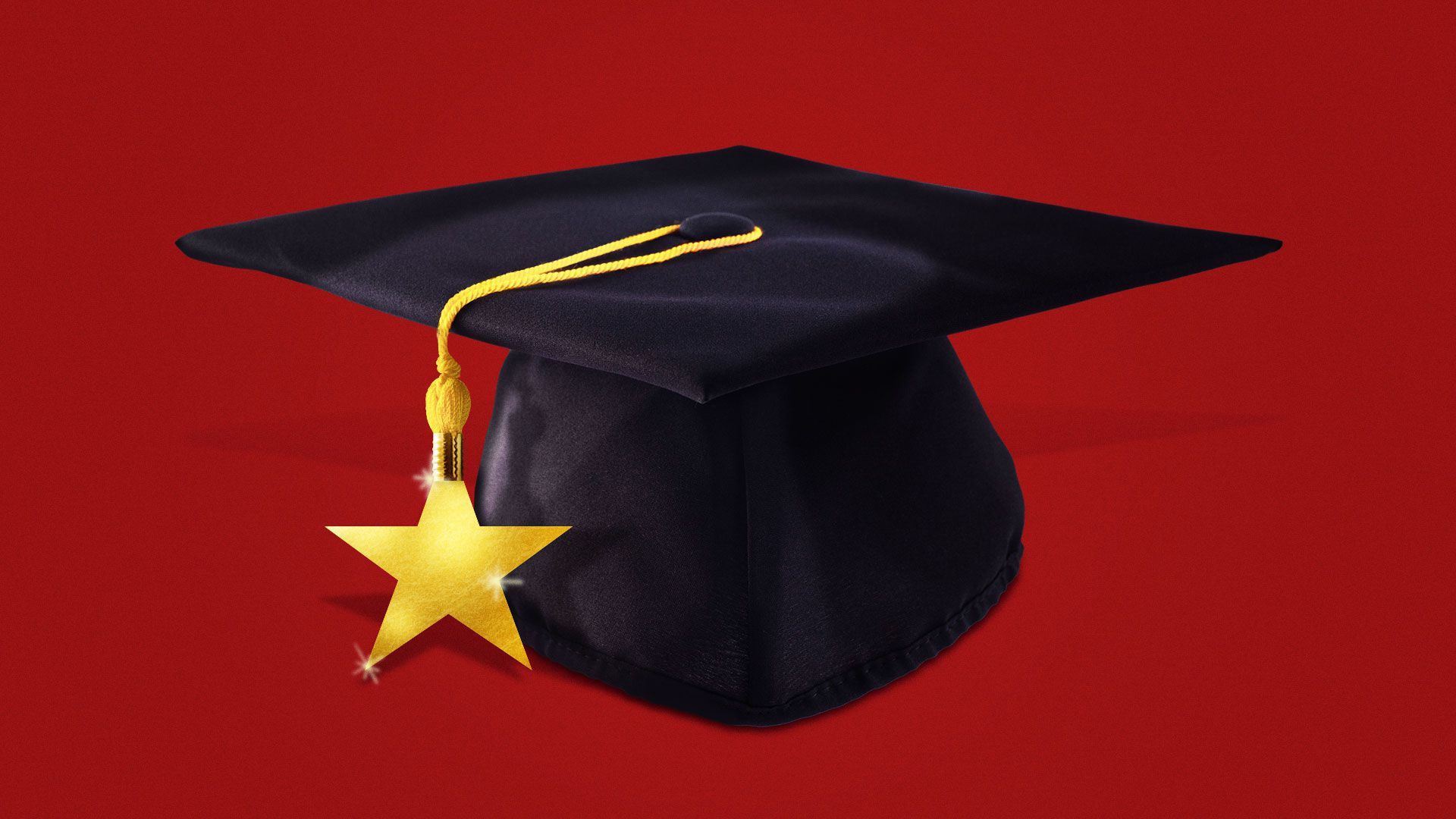
In 2017, the University of Illinois at Urbana-Champaign took out an insurance policy to cover the $60 million in tuition that Chinese students paid to the university, in case an unforeseen event precipitated a sudden drop in Chinese student enrollment.
Why it matters: School administrators recognized the risks associated with becoming overly reliant on student tuition from a single foreign country — and amid a global pandemic, their fears have proved justified.
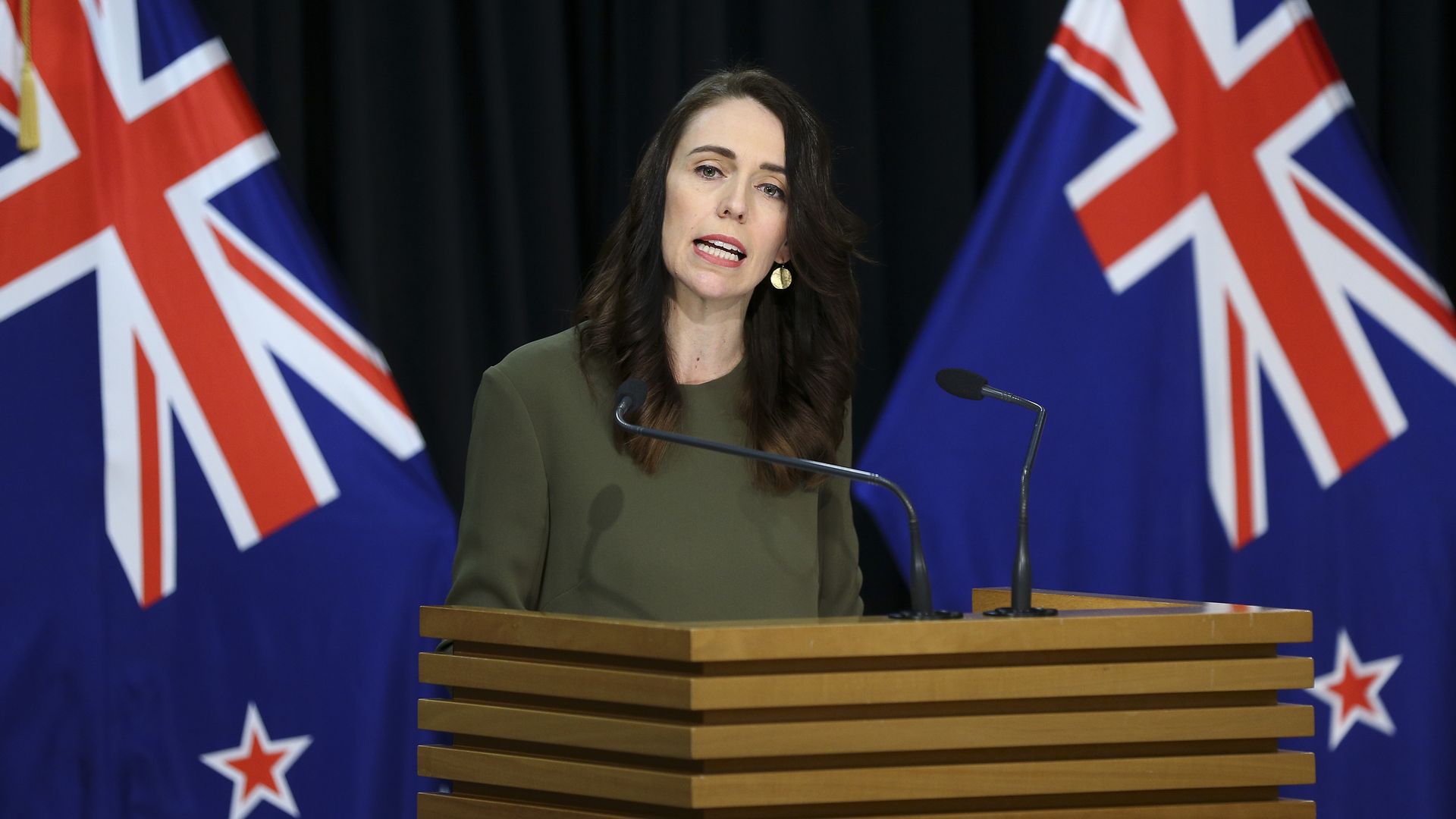
Prime Minister Jacinda Ardern on Tuesday rejected President Trump's comments on New Zealand's growing number of coronavirus cases since COVID-19 was detected in the community for the first time in 102 days last week.
Driving the news: Trump said Monday when New Zealand "beat" the virus, "it was like front page, they beat it because they wanted to show me something." "The problem is big surge in New Zealand. It's terrible. We don't want that." But Ardern said there's "no comparison between New Zealand’s current cluster and the tens of thousands of cases being seen in the United States."
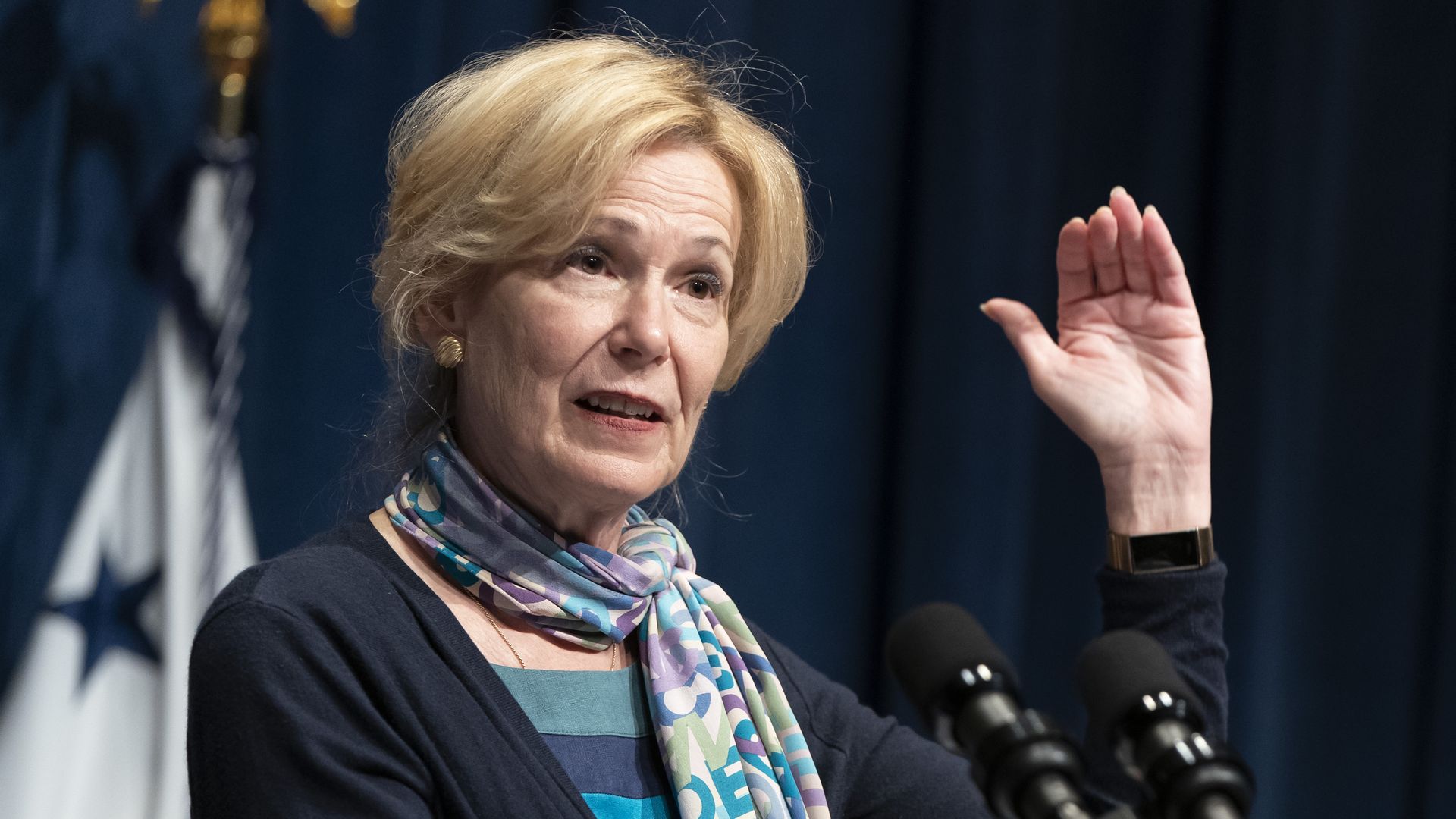
Deborah Birx, the White House's coronavirus response coordinator, told reporters Monday she would have liked to have seen the U.S. introduce stricter restrictions like Italy did to prevent the spread of COVID-19.
What she's saying: "I wish that when we went into lockdown, we looked like Italy," she said. "When Italy locked down, I mean, people weren't allowed out of their houses, they couldn't come out but once every two weeks to buy groceries for one hour and they had to have a certificate that said they were allowed. Americans don't react well to that kind of prohibition."
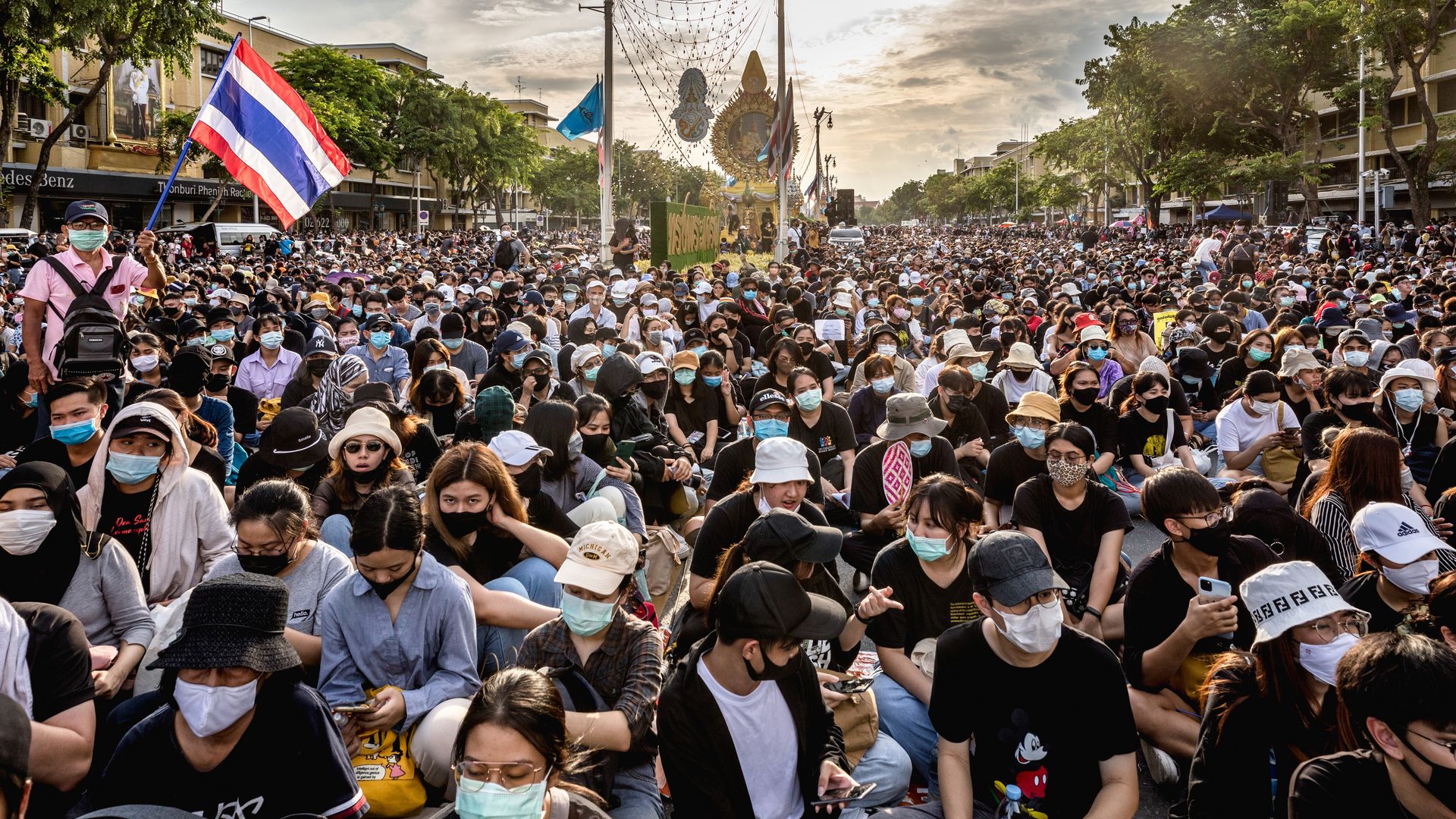
Upwards of 20,000 people took part Sunday in Thailand's biggest protests in years, demanding the dissolution of parliament and a new constitution.
Why it matters: The protesters are targeting not only Thailand's prime minister, who took power in a 2014 coup, but the monarchy, which has historically been shielded from criticism.
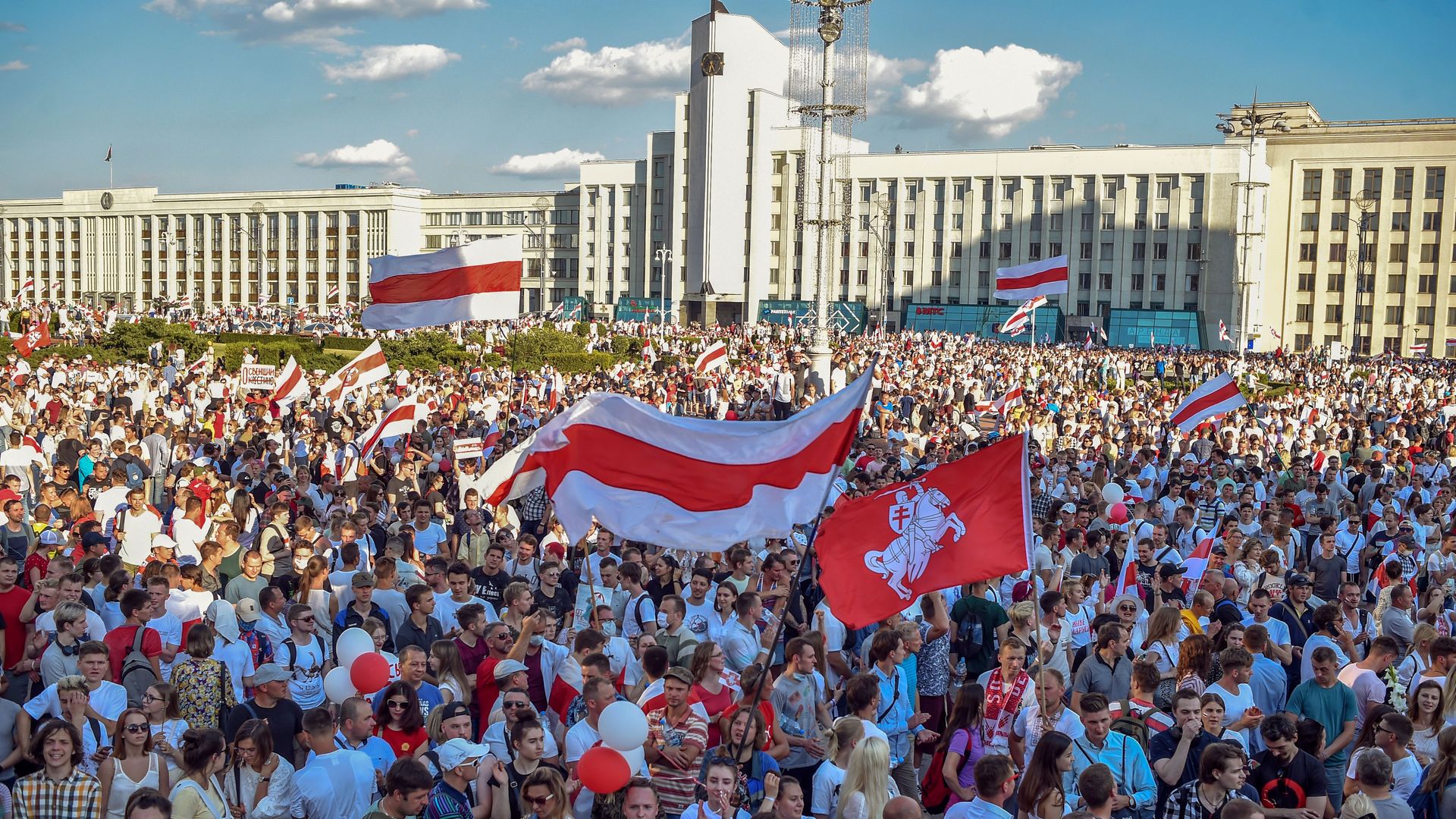
The man who has ruled Belarus for 26 years growled today that protesters demanding new elections would have to kill him first, while his would-be successor announced she was prepared to take charge.
Why it matters: Aleksandr Lukashenko has never before appeared so weak — but he still has a fearsome security apparatus behind him, and a global power watching from the east.
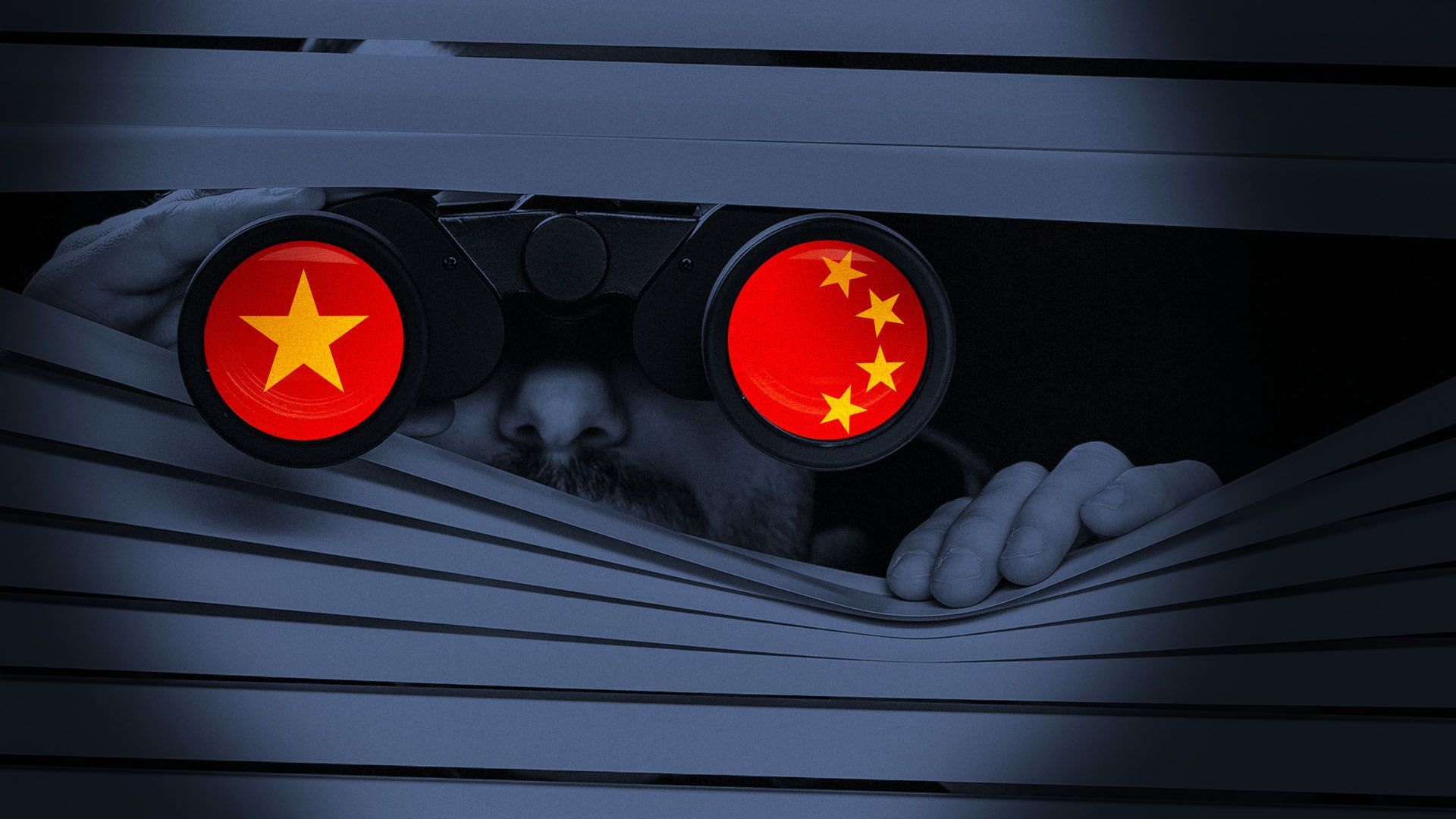
Former CIA officer Alexander Yuk Ching Ma has been arrested and charged with allegedly sharing classified information with China, the Justice Department announced Monday.
Our thought bubble, via Axios China reporter Bethany Allen-Ebrahimian: No one should underestimate China’s intelligence services. In the past decade, the efforts of Chinese intelligence to identify as many individual CIA personnel as possible have paid off, resulting in the decommissioning of dozens of CIA assets in China.
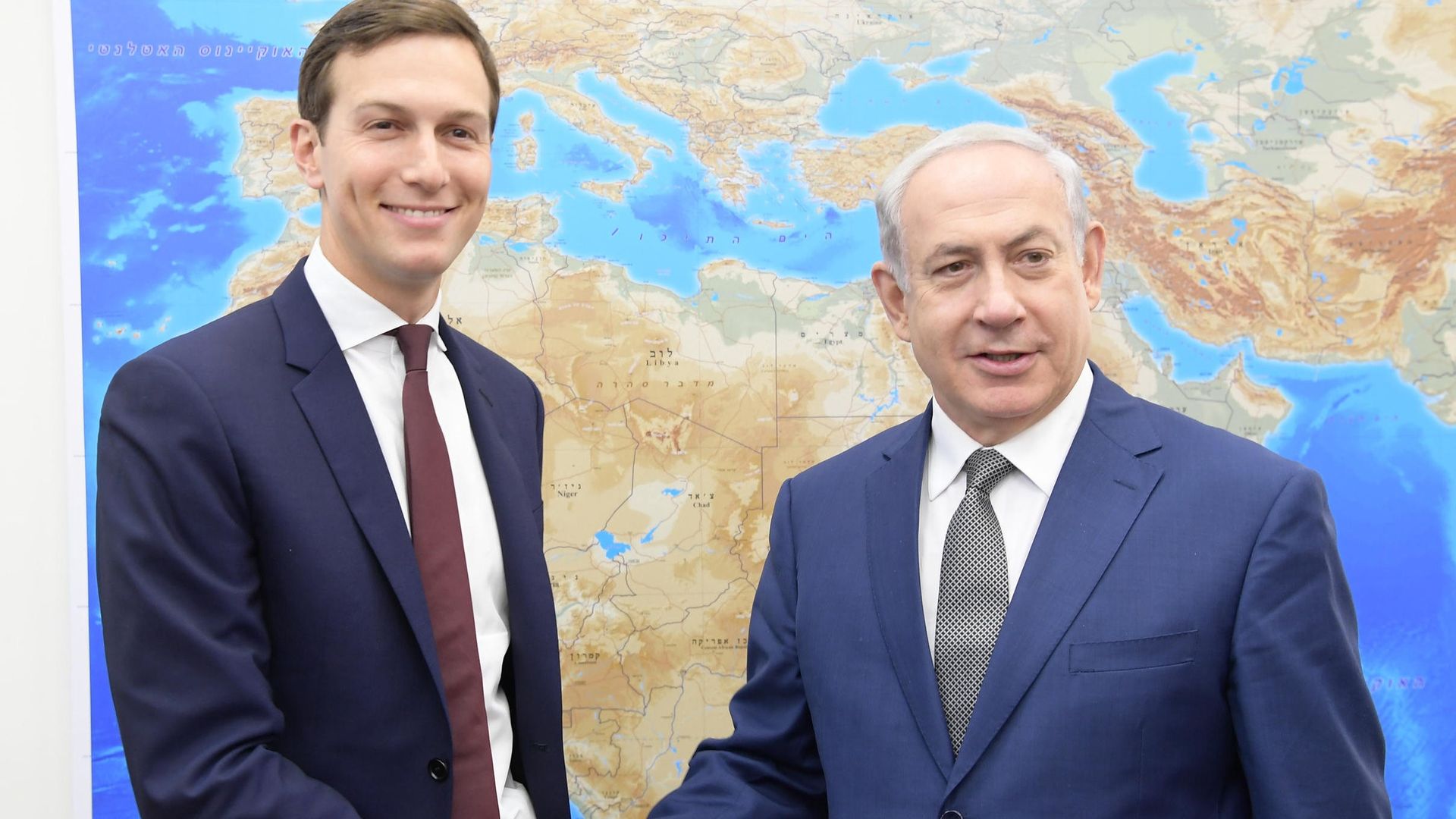
Israeli Prime Minister Benjamin Netanyahu has assured the U.S. he won't move forward with annexation in the West Bank without White House consent, and “we are not going to give him such consent for some time," Jared Kushner told reporters today.
Why it matters: Netanyahu agreed to suspend his annexation plans in order to strike a normalization deal with the United Arab Emirates, but stressed afterwards that the suspension was temporary.
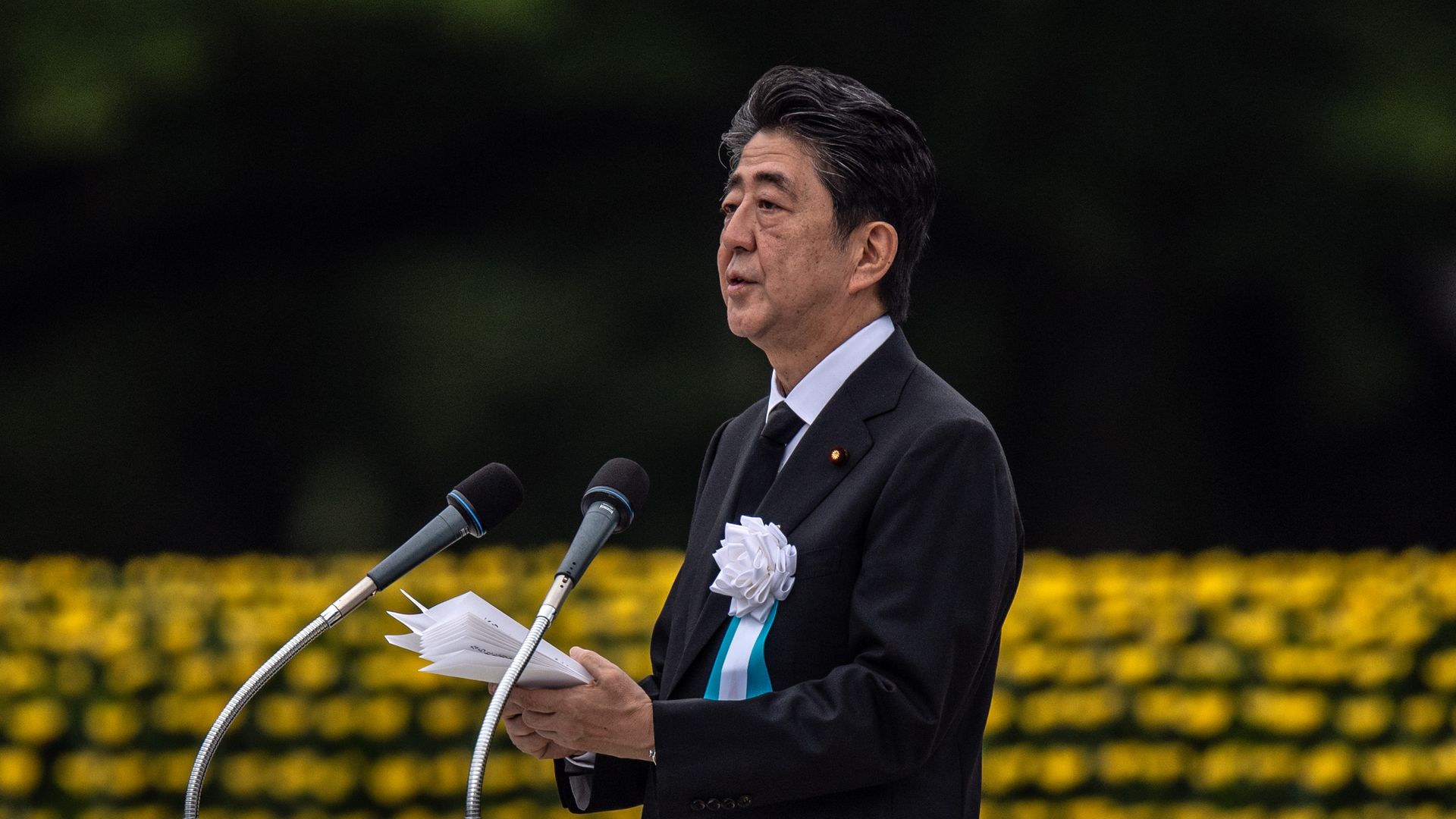
Japan's Prime Minister Shinzo Abe underwent a medical examination in a Tokyo hospital Monday after a top official expressed concern he was fatigued from his workload during the pandemic, Reuters reports.
The big picture: Officials told Japanese media Abe was going for a routine checkup. His visit coincided with new data showing Japan suffered its worst decline on record, with the economy shrinking at an annual rate of 27.8% from April to June and GDP falling 7.8%. Economic activity ground to "a near halt" in April and May, when Abe had declared a state of emergency over the coronavirus outbreak, per the New York Times. Abe has "worked nearly continuously" since the pandemic began, the Wall Street Journal notes.
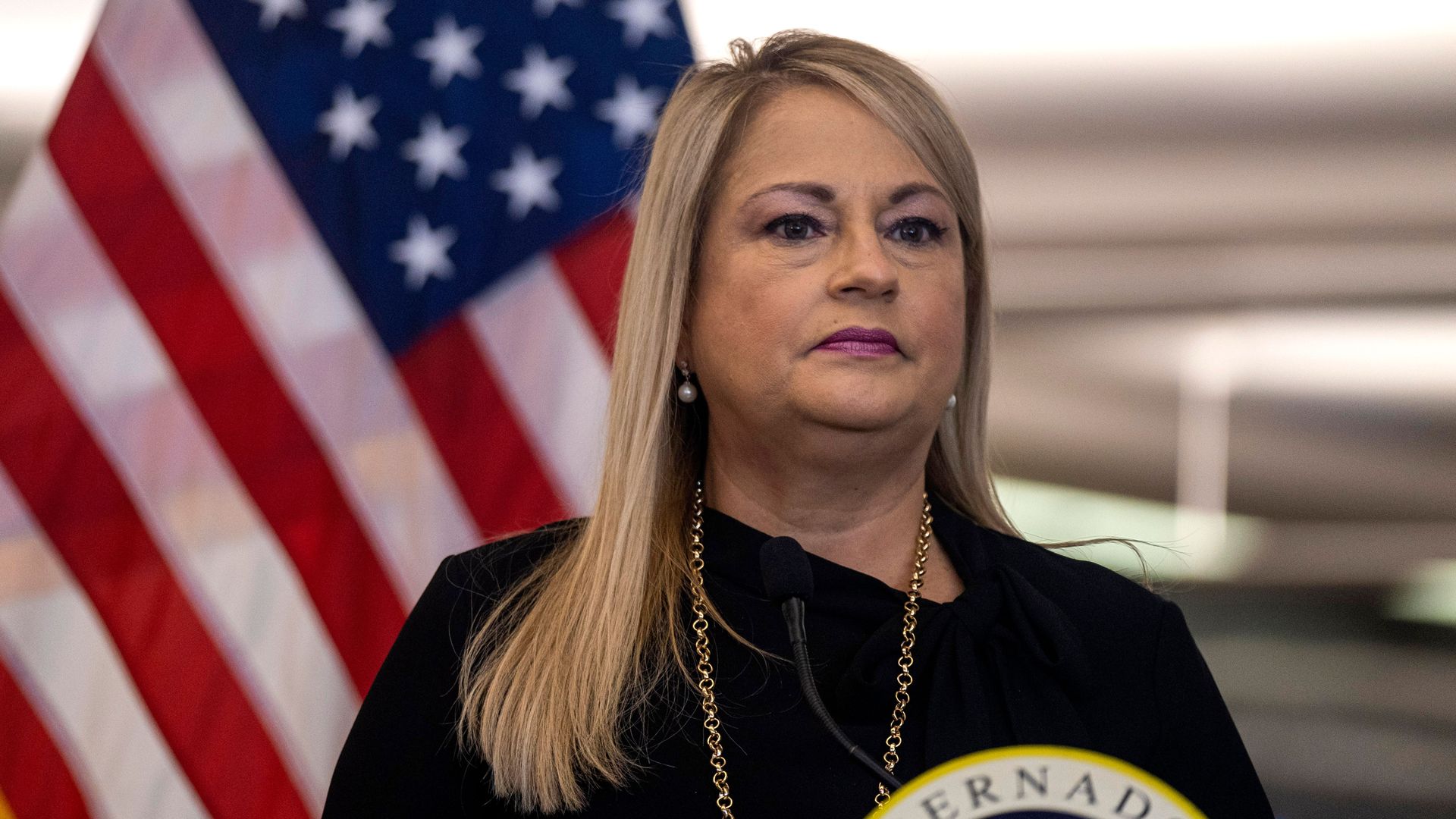
Puerto Rico Gov. Wanda Vázquez conceded Sunday losing the primary of her pro-statehood party to Pedro Pierluisi after a second round of voting, per AP.
The big picture: Primary voting in Puerto Rico was partially suspended earlier this month due to a lack of ballots at voting centers. Pierluisi was briefly governor of the U.S. territory last year, after former Gov. Ricardo Rosselló stepped down following an investigation by Puerto Rico's House of Representatives that found five impeachable offenses against him. Vázquez will stay on as governor "until the winner of Puerto Rico's Nov. 3 general elections takes office," AP notes.