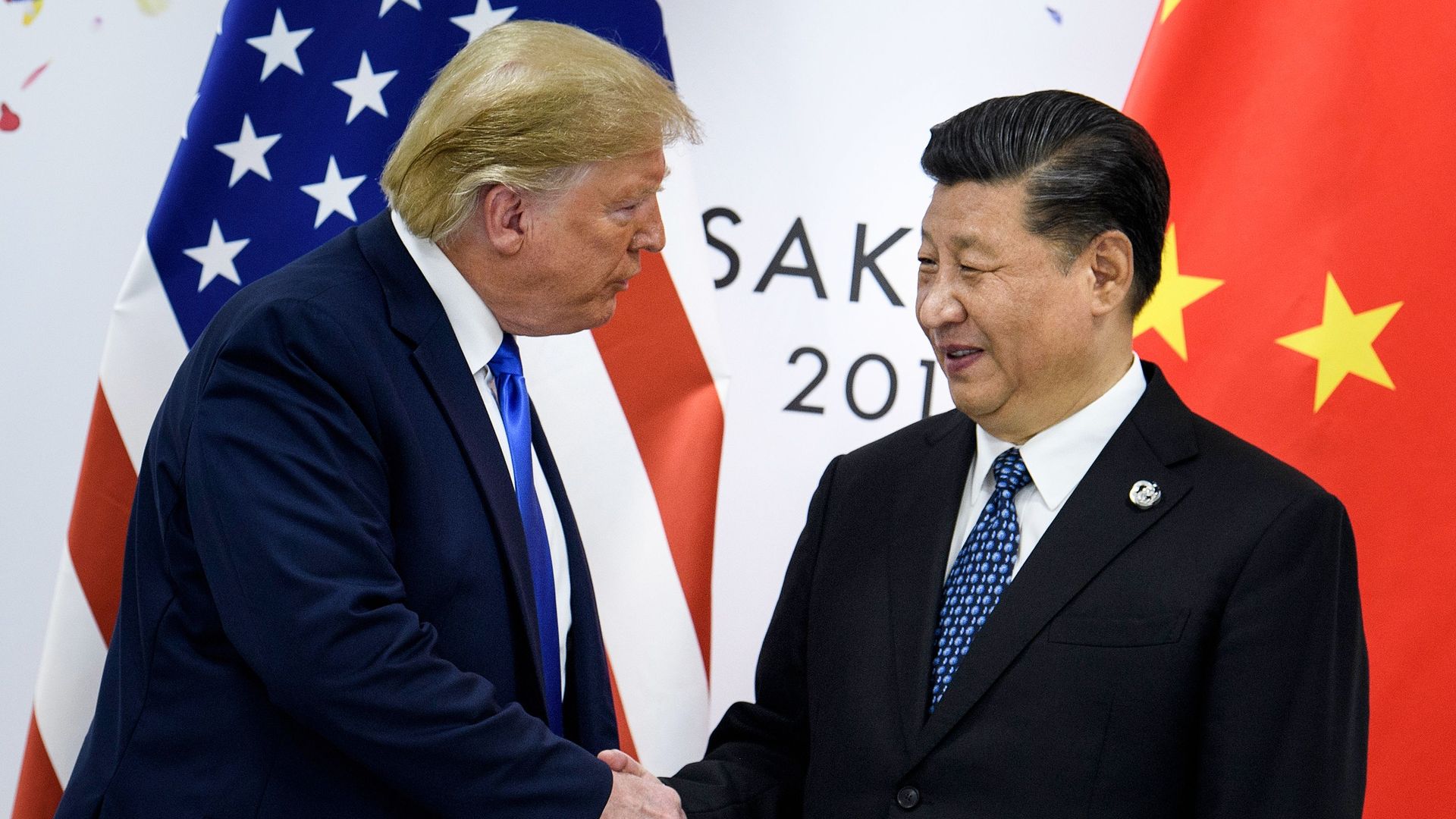
The Treasury Department announced Monday that China will no longer be designated as a currency manipulator, just two days before President Trump and Vice Premier Liu He are set to sign "phase one" of a long-awaited trade deal, CNBC reports.
Why it matters, per Axios' Felix Salmon: China never fit the textbook definition of being a currency manipulator. The decision to apply the label was a political one — as was the decision to remove it.
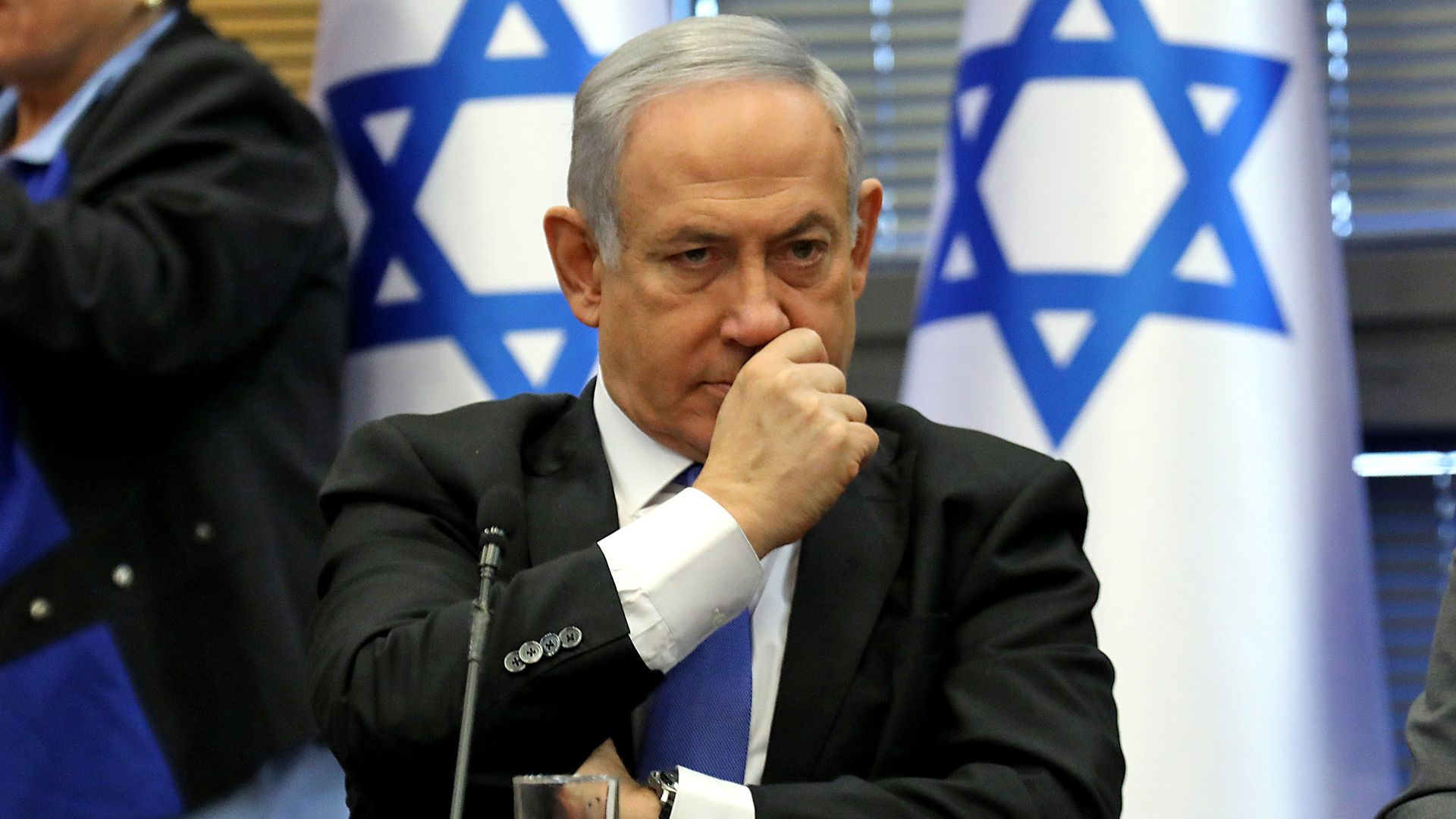
Israeli Prime Minister Benjamin Netanyahu had a very bad political day.
Driving the news: Less than 50 days before Israel's third elections in a year, three new political developments will make his efforts to get re-elected much harder.
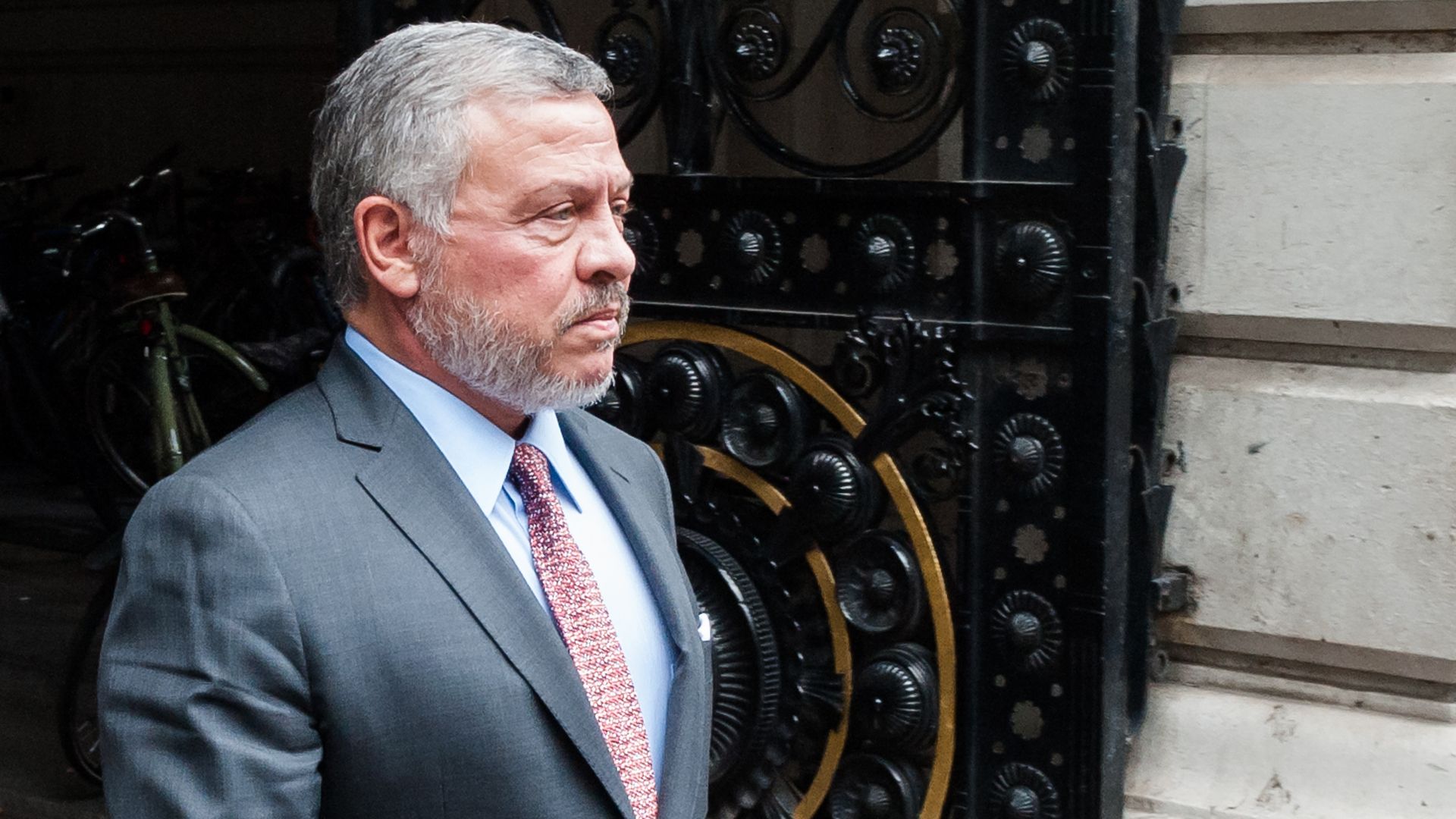
Jordan's King Abdullah II said in an interview with France 24 that he thinks President Trump will present his Israeli-Palestinian peace plan soon, stressing that he hopes it will allow his country and the rest of the international community to see "the glass half full."
Why it matters: The king’s remarks signal a shift in his rhetoric regarding the U.S. peace plan. In the last several months, the king and other Jordanian officials raised concerns about the plan both in private and in public — and even said they don’t want the White House to present it.
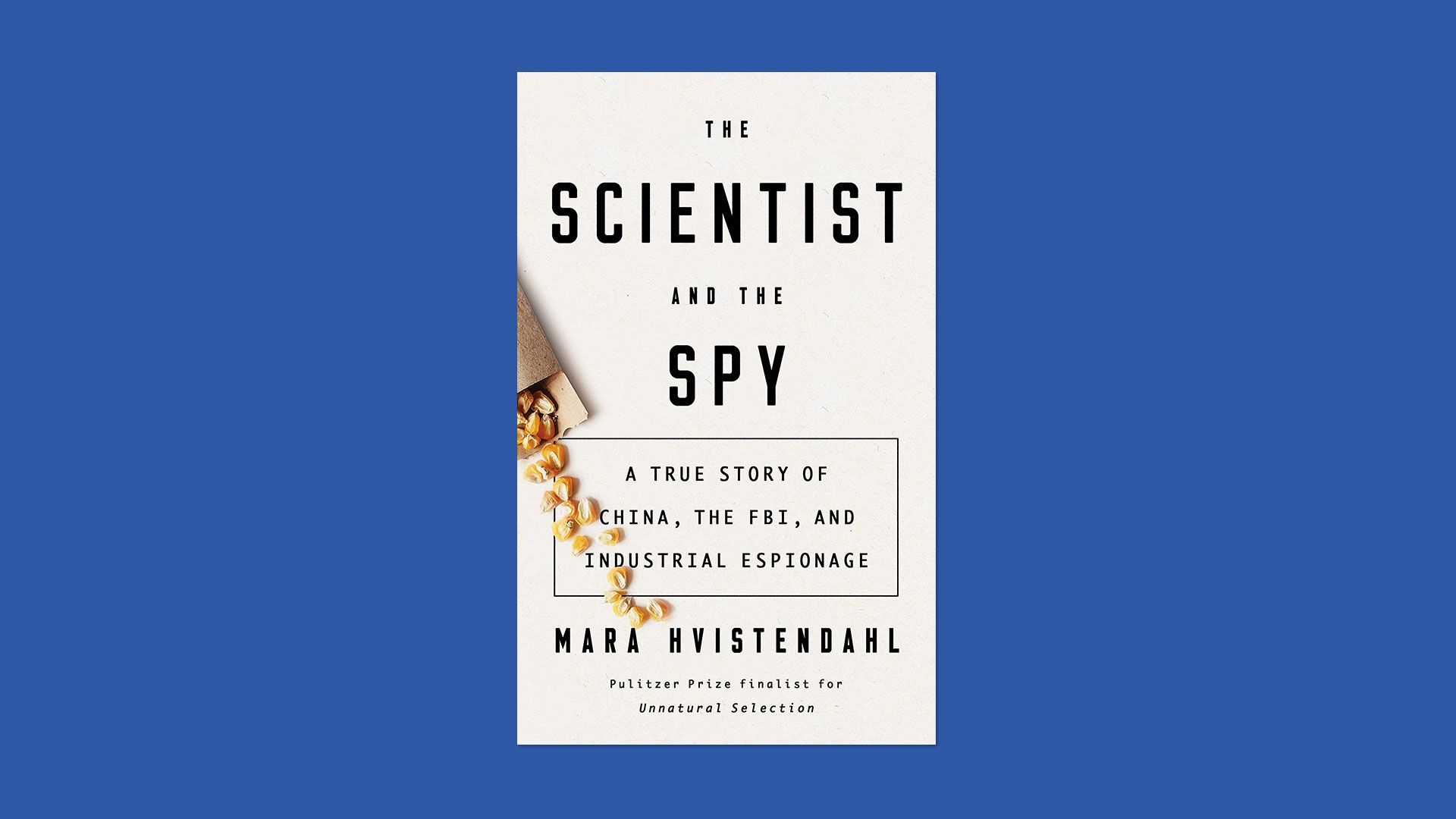
In 1967, at the height of the Cold War, the FBI began collecting information on thousands of Chinese scientists and students in cities across the U.S. The Scientist and the Spy, a book publishing in February, reveals the existence of this former program for the first time.
Why it matters: Recent FBI indictments and investigations, targeting Chinese researchers in the U.S. and aimed at stemming the unauthorized flow of science and tech secrets to China, have raised fears among Chinese-Americans that another period of racially tinged suspicion is upon them.
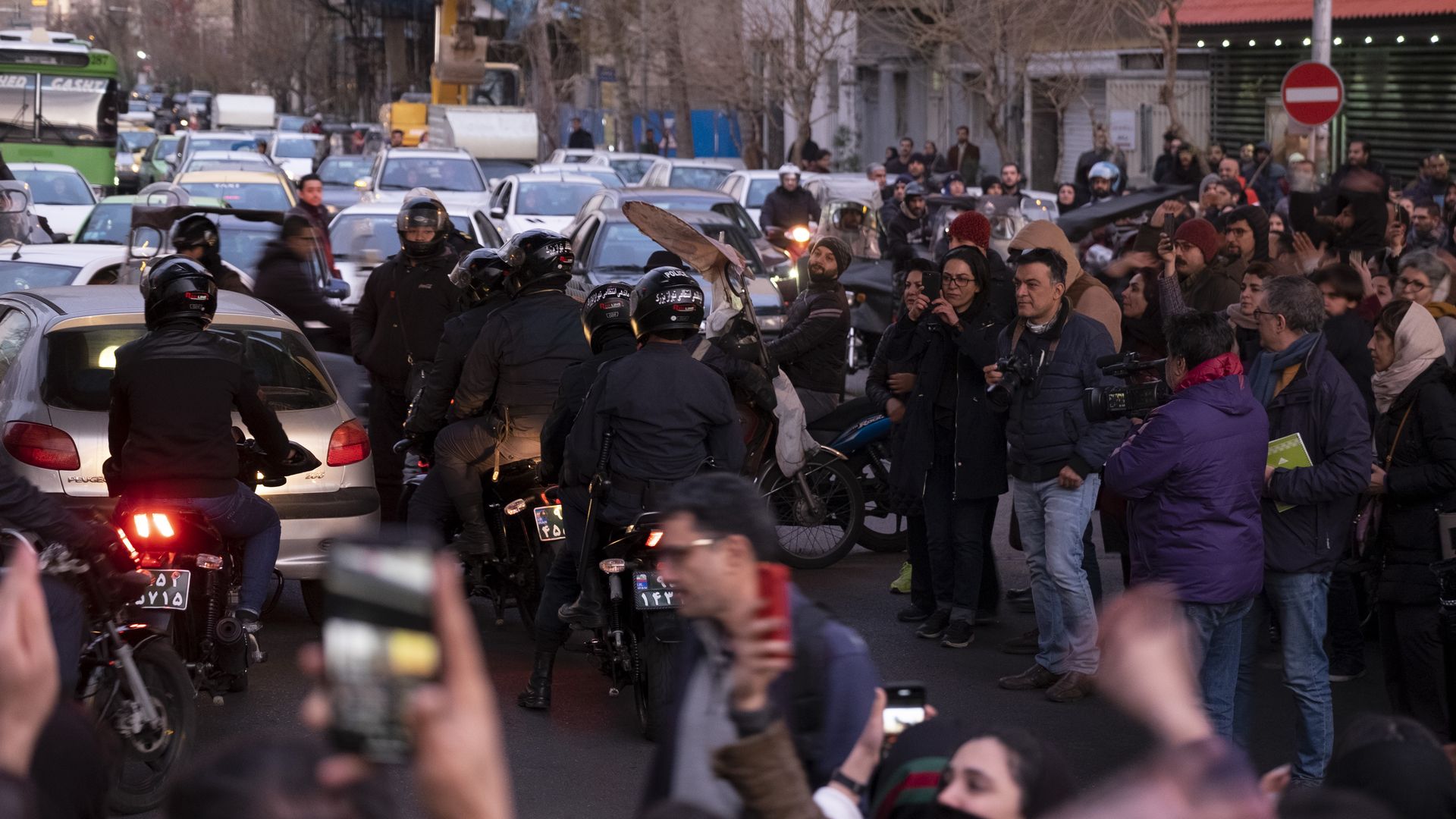
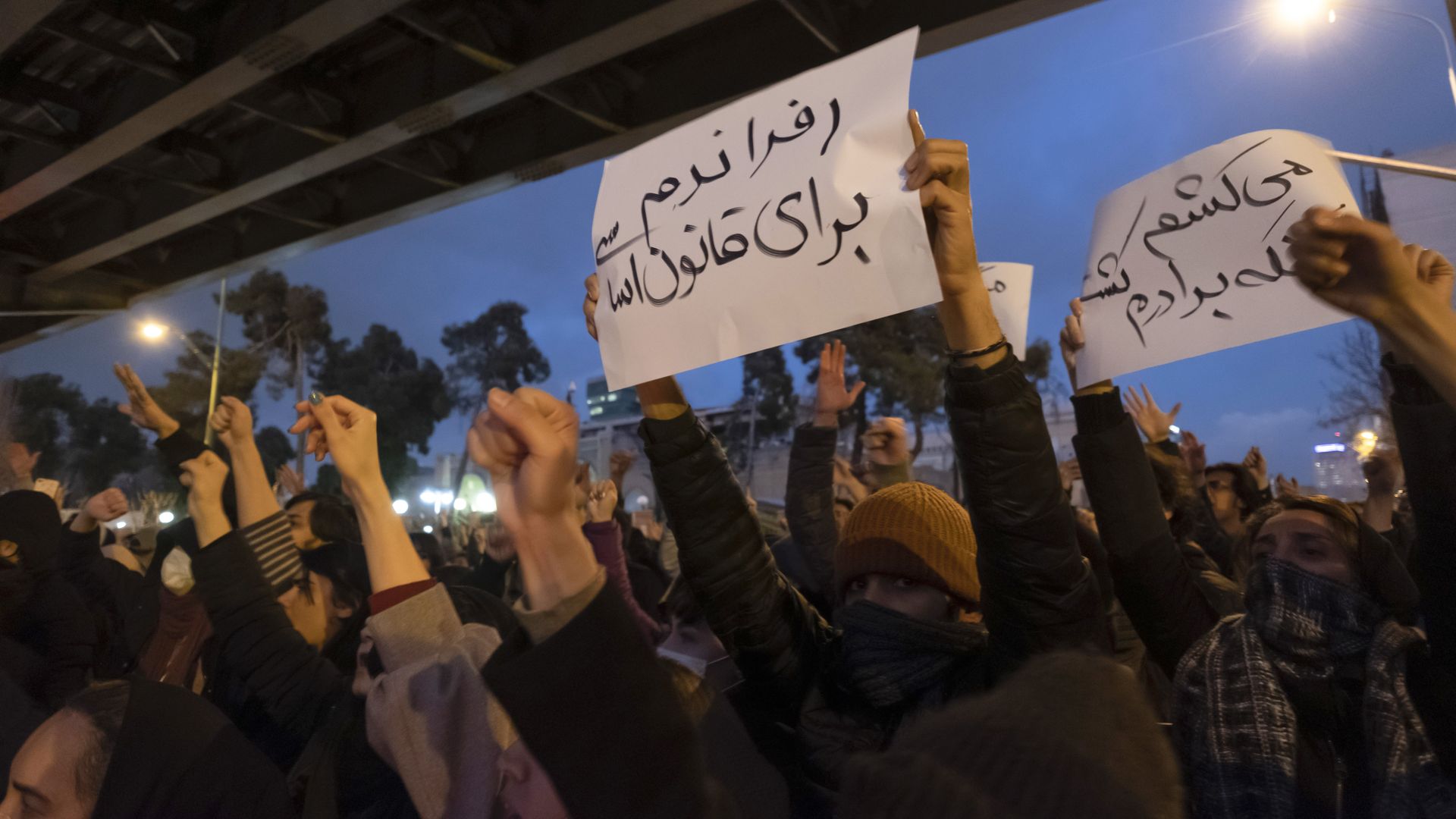
Iranian protesters have taken to the streets for a second day, calling for Supreme Leader Ayatollah Ali Khamenei's resignation after the government admitted to accidentally shooting down a Ukrainian passenger plane, killing all 176 people on board, Reuters reports.
The latest: Security forces used tear gas, rubber bullets and live ammunition to break up protests in Tehran on Sunday, per the New York Times, which notes demonstrations have spread to other cities across the country.
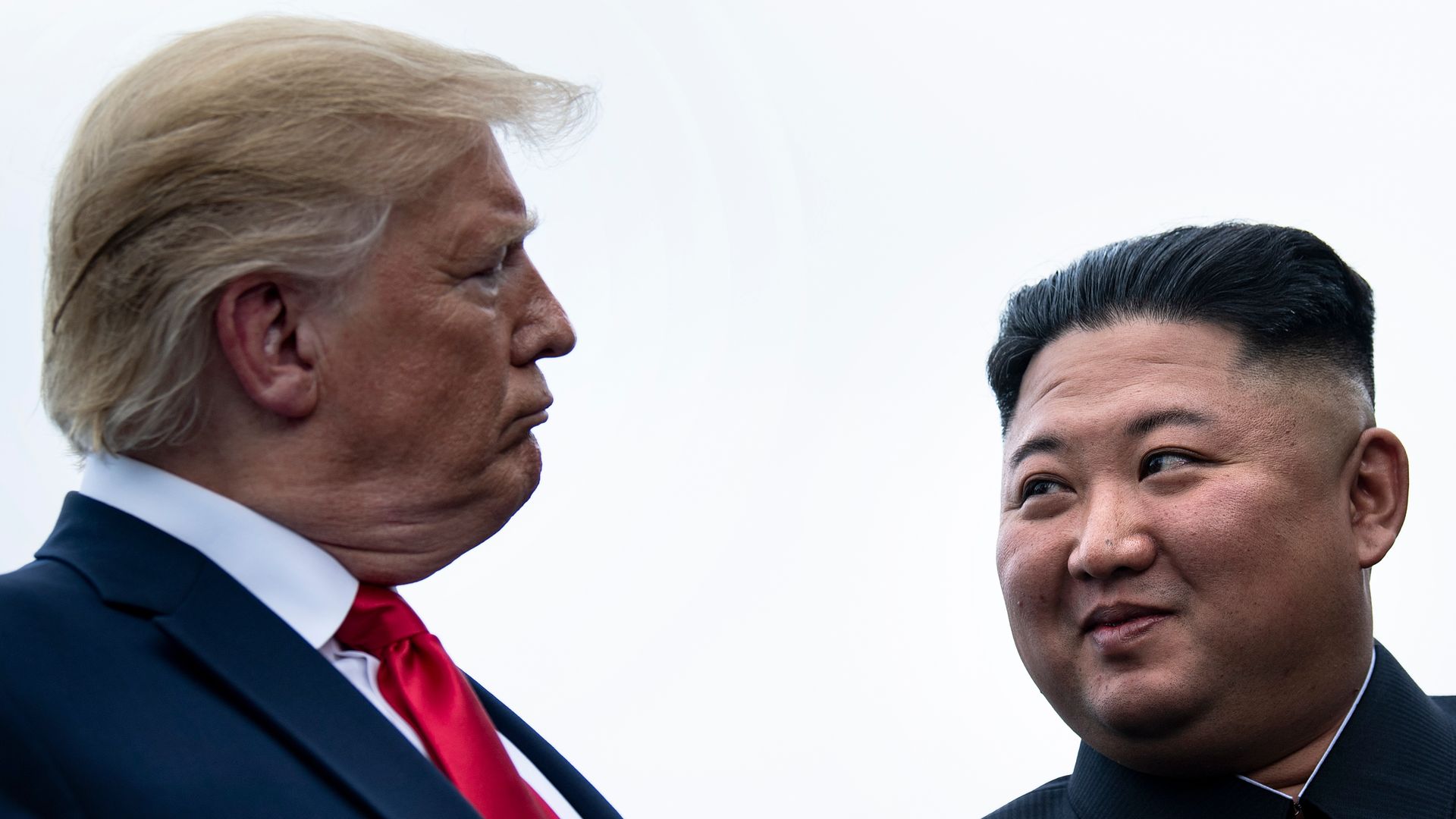
White House national security adviser Robert O'Brien tells Axios that the Trump administration has "reached out to the North Koreans" to ask them to resume diplomacy that has been all but dead since October.
Driving the news: O'Brien sat down with Axios at the Eisenhower Executive Office Building on Friday to talk about a range of national security challenges at the start of a new year.
Secretary of Defense Mark Esper told CBS News' "Face the Nation" Sunday that he "didn't see" specific evidence that Iran was targeting four U.S. embassies, as President Trump claimed in an interview with Fox News, but that he does share the president's overall concerns.
Why it matters: The controversy over Trump's comments reflects a broader mistrust over the administration's claims that there was intelligence showing Iranian Gen. Qasem Soleimani posed an "imminent" threat to U.S. forces.
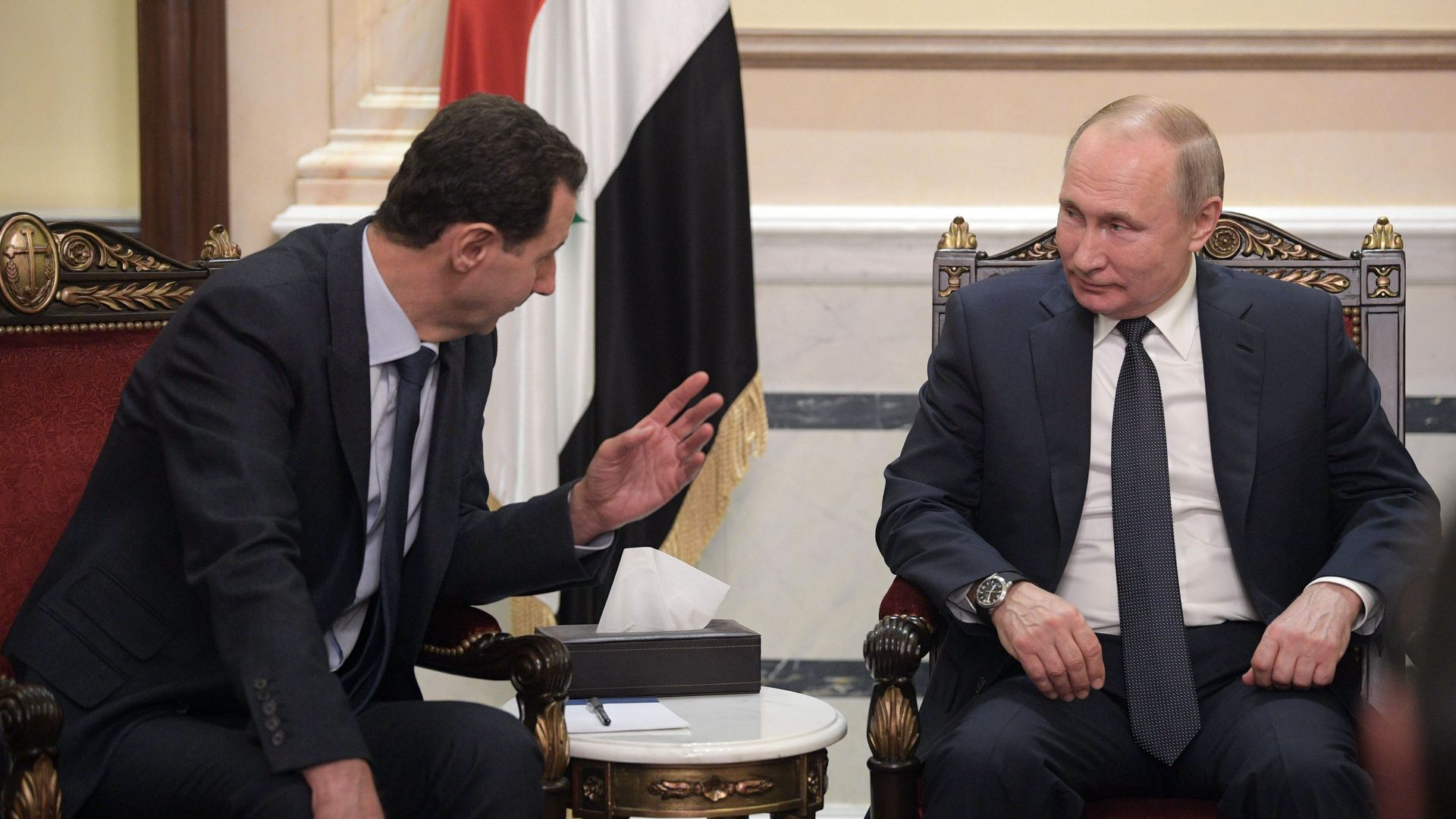
During his surprise visit to Syria last week, Russian President Vladimir Putin urged his Syrian counterpart, Bashar al-Assad, to invite President Trump to Damascus, according to a video of a short conversation between the two leaders aired Sunday on Russia-1 television channel.
What's happening: The video shows the leaders speaking to each other during a visit to the Orthodox Church of the Virgin Mary in Damascus. Assad tells Putin about the apostle Paul who became a Christian at the gate of Damascus and adds jokingly: "If Trump arrives along this road, everything will become normal with him too."
Sen. Mike Lee (R-Utah) said on CNN's "State of the Union" Sunday that the Trump administration did not brief him and other members of Congress that Iran was allegedly plotting attacks on four U.S. embassies, as President Trump claimed in an interview with Fox News on Friday.
Why it matters: The administration has come under fire for declining to provide specifics about the nature of the "imminent" threat that prompted the president to order the killing of Iranian Gen. Qasem Soleimani.
Iranian riot police and members of the Islamic Revolutionary Guard Corps were out in force Sunday as mass protests continued over the downing of a Ukrainian commercial jet, with demonstrators mourning the 176 victims and demanding the resignations of top government officials, AP reports.
Why it matters: Human rights groups believe Iran killed hundreds of protestors in November when demonstrations over increased oil prices broke out.
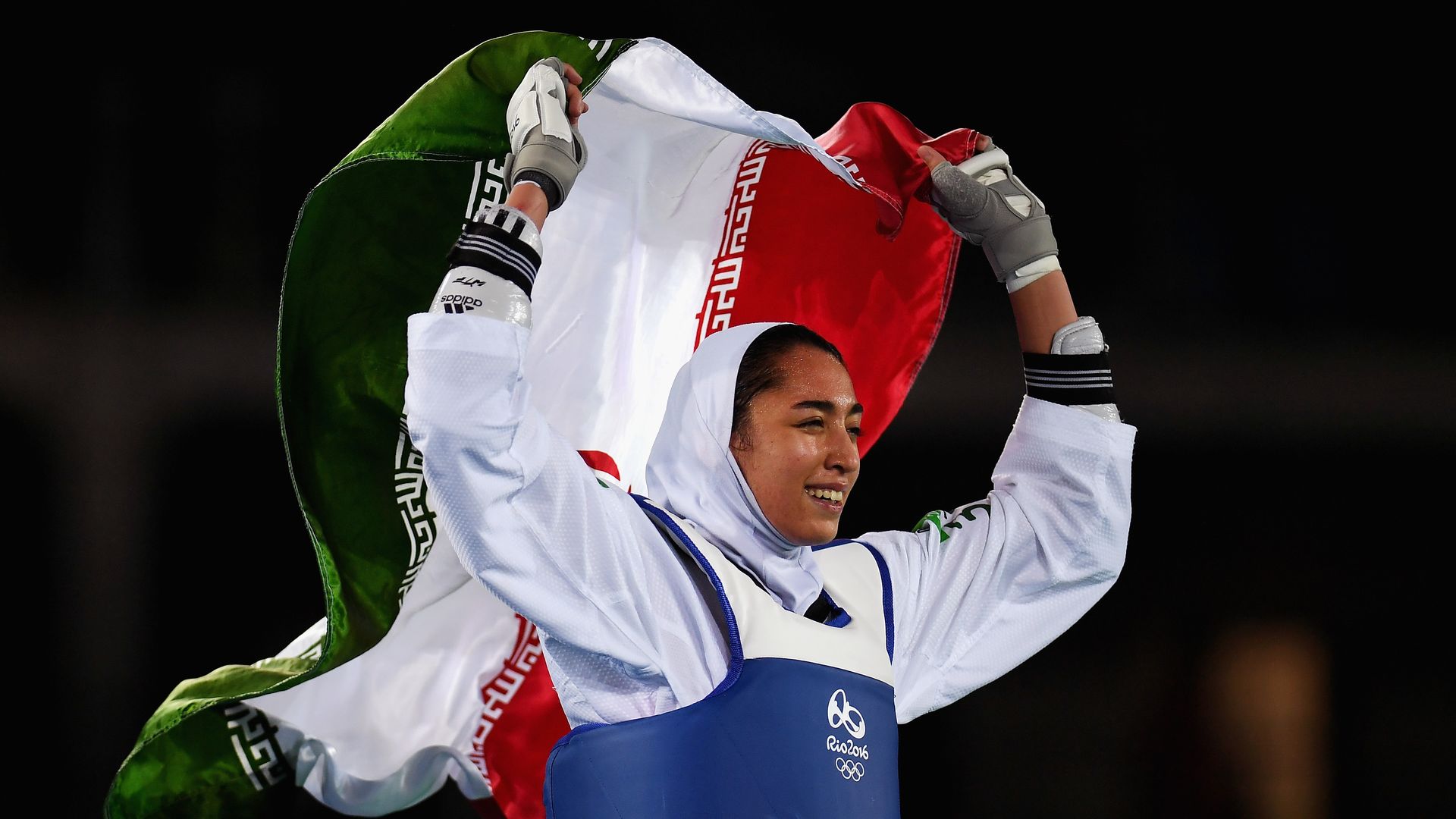
Kimia Alizadeh, the first and only Iranian woman to win an Olympic medal, announced on Instagram Saturday that she has permanently left her home country, condemning the Iranian government for its "corruption and lies."
What she's saying: The 21-year-old Alizadeh, who won the bronze medal in taekwondo at the 2016 Summer Olympics in Rio, said she would always remain a "daughter of Iran," but that she could no longer sit at the regime's "table of hypocrisy, lies, injustice and flattery," according to a CNN translation.
56% of Americans say they disapprove of President Trump's handling of heightened tensions with Iran, according to an ABC News poll conducted by Ipsos Public Affairs.
Why it matters: 52% of Americans said the Trump administration's decision to kill Iranian Gen. Qasem Soleimani in an airstrike makes them feel "less safe," despite assurances from Secretary of State Mike Pompeo and other top officials that the U.S. is safer with Soleimani gone.
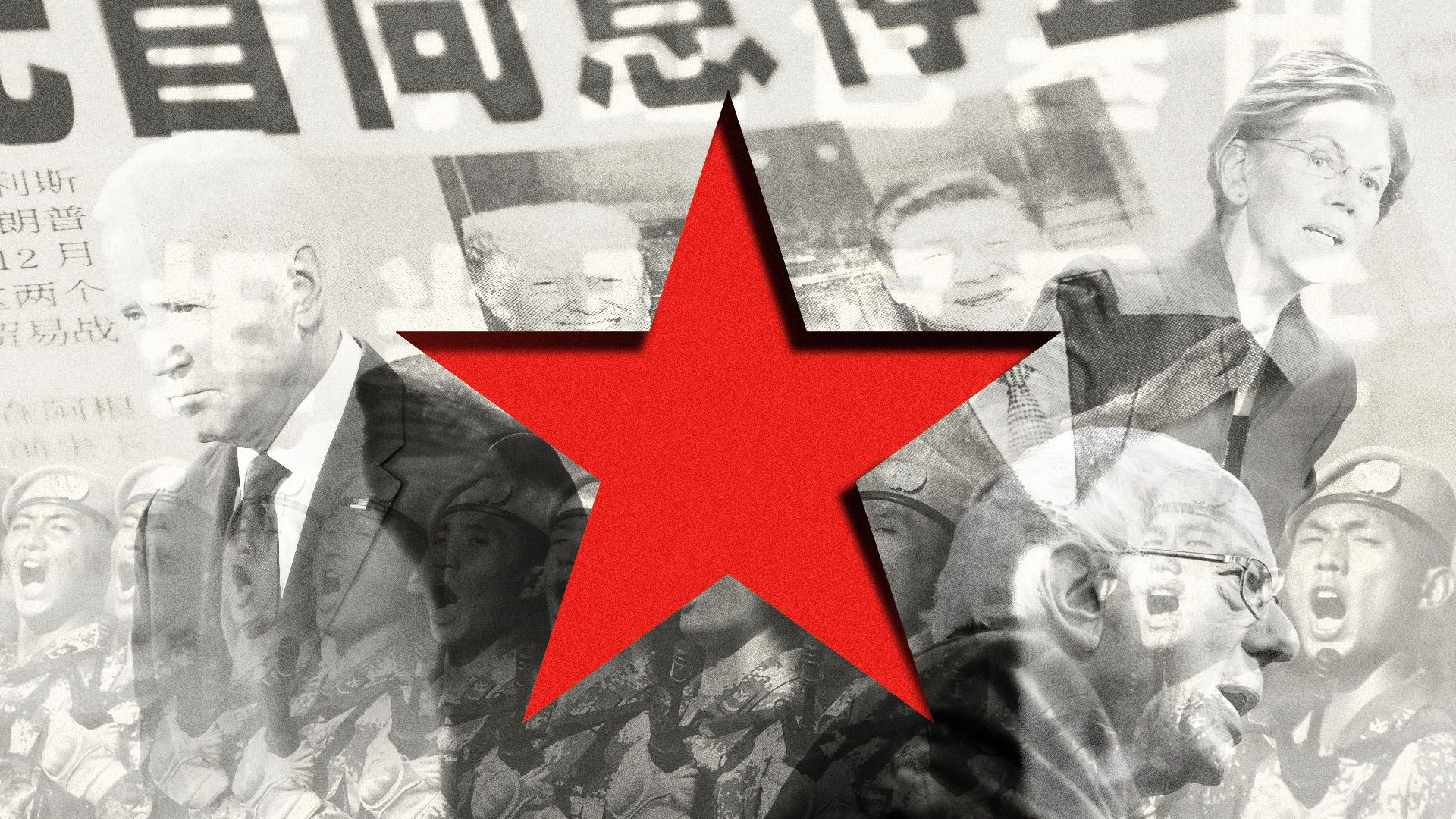
Most U.S. presidential candidates identify China as a serious national security challenge, but they're short on details as to how they'd tackle the economic, technological and human rights threats posed by the world’s largest authoritarian power.
Why it matters: The Chinese Communist Party is seeking to reshape the world in its own image and amass enough power to marginalize the United States and Western allies regardless of whether China is contending with President Trump for another four years — or one of his Democratic rivals.