Various media outlets have reported that the U.S. waged some form of cyber operation against the Iranian military last week in response to attacks on oil tankers in the Gulf of Oman and an unmanned U.S. drone.
The big question: Given its history of responding to various threats with cyberattacks of their own, how will Tehran respond? It's a complicated question to answer, especially given how close President Trump was to launching physical attacks as part of his own response to escalating tensions with Iran.
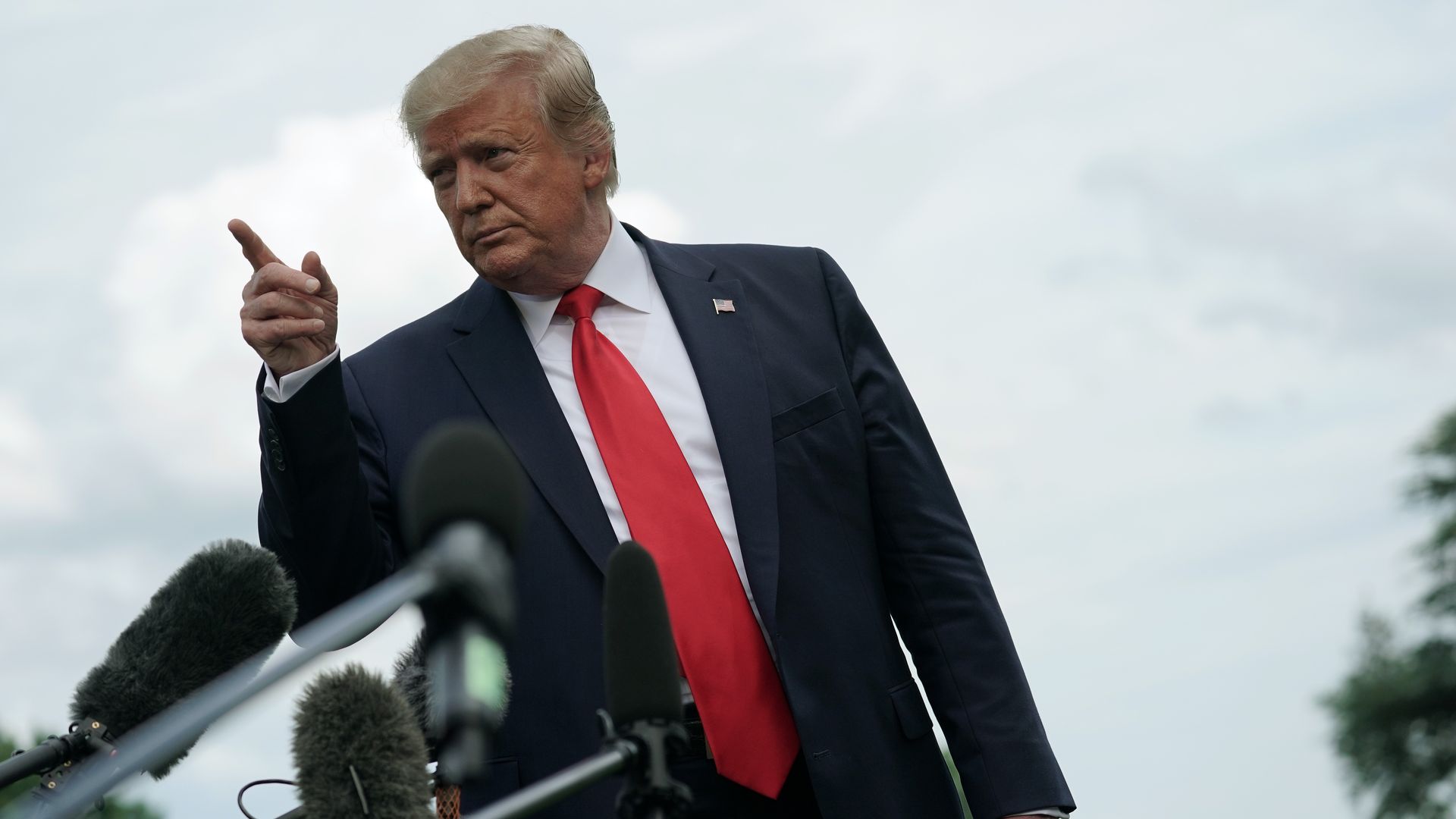
President Trump said in an interview on NBC's "Meet the Press" Sunday that he is willing to speak with the leaders of Iran under "no pre-conditions," and that all he is seeking out of a deal with Iran is a ban on the country obtaining nuclear weapons.
CHUCK TODD: "Is it one-on-one talks, you and the Ayatollah, or you and the President?
TRUMP: "It doesn't matter to me. Here's what I want, anything that gets you to the result. They cannot have a nuclear weapon. It's not about the straits. You know, a lot of people covered it incorrectly. They're never mentioned. They cannot have a nuclear weapon. They'd use it. And they're not going to have a nuclear weapon."
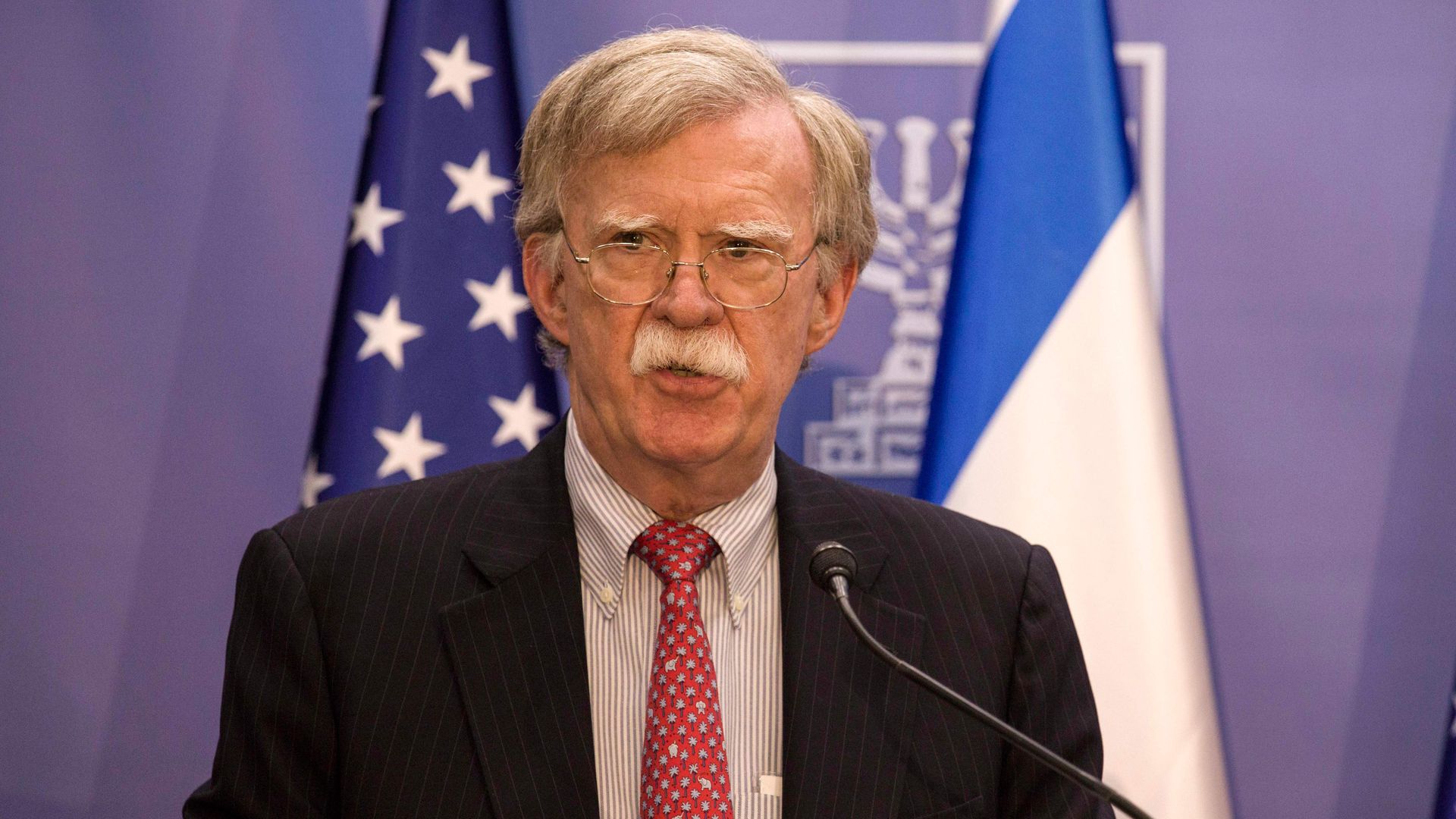
White House national security adviser John Bolton told Israeli Prime Minister Benjamin Netanyahu in a meeting today that President Trump may still order a military strike against Iran. "The president said he just stopped the strike from going forward at this time," Bolton said in a joint press availability with Netanyahu at the top of their meeting.
Why it matters: Israeli officials are concerned with the U.S. response to the latest Iranian actions in the region. Israeli security and intelligence officials think that in order to force Iran to stop its provocations, the U.S. response needs to be stronger. Despite this assessment, Netanyahu refrained from publicly criticizing Trump's decision not to order a military strike and didn't say a word about it in his press remarks with Bolton.
U.S. military cyber forces launched retaliatory online attacks this week on Iranian computer systems that control Iran’s rocket and missile launchers, the New York Times and AP report.
Details: President Trump authorized the cyberattack as he stopped a military response to Iran shooting downing a U.S. surveillance drone, according to AP and the Washington Post. Thursday's operation targeted Iran's Revolutionary Guard, which U.S. officials hold responsible for attacks on oil tankers in the Gulf of Oman this month, per AP.
The Department of Homeland Security said in a warning issued on Saturday there's been a recent rise in malicious cyber activity directed at U.S. industries and government agencies by Iranian regime actors and proxies.
"Iranian regime actors and proxies are increasingly using destructive 'wiper' attacks, looking to do much more than just steal data and money. These efforts are often enabled through common tactics like spear phishing, password spraying, and credential stuffing."
— Christopher Krebbs, Cybersecurity and Infrastructure Security Agency director
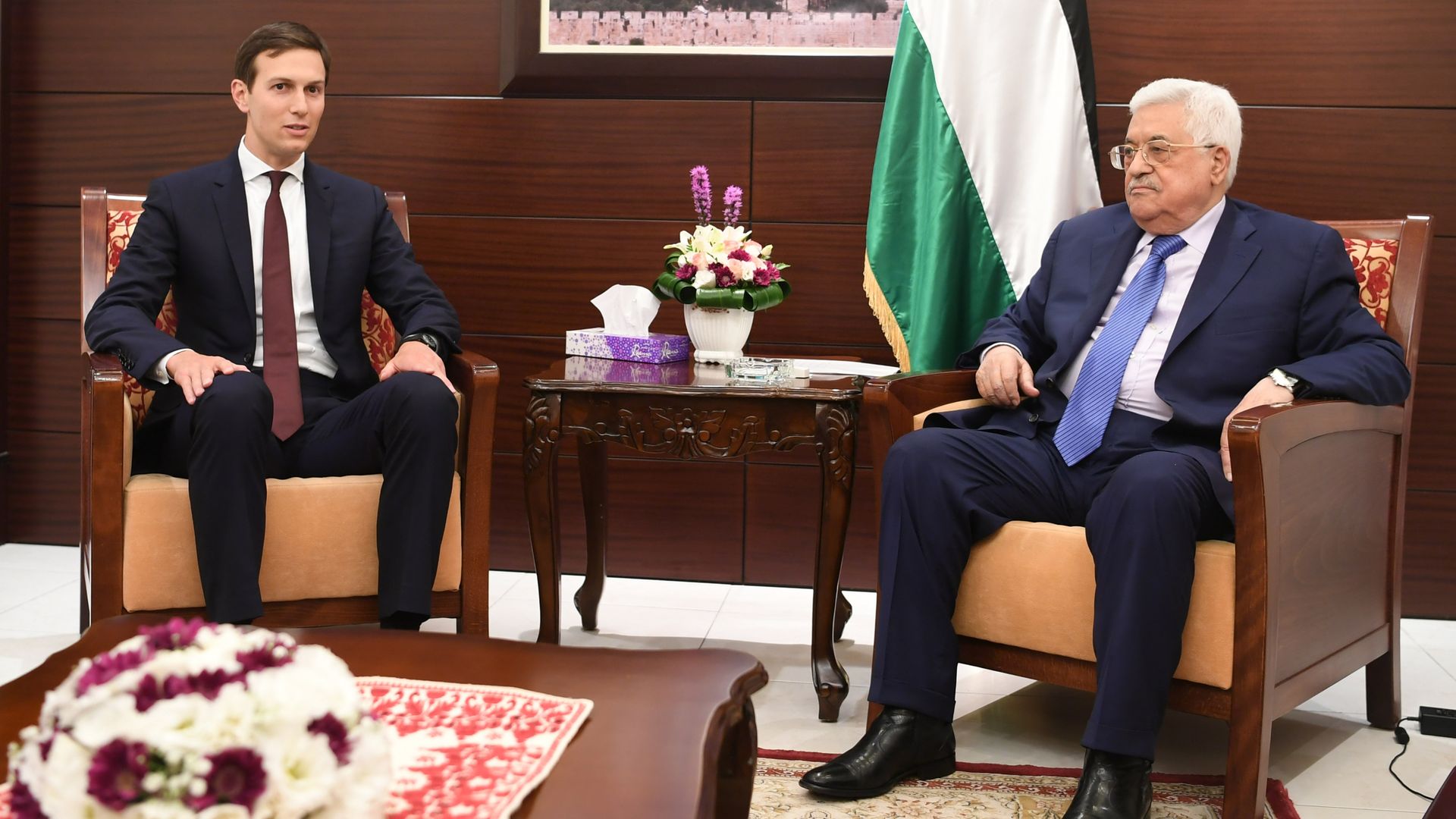
Palestinian leaders rejected the economic aspect of the Trump administration's Israeli-Palestinian peace plan, spearheaded by President Trump's son-in-law and White House senior adviser Jared Kushner, because they want to see a political solution first, Reuters reports.
Details: The political plan is expected to be released in November, after a new Israeli government is formed. The economic proposals published Saturday include a $50 billion investment plan. But Palestinian Authority President Mahmoud Abbas said "the economic situation should not be discussed before the political one," according to Al Jazeera.
In a string of Saturday tweets, President Trump announced that the U.S. plans to impose major new economic sanctions on Iran starting Monday, within days of abruptly aborting a plan to launch airstrikes against the nation.
The White House published today the economic part of the Trump administration's Israeli-Palestinian peace plan.
Why it matters: The economic part of the peace plan was drafted over the last two years and was published three days before the Bahrain conference, which will discuss ways to boost the Palestinian economy. White House officials told me they wanted participants to come to the conference after they read the economic plan and are able to comment on it.
President Trump's decision to pull back from retaliatory military strikes against Iran that he had approved highlights a dichotomy between how he presents himself to the rest of the world as a "bellicose warmonger," and how he behaves as an "isolationist peacenik," writes the New York Times' Peter Baker.
"Trump ... has adopted a modified version of Theodore Roosevelt’s maxim when it comes to overseas military threats — speak loudly and carry a small stick."