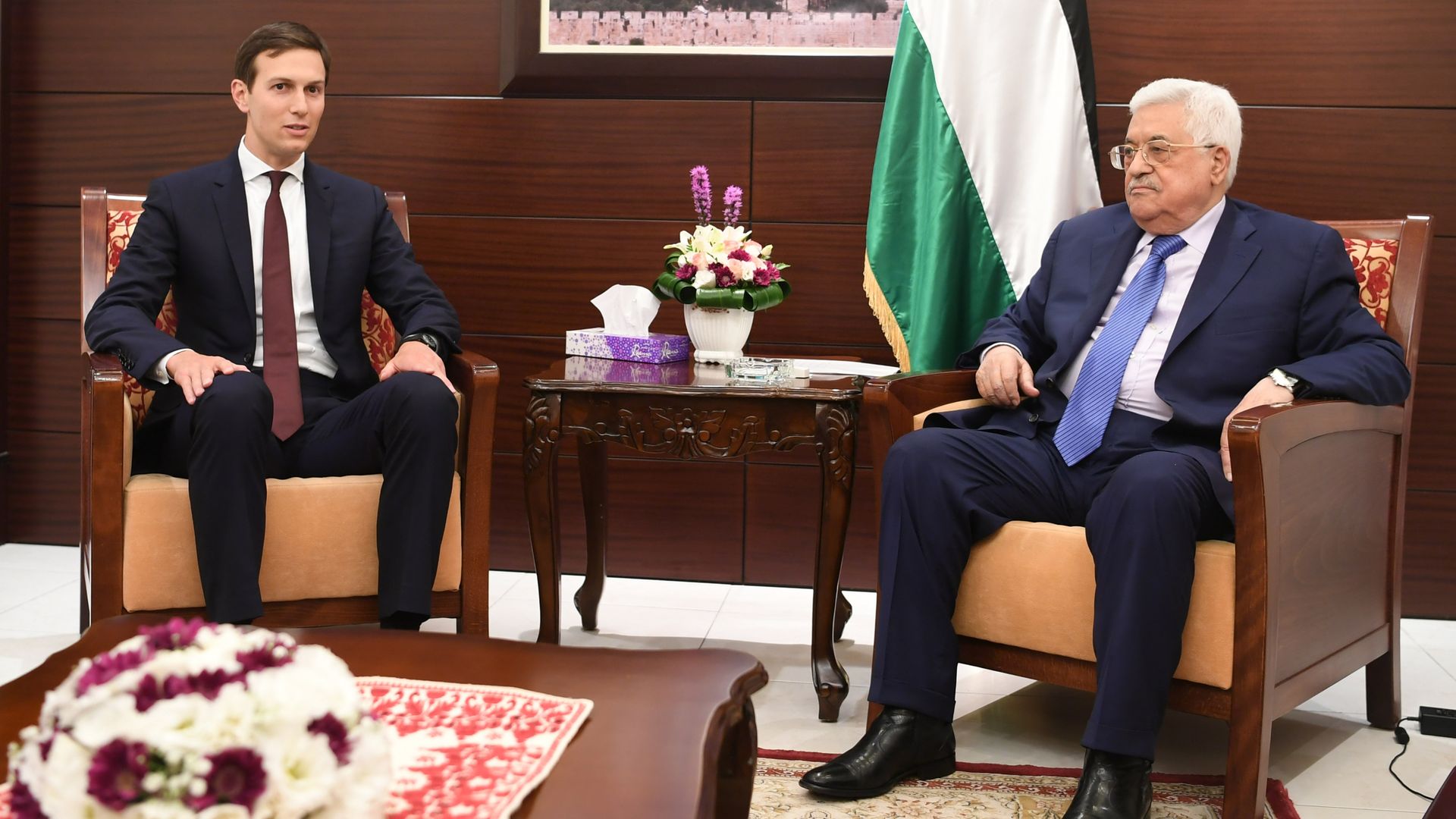
Palestinian leaders rejected the economic aspect of the Trump administration's Israeli-Palestinian peace plan, spearheaded by President Trump's son-in-law and White House senior adviser Jared Kushner, because they want to see a political solution first, Reuters reports.
Details: The political plan is expected to be released in November, after a new Israeli government is formed. The economic proposals published Saturday include a $50 billion investment plan. But Palestinian Authority President Mahmoud Abbas said "the economic situation should not be discussed before the political one," according to Al Jazeera.
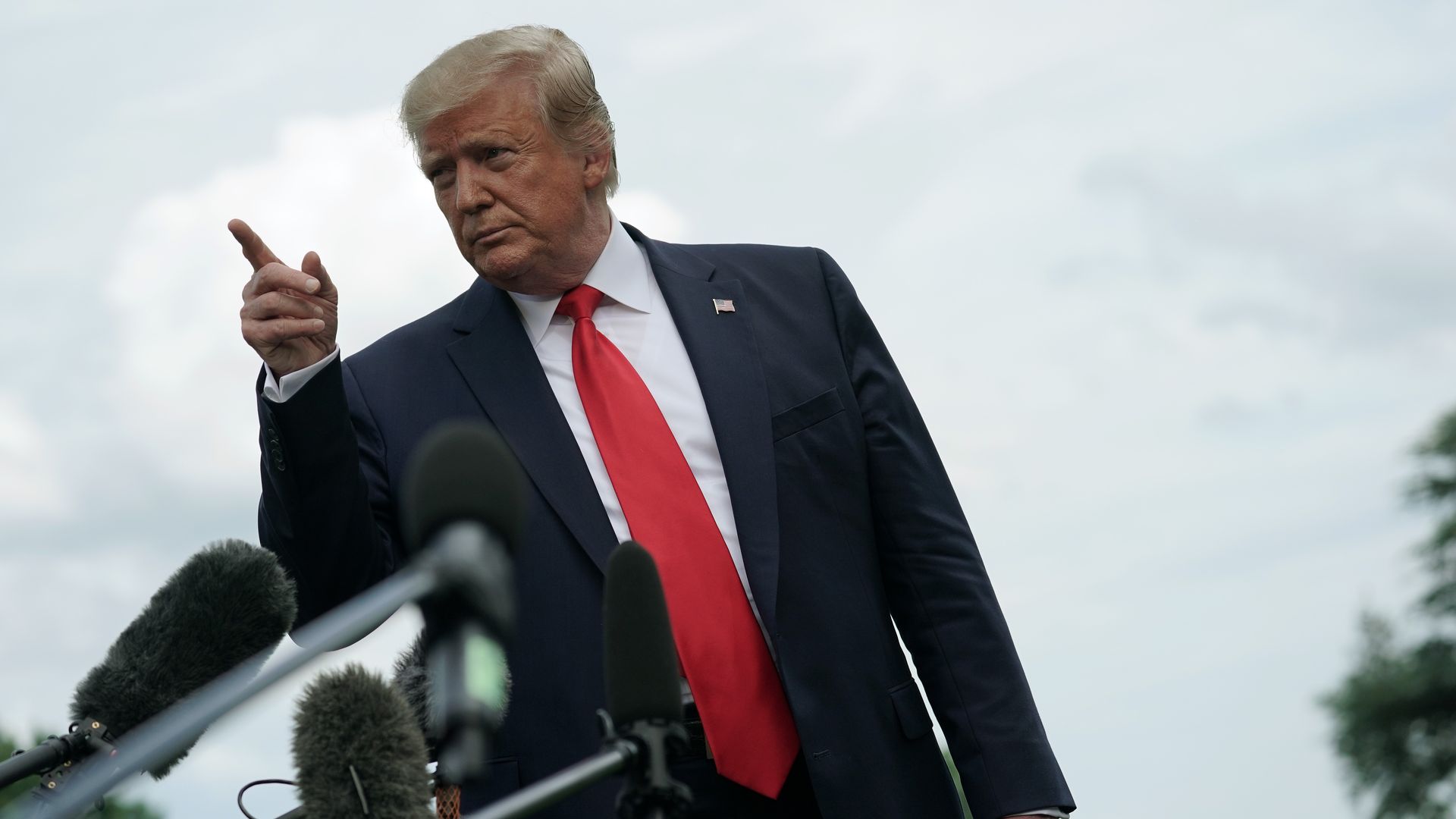
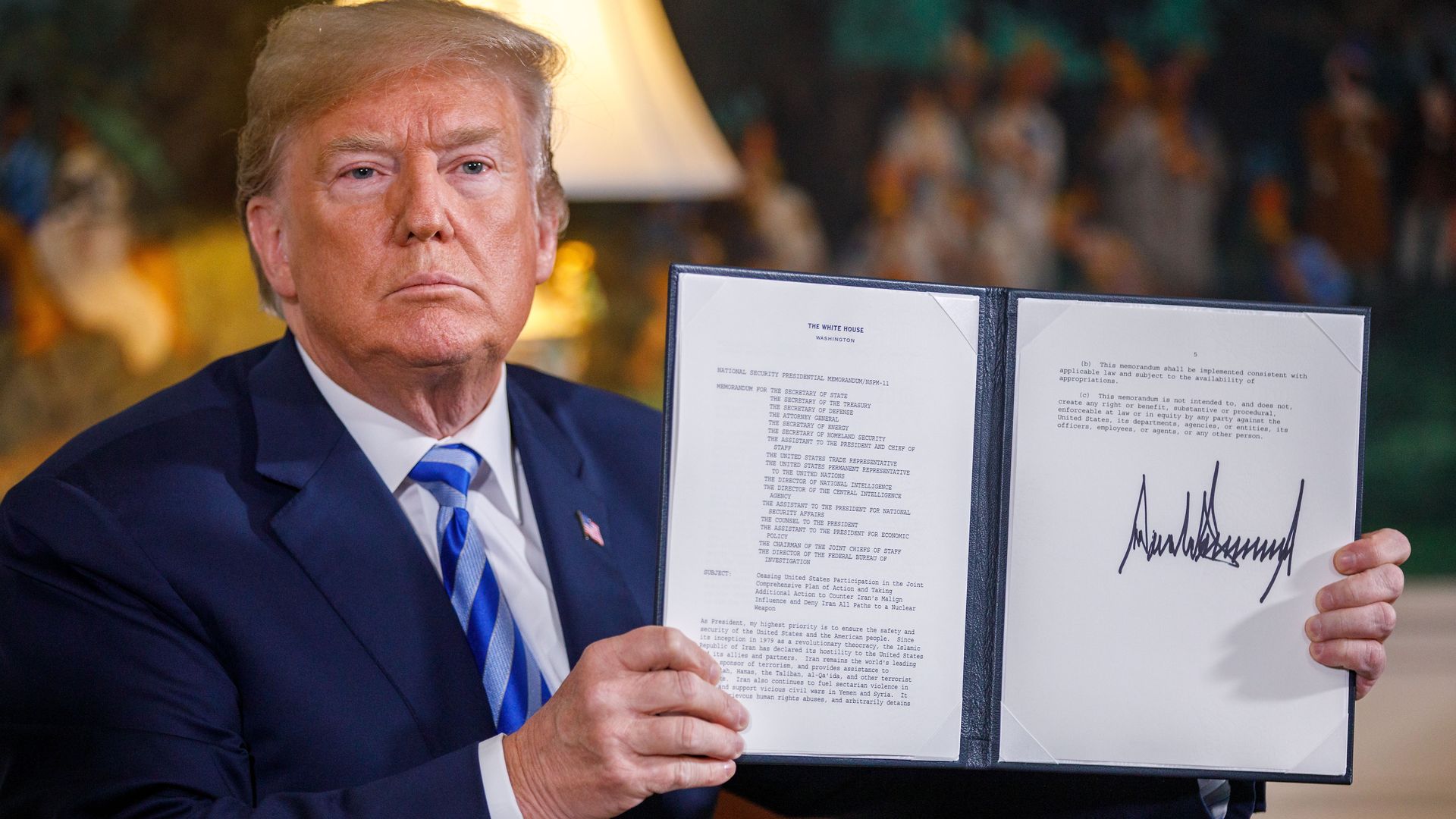
In a string of Saturday tweets, President Trump announced that the U.S. plans to impose major new economic sanctions on Iran starting Monday, within days of abruptly aborting a plan to launch airstrikes against the nation.
The White House published today the economic part of the Trump administration's Israeli-Palestinian peace plan.
Why it matters: The economic part of the peace plan was drafted over the last two years and was published three days before the Bahrain conference, which will discuss ways to boost the Palestinian economy. White House officials told me they wanted participants to come to the conference after they read the economic plan and are able to comment on it.
President Trump's decision to pull back from retaliatory military strikes against Iran that he had approved highlights a dichotomy between how he presents himself to the rest of the world as a "bellicose warmonger," and how he behaves as an "isolationist peacenik," writes the New York Times' Peter Baker.
"Trump ... has adopted a modified version of Theodore Roosevelt’s maxim when it comes to overseas military threats — speak loudly and carry a small stick."
Amidst all the tension this week, it's worth stepping back for a minute to remember that President Trump doesn't have a permanent secretary of defense.
Why it matters: Running the Pentagon is no small task for a permanent, seasoned chief. It's a huge undertaking for a temp, the AP reminds.
President Trump confirmed Friday that the U.S. was "cocked & loaded" to strike Iran last night, a move that could have accelerated the path to war.
How we got here: The strike had been ordered in response to Iran's shooting down of a U.S. drone earlier this week, but the trend toward conflict began in earnest last year when the president announced that the U.S. would pull out of the internationally negotiated Iran nuclear deal.
President Trump confirmed that his administration had readied a series of strikes against Iran in response for shooting down an unmanned drone in a Friday Twitter thread.
"We were cocked & loaded to retaliate last night on 3 different sights [sic] when I asked, how many will die. 150 people, sir, was the answer from a General. 10 minutes before the strike I stopped it, not proportionate to shooting down an unmanned drone."
President Trump authorized military action against Iran for shooting down a U.S. surveillance drone on Thursday, but then abruptly pulled the plug on the operation as it was already underway on Thursday night, the New York Times reports, citing several senior administration officials.
Why it matters: This is the latest in a series of escalating tensions between the two nations amid the Trump administration's maximum pressure campaign. Last week, the administration accused Iran of attacking oil tankers near the Strait of Hormuz, a key international waterway.