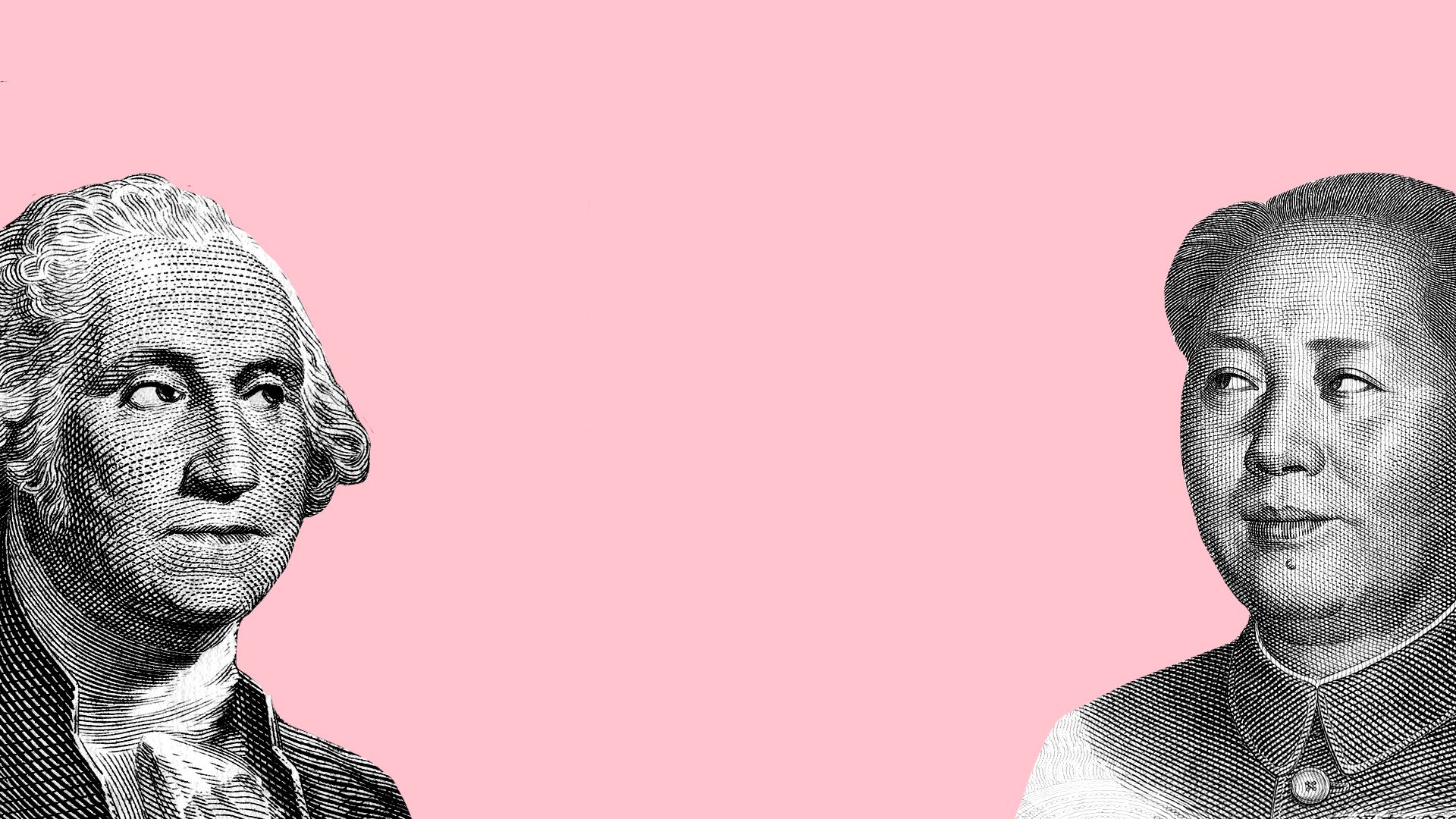
Most people in China would like to see their country's political system become more like America's over the next 2 decades. Japanese and Germans, not so much.
Data: Eurasia Group Foundation; Chart: Harry Stevens/Axios
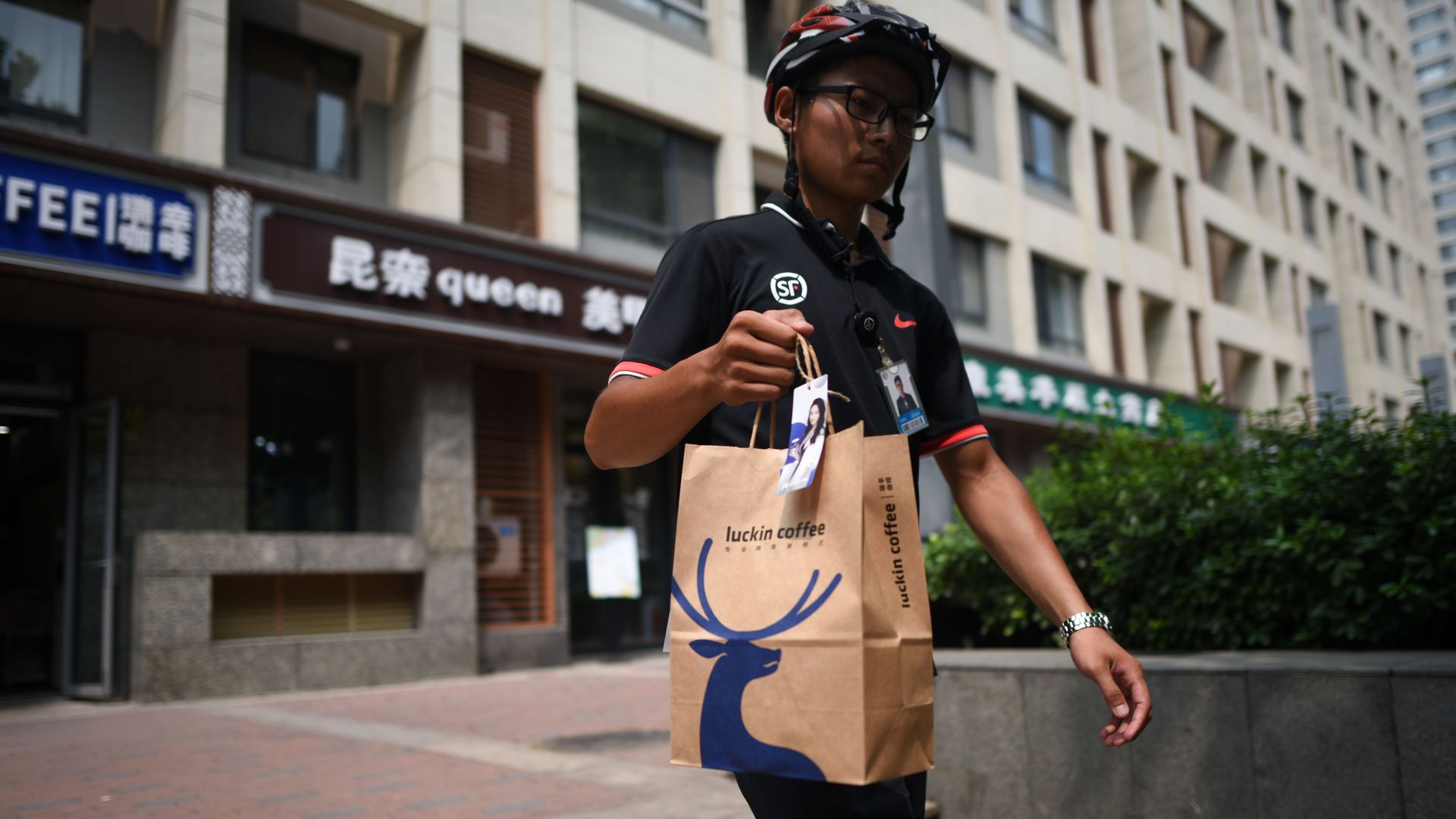
Luckin Coffee, a homegrown rival to Starbucks in China, on Thursday raised $561 million in its IPO, after increasing its number of offered shares and pricing at the top of its $15-$17 range. It will begin trading tomorrow on the Nasdaq under ticker LK.
Why it matters: This may be one of the few companies to actually benefit from the U.S.-China trade war escalation, as increased nationalism could prompt Chinese coffee drinkers to choose Luckin over its Seattle-based competitor.
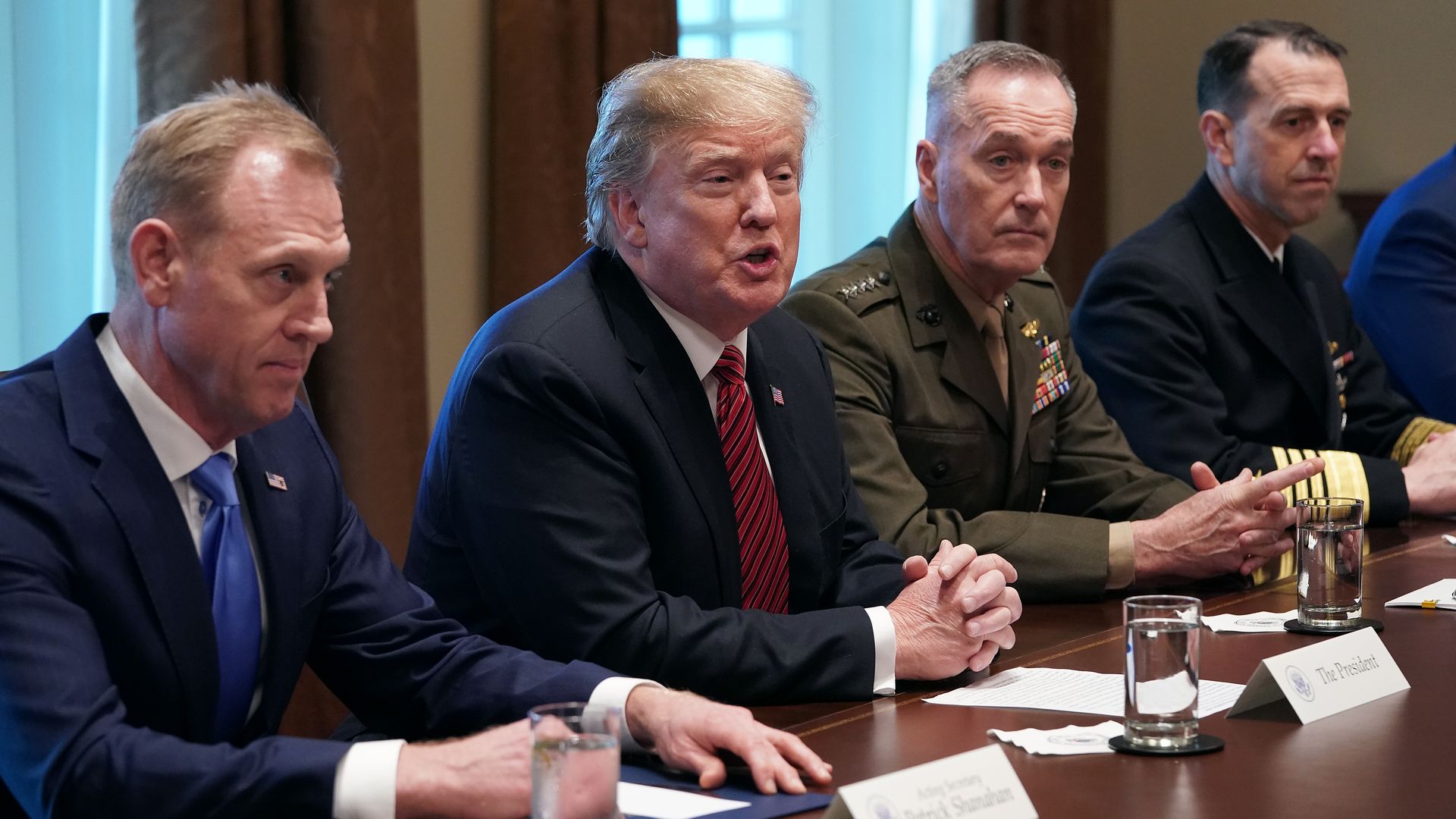
President Trump told acting Defense Secretary Patrick Shanahan and other top officials on Wednesday that he does not want his "maximum pressure" campaign against Iran to escalate to war, the NY Times reports.
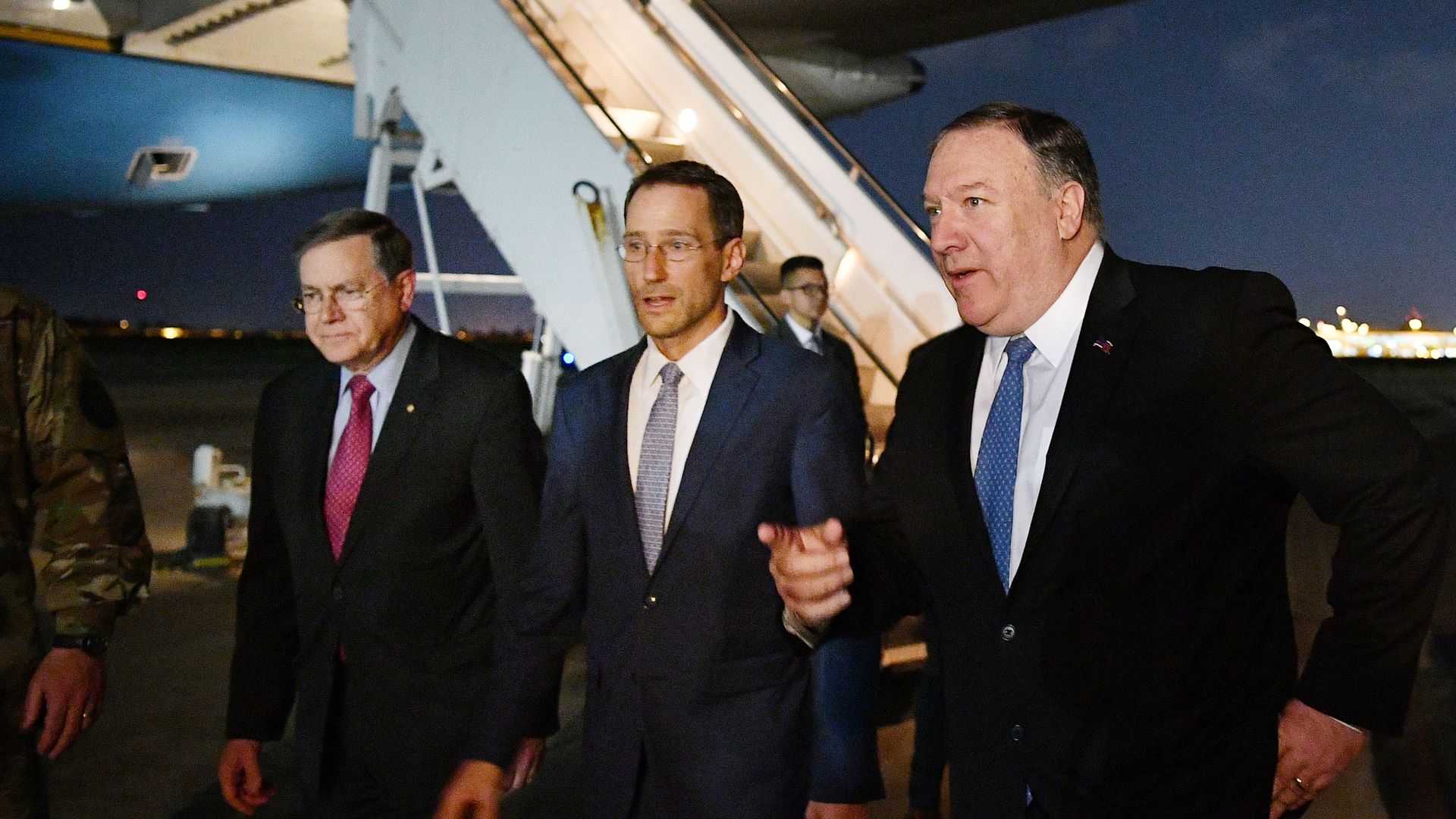
Between the lines: National Security Adviser John Bolton and Secretary of State Mike Pompeo have been sounding the alarm about impending attacks from Iran and warning of "unrelenting force" if necessary. Trump has long been wary of a new military engagement in the Middle East, and this is the clearest signal yet that the current standoff with Iran is no exception.
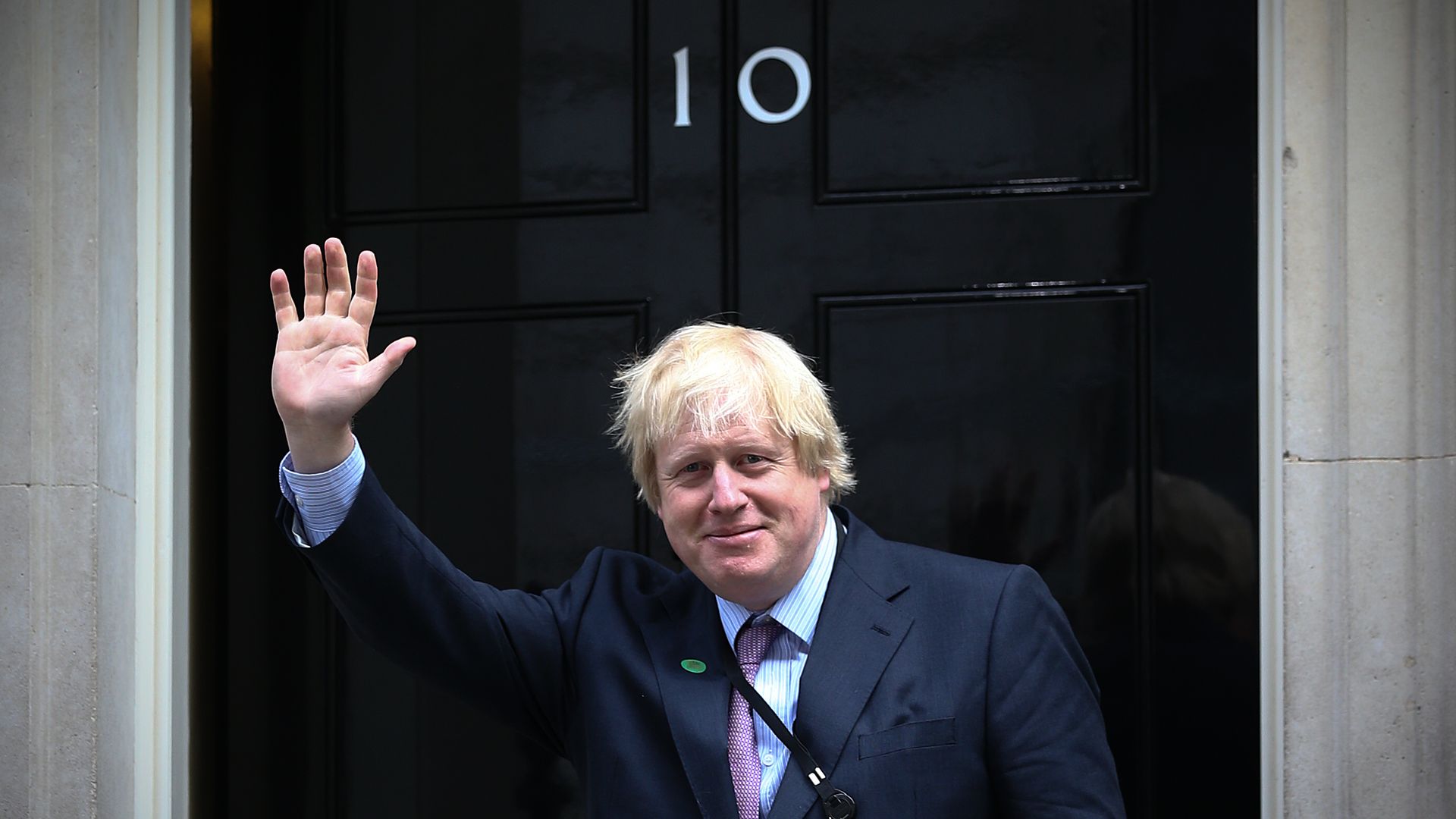
Former foreign secretary and Brexit campaigner Boris Johnson told the BBC's Huw Edwards Thursday that he plans to stand to replace Theresa May as the U.K.'s prime minister once she fulfills her pledge to step down after a deal on Brexit is reached.
The big picture: Of course, May hasn't stepped down — and her pledge to do so was contingent on her Brexit deal getting through Parliament. Some members of the Conservative Party are worried she may have gotten cold feet. She met with senior party members in Parliament today, reaching an agreement that they'd begin working toward a timetable to elect her replacement next month — whether or not her deal succeeds.
The Department of Justice announced Thursday morning it had indicted 10 people involved in a transnational banking malware scheme as part of an international effort to chop down the crime ring.
Why it matters: The group allegedly used the GozNym banking malware to steal credentials to online banking accounts that they then attempted to rob for more than $100 million.
President Trump addressed two stories on Iran — one from the New York Times, which said his administration was considering military action, and one from the Washington Post, which said he was not convinced of an attack by his advisers — in a pair of Thursday tweets.
"The Fake News Washington Post, and even more Fake News New York Times, are writing stories that there is infighting with respect to my strong policy in the Middle East. There is no infighting whatsoever. Different opinions are expressed and I make a decisive and final decision - it is a very simple process. All sides, views, and policies are covered. I’m sure that Iran will want to talk soon."
Context: Trump's statement that "Iran will want to talk soon" actually fits the thrust of the Post's report, which said the president "prefers a diplomatic approach to resolving tensions and wants to speak directly with Iran’s leaders."
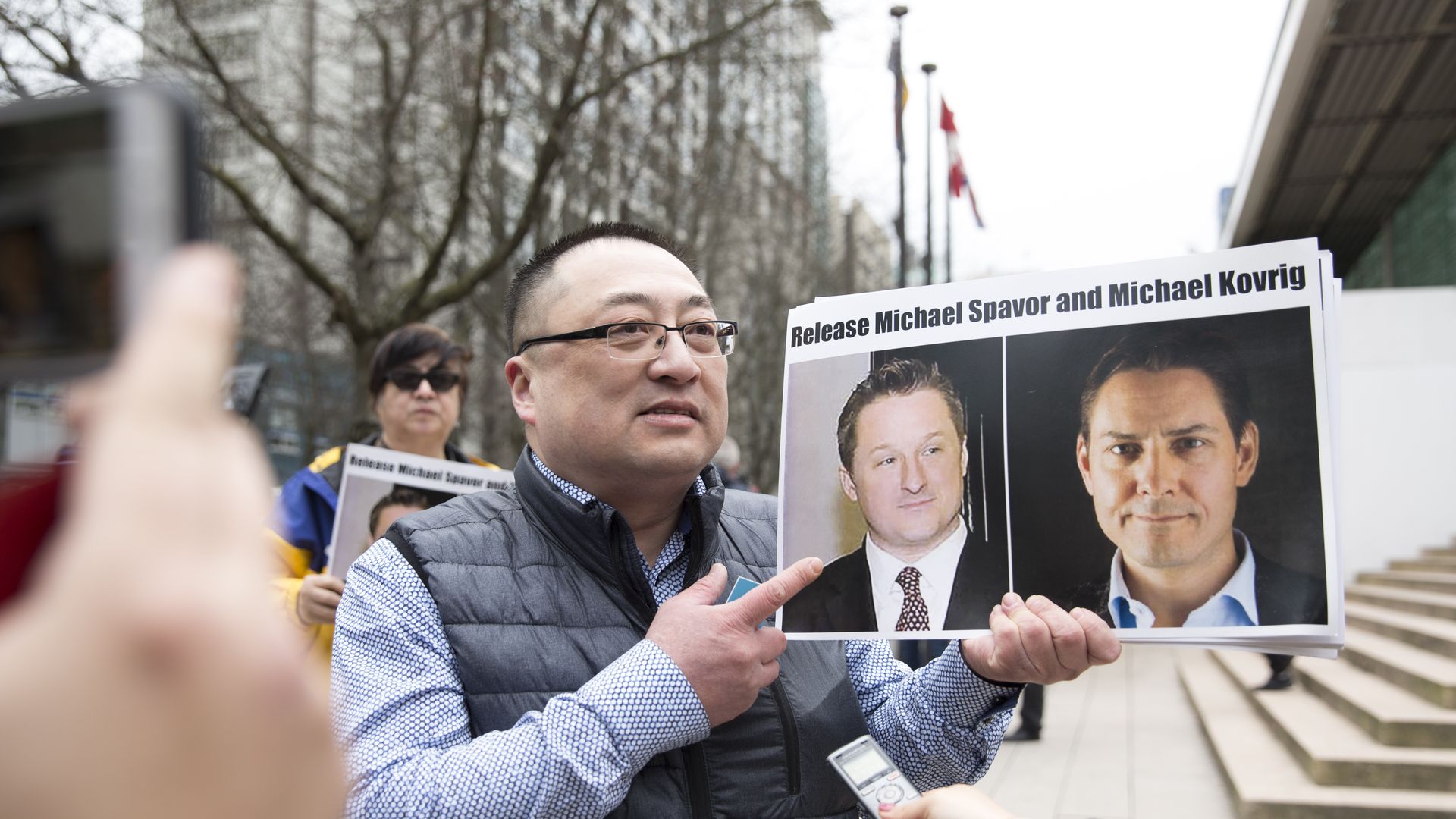
Why it matters: U.S. experts view the arrests of writer Michael Spavor and former diplomat Michael Kovrig as "direct retaliation" by China for Canada's detention of Huawei executive Meng Wanzhou, who's accused of violating U.S. sanctions on Iran. On Wednesday, President Trump issued an executive order prohibiting U.S. firms from using telecom services solely owned, controlled, or directed by a foreign adversary, paving the way for a ban on Huawei.
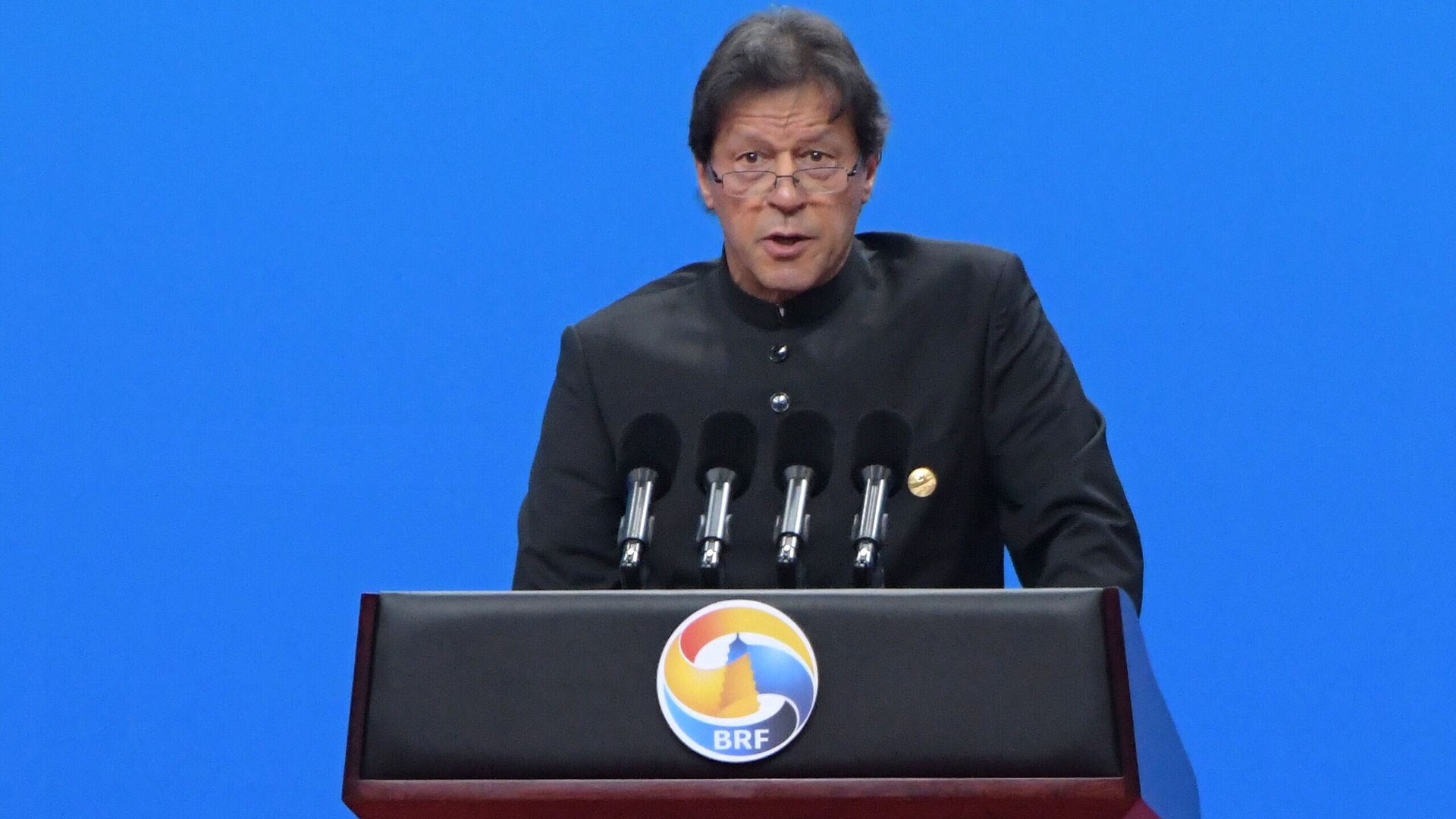
Pakistan reached a preliminary agreement with the International Monetary Fund for $6 billion in support over 3 years — a much-needed infusion as the country aims to buttress foreign reserves and forestall an economic crisis.
The big picture: For decades, Pakistan's government has prioritized military investments over development, yielding a thriving nuclear weapons and ballistic missile program but declining economic competitiveness. Its performance in this latest IMF program will establish whether Prime Minister Imran Khan renews the country's Faustian bargain or becomes the change agent he has claimed to be.
Fears are growing that bluster between the U.S. and Iran might explode into war.
The latest: The U.S. has evacuated non-essential personnel from its embassy in Iraq, and Iran’s Islamic Revolutionary Guard Corps warned "we are on the cusp of full-scale confrontation."
At a special meeting on U.S.-Iran tensions with Israel's intelligence chiefs and top military brass, Prime Minister Benjamin Netanyahu said Israel would make every effort not to get dragged into the escalation in the Gulf and would not interfere directly in the situation, Israeli officials tell me.
The backdrop: Israel was one of the main sources of intelligence on alleged Iranian plots against the U.S. and its allies in the region. The U.S. has spread the alarm about such threats and deployed additional military assets. Secretary of State Mike Pompeo spoke on the phone earlier this week with Netanyahu to coordinate their responses to rising U.S.-Iran tensions, the officials say.
Pakistani authorities have arrested more than two dozen Chinese nationals involved in allegedly selling Pakistani women into forced marriages in China.
Why it matters: Human rights groups have documented numerous cases of women sold to Chinese men struggling to find wives due in part to the gender imbalance in the country.
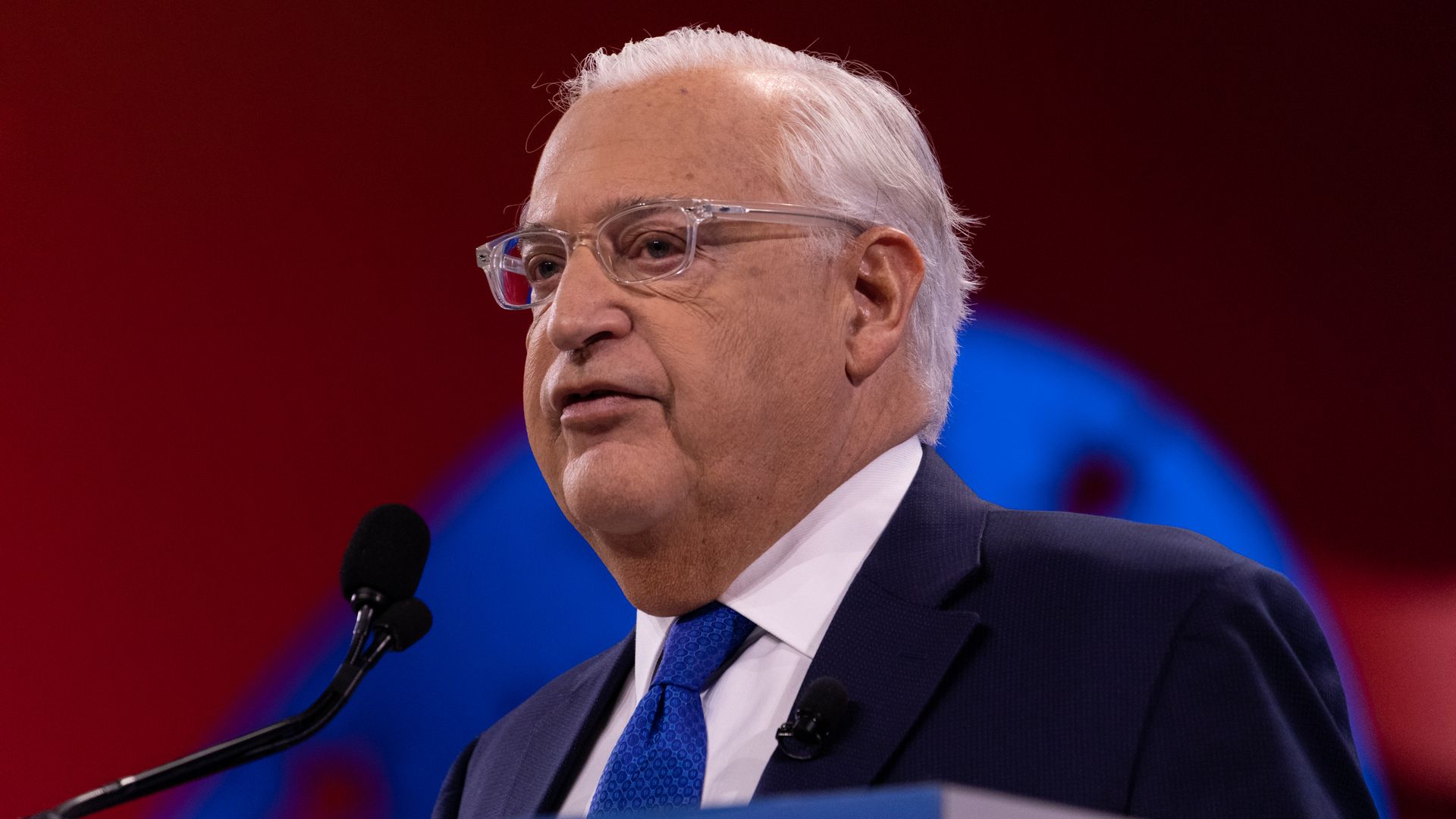
U.S. ambassador to Israel David Friedman said the country is gaining strength in part because "Israel is on the side of God," the New York Times reports.
The big picture: The Trump administration has ratcheted up policy and rhetoric in support of Israel by recognizing Israeli sovereignty over the Golan Heights, moving the U.S. embassy from Tel Aviv to Jerusalem, and eliminating the U.S. Consulate General in Jerusalem. Friedman has played a major role in creating Trump's promised proposal regarding the Israeli-Palestinian conflict.
When President Trump began threatening China with tariffs, the Chinese initially played the role of obsequious couriers in an effort to avoid a head-on conflict. But since raising tariffs to 25% on their goods, China has reversed course and is making clear its intent to take the conflict with the U.S. to the proverbial mattresses.
The state of play: In a commentary published last week on its WeChat account, China's state-owned People's Daily warned the U.S. to "not even think about" concessions.
The U.S. State Department ordered "non-emergency government employees" to leave Iraq as soon as possible, the U.S. Embassy in Baghdad said in a statement Wednesday.
Details: The move comes after Iran's supreme leader, Ayatollah Ali Khamenei, said it would not be difficult for Tehran to "enrich uranium to weapons-grade levels," AP reports, citing state media. He did say "no one is seeking war," AP said. Iran officially began rolling back key commitments of its 2015 nuclear deal Wednesday, per the Iranian Students News Agency.