Russian President Vladimir Putin has been a towering figure when it comes to selling oil, acting the strong man, and breaking into other nations' electoral systems and social media.
The big picture: Putin has beenrelatively passive amid the roiling transformations with which Russia's rivals are wrestling — a future driven by robots, artificial intelligence, a mobility revolution, space travel, and other relentless tech forces.
The White House and State Department don't seem to be on the same page about a controversial proposal from Vladimir Putin — that in exchange for cooperation with the Mueller probe, Russia be allowed to question several U.S. citizens, including former U.S. Ambassador to Russia Michael McFaul.
Why it matters: President Trump referred to Putin's idea as an "incredible offer" during their Monday press conference, but it has generated strong pushback, including from former U.S. officials. Minutes after White House Press Secretary Sarah Sanders confirmed that Trump would "meet with his team" to discuss the proposal, State Department spokeswoman Heather Nauert said Russia's "assertions" about the U.S. citizens involved were "absolutely absurd," and she understands the "great concern" over the prospect.
For the first time in the four years since a Russian missile downed Malaysia Airlines Flight 17 over Ukrainian airspace, killing all 298 passengers on board, the State Department did not release a statement acknowledging the anniversary or condemning Russia's silence, reports Foreign Policy.
Why it matters: The anniversary, July 17, came just one day after President Trump's highly criticized meeting with Russian President Vladimir Putin in Helsinki. Foreign Policy obtained a statement drafted by officials at the State Department denouncing Russia for its role in the attack, but it was never released for reasons that have not been publicly explained.
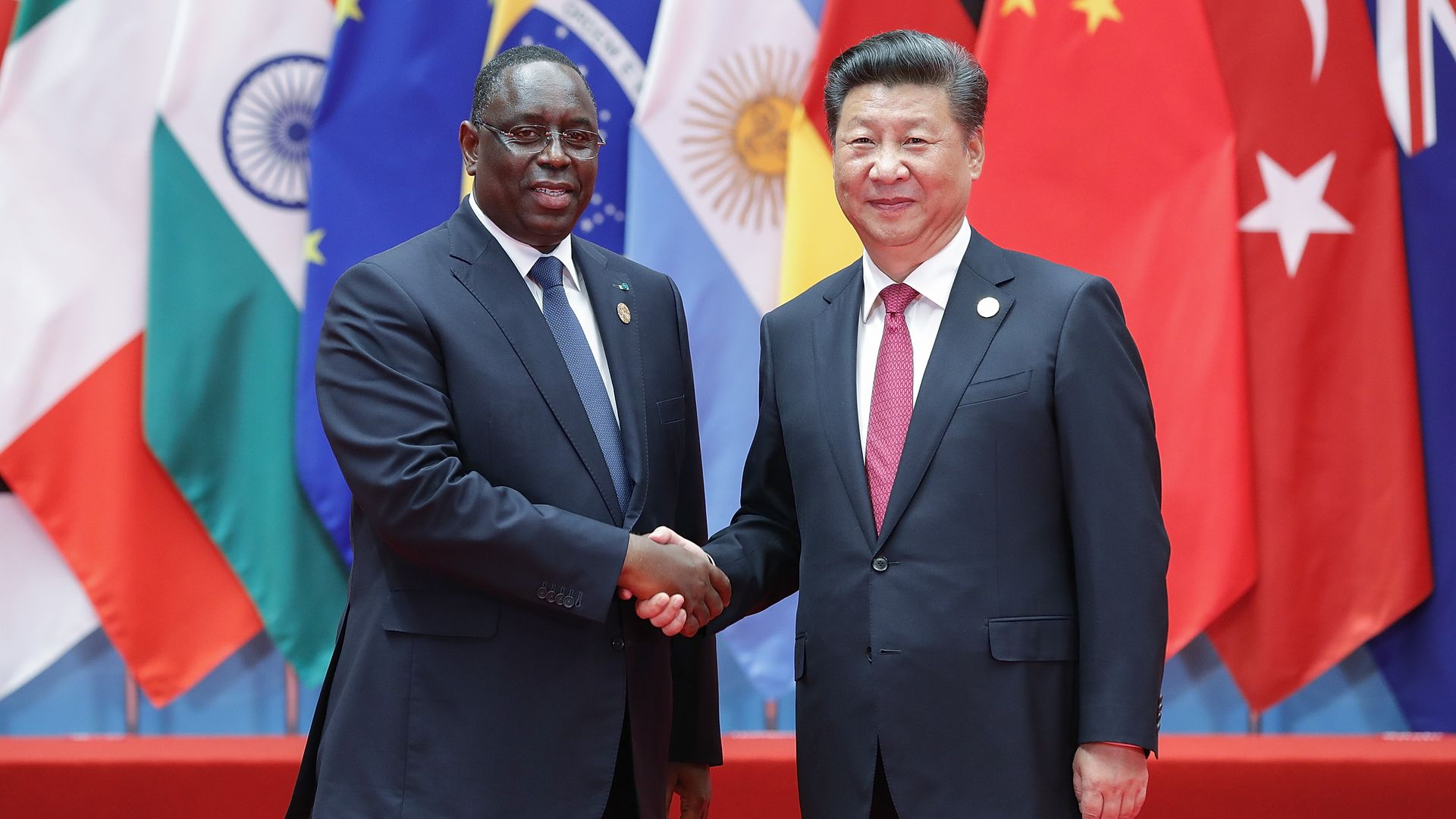
Xi Jinping is heading to Africa this week, with stops in Senegal, Rwanda, South Africa and Mauritius. In South Africa, Xi will also attend the BRICS (Brazil, Russia, India, China and South Africa) summit with Michel Temer, Vladimir Putin, Narendra Modi and Cyril Ramaphosa.
Why it matters: China’s emphasis on Africa as a cornerstone of its diplomacy remains strong. Chinese financing has supported a great deal of new African transportation infrastructure, including high-profile projects such as Kenya’s Standard Gauge Railway and the Addis–Djibouti Railway. Similar commitments will likely emerge during Xi’s visit.
President Trump responded "no," when asked during a cabinet meeting whether he believes Russia is still targeting the U.S., per ABC reporter Cecilia Vega, who asked the question. The White House did not immediately respond to Axios' request for comment on the president's answer to the question, which was shouted over many voices in a noisy, crowded room.
Why it matters: The U.S. intelligence community is unified in its conclusion that Russia both meddled in the 2016 election and continues to attempt to interfere in American electoral systems. Just yesterday, Trump said that he accepts the conclusions reached by the U.S. intelligence community that Russia meddled in the 2016 election, but that there "could be other people also."
Faced with an onslaught from President Trump, EU leaders made a conscious effort this week to find common cause with friends new and old in another part of the world —Asia.
Between the lines: As Trump openly questions the continued value of NATO, calls the EU a “foe,” and ingratiates himself with a Vladimir Putin — whose government has worked diligently to stoke divisions and support Euroskeptic parties throughout the continent — it’s no surprise that Europe has started to seek out new friends.
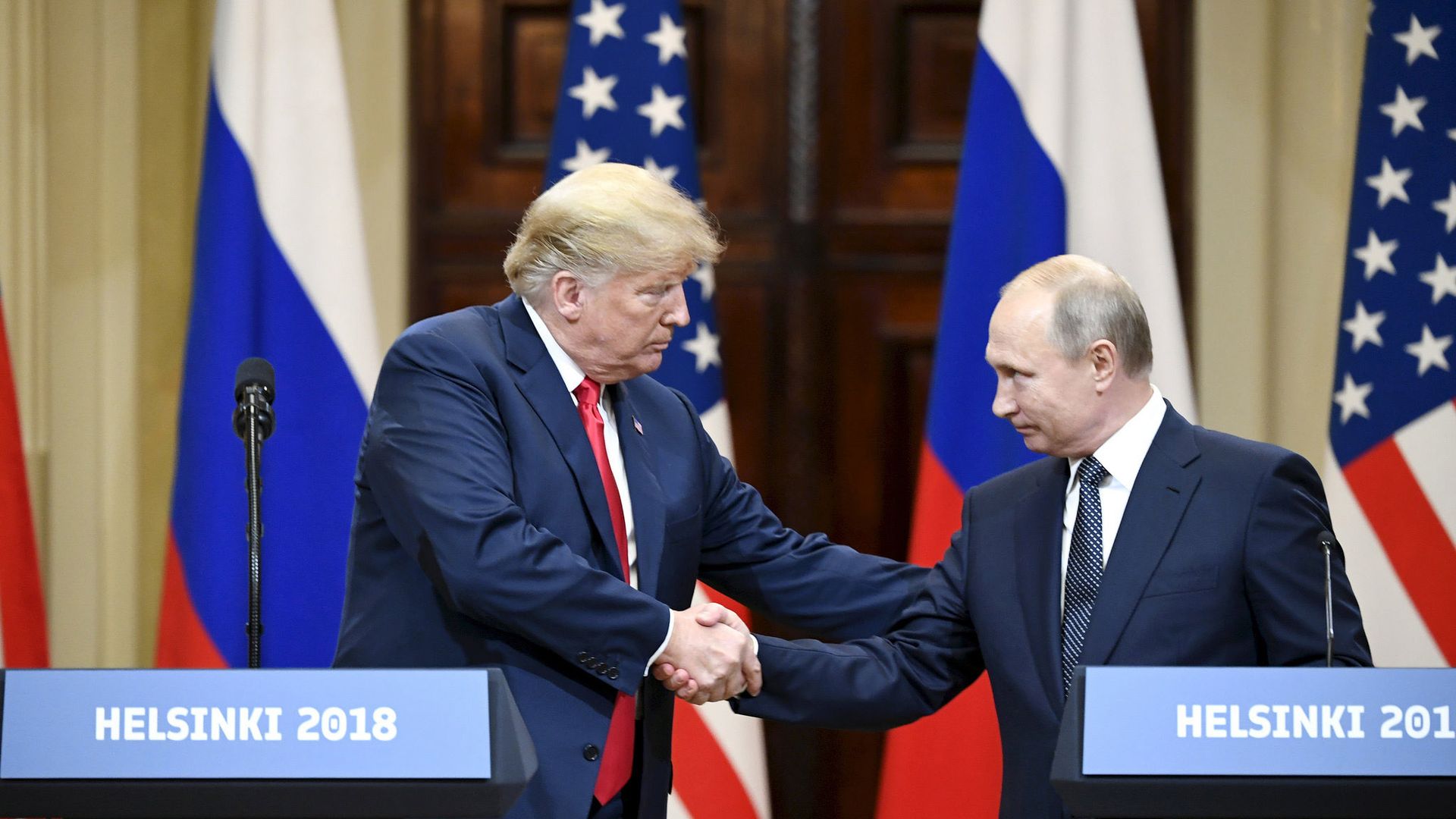
President Trump defended his performance at his press conference with Russian President Vladimir Putin in Helsinki in a series of Wednesday morning tweets, one of which called those who criticize him victims of the "Trump Derangement Syndrome."
"Some people HATE the fact that I got along well with President Putin of Russia. They would rather go to war than see this. It’s called Trump Derangement Syndrome!"
The backdrop: Trump's refusal to unequivocally acknowledge the American intelligence community's conclusion on Russian election meddling drew sharp criticism from the right and the left on Monday. He partially walked back his Helsinki comments Tuesday.
President Trump doubled down Wednesday on his comments at his press conference with Russian President Vladimir Putin, saying "many people at the higher ends of intelligence" loved it.
"So many people at the higher ends of intelligence loved my press conference performance in Helsinki. Putin and I discussed many important subjects at our earlier meeting. We got along well which truly bothered many haters who wanted to see a boxing match. Big results will come!"
The big picture: The Trump administration is investing heavily in financial tools to compel Iran to change its behavior in the region and to negotiate a new nuclear deal consistent with U.S. parameters. Meanwhile, European political leaders are continuing their search for a sanctions-proof financial channel to keep Iran in the current agreement.
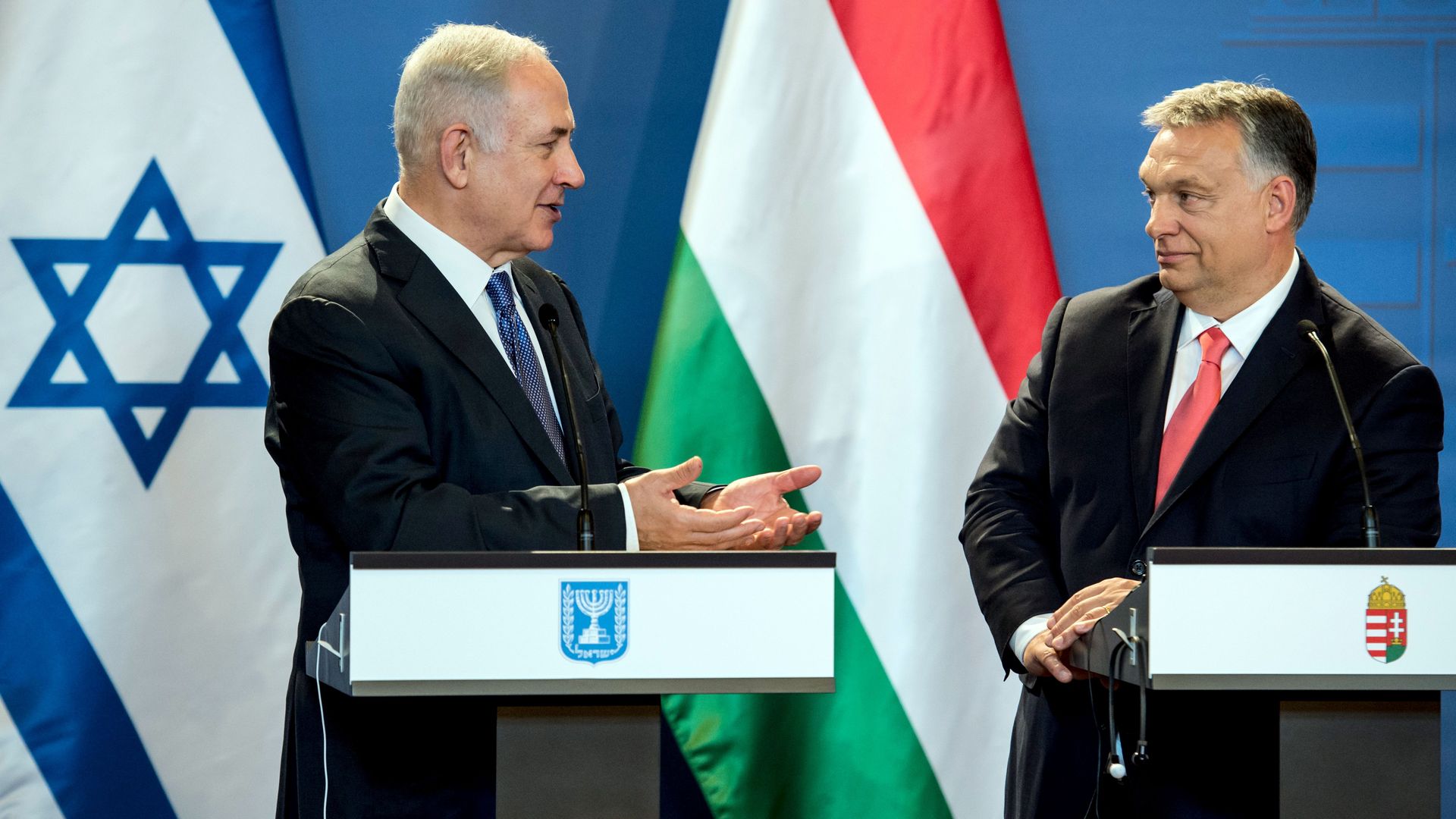
Israeli Prime Minister Benjamin Netanyahu has worked behind the scenes for the last year to "open doors" in the Trump administration for Viktor Orban, Hungary's controversial nationalist prime minister, Israeli officials tell me.
Why it matters: Orban, who has been called the "Donald Trump of Europe," leads an ultra-nationalistic government and is working to turn Hungary into what he has termed an "illiberal democracy." Cold relations that had existed between his government and the Obama administration carried forward to the first year under Trump. Israeli officials tell me that when Netanyahu met with Orban in Budapest last July, the Hungarian Prime Minister asked for his help in improving those relations.
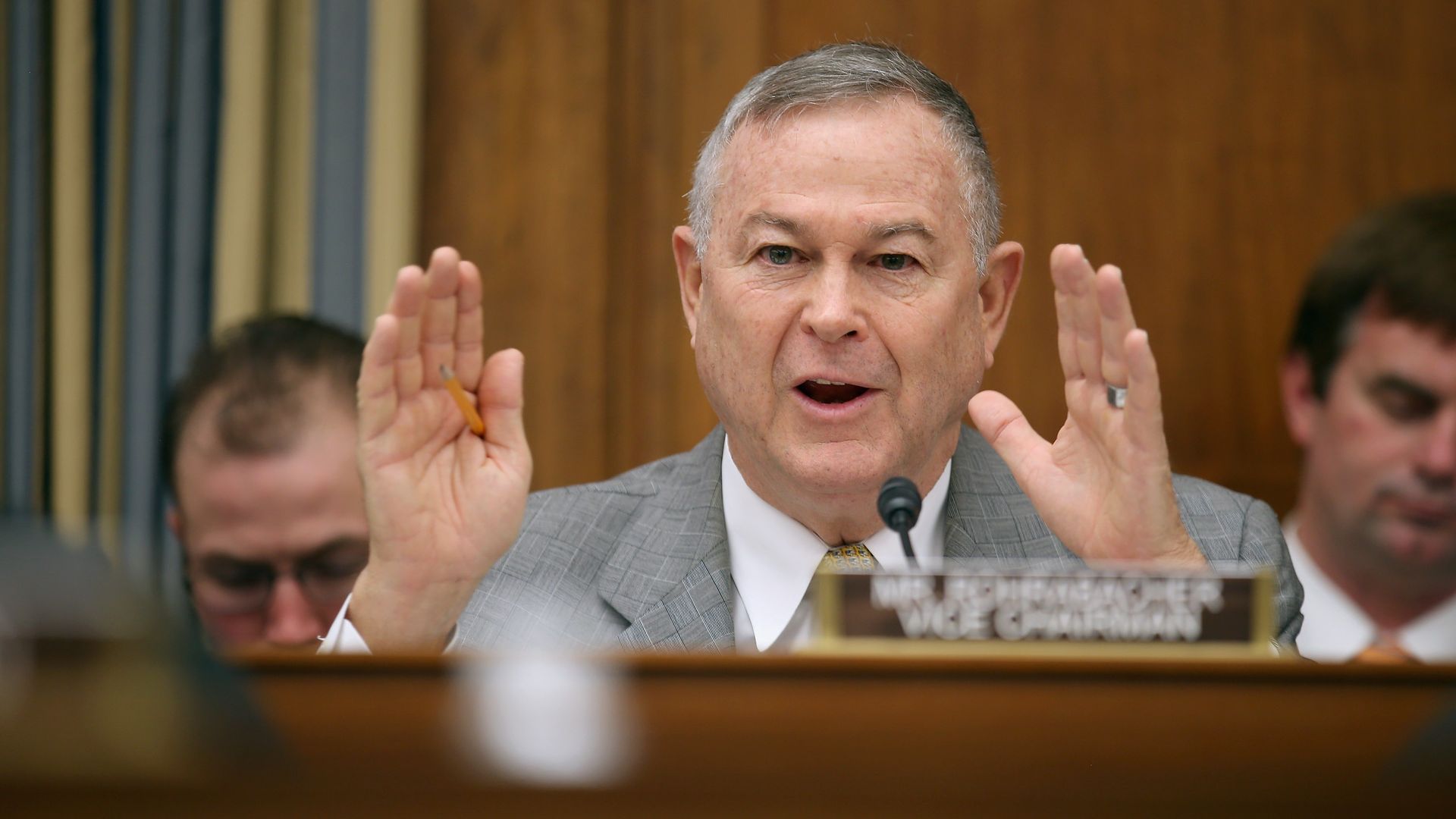
Rep. Dana Rohrabacher (R-CA) is the U.S. Congressman named in Monday's FBI affidavit against Russian national Maria Butina, which alleges Rohrabacher was part of a 2015 delegation that traveled to Moscow and planned to meet with a Russian official widely believed to be Alexander Torshin, reports The Daily Beast.
Why it matters: Torshin, who has been described as a "godfather" in a Russian organized crime syndicate, has been under FBI investigation for potentially funneling money through the NRA to help President Trump win the 2016 election. The notoriously pro-Russia Rohrabacher did not deny being the congressman referenced in the document, but said that the charge against Maria Butina is "bogus," according to Politico.
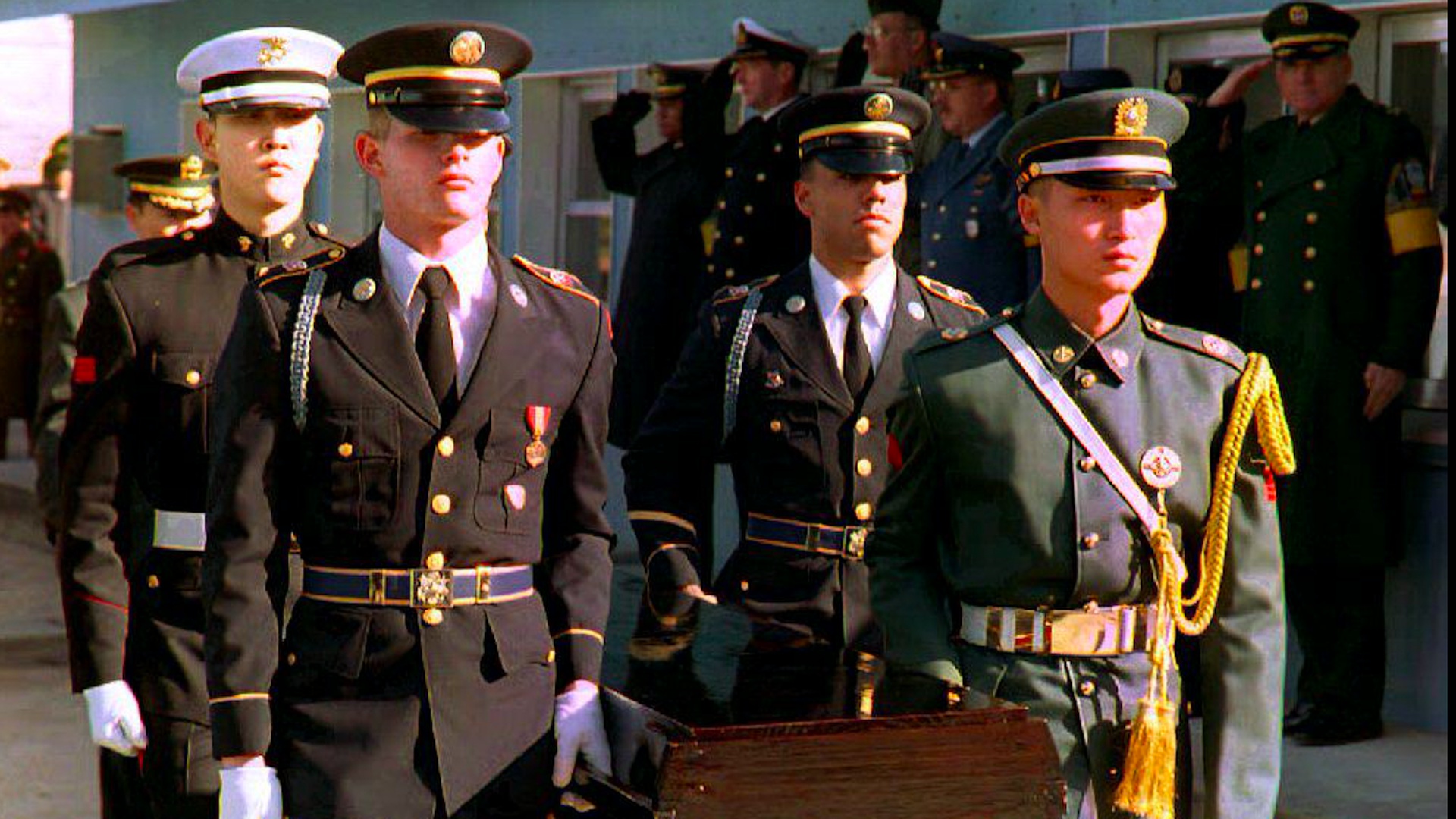
U.S. military officials said they are expecting to retrieve the remains of up to 55 service members who were killed during the Korean War within two weeks, reports the Washington Post.
Why it matters: “It would be the first time that remains believed to be those of U.S. troops have been directly returned by North Korean officials in 13 years,” the Post notes, citing an official who said the timing and number of remains could change.
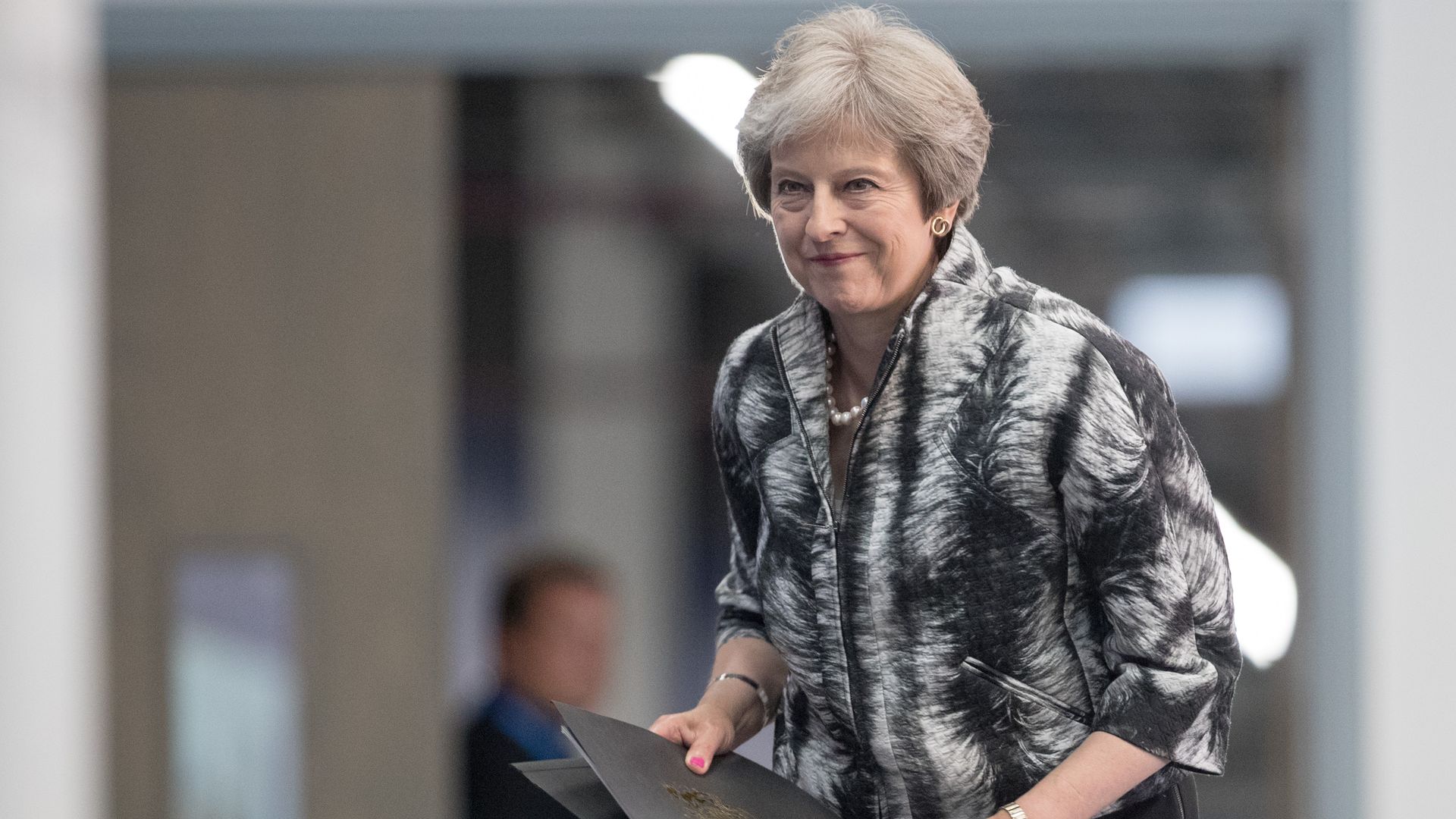
While U.K. Prime Minister Theresa May held a lively press conference with President Trump Friday at her country retreat, Michel Barnier, the EU's Brexit point man, was in Washington responding to her Brexit plan.
Between the lines: May is facing an intraparty revolt for allegedly going too "soft" in her plan, but parts of it still look unacceptable from Brussels. Still, EU officials aren't anxious to see May fall, and a "no deal" Brexit would also damage Europe. So can Barnier show a bit of flexibility?
Bookings Holdings, the parent company of travel sites like Priceline and Kayak, has invested $500 million in Chinese ride-hailing giant Didi Chuxing. The companies will also make each other's services available to their respective customers as part of the deal.
Why it matters: Accommodations is a natural extension of Didi Chuxing's ambitions to be more than a service for on-demand car rides, and fits with its ongoing global expansion beyond China.