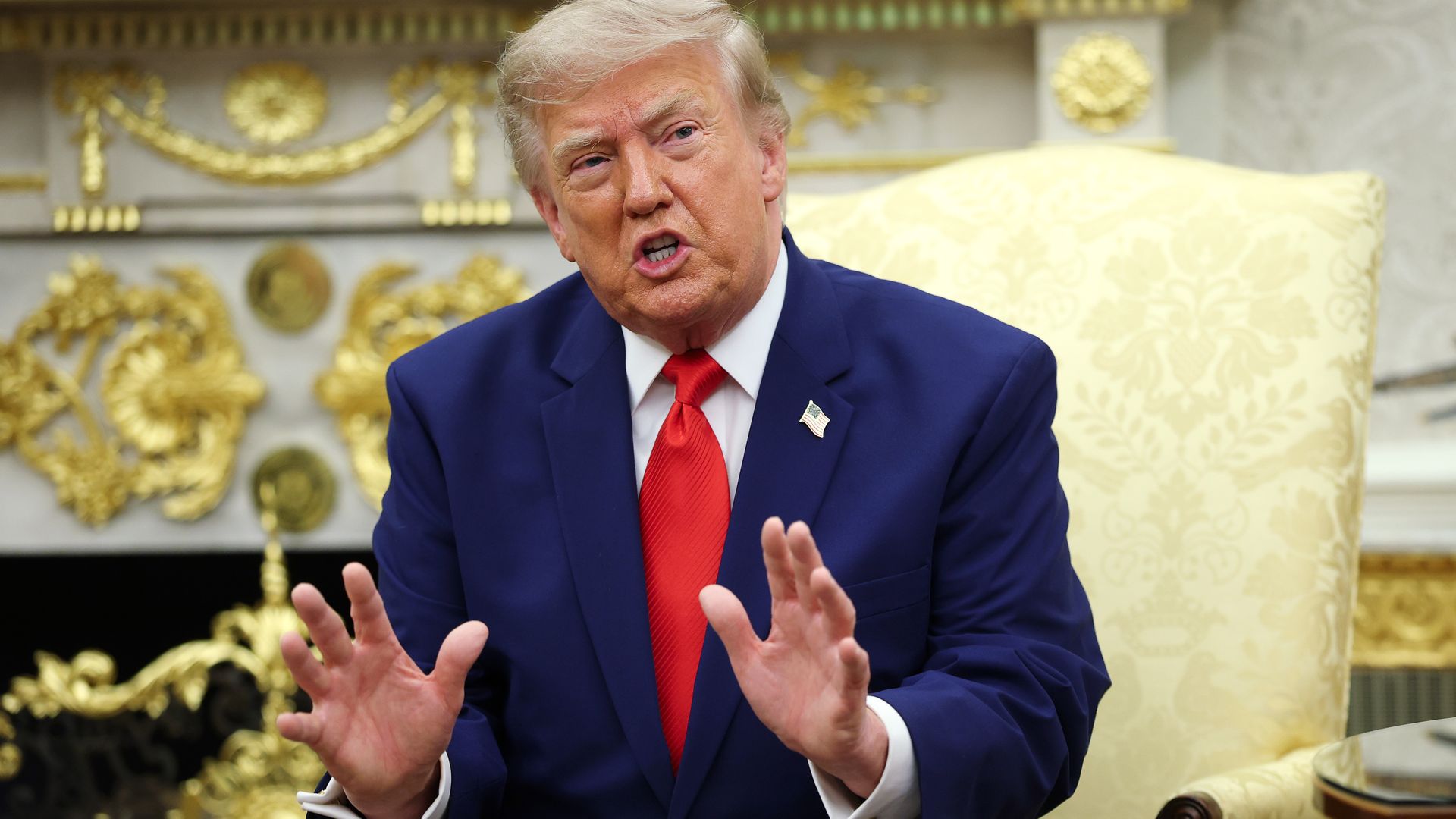
President Trump threatened Wednesday to destroy an Iranian bridge or power plant, including in Tehran, each time Iran attacks a ship in the Strait of Hormuz.
Why it matters:Trump sent the new threat as he considers both a ceasefire and a significant military escalation. His key condition for a ceasefire is for Iran to stop its attacks on ships and reopen the Strait of Hormuz.
Rep. Ritchie Torres (D-N.Y.) has asked the Securities and Exchange Commission to investigate whether plans by Truth Social's parent company to sell Wall Street firms real-time access to President Trump's posts could violate federal securities laws, according to a copy of the letter obtained by Axios.
Why it matters: The letter escalates scrutiny of Trump Media & Technology Group's plan to monetize faster access for institutional investors to President Trump's market-moving social posts.
For the past few years, the corporate playbook for artificial intelligence has focused on making individual employees faster. Leaders armed workforces with generative assistants, expecting a swift bottom-line transformation. Instead, they hit a wall.
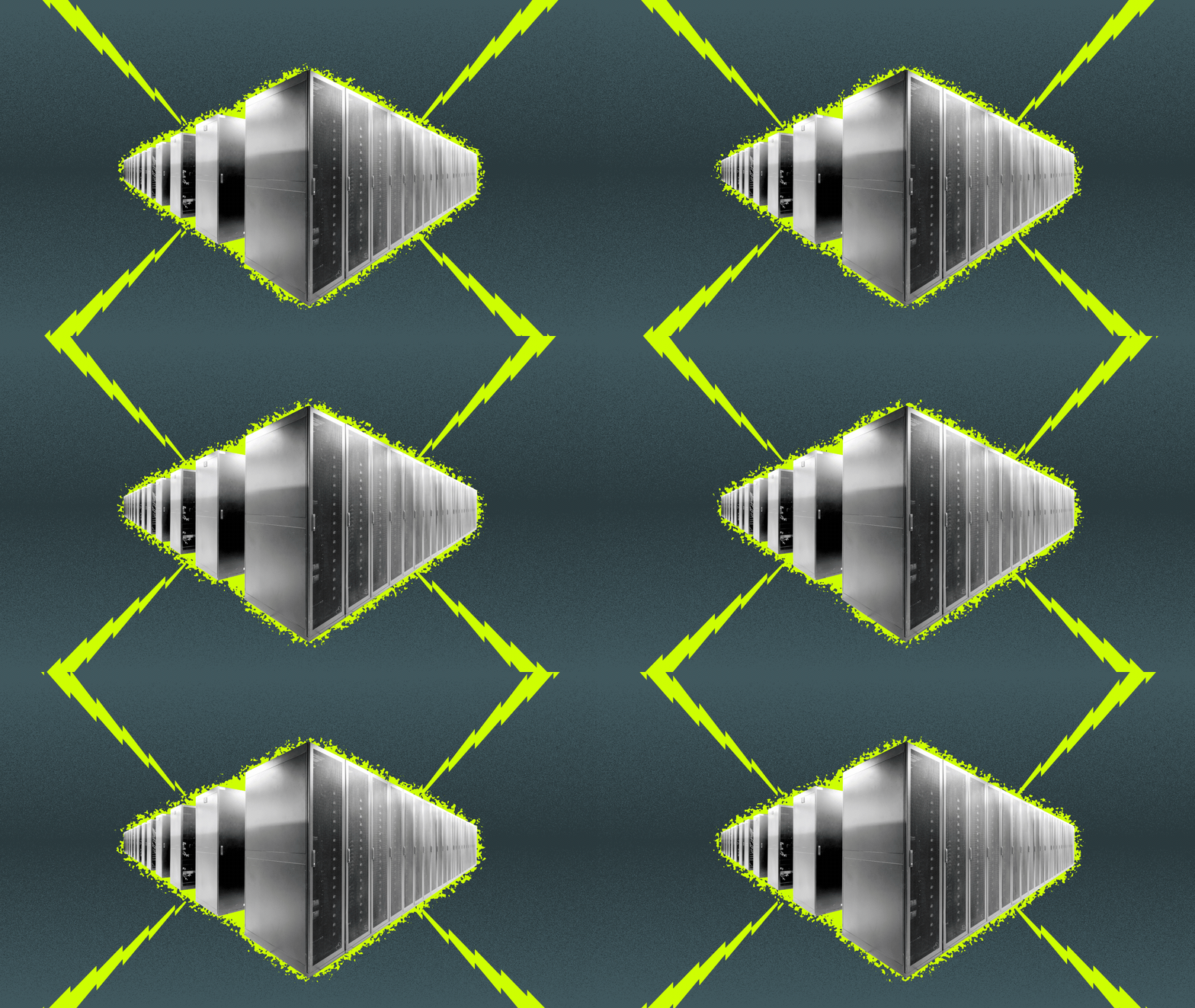
OpenAI on Wednesday announced plans to build a data center near Savannah, Georgia, with 3.2 gigawatts of power to be delivered in phases from 2028 to 2032.
Why it matters: Computing infrastructure is a major constraint on how quickly AI improves and how broadly it can be deployed.
China has poured billions of dollars into the stock market in recent days to snuff out a tech-led selloff, as it seeks to shore up confidence in the domestic economy.
Why it matters: It's a reminder that despite its prowess as an exporter of goods — and increasingly, AI technology — China remains dependent on exports for growth.
Tesla's second-quarter earnings report will provide insights into the state of the core business — but it's the company's future that investors will be focused on more than ever.
Why it matters: After the SpaceX IPO, investors are watching closely for any signs that Elon Musk plans to merge Tesla with SpaceX or keep it independent.
"The stock is increasingly being valued on robotaxi and humanoid developments rather than core auto fundamentals — with a potential SpaceX acquisition adding a premium to our valuation," wrote Tom Narayan, global autos lead equity analyst at RBC Capital Markets.
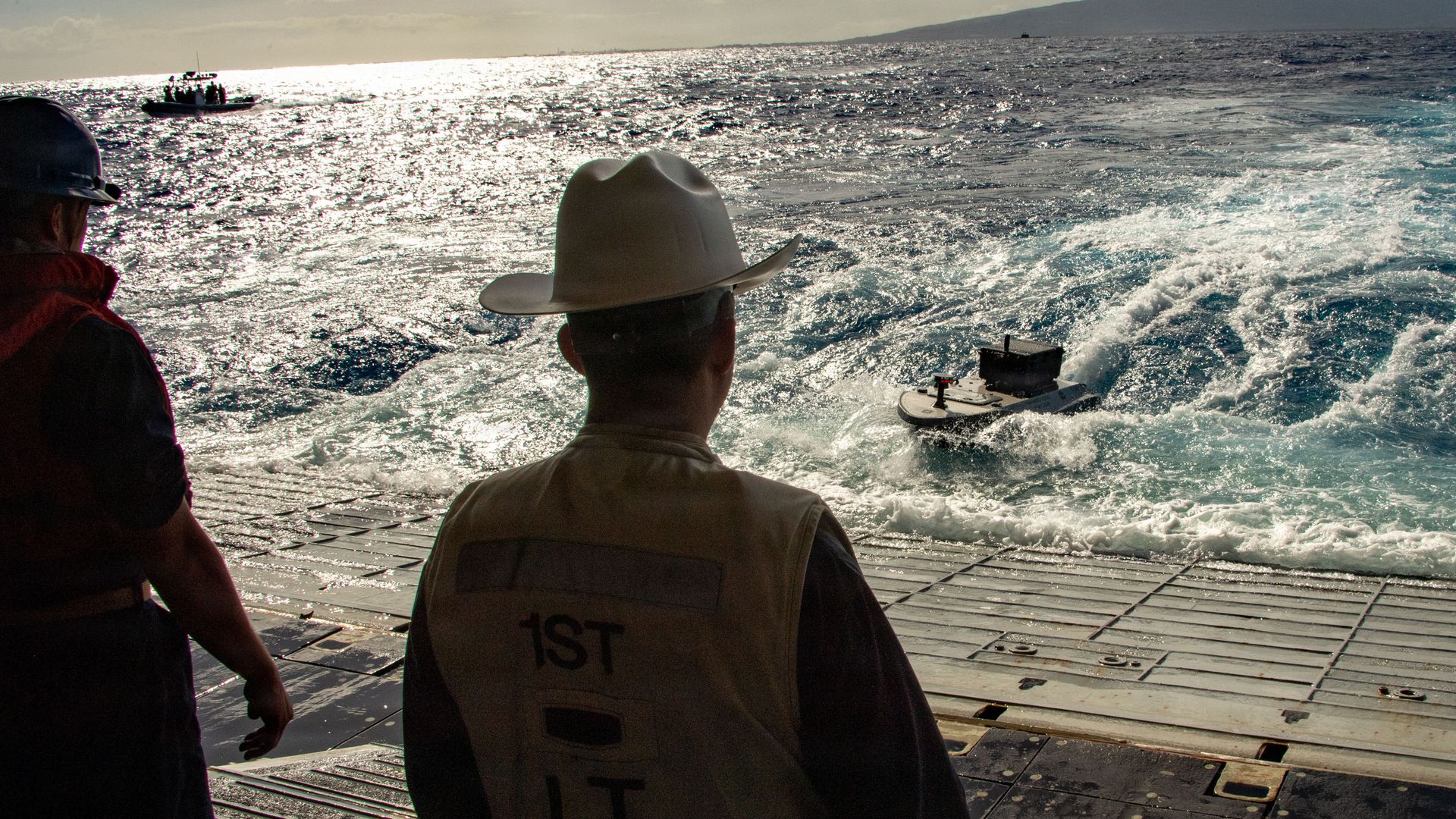
Splash Industries, a California startup, conducted unmanned resupply missions at the Rim of the Pacific exercise, delivering parts to the amphibious assault ship Essex and nuclear-powered aircraft carrier Theodore Roosevelt.
Why it matters: It's a huge moment — at one of the world's largest naval drills, no less — for such a small outfit.
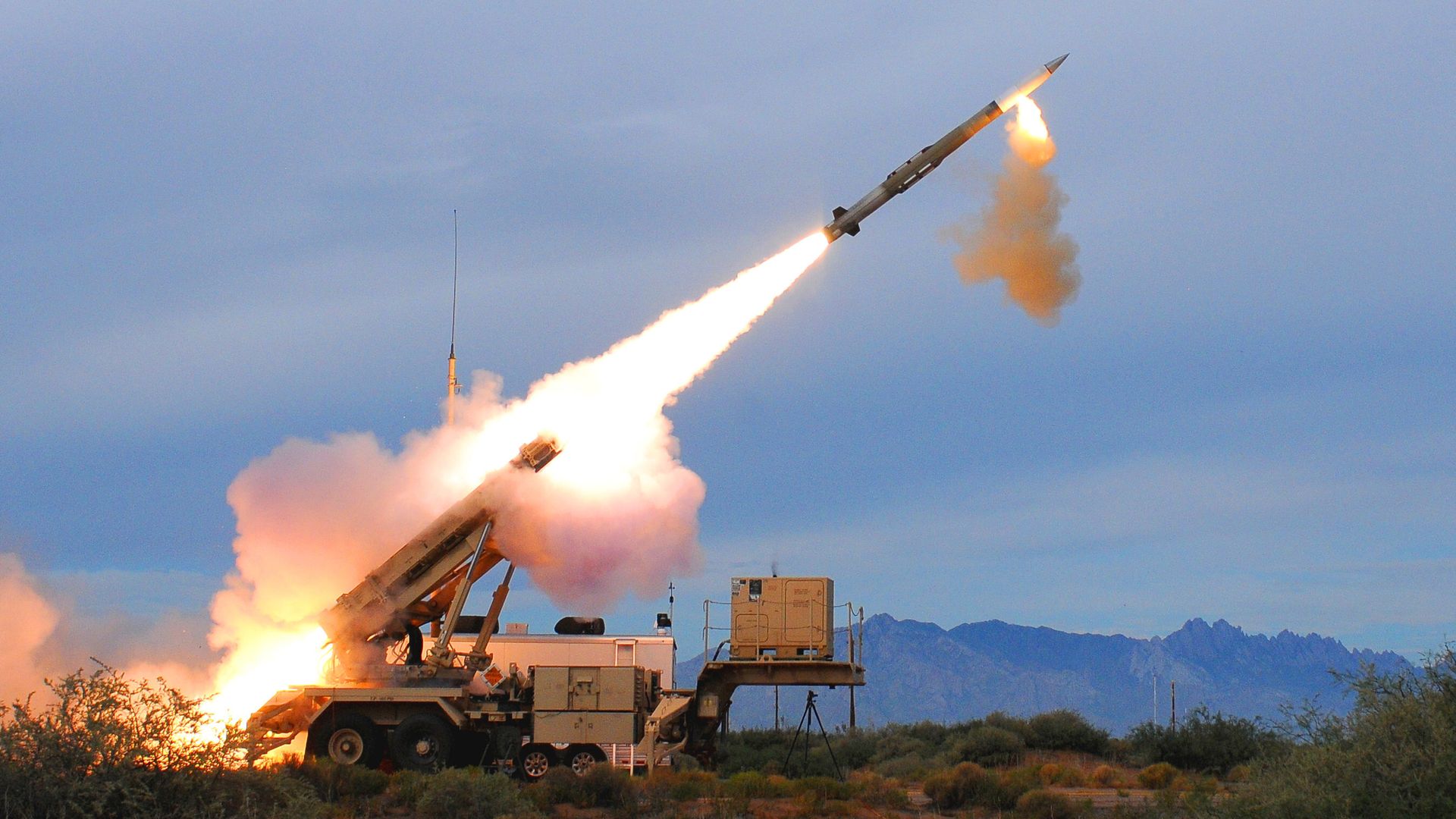
Boeing aims to produce 850 Patriot missile seekers this year, a marked bump up from previous rates, according to the head of its defense business.
Why it matters: The Trump administration has demanded speedier results from the American defense industry, simultaneously singling out companies on social media and inking deals to double, triple and quadruple output of specialty munitions.
"These Chinese models are excellent," Huang told Axios' Mike Allen on Tuesday in an exclusive interview for our "Behind the Curtain" video series. "Open-source models that are excellent should be used."
Why it matters: The world's top AI chipmaker says American companies should "absolutely" be allowed to use Chinese models — a direct challenge to Trump officials and the U.S. labs lobbying Washington to shut them out.
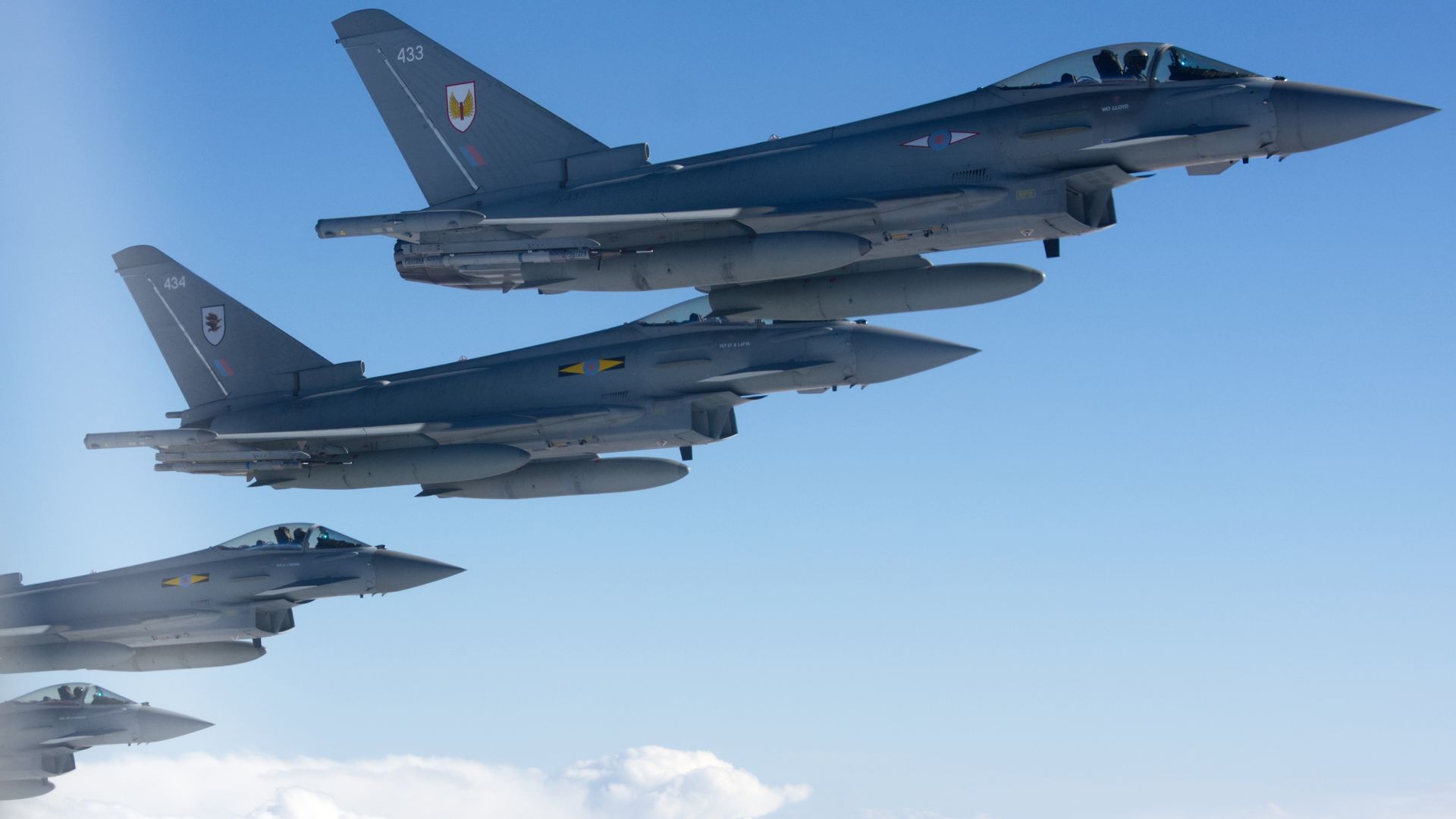
LONDON — The U.K. is betting big on drones and robo-wingmen, assigning a growing number of existing and in-development machines to spying, jamming and bombing roles.
Why it matters: The maturation of artificial intelligence and autonomy has sparked a global sprint to build and deploy hybrid fleets no matter the domain.
Anthropic is donating another $20 million to Public First Action, a bipartisan advocacy group focused on AI transparency and safeguards, the company announced on Wednesday.
Why it matters: That's now $40 million the company has committed to public education efforts on AI ahead of elections.
OpenAI and Anthropic compete fiercely for customers. But in Washington, the two leading AI labs are aligning on one issue: warning policymakers about the risks of powerful Chinese open-weight AI models.
Why it matters: That shared position pits the top U.S. AI labs against researchers, startups and open-model advocates who argue broad access to AI is essential for competition and scientific progress.