Samsung to put AI smarts inside all its 2026 smartphones

Add Axios as your preferred source to
see more of our stories on Google.
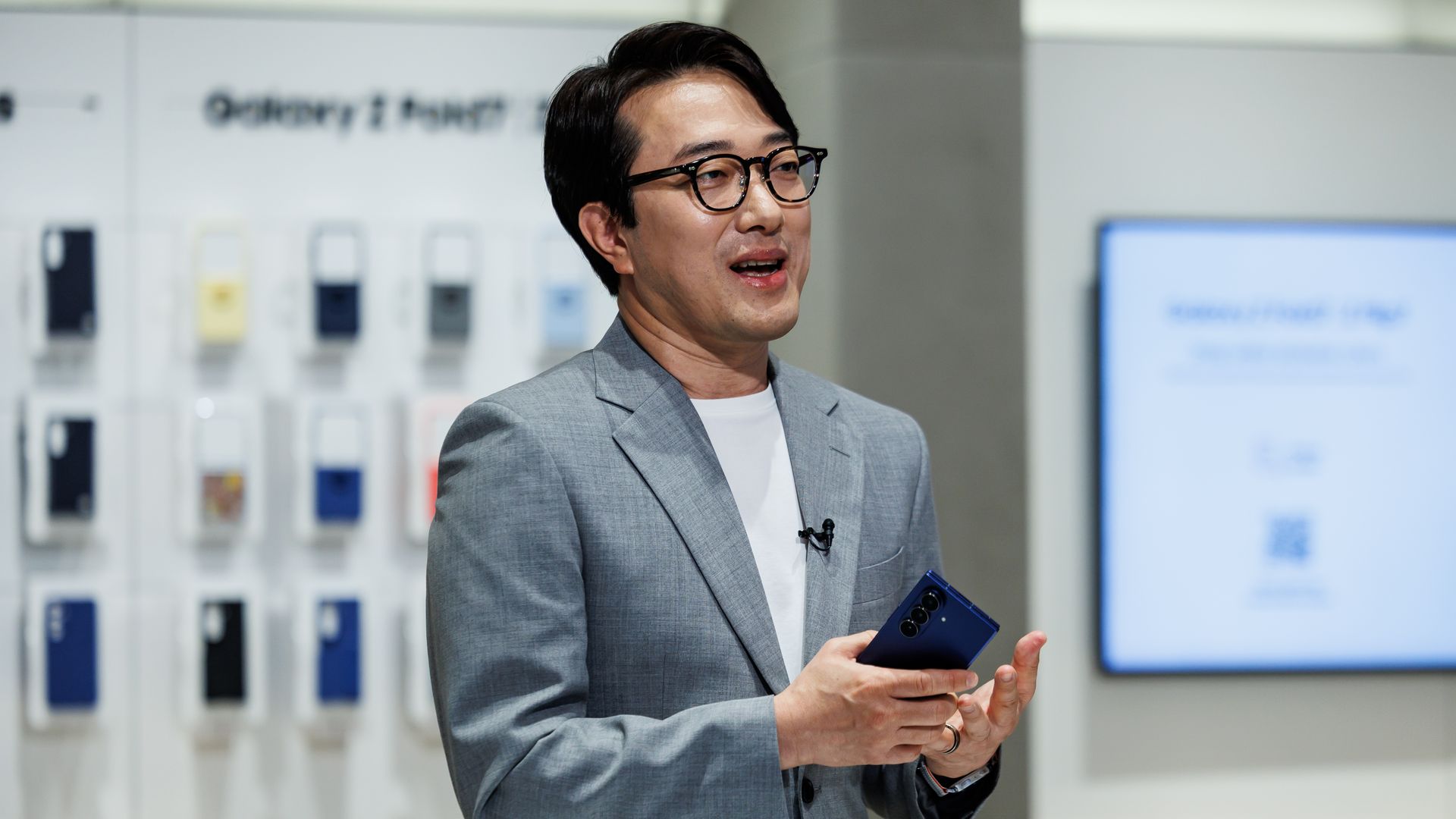
Samsung mobile unit COO Won-Joon Choi, speaking at the company's Suwon, South Korea headquarters. Photo: Seong Joon Cho/Bloomberg via Getty Images
Samsung wants to put mobile AI into the hands of millions more people — whether they buy the company's pricey foldables or its entry-level phones, a top executive told Axios.
Why it matters: The company aims to double the number of AI-equipped Samsung smartphones to more than 800 million by the end of 2026.
- "We really want to increase accessibility of AI for all people," Won-Joon Choi, COO of Samsung's mobile device business, told Axios.
The big picture: As the largest Android phone maker, Samsung sees the iPhone as its main competition.
Yes, but: The company also needs to differentiate itself from other Android phones, including Google's Pixel line.
- Samsung relies heavily on Google, which develops both the Android ecosystem and its key apps — Gmail, Chrome and YouTube.
- The company has long tried to add its own software, sometimes offering apps that largely overlap with Google.
- Past software efforts have often failed to click, but Samsung says its AI features are showing signs of stickiness.
What they're saying: "Generally when we launch a new feature, we'll see usage peak right after the launch, and then the usage will continue to dramatically drop," Choi said.
- With Galaxy AI, however, Choi says usage is staying high.
- Samsung's most popular in-house AI tools include photo editing features and its "Now Brief," which summarizes upcoming events and surfaces relevant weather, news and other information, he said.
Between the lines: Choi says AI is reshaping Samsung's hardware priorities, with more emphasis on neural processors and high-bandwidth memory.
Zoom in: He doesn't see the shift to AI reducing the need for the large screens on its foldable line of devices.
- "We cannot underestimate the importance of these displays," he said. "You will get answers through voice, but at the same time, people will need displays and screens to get visual output. So in the era of AI, I think foldables and large screens will actually have a bigger role to play."
- Samsung recently debuted the Galaxy Z Trifold, a smartphone that unfolds into a 10-inch tablet. It debuted in Korea, but is expected to go on sale in the U.S. later this year.
What to watch: Choi also expressed excitement for the AI glasses that Samsung is developing with Google.
- "Glasses are one of the most natural ways for us to interact with AI using our voice and vision," he said. "It's a natural form factor. It's always on. It can understand what you're saying. And basically the glasses will see what you see."
- "Within this year, you will be able to see these glasses," Choi said.
