Exclusive: Inside the 82nd Airborne's machine-fueled fight

Add Axios as your preferred source to
see more of our stories on Google.
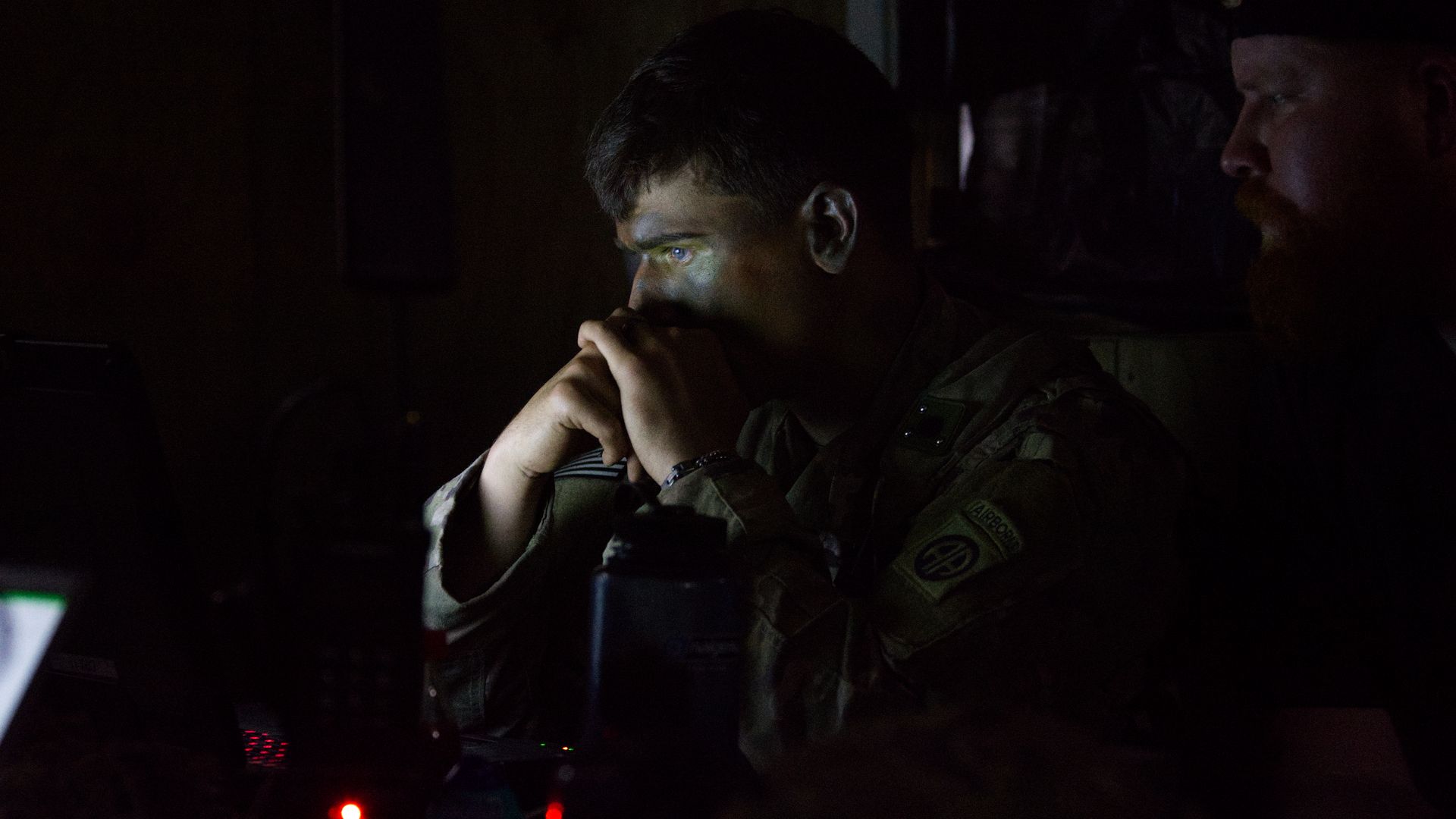
Monitoring drone feeds on the outskirts of Dara Lam, at the Joint Readiness Training Center, Louisiana. Photo: Colin Demarest/Axios
FORT POLK, La. — The windows of the Multi-Functional Reconnaissance Company command post were plastered with black trash bags. The table at the center was littered with hot sauce, maps, cables and Nalgene bottles. Around it gathered a few men, faces painted, staring at small screens.
- The plan for the night was simple: Use drones to spot, harass and kill the enemy. Taking out the mine-clearing line charges from afar would be critical to the defense of Dara Lam, a make-believe city in this sandy section of Louisiana.
- "It kind of feels like cheating," one of the men said of the drones.
- "Switchblades are artillery on easy mode," said another.
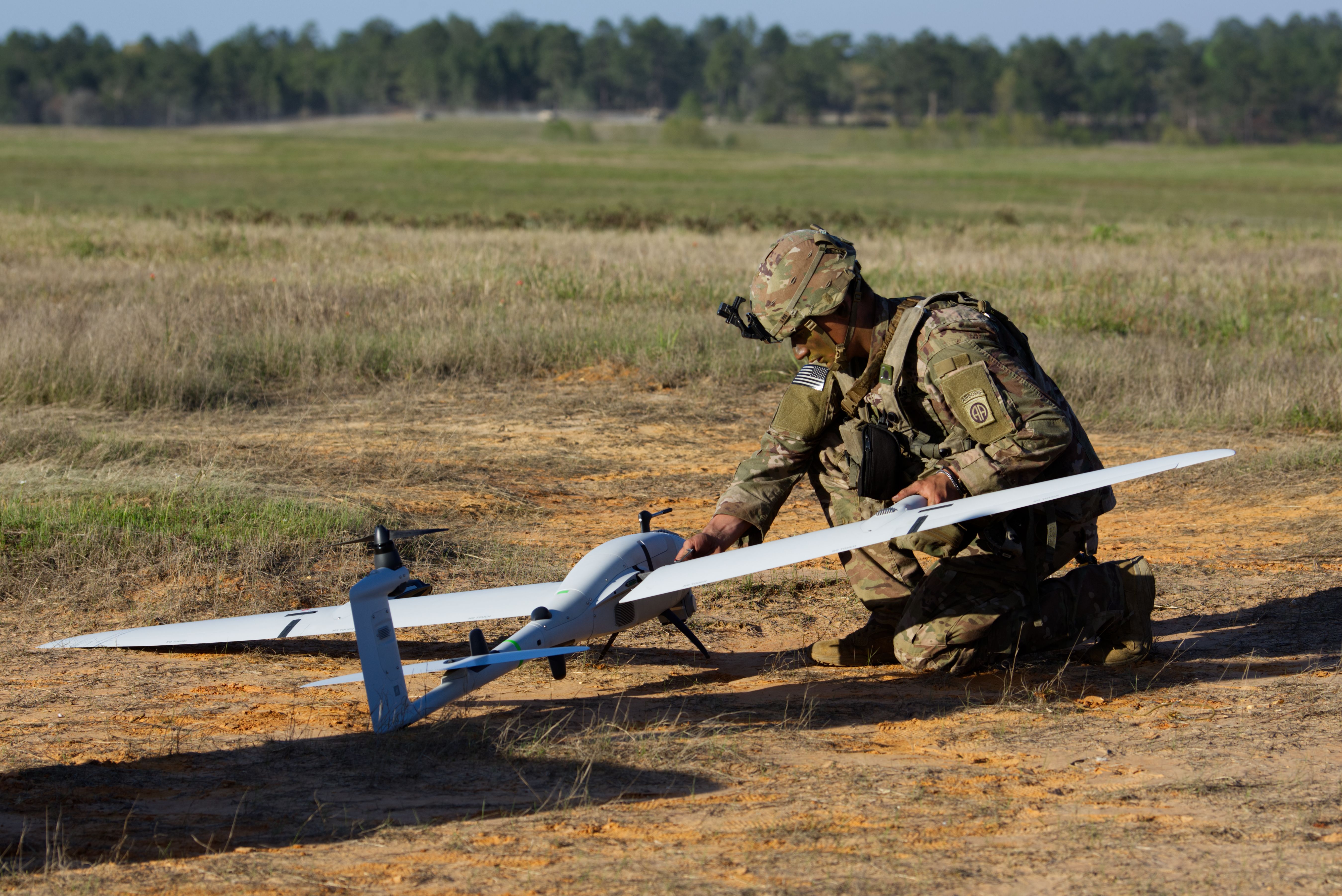
The big picture: Portions of the 82nd Airborne Division have spent the past few days at the Joint Readiness Training Center (JRTC), honing how they infiltrate, surveil, fight and resupply.
- Increasingly, it's done with smart machinery.
- "The long-range reconnaissance unmanned aerial system? Very capable," said Col. Daniel Leard, the 3rd Brigade Combat Team commander.
- "The second piece that I think shows a lot of promise is our autonomous land vehicles," he said. "They're legitimately getting where they need to go."
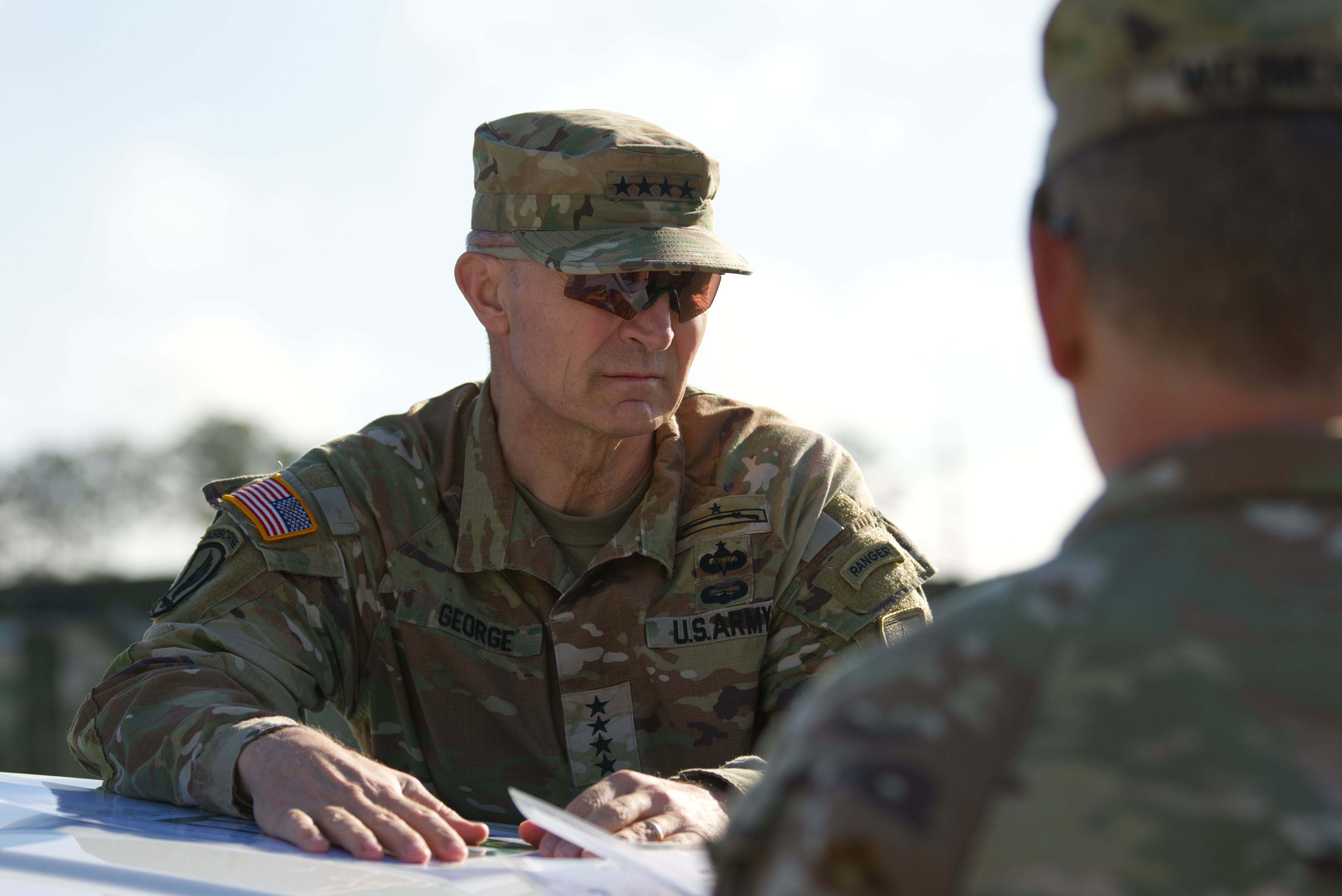
Driving the news: Axios spent March 19-20 in Louisiana, alongside Army Chief of Staff Gen. Randy George, observing what the 82nd Airborne is up to — and how unmanned tech is reshaping war.
- "These combat training centers ... are worth every penny that the taxpayer spends on them," Leard said. "It takes a special person to be a paratrooper. And I've got 3,000 of them, and they're eating it up right now."
- Shortly after the trip, different elements of the 82nd Airborne were slated to deploy to the Middle East amid the Iran war.
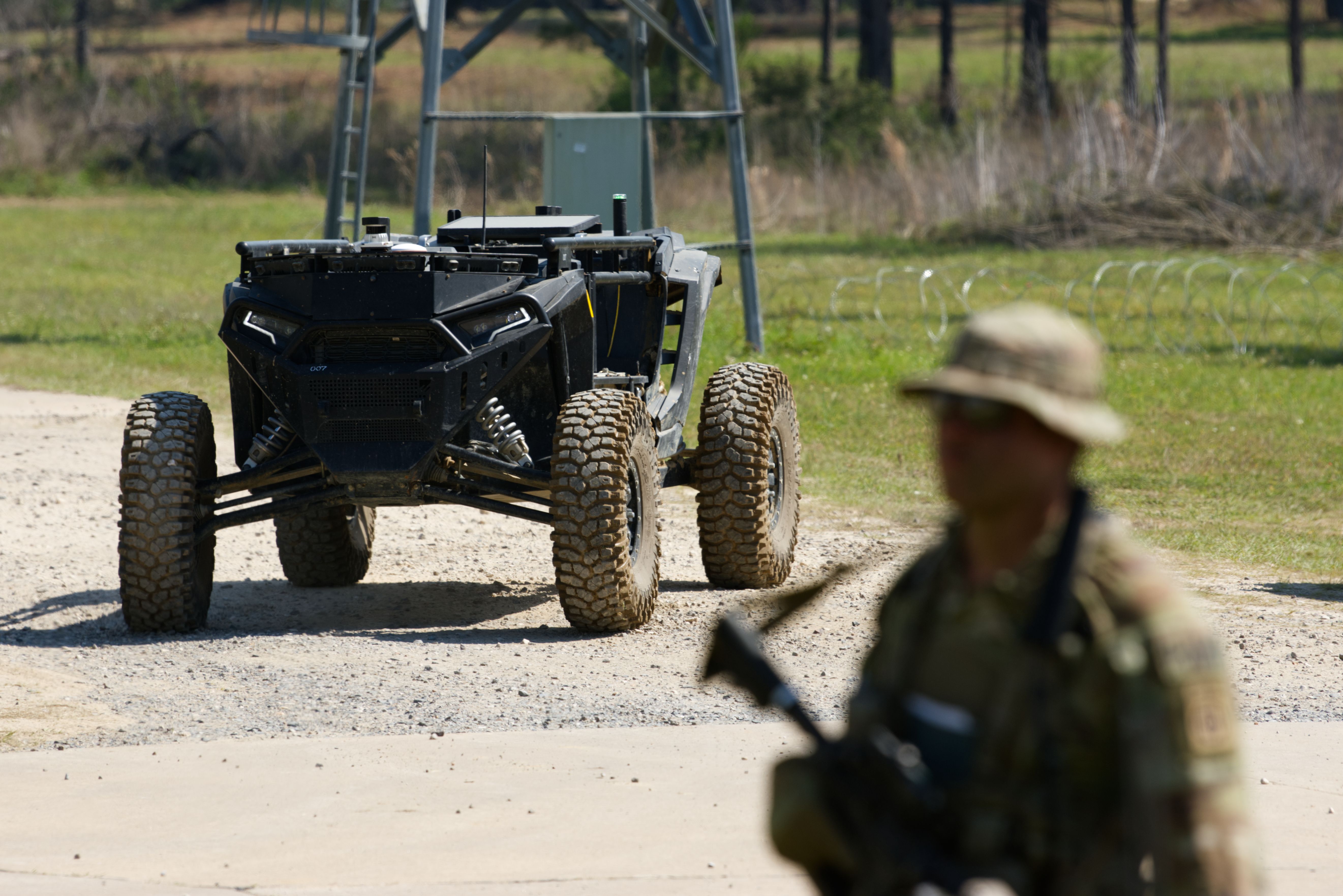
Zoom in: On the same day this Multi-Functional Reconnaissance Company (MFRC) was executing drone one-two punches, robo-resuppliers made by Overland AI whipped around the city and its unpaved roads.
- These Ultras, as they're known, can haul 1,000 pounds and cruise for 100 miles. One variant launches a tethered drone. Another's outfitted with a counter-drone system.
- "When we jumped in on the first night, one of our responsibilities was to consolidate cargo bundles that we drop on the drop zone. And typically we had to do that by hand, driving a Humvee in the middle of the night," Lt. Col. Peter Van Howe told Axios.
- But these automatons "cut our resupply on the drop zone by half," he said. "That really had a big impact on our ability to keep moving." Several other people said they had yet to see one tip over.
Zoom out: The U.S. military has for years talked about man and machine working together seamlessly. Take, for example, the Army's human-machine integrated formations, the Navy's hybrid fleet and the Air Force's collaborative combat aircraft.
Friction point: It's easier said than done.
- Battlefield connectivity is spotty at best. Messy electronic signatures are death sentences. Autonomy is still maturing. Trust must be built.
- And the price-point debate — expendable, attritable, exquisite — rages on. (One person told Axios what they really need is "the Honda Civic" of drones. Widely available. Effective. Reliable.)
What they're saying: "I think we're doing really well in the Group 1-2 UAS," George, the Army's top uniformed official, told Axios, referring to relatively small and mobile drones.
- Plus: "I've seen a lot of advancements in the last year in ground autonomy. You don't get that in simulation."
State of play: The Army is trying and buying unmanned tech for a range of tasks, including route reconnaissance, contested logistics, breaching and missile launching.
- "What we have found is our units are much more lethal. We have collected the data. We had a rotation that was 300% more lethal using the machines," George said.
What's next: MFRCs, a relatively recent introduction to the Army, will continue to evolve. Their doctrines are being drafted today by those in the field tinkering. The Army last year conceded "every MFRC is different."
- "We're trying to take out the middleman, as much as we can, to expedite the sensor-to-shooter process," one 82nd Airborne officer told Axios.
- "We're just figuring out what works."
Go deeper: Army and Treasury team up to pull in defense-tech investments
