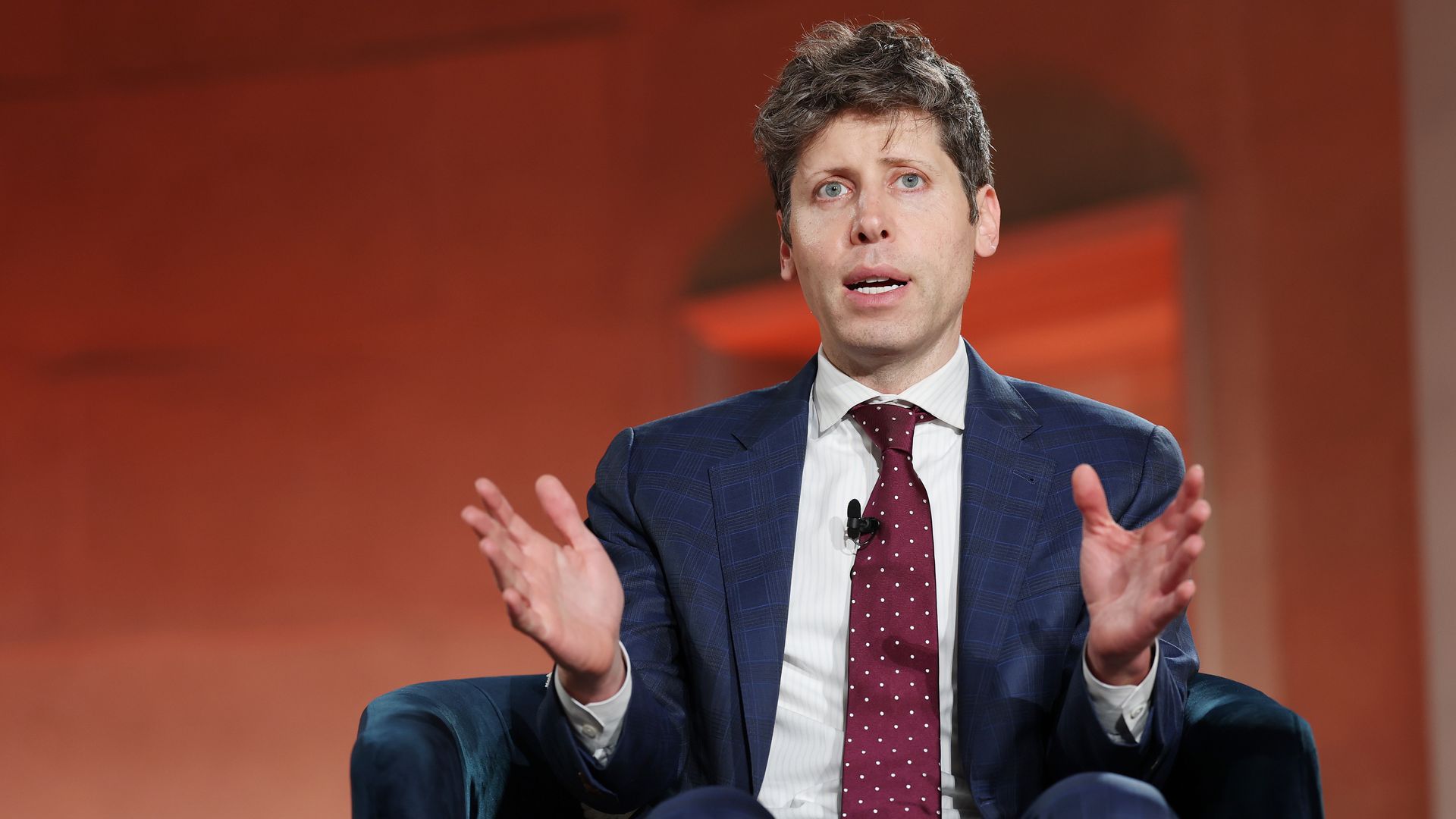
OpenAI is rolling out a more permissible version of GPT-5.5 — aka "Spud" — to vetted cyber defenders, the company said Thursday.
Why it matters: Recent security testing suggests that GPT-5.5 model is nearly as good at finding and exploiting software bugs as Anthropic's Mythos Preview. The capabilities of the new models have sparked an urgent debate in Silicon Valley and the White House about how to keep them out of the hands of bad actors.
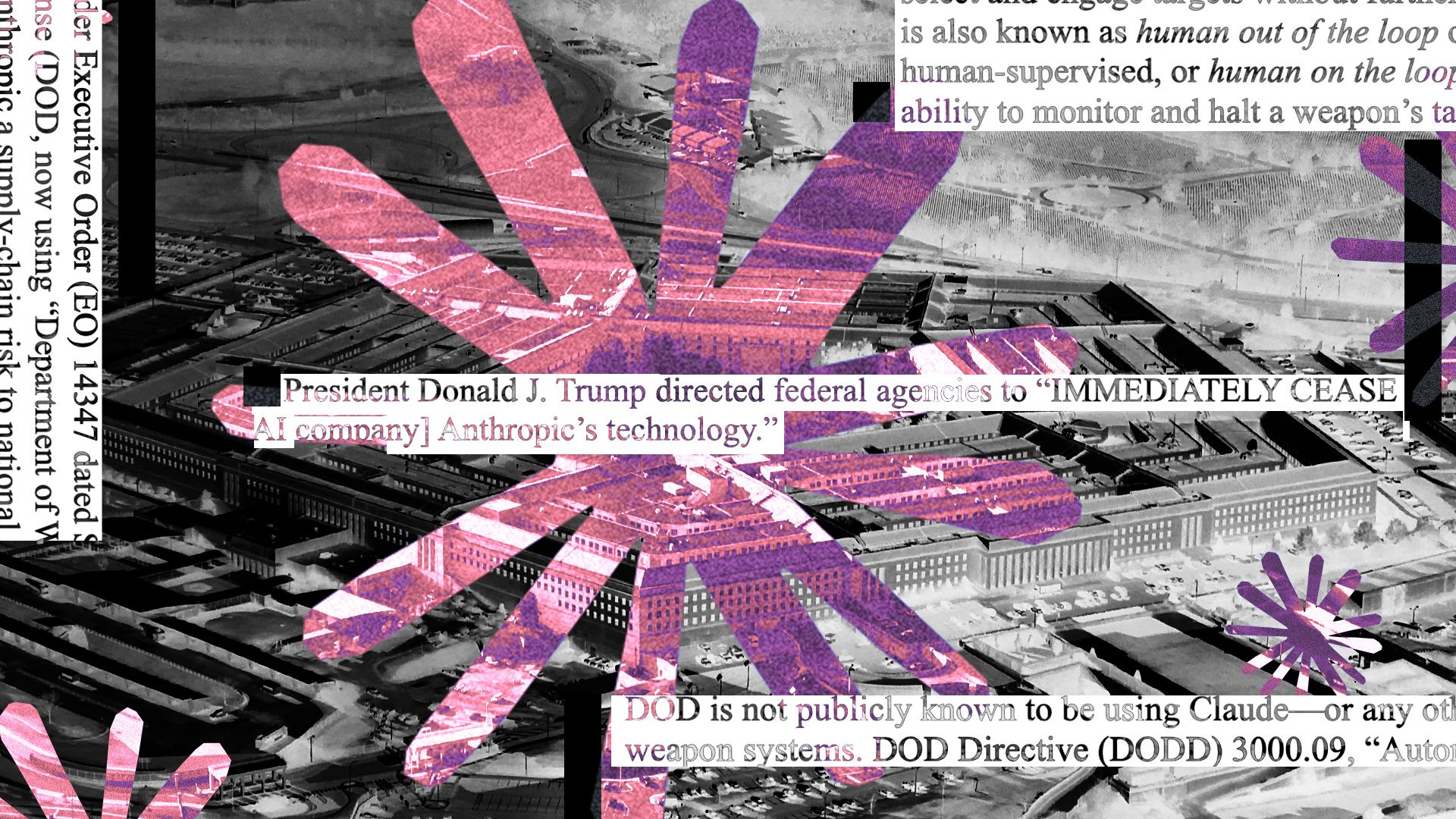
There's no resolution between Anthropic and the Pentagon coming any time soon despite new agreements with other frontier AI companies, chief technology officer Emil Michael said Thursday.
Why it matters: Michael's comments come as the White House considers potential executive action around AI testing and safety, moves that could eventually allow government agencies to work with Anthropic again.
Bumble's swipe feature — responsible for countless connections, breakups and everything in between — will soon be no more, founder and CEO Whitney Wolfe Herd announced Wednesday on "The Axios Show."
Why it matters: Wolfe Herd, who returned to the dating app as CEO last year, is making a big bet: ditching core features to pivot toward AI-driven matchmaking and attract new users ahead of a relaunch this year.
Is today more like 1995, when a technology-driven productivity surge was underway but not yet fully acknowledged, or like 1999, when that boom was well-known, much-celebrated, and reflected in asset prices?
The answer might determine what the Federal Reserve ought to do about interest rates in 2026.
If the U.S. stock market is now largely a bet on the AI boom, then South Korea's market is a supersized, turbocharged version of that wager.
Why it matters: Investors' optimism about the promise of AI is global, but such a concentration of wealth in one sector could be risky in a market downturn.
The AI coding tools letting anyone "build" software without engineering skills are also letting medical records, financial data and Fortune 500 internal docs leak onto the open web, security researchers say.
Why it matters: AI coding tools are enabling employees without engineering or cybersecurity training to publish internal tools publicly, often without company oversight or basic access controls.
Anthropic, the AI lab whose identity is wrapped around warning the world about AI risk, is claiming "early signs" of AI not just coding its own products but building itself.
Why it matters: Anthropic co-founder Jack Clark predicted this week that there's a 60%+ chance of an AI model fully training its successor by the end of 2028. "What I'm looking at is a technological trend where, if anything, the speed will accelerate further," Clark told us.
In the new research agenda for The Anthropic Institute — first shared with us, and out Thursday — the company says it's seeing signs of "AI contributing to speeding up the research and development of AI itself," a process known as recursive self-improvement. And Anthropic researchers think the world should know.
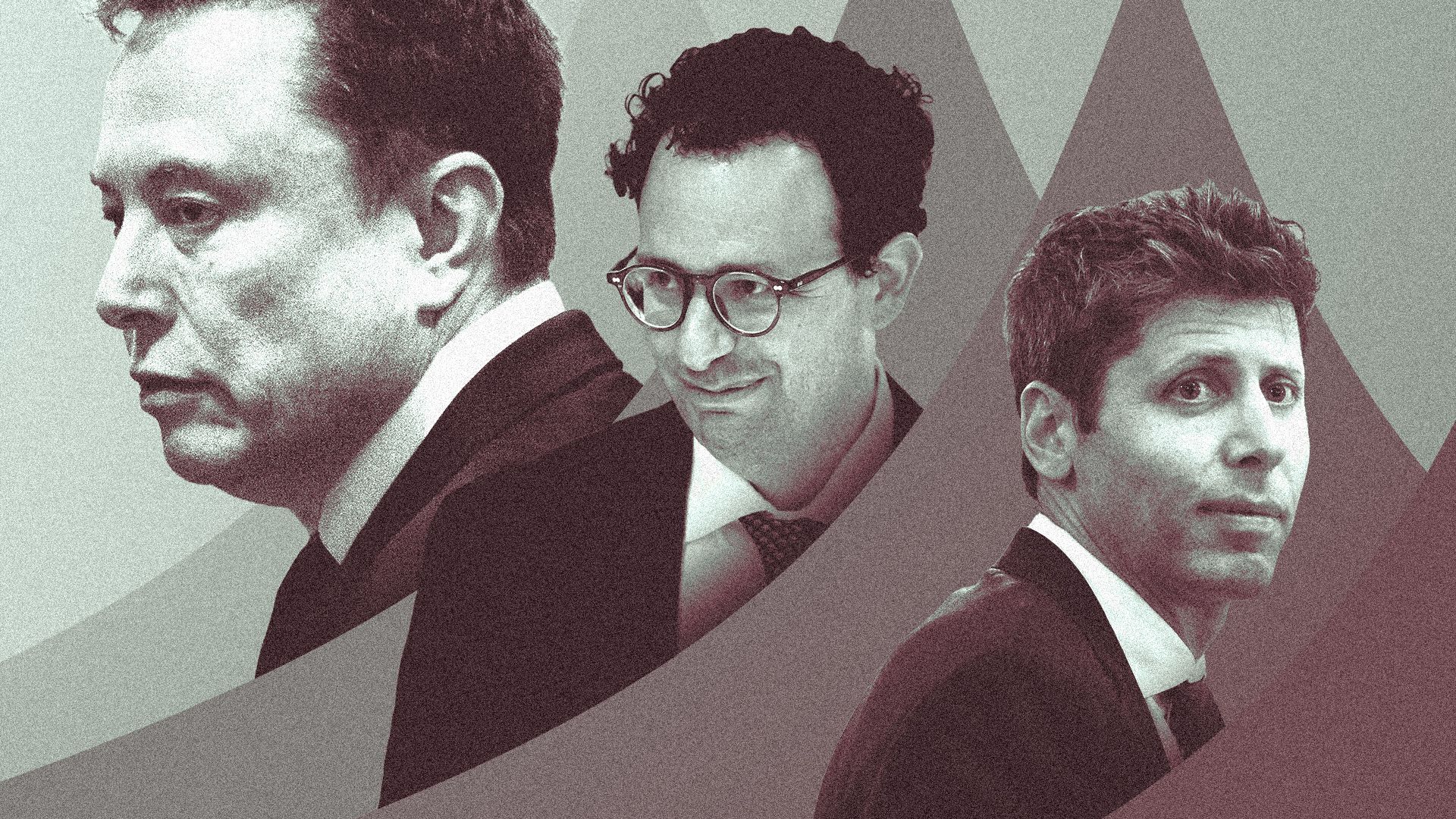
Elon Musk's surprise Anthropic deal allows him to accomplish two things at once: turn unused compute into revenue before an expected SpaceX IPO next month — and stick it to his archrival, OpenAI CEO Sam Altman.
Why it matters: Musk went from calling Anthropic "evil" to doing business with it in three months, showing how quickly competition can give way to strategic necessity in the AI race.
It's no secret that AI has become a splitting headache for private equity, or at least for funds that bought big into enterprise software.
But this isn't just a backward-looking problem, which can be temporarily stemmed by Q1 equity markdowns and maturing debt renegotiations.
Almost every industry big that spoke to Axios at the Milken Global Conference this week said that AI has created massive modeling challenges for new deals, almost regardless of sector.
Private equity is a long-term asset class, typically holding portfolio companies for a minimum of three or four years.
For context, it's been only three-and-a-half years since ChatGPT was first released.
Subsequent AI advancements — including the introductions of Claude, Gemini, etc. — have upended industries.
Any financial sponsor (or lender) who claims a high degree of confidence in the environment three-and-a-half years from now is either lying or self-deluded. Even if it partners with a major frontier lab.
"Modeling exit multiples has always involved a lot of guesswork, but now it feels like throwing at a dartboard blindfolded," said one private equity veteran.
The known unknowns are more pronounced, even in industries that appear AI-resistant or more likely to benefit from the tech than be disintermediated by it.
Private equity has plenty of dry powder, with limited partners continuing to invest despite the DPI drought.
So new investments will obviously be made. Even if the industry's long-term nature, always one of its greatest strengths, is becoming a material weakness.
After years of development, autonomous trucks are gaining traction across the Sunbelt, but the industry's next breakthrough is economic, not technical.
Why it matters: Large-scale adoption won't happen until driverless trucks become cheaper to operate than human-driven ones — an inflection point that could soon reshape freight logistics, labor and supply chains.
Anthropic said Wednesday it has struck a deal to gain access to compute capacity from Elon Musk's SpaceX, a move that could help the company deal with surging demand.
Why it matters: Anthropic has been struggling to meet the needs of developers which has led to aggressive rate caps and a shift to usage-based pricing.
Meet ALEX by Admired Leadership, an AI coach built on a rare foundation: more than 40 years of research into 15,000 exceptional leaders and nearly 2 million words of proprietary research on what actually works in high-stakes leadership moments.
If AI causes a sustained surge in the economy's productivity potential, it will significantly ameliorate America's dire fiscal picture — though by how much depends on how bumpy the path is for workers and how much the government does to assist people whose jobs are displaced.
The big picture: That's the upshot of new modeling from the Budget Lab at Yale, which shows that in the most optimistic scenario — one with strong productivity growth but without mass unemployment — the national debt would level off as a share of the economy.
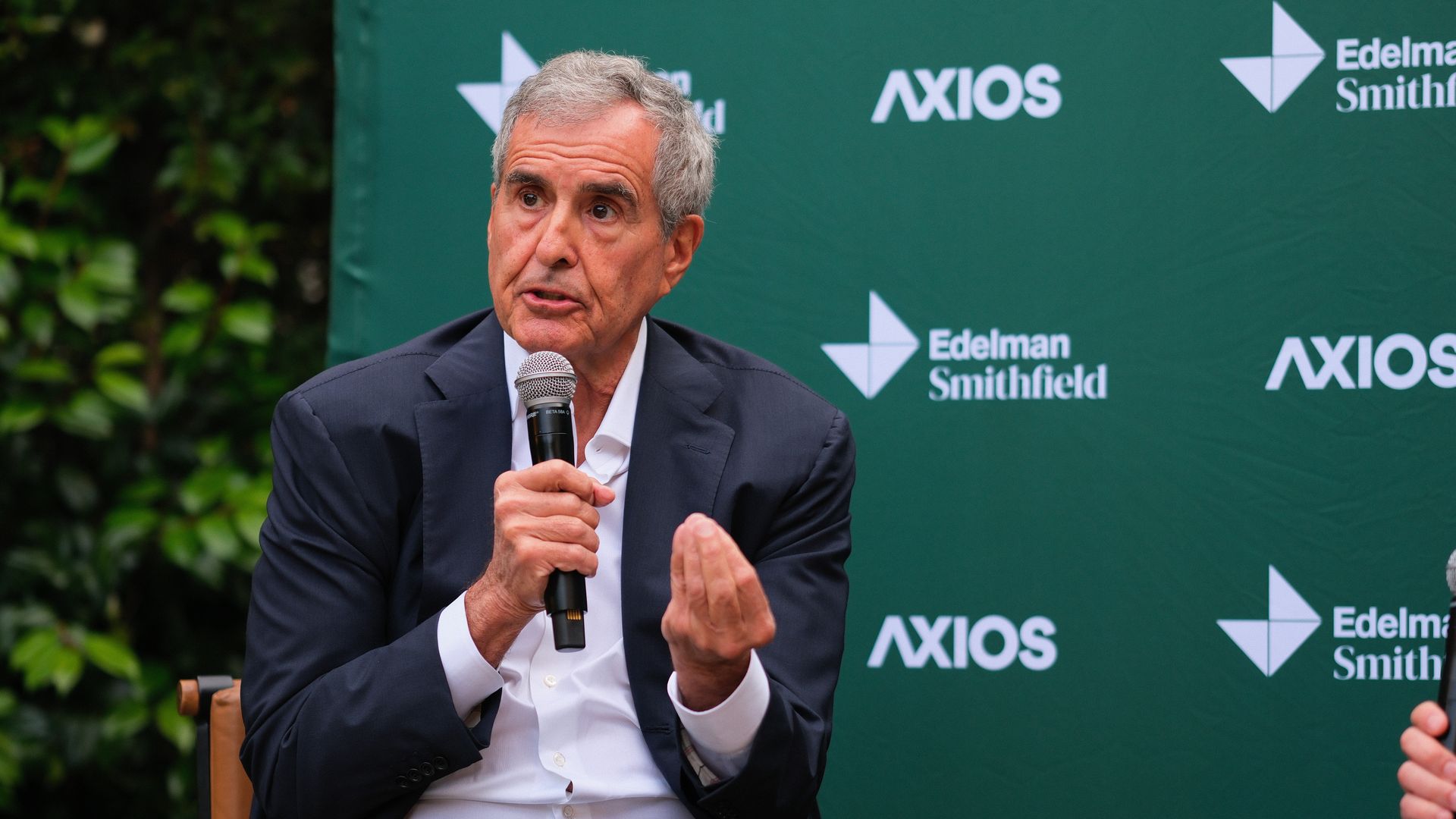
LOS ANGELES — Media companies should focus on creativity instead of growth, The Chernin Group co-founder and North Road chair Peter Chernin said at a May 3 Axios Live event.
Why it matters: Original content gives smaller studios a rare opportunity to compete with industry titans.
Axios' Dan Primack spoke to Chernin for the event, which was sponsored by Edelman Smithfield.
Fun fact: At the time of the interview and a first for the streaming platform,Chernin's production company had the No. 1 TV show ("Man on Fire") and movie ("Apex") on Netflix.
What they're saying: "You can't beat an incumbent on scale," Chernin said. "You beat an incumbent on creativity."
Studios are also "wildly over-focused on sequels," he added. "Those companies should be in the business of creating and inventing original" intellectual property.
"The most exciting things happen where young people and talent and technology come together."
Case in point: North Road's new movie "Backrooms," directed by YouTube creator Kane Parsons and based on a 2019 viral internet post, is projected to be "the most successful new horror movie in the last several years," Chernin said.
What's next: Chernin recommends that major platforms rethink their approach to keeping everything in-house when it comes to ownership, production and distribution rights.
"Embrace independent, creative companies" to stay competitive and relevant, Chernin said.
"Resisting technology is a stupid idea," he added.
Content from the sponsor's segment:
Lisa Leiter, Edelman Smithfield's managing director and U.S. co-head of financial services, told Axios publisher Nicholas Johnston that the rise of AI is causing concern.
"People are worried about losing their jobs," she said, "and there's a fear that [AI] could really damage society."
Companies should be clear, concise and specific as they share information with the public to reinforce trust, she added.
The director of the Pentagon'sEconomic Defense Unit has heard your "Deal Team Six" jokes. He thinks the nickname is both fun and fitting.
"Economic warfare has been a part of all successful nations for thousands of years," George Kollitides, who's months into the job, told Axios at the Milken Institute Global Conference in California.
The big picture: Dealmaking is synonymous with national security. There is no missile production, no shipbuilding, no crazy venture valuations, no European rearmament and no American reindustrialization without it.
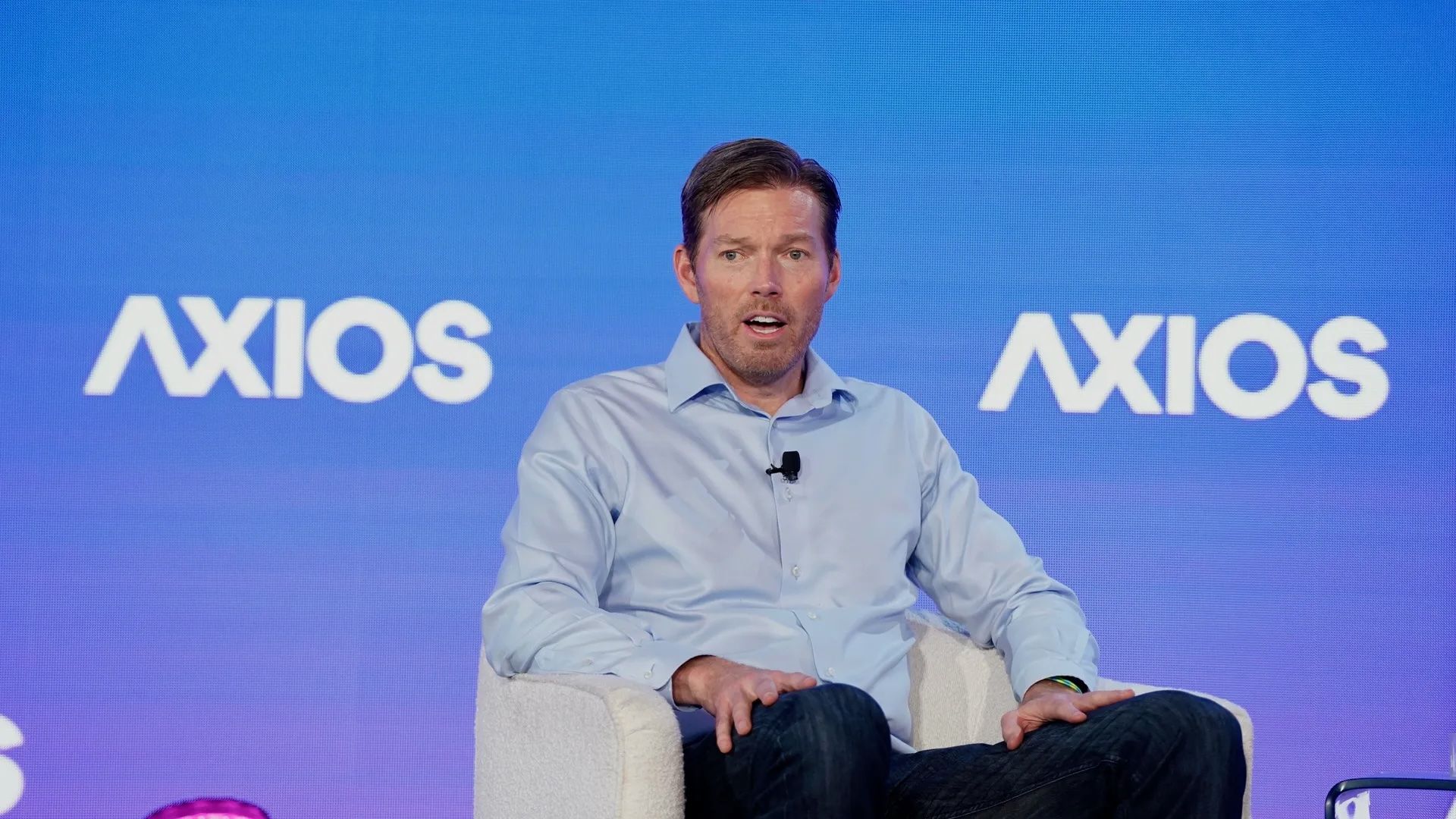
Scale AI CEO Jason Droege tells Axios that AI is often too unreliable for mission-critical use by business, military and government.
"The cost of mistakes in these environments can be high," Droege, 47, said in an interview from San Francisco, where Scale — which celebrated its 10th anniversary this week — is based.
Why it matters: Droege — who succeeded founder Alexandr Wang last June when the wunderkind became Meta's first chief AI officer, and Meta took a 49% stake in Scale — wants to signal that it isn't merely a data annotation company, but has long been an AI infrastructure and deployment company.
AI is helping make doctors the unwitting stars of deepfake videos that hawk questionable products or spread misinformation, prompting calls from clinicians for more privacy and transparency laws.
Why it matters: The profusion of AI content on social media platforms could further erode public trust in the medical establishment.
Coinbase is the latest in a string of companies to pair layoffs with announcements that AI is changing the way the company operates.
Why it matters: Companies are increasingly blaming AI for job cuts, but the evidence points to a messier mix of automation, cost-cutting and market pressure.
The simplest AI playbook we know doesn't involve a single model. It's three questions, asked by YOU to YOU. They work for any size company, any seniority level:
What are the three things, in order of importance, you must do to meet or exceed expectations in your gig?
What are three things you think you're supposed to be doing that make no sense, could be done better or not at all?
What are three things AI could do better than you to 10x your output?