Amazon is offering its distribution, parcel shipping and fulfillment services to outside businesses, not just to those on its marketplace.
Why it matters: The $2.9 trillion company is now aiming to be a dominant force in the global supply chain, going head-to-head against delivery companies like FedEx and UPS, as well as air freight and logistics firms.
OpenAI has launched a self-serve advertising platform, executives said, marking a significant step in its goal of generating $2.5 billion in ad revenue this year and $100 billion by 2030.
Why it matters: The new platform makes it easier for a broader set of advertisers to buy ads on ChatGPT.
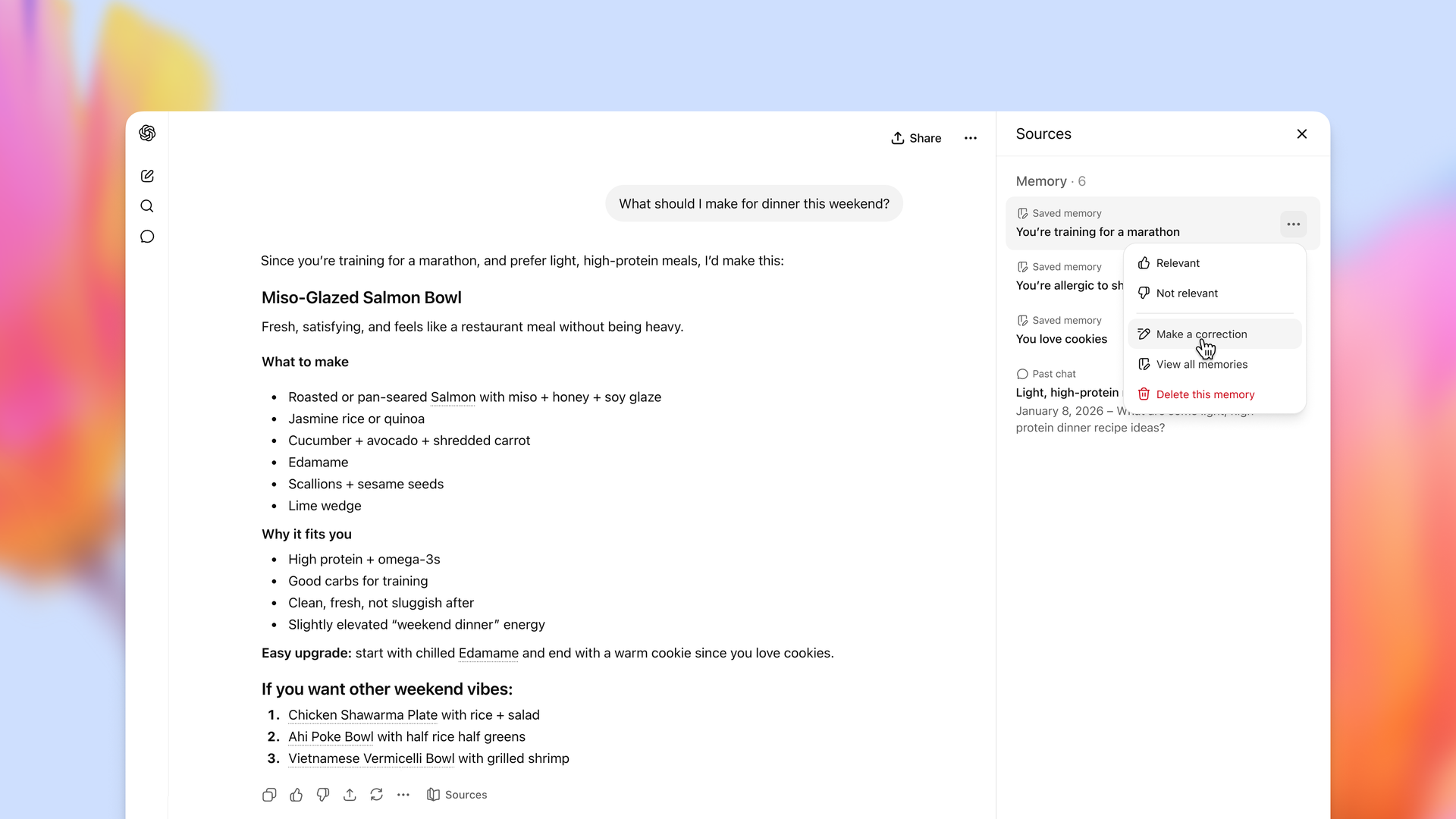
OpenAI is making the default ChatGPT more accurate and more personal — changes that could increase people's reliance on it, while also increasing its access to their lives.
Why it matters: Even subtle changes to a chatbot's tone, accuracy or memory can trigger backlash.
New research suggests that OpenAI's GPT-5.5 model — aka Spud — is nearly as good at finding and exploiting software bugs as Anthropic's Mythos Preview.
Why it matters: The head start that cyber defenders were promised when Mythos was unveiled last month is disappearing faster than expected.
Health systems are sitting on massive amounts of clinical data, but turning that data into timely patient care isn't always easy.
Qualified Health isa health care AI platform that uses Anthropic's Claude to analyze clinical data, identify patients who qualify for evidence-based interventions and surface those patients directly into clinicians' workflows for follow-up care.
In-Q-Tel is refashioning its investment strategy to focus on a smaller number of big bets in key areas like autonomy, contested logistics and critical infrastructure, CEO Steve Bowsher told Axios.
The big picture: The venture capital firm, birthed from the CIA, helped elevate Anduril Industries and Palantir Technologies, among the splashiest companies in today's defense-tech frenzy.
Its hundreds of other investments include drone-maker Neros, cyber specialist Twenty and remote-sensing company ICEYE.
JPMorgan Chase CEO Jamie Dimon stood next to Anthropic CEO Dario Amodei in New York on Tuesday and told Wall Street the AI buildout is worth every dollar.
Why it matters: With investors increasingly anxious about whether AI revenue can keep pace with spending, the head of the world's largest bank endorsed a capital expenditure wave projected to top $1 trillion next year.
Private equity is now in bed with the same AI giants that are decimating the industry's portfolio values, particularly the hundreds of billions of dollars invested in software.
Driving the news: Both Anthropic and OpenAI have completed their deals to form AI consulting firms that are funded by, and will initially be used by, large private equity firms.
Anthropic announced its joint venture yesterday, while OpenAI's announcement is expected later this month.
The government is deepening its oversight of cutting-edge AI, signing new agreements with Google DeepMind, Microsoft and xAI to test powerful models, according to a Commerce Department announcement.
Why it matters: As AI systems grow more powerful and potentially risky, officials want to understand their security implications before they hit the market, even in a Trump administration focused on accelerating AI innovation.
The biggest tech companies are set to spend $1 trillion on AI by next year, according to multiple banks, a bill so big that it's propping up both the stock market and economy.
Why it matters: Our financial system is now load-bearing on AI spending that may never pay off, and most investors can't even see what the full tab is.
President Trump set out on his first day in office to free artificial intelligence from government constraints.
15 months later, his own White House is preparing to become a gatekeeper for the most powerful new models on Earth.
Why it matters: AI has crossed a threshold that no administration — not even one ideologically committed to staying out of its way — can afford to ignore.
Elon Musk's lawsuit against OpenAI and the recent spate of deals AI companies have cut with the Pentagon show how far the industry has drifted from the altruistic origin story it's long told about itself.
Why it matters: OpenAI and Anthropic were founded on the idea that AI would be deployed in ways that prioritized safety and the public good. Now those principles are giving way to an arms race for market share, as those companies and others release ever more powerful models.
AI makers have trained agents to use software like people do. Now the industry is starting to build software meant for agents instead.
Why it matters: If agents stop using software the way humans do, tech competition could shift from who has the best interface to who controls the APIs, data and permissions agents need to act.
Congrats! You started a business using AI. Now, you've got to run it. AI can help with that, too.
The old rule: After launch, the hiring surge and spiral begins. Every hire slows the business down before it runs.
The new rule: The next generation of companies will be designed before they're staffed. You can use AI agents to execute a lot of the work. You supervise outcomes, not big teams of people, until business is rolling in.
Why it matters: This could be the real jobs story of the decade — perhaps even bigger than "AI takes your job." The same technology that threatens millions of existing roles can create a wave of small, profitable, lower-headcount companies that couldn't have existed five years ago.