OpenAI makes default ChatGPT more personal

Add Axios as your preferred source to
see more of our stories on Google.
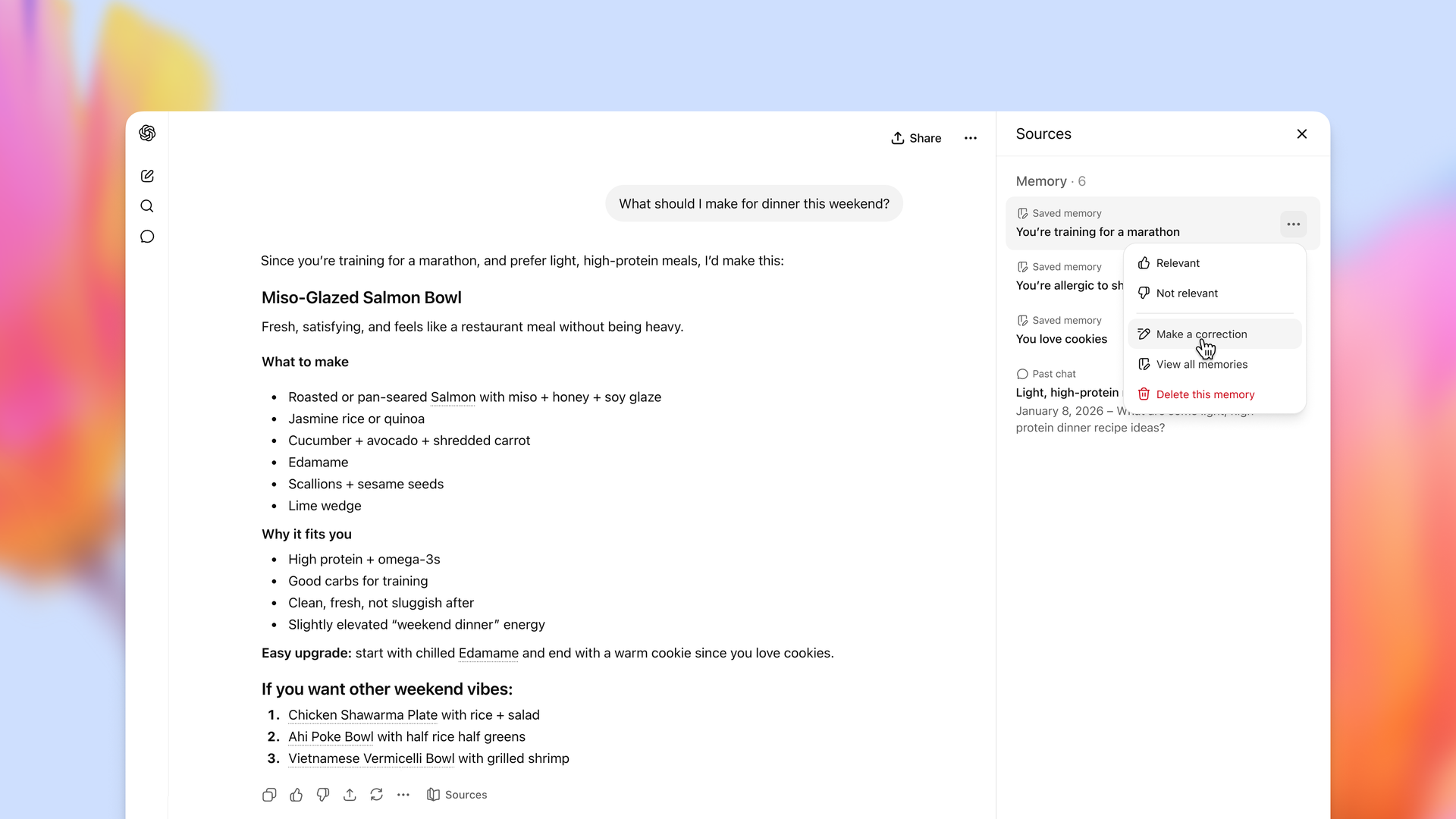
Image: OpenAI
OpenAI is making the default ChatGPT more accurate and more personal — changes that could increase people's reliance on it, while also increasing its access to their lives.
Why it matters: Even subtle changes to a chatbot's tone, accuracy or memory can trigger backlash.
Driving the news: OpenAI updated ChatGPT's default model to respond with more accuracy, more personalization and fewer gratuitous emoji, the company said Tuesday.
- GPT-5.5 Instant is rolling out to all ChatGPT users and to the API.
Enhanced personalization is initially for Plus and Pro on the web.
- Free, Go, Business and Enterprise will come later.
- Paid users can keep GPT-5.3 Instant for three months.
By the numbers: OpenAI says GPT-5.5 Instant produced 52.5% fewer hallucinated claims than GPT-5.3 Instant on high-stakes prompts in areas like medicine, law and finance.
- It also reduced inaccurate claims by 37.3% in especially challenging conversations users had flagged for factual errors.
Zoom in: The new model "matches the scale of the task," the company said in a blog post Tuesday.
- For casual advice prompts, the new version avoids unnecessary follow-up questions and formatting that made responses feel cluttered.
Between the lines: Instant will also draw on more of a user's context in responses to prompts.
- That includes information from past chats, files users have uploaded and Gmail, if connected.
Reality check: OpenAI says this means users won't have to repeat themselves as often, but not everyone wants a chatbot with persistent memory.
- The company is also adding "memory sources," a control that shows users some of the context ChatGPT used to personalize an answer, such as saved memories or past chats.
- OpenAI says users can delete or correct outdated memory and use temporary chats that do not use or update memory.
Yes, but: The increased memory serves as a reminder that prompts may be stored by AI services, depending on the service and settings.
- Connecting your chatbot to third-party services means putting more of your personal or work information at risk.
- The tradeoff between efficiency and privacy online has been a constant battle ever since there was an internet.
Zoom out: Lower hallucination rates can also create new problems.
- Users may trust answers more even when the model is still capable of getting things wrong.
What we're watching: Whether OpenAI's new memory-source controls are enough to reassure users who want more personalized answers without feeling watched.
