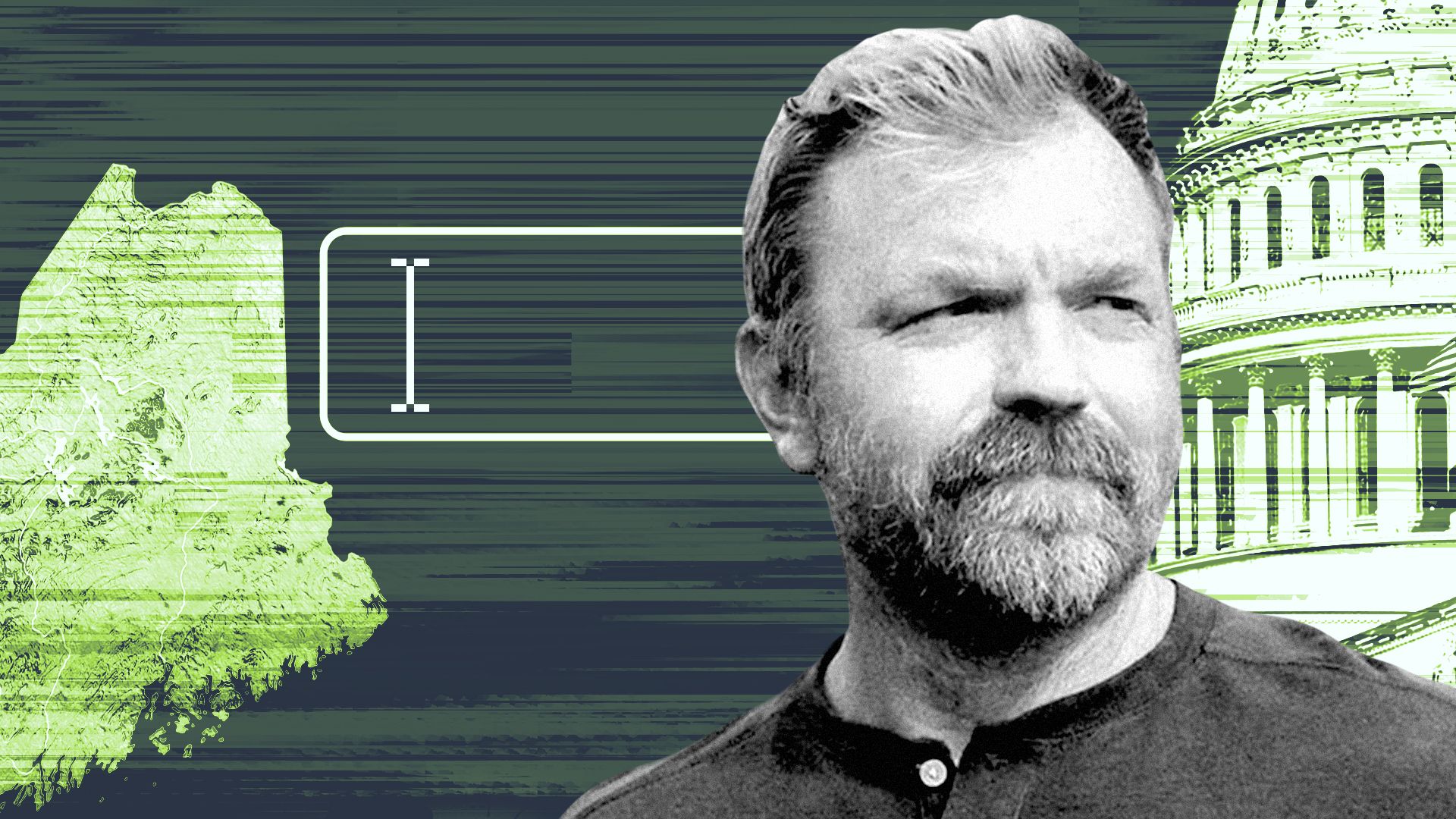
Potential presidential candidates are operating like creators, with social video operations, podcasts, Substack accounts and merch stores ahead of 2028.
Why it matters: Politicians can build audiences, raise money and shape narratives nationally beyond traditional media interviews or ad campaigns.
Since changing its press rotation policies last year, the White House has ushered in smaller and creator-led outlets, many of which align politically with the administration.
Why it matters: Just as candidates are leaning into the creator model to reach younger audiences, so too is the Trump administration.
Left-leaning news organizations have gained momentum in Trump 2.0 with podcasts and digital outlets seeing stronger reach, funding and audience engagement.
Why it matters: It marks a reversal from Trump's first term, when conservative media dominated social distribution and audience growth.
Universities across the country are rescheduling or canceling finals after a cyberattack shut down a learning platform used by thousands of schools for course information and assignments.
The big picture: The attack comes at a critical moment for college students who are cramming for finals — and underscores education's growing reliance on singular technology platforms.
Leading the Future, the pro-AI super PAC backed by major tech names, is endorsing three more Democrats in upcoming primaries, the group told Axios exclusively.
The latest Democratic candidates to get the group's endorsement are Val Hoyle (OR-4), Rob Menendez (NJ-8) and Richie Torres (NY-15).
Why it matters: The pro-AI super PAC is continuing to spend big on candidates it thinks will boost their preferred policies, even as policy fights over AI in Washington get more complicated.
The U.S. labor market has found its footing: A yearlong pattern of whipsawing between job gains and losses is finally breaking, a sign that stabilization is taking hold.
Why it matters: The labor market is holding up despite a wall of headwinds, including an energy shock stemming from the Iran war and the uncertainty that comes with the conflict. So far, the damage that was expected to ripple through hiring simply hasn't shown up.
LOS ANGELES — Artificial intelligence is helping nonexperts code, make money and sell products faster, business leaders said at a May 3 Axios Live event.
Why it matters: The technology is making it easier for beginners to earn money while increasing the value of expertise for investors and entrepreneurs.
Axios' Dan Primack moderated the Expert Voices roundtable, which was sponsored by the Center for Audit Quality.
What they're saying: "It has never been easier to launch … and get something into market," Greycroft co-founder and managing partner Dana Settle said.
"I'm seeing a lot of founders that I probably would not have seen pitching to me… because they now have the ability to code and build products," Stripe startup and venture capital lead Asya Bradley said.
"This kid can now write… [and] make Salesforce in his bedroom," Playground Global co-founder and general partner Peter Barrett said.
Case in point: In less than six months, TD Bank used AI to launch a Spanish-language mobile app with nearly 500,000 customers.
Yes, but: Experience still matters.
"There has never been more of a premium on expertise," Tradeweb chief financial officer Sara Furber said.
People with deep knowledge of investment and an understanding of AI "are making a killing," said Osman Ali, Goldman Sachs Asset Management global co-head of quantitative investment strategies.
"Being able to write software is necessary, but not sufficient," Barrett added.
Content from the sponsor's remarks:
"Decisions are being made faster than ever," said Amy O'Connor, vice president of public affairs at the Center for Audit Quality.
"So many times in life, we consume or engage with something, and we really don't know how it got there," she added. One of the most important things is "making sure that we have good information."
The Trump administration appears poised to reshape the U.S. approach to AI security ahead of President Trump's trip to China next week.
Why it matters: What happens next could be the turning point for how the Trump White House handles the proliferation of the most advanced AI models in the world.
Graham Platner, the presumptive Democratic nominee in Maine's Senate race, on Friday called for ending federal taxes on gasoline and diesel.
Platner is also proposing a national freeze on electricity rates.
Why it matters: His race is likely among the nation's tightest — and critical for Democrats' uphill climb to regain control of the chamber in November's elections.
The AI companies locked in a blistering competition for dominance are running into a roadblock that's threatening to stunt their meteoric rise: scarce "compute."
Why it matters: Rivals are making unprecedented deals and forming unlikely alliances to solve this issue, injecting fresh intrigue into the AI race that could define the coming years.
James VandeHei Jr., 21, is a rising senior at High Point University and a Division I soccer player. He brings us the backstory of an app that launched Thursday (and is moving up the news chart):
My dad's letter on AI, which dropped in Axios Finish Line in January, came right as I was starting to go deep into the technology myself. Along with two buddies — Charlie Stallmer at Holy Cross and Chris Brophy at the University of Denver, also college juniors — I was already thinking about building an app.
The idea: After a summer on the Hill, the three of us had the same realization. Voting records, campaign finance and legislative activity are technically public — but practically buried. Even on the official Congress.gov, breaking down a single bill means sifting through legislative language no normal person should have to translate.