Axios Future of Defense Thought Bubble

July 17, 2025

🚧 Hello from the last day of Reindustrialize. It's been a whirlwind.
- There's a distinct vibe here. This is my best attempt at capturing it.
Smart Brevity™ count: 445 words, 1.5 mins.
1 big thing: A "desire to build"
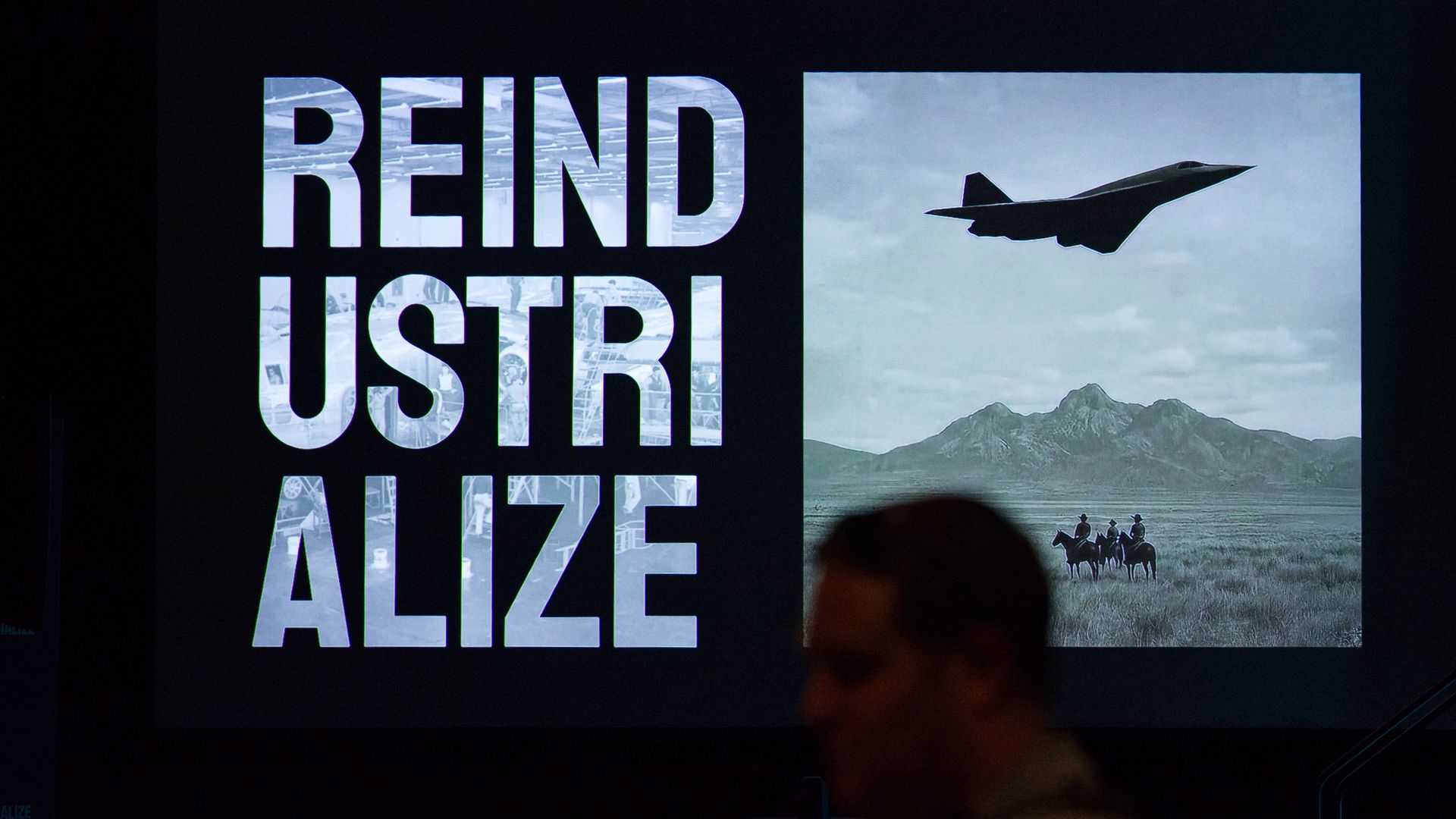
The Reindustrialize conference in downtown Detroit is best distilled by a single image plastered on screens and signs throughout the venue: It depicts cowboys on horseback clopping across the prairie as a jet hovers overhead.
Why it matters: It's back to the future in the halls and hallways here, where a brew of futuristic military technologies, nostalgia for the factories of old and thick venture-capital wallets produces a raw energy the event organizers want to wrangle but not smother.
- Across the U.S. there's "this desire to build, desire to create, desire to free think. This movement is about trying to unleash and allow all of that to happen," Gregory Bernstein, a Reindustrialize co-founder, told me.
- "The energy that's around connecting tech to the industrial base is going to be weird. It's going to be strange," he added. "And we're cool with that."
- The reshaped and replenished American arsenal looks increasingly Silicon Valley-savvy — and powered by a revitalizing Rust Belt.
State of play: Reindustrialize is in its second year. This week's venue sits across the street from a Gucci store, in front of which military-industrial-complex protesters gathered Wednesday.
- The lanyards are star-spangled. There's tie-dyed merch. Trucker hats, too.
- Whitney Houston's Super Bowl rendition of the national anthem preceded U.S. Navy Secretary John Phelan's keynote speech.
- And Palmer Luckey, the founder of Anduril Industries, beamed in from California to answer questions via a humanoid robot rocking his signature Hawaiian shirt and mullet combo.
"We don't want this to be like every other event that you go to," said Bernstein, who is also the CEO of the New Industrial Corporation.
- "The movement is different because it's also existential."
Friction point: The U.S. defense industrial base has long been chided for being too brittle and too insular.
- The Commission on the National Defense Strategy last summer ruled that Washington was unprepared for a war that could kick off with Russia and China and metastasize.
The bottom line: "Our biggest risk is not homicide. It's suicide. It's our unwillingness to get off our ass and actually compete," Shyam Sankar, the chief technology officer at Palantir Technologies, said onstage Thursday.
- "We were on the road to suicide, fatalism and complacency, but this gathering shows that we can shake off that cynicism."
Go deeper: Where America's fragile defense production and futuristic megafactories meet
📩 Did I read the room right?
- Reply to this email and let me know!
🖋️ Thanks to David Lawler and Matt Piper for the edits.