Tariffs spark conversation on a Rust Belt revival

Add Axios as your preferred source to
see more of our stories on Google.
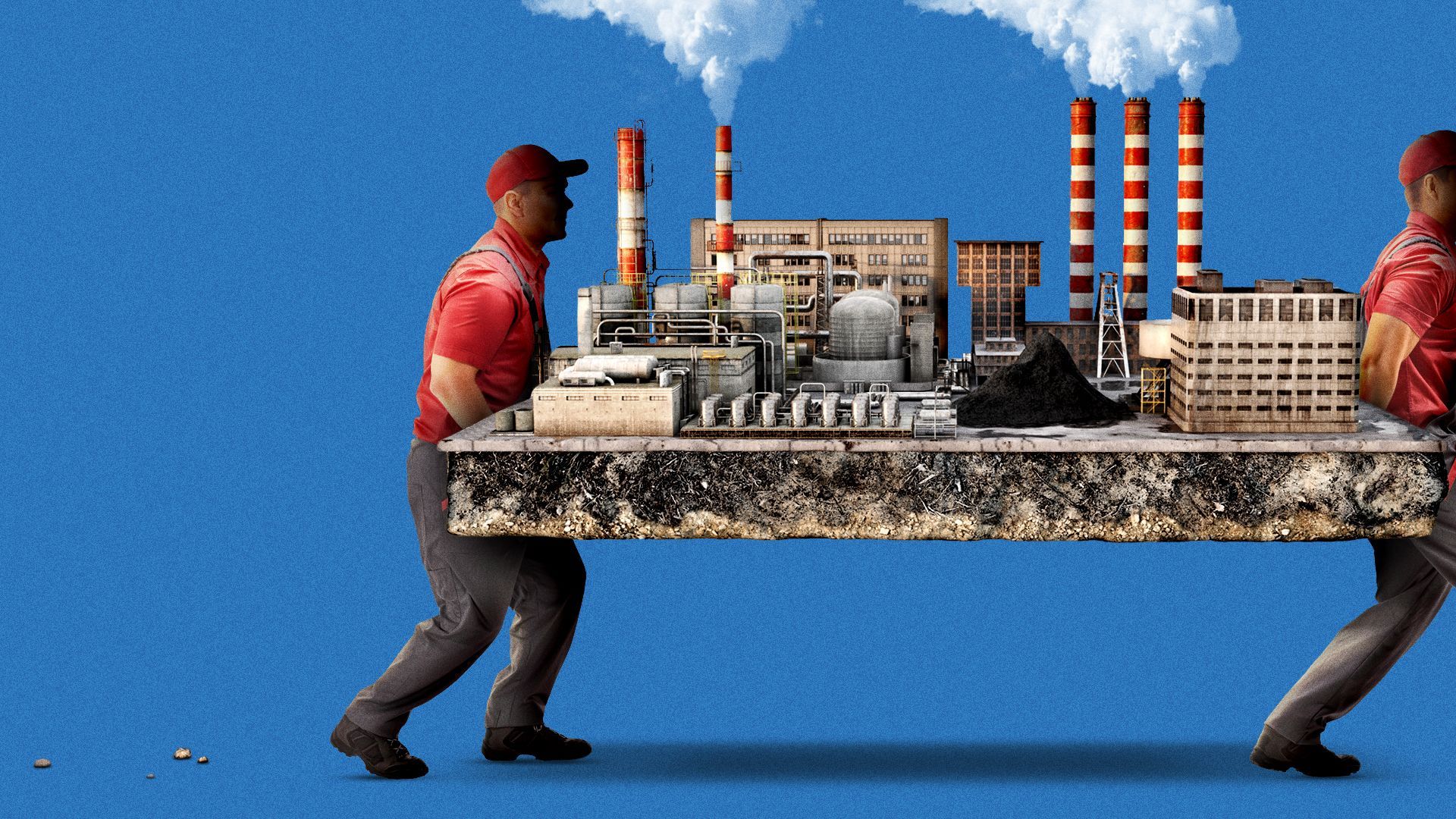
Illustration: Maura Losch/Axios
President Trump's allies say his tariffs are helping Rust Belt cities make a comeback, casting the area as a beneficiary of the trade war.
Why it matters: Former industrial powerhouses like Pittsburgh once fueled America's growth — but economists say tariffs alone won't bring back the old steel economy that some want to recapture.
The big picture: Trump has signed a flurry of tariffs over his first three months in office, including a 25% tax on imported steel and aluminum and varying degrees of tariffs on dozens of nations.
State of play: Supporters of Trump's trade war see it as a path to rebuilding the U.S. manufacturing base — reversing decades of industrial job losses.
- "I fully support President Trump's critical efforts to right this generational wrong, bring manufacturing jobs home, and rejuvenate American working families," said Republican U.S. Rep. Guy Reschenthaler, who represents mill towns in Pittsburgh's Mon Valley, last week on X.
- Ohio Republican U.S. Rep. Michael Rulli told Fox News that steel towns like Mingo Junction — located less than an hour west of Pittsburgh — are already seeing revitalization thanks to the tariffs.
Reality check: Chris Briem, a regional economist with the University of Pittsburgh's Center for Social and Urban Research, said trade policies had little impact on the loss of the region's steel and manufacturing jobs, noting that the steel industry's collapse in the 1980s was a decade before the North American Free Trade Agreement was signed.
- "Whatever the impact was, it was just a shadow. The steel industry collapsed before NAFTA was conceived," he said.
- Pittsburgh's steel industry suffered because of modernization, non-coal fuel sources and more efficient technology that didn't need as many workers, Briem told Axios.
By the numbers: Pittsburgh manufacturing employment peaked in the 1950s with about 380,000 jobs, but began to decline shortly after and has been in a virtual free fall ever since.
- The pandemic marked a low point for Pittsburgh-area manufacturing, which fell to about 82,000 jobs in April 2020, according to the U.S. Bureau of Labor Statistics.
- Things have ticked up a bit from there, but the region has only added about 3,000 manufacturing jobs since.
The other side: Nine steel executives — including U.S. Steel CEO David Burritt — told Trump in a March letter that his 2018 steel tariffs led to nearly $20 billion in industry investment.
- Earlier this month, United Steelworkers union president David McCall said the proposed tariffs could help bring jobs back to the U.S. But he warned that tariffs on allies like Canada are counterproductive — and that genuine revival will take strategic investment.
Zoom in: U.S. Rep. Chris Deluzio (D-Allegheny) approves of some targeted tariffs, but told Axios that Trump's across-the-board approach is reckless and "divorced from any policy to supercharge manufacturing."
- He noted that Howmet, a Pittsburgh-based airplane parts manufacturer, recently warned it might cancel its orders to Boeing and Airbus because of the tariffs.
- Deluzio said the government should be providing tax credits to industries that are critical to national defense, such as semiconductor chipmakers and aerospace.
What's next: PNC chief economist Gus Faucher said manufacturing growth is possible in Pittsburgh and across the Rust Belt — but not the kind tied to low-cost goods targeted by Trump's tariffs.
- "We are just not that economy anymore, nationally or locally," he said.
- Faucher said robotics, high-tech computer parts, and medical devices industries could increase manufacturing jobs in Pittsburgh and parts of the Rust Belt. Those are helped by government research funding, lower capital gains taxes, and policies encouraging investment.