How Gen Z is helping to drive a digital detox boom

Add Axios as your preferred source to
see more of our stories on Google.
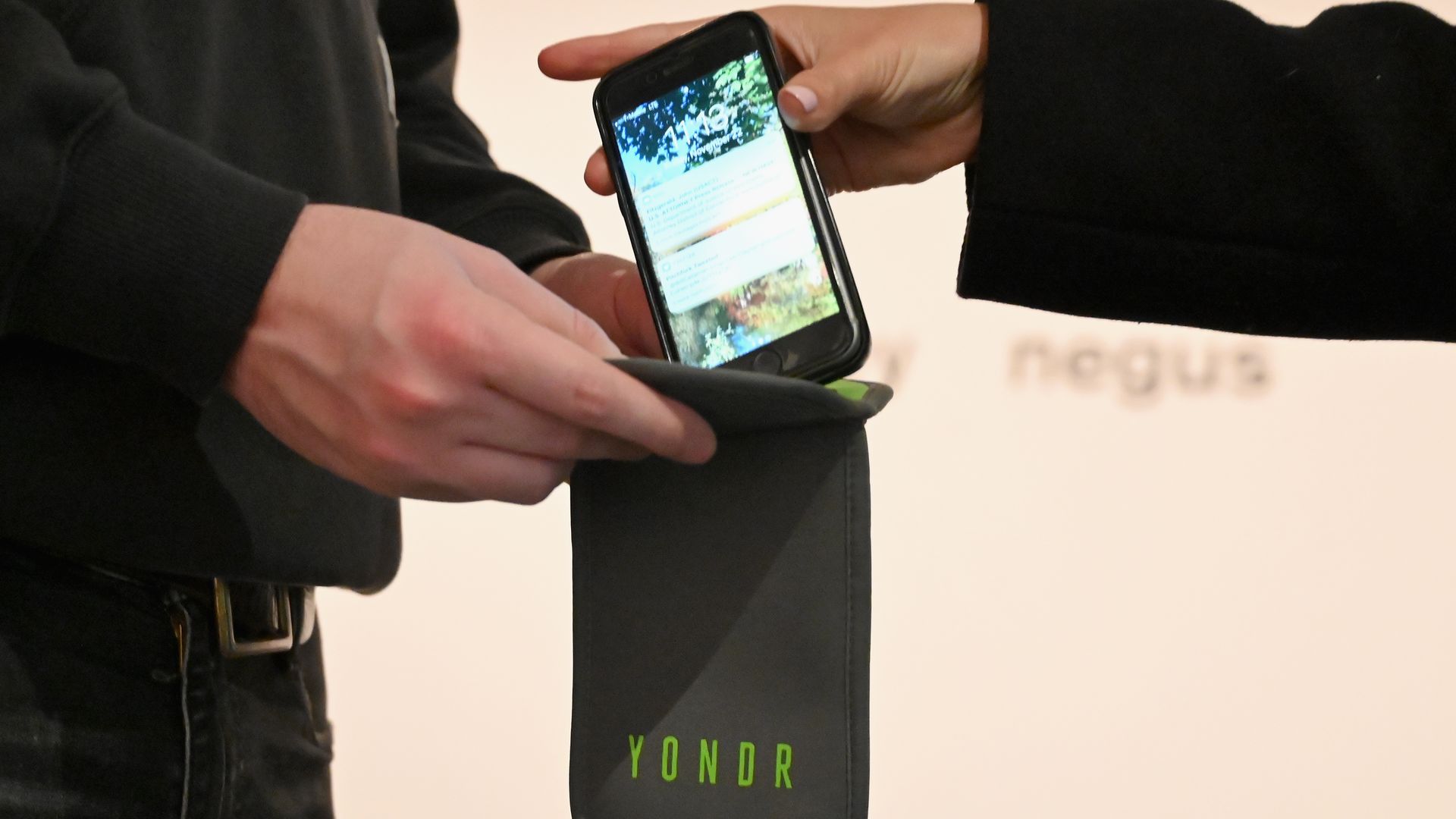
A phone is locked into a Yondr pouch at New York City's Brooklyn Museum. Photo: Angela Weiss/AFP via Getty Images
The digital detox movement is gaining popularity, driven by grassroots efforts to limit screen time and a broader push among Gen Zers to switch off their phones.
The big picture: Phone-free bars, restaurants and entertainment experiences are on the rise while cellphone pouches are becoming an essential item at schools, weddings, proms and retreats, and search interest in apps that keep you off your phone skyrocketed.
- Kostadin Kushlev, an associate professor of psychology at Georgetown University, tells Axios that Americans consciously taking screen breaks and doing digital detoxes has become "a huge thing" over the past year, just as loneliness is on the rise.
By the numbers: Over half of U.S. adults reported signs of loneliness in an August survey, and a separate poll found depression rates for adults under 30 more than doubled between the end of 2017 and the start of 2026.
Between the lines: That coincides with increasing awareness that algorithms "have been optimized to essentially be as addictive as possible," says Kushlev, who co-authored a 2025 study on the benefits of digital detoxes.
- Gen Z is leading the charge, per a 2025 YouGov survey: 47% of those under 30 said they are striving to reduce screen time, compared with 32% of older Americans.
State of play: Digital wellness groups are using social media to publicize offline activities.
- Among them are the nonprofit #HalfTheStory, which last year had programming in 500-plus school districts across 46 U.S. states and 10 countries, and The Offline Club, which began in Amsterdam in 2021 and has expanded globally to 19 cities.
- Offline Club co-founder Ilya Kneppelhout tells Axios the group has nearly 600,000 Instagram followers and plans to expand to the U.S. next year.
- The club is "not against technology, but promotes a healthier balance where tech supports us, rather than consumes us," Kneppelhout says in an email.
- #HalfTheStory started from a $250 grant while at college to a nationwide organization that works with politicians, private companies and other youth groups to provide youth-led programs, executive director Larz May says.
Zoom in: New York high school sophomore Lukas Druckenmiller got a $3,000 grant from #HalfTheStory's Phone-Free Fund to create a scavenger hunt where students used old-school digital cameras as an after-school activity in May.
- "We spend so much time on our screens instead of interacting with people, and we confuse likes with interaction," the 15-year-old tells Axios. "We just really wanted an in-person event without phones, where people could interact and make new friends."
- Harveer Saini attended a summer digital wellness program from #HalfTheStory and went on to found the National AI Youth Council and addressed the UN on racial bias and inequity in AI.
- He maintains ties with #HalfTheStory and now serves as a fellow working to expand the academy and bring in new interns.
The bottom line: "We cannot save the world through fear," May says.
- "Bans are a starting line, but we need local-level solutions that are bringing together teens and adult stakeholders," she adds.
- "And that's education across the board, in every school. That's empowering, that's funding young people and actually having research to show government officials what successful implementation looks like."
Go deeper: Phone-free bars and restaurants on the rise across U.S.
