A federal appeals court in D.C. on Wednesday denied Anthropic's request to pause enforcement of the Pentagon's designation of the company as a supply chain risk.
Driving the news: Anthropic sought the stay to fend off financial and reputational harm. The ruling comes after a federal judge in a San Francisco court last month granted the company a preliminary injunction keeping the administration from banning the use of Claude.
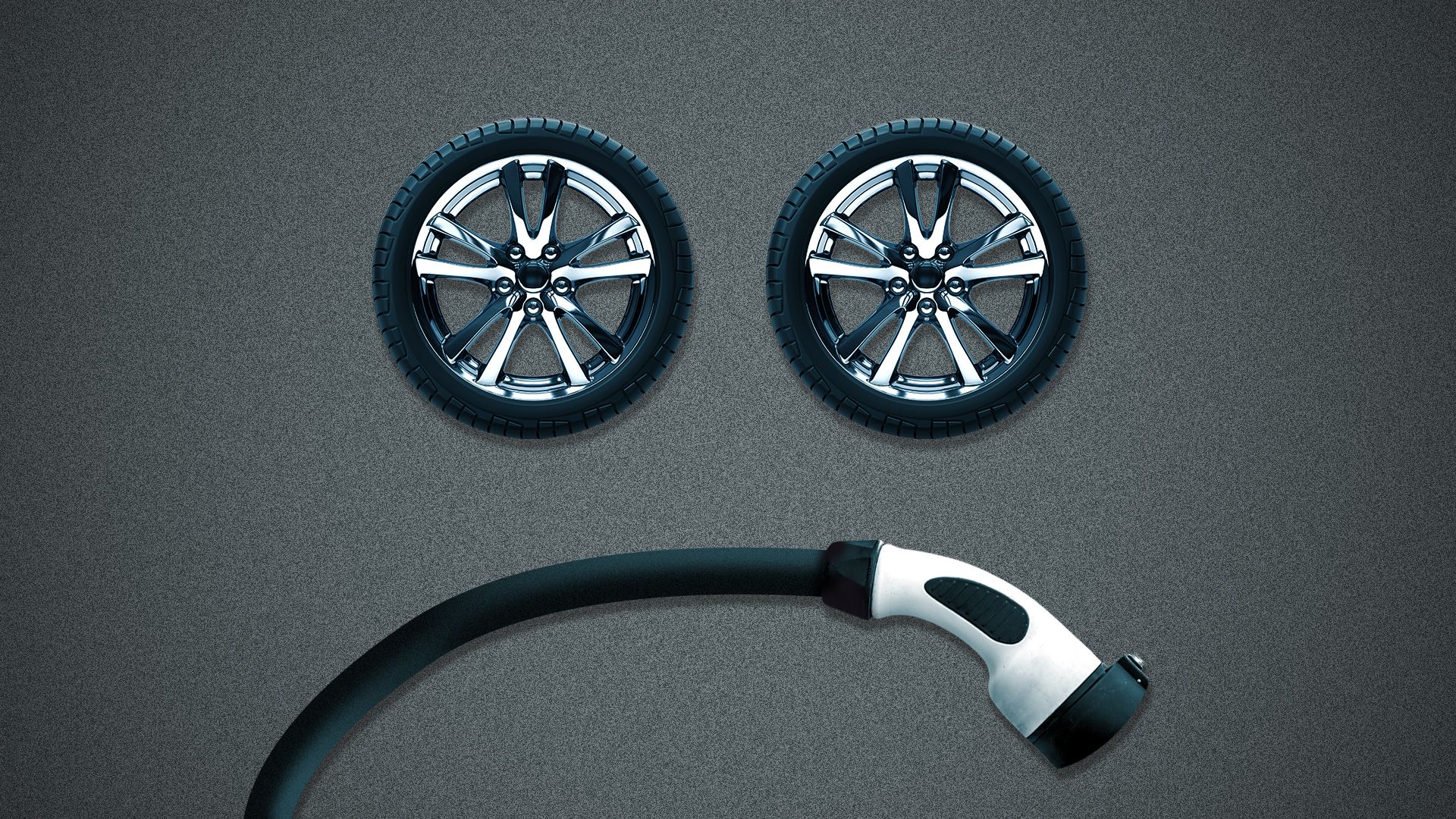
We took a 320-mile trip to Ohio in an electric vehicle and I was reminded why charging is still problematic.
It's not hard to find a charger these days; a surge in construction in 2025 made that a lot easier.
The experience just stinks.
Why it matters: High gas prices have rekindled consumer interest in EVs, even without last year's tax incentives. But the continued inconveniences of charging still make it a hard choice for many.
My own experience trying to charge the BMW i5 xDrive40 was typical of what's wrong with public charging.
It takes too long, there's no shelter from the elements and it's expensive — up to 60 cents per kWh, which is three to four times the cost of charging at home.
Plus, the cables for high-powered DC fast-chargers are as thick as your wrist and can weigh 20 to 30 pounds, sometimes more.
I actually hurt my shoulder trying to plug in my car at a public charger.
The charging industry is fragmented, too, which means you have to download the apps for multiple networks.
Some EVs support plug-and-charge, which streamlines public charging by pre-registering payment methods in the car's app so you don't need to use separate apps or a credit card.
BMW features plug-and-charge at some participating charging networks, but as a media tester, I hadn't registered via the app.
One important lesson I learned, especially during a cold weekend in northeastern Ohio: Precondition the car's battery for faster charging.
This can be done several ways: by setting a departure time using the vehicle app, or navigating to a DC fast-charger, giving the car 15-30 minutes to prepare the battery for optimal conditions before charging.
I forgot. And charging took longer than it should have.
At a 180-kW charger, the BMW pulled closer to 80 kW.
It was the little indignities that annoyed me the most, like trying to scan a QR code in the biting wind just so I could download another network's app.
Or the glare of the late-winter sun that made it impossible to read the screen on the charger.
At one charging location, there was a trash can, at least, and a bucket of water to wash the windshield — but no squeegee.
The bottom line: Charging is more accessible, but it still tests your patience.
Meta on Wednesday debuted Muse Spark, a homegrown AI model it says significantly narrows the performance gap with models from OpenAI, Anthropic and others.
Why it matters: The model — code-named Avocado and built over the past nine months by a team led by Alexandr Wang — is a major upgrade over its Llama 4 models, Meta tells Axios.
Iran agreed to reopen the Strait of Hormuz. But the economic fallout from five weeks of effective closure is just beginning.
Why it matters: Supply chains don't unsnarl overnight. The gloomiest forecasts for the U.S. economy from the war may not come to pass, but shortages and price shocks will continue to pinch the world for months.
Moreover, there's no certainty that the two-week ceasefire will turn into lasting peace.
Anthropic has begun a tightly controlled release of Mythos, the first AI model that officials believe is capable of bringing down a Fortune 100 company, crippling swaths of the internet or penetrating vital national defense systems.
Why it matters: This is the scary phase of AI — a model deemed so powerful that its full release into the wild could unleash untold catastrophe. So only carefully vetted companies and organizations, about 40 so far, are getting access.
Anthropic published the capabilities of Claude Mythos Preview, its latest model that the company will allow a select group of tech and cybersecurity companies to test before releasing similar models to the public.
Why it matters: The detailed safety evaluation reads like a thriller about an AI that has learned some of humanity's most devious behaviors.
The rise of chatbots and AI search engines is forcing big brands to invest in new generative engine optimization that favors third-party validation, as opposed to traditional search engine optimization, which can still be gamed with paid media.
Why it matters: The ad market for chatbots and AI search engines is still nascent, which means brands need to rely on strong organic and earned media coverage to reach consumers using AI tools.
The 2026 box office is off to its strongest start since the COVID-19 pandemic, raising hopes in Hollywood that theatrical moviegoing has staying power in the streaming era.
Why it matters: Success at the box office gives studios and distributors more leverage to preserve theatrical release windows, a key revenue driver for the industry.
Anthropic is rolling out a preview of its new Mythos model only to a handpicked group of tech and cybersecurity companies over concerns about its ability to find and exploit security flaws, the company said Tuesday.
Why it matters: Anthropic is so worried about the damage Mythos could cause that it's refusing to release it publicly until there are safeguards to control its most dangerous capabilities.
The Iran war has scattered the highly concentrated helium supply chain, knocking out a significant share of global production for a practically irreplaceable element.
Why it matters: Helium does more than fill party balloons: It's critical for cooling highly advanced tech and integral to chip production and medical imaging. Now, roughly a third of the world's supply is in limbo.
OpenAI has a new plan for how policy might adapt to a world of massive economic disruption. It's a fascinating window into how builders of AI view the likely economic and political fallouts of their technology.
The big picture: The 13-page document released Monday seeks to lay down a marker for the kinds of policy shifts that might help AI advances create broad prosperity, rather than a divided society with a handful of AI-turbocharged elites and a mass underclass.
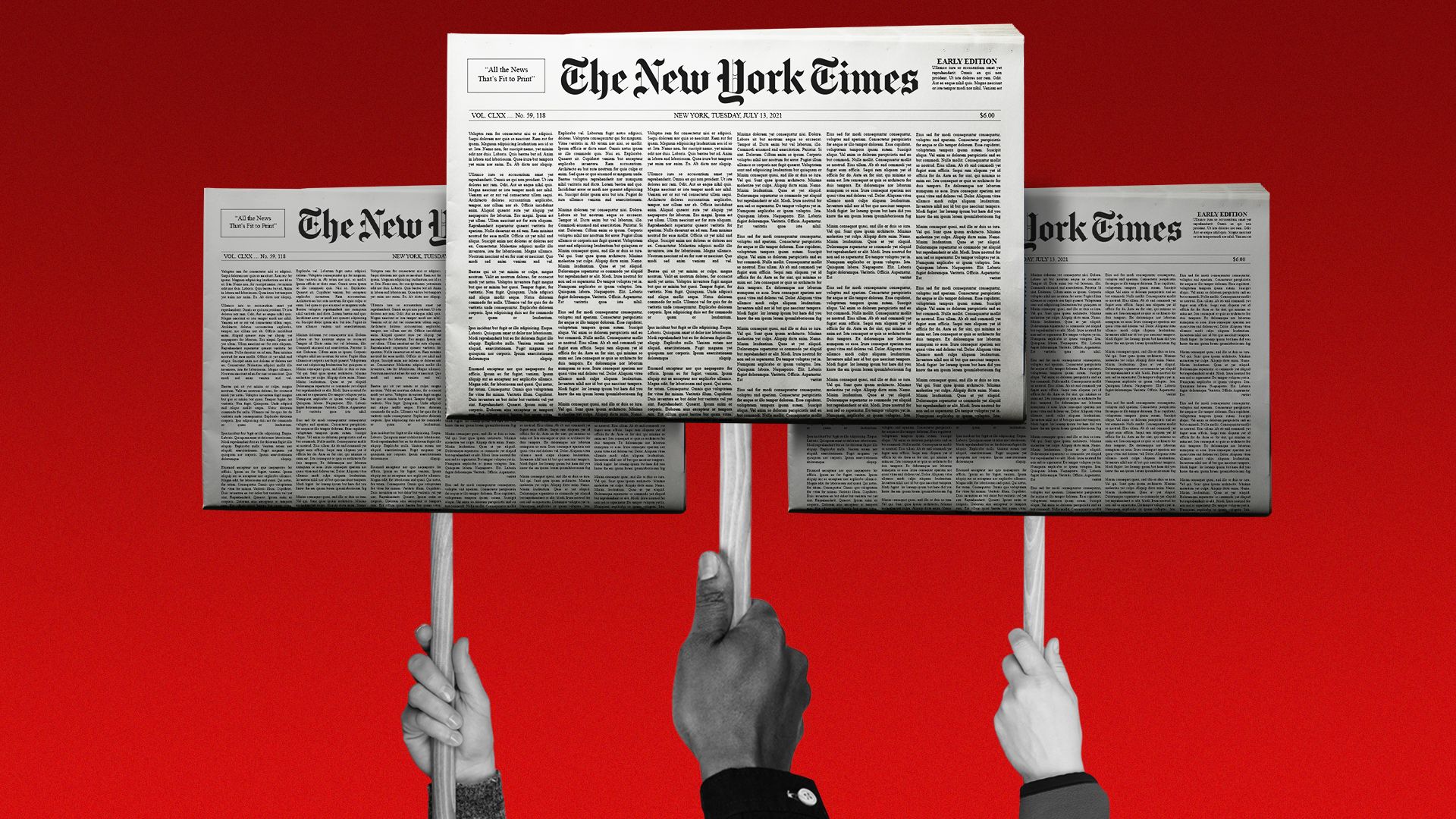
The New York Times' editorial union leaders on Tuesday sent a letter to management arguing its artificial intelligence standards are "woefully inadequate" and too vague, which has led to editorial problems and trust issues.
Why it matters: AI is one of several sticking points in a contract dispute between management and the guild.
The impact of AI on the job market is starting to show up in the data analyzed by Wall Street firms — so far it's pretty modest, but certainly real.
Why it matters: New reports from Morgan Stanley and Goldman Sachs come in the wake of a deluge of doomsday predictions and tell a more nuanced story of how AI is changing the job market.
A new study finds that AI agents can act to preserve other bots even when that behavior conflicts with their assigned task.
Why it matters: Just because Sam Altman and Dario Amodei won't hold hands doesn't mean their future bot creations won't find ways to work together, potentially without prompting.
Facebook has shaped political discourse, family dynamics and entire news cycles for years. Its algorithm reflects years of your clicks, relationships and habits, so your feed may be showing you a version of the world built from your past.
Why it matters: Facebook doesn't have to be a pit of despair and rage bait. You can reset it. And it's never too late to start.