Meta is preparing to release the first new AI models developed under Alexandr Wang, with plans to eventually offer versions of those models via an open source license, Axios has learned.
Why it matters: Meta has been the largest U.S. player to let others modify its frontier models, and there has been growing speculation the company might retreat from that strategy altogether.
AI enthusiasts scrambled over the weekend after Anthropic blocked Claude subscriptions from powering third-party agent tools such as OpenClaw.
Why it matters: The move underscores a growing tension at the heart of the AI boom: Power users want autonomous agents that run constantly, but AI labs are trying to control costs, capacity and how their models are used.
OpenAI CEO Sam Altman is doing something no tech titan has ever done: He's publishing a detailed blueprint for how government should tax, regulate and redistribute the wealth from the very technology he's racing to build and spread.
Why it matters: Altman told us in a half-hour interview that AI superintelligence is so close, so mind-bending, so disruptive that America needs a new social contract — on the scale of the Progressive Era in the early 1900s, and the New Deal during the Great Depression.
President Trump threatened to bomb Iran's power plants and bridges starting Tuesday if the regime doesn't open the Strait of Hormuz.
Why it matters: Trump's 10-day deadline to Iran is expected to expire Monday. He previously threatened to bomb the country's energy, water and oil infrastructure if no deal was reached to open the strait.
The most consequential force reshaping geopolitics and business can be captured in one word: asymmetry, Axios CEO Jim VandeHei writes in his new weekly Axios C-Suite newsletter.
The small can now destroy the big. The cheap can neutralize the expensive.
Drones proved it on the battlefield. AI is proving it everywhere else.
Why it matters: Every CEO now faces the same question the Pentagon does: Are you the $3 million missile or the $35,000 drone?
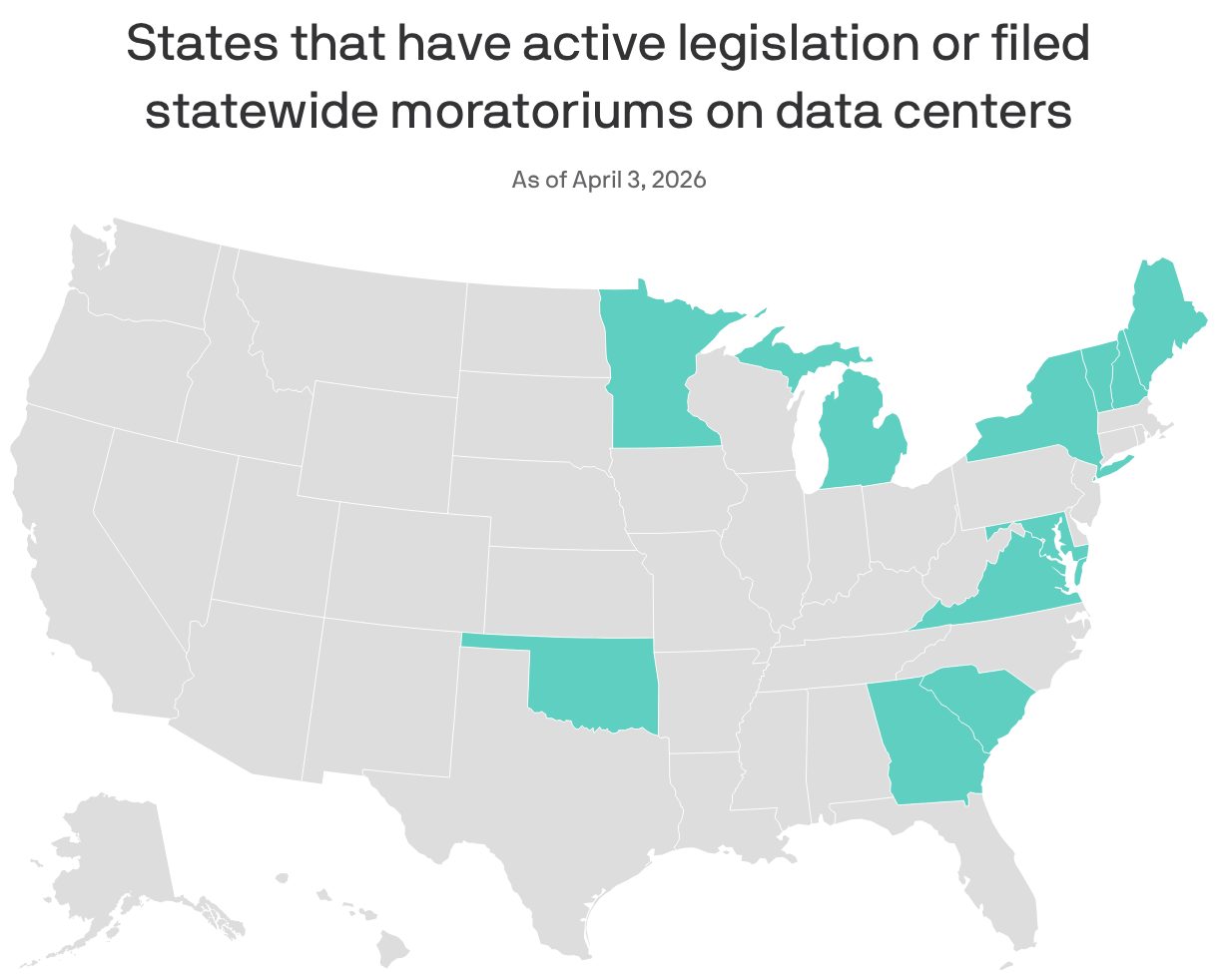
Data centers have become a boxy, hulking flashpoint heading into the midterms — and the backlash is spreading fast across red and blue states.
Why it matters: With no federal action, states are fielding constituent anger over power grids, water supplies and strained local infrastructure. But investment keeps accelerating; Wall Street isn't slowing down, and neither is Washington's appetite for AI dominance.
Phone-free bars and restaurants are emerging across the U.S. as people seek to disconnect from screens and devices.
The big picture: This trend is emerging amid a societal shift, with several countries imposing social media bans for children and teens, some U.S. states prohibiting phone use at school, and more live events restricting phones.