Anyone charged with securing America's critical infrastructure — water, electricity, health care, financial services and more — is officially on the clock.
Why it matters: AI models are getting so good at autonomously hacking and exploiting severe bugs that their own creators are holding them back out of fear they'll wreak havoc on the systems that power daily life.
The U.S. Navy is taking out of commission the USS Boise, an attack submarine that has for years sat pier-side and become synonymous with the service's maintenance backlog.
Why it matters: Walking away means saving billions of dollars, Navy Secretary John Phelan told Axios, as well as freeing up precious manpower for shipyards and other boats.
"It's about discipline. It's about having every dollar delivering capability in a smart, cost-effective manner," he said. "I've got a bunch of people focused on this ship that could be focused on a Virginia-class."
The share of adults age 55 and up in the workforce is at its lowest level in two decades, as more baby boomers age out of their working years.
Why it matters: The growing population of seniors — the youngest boomers are 61 years old — is one of two huge demographic forces hitting the labor market right now, as evidenced in last week's jobs report.
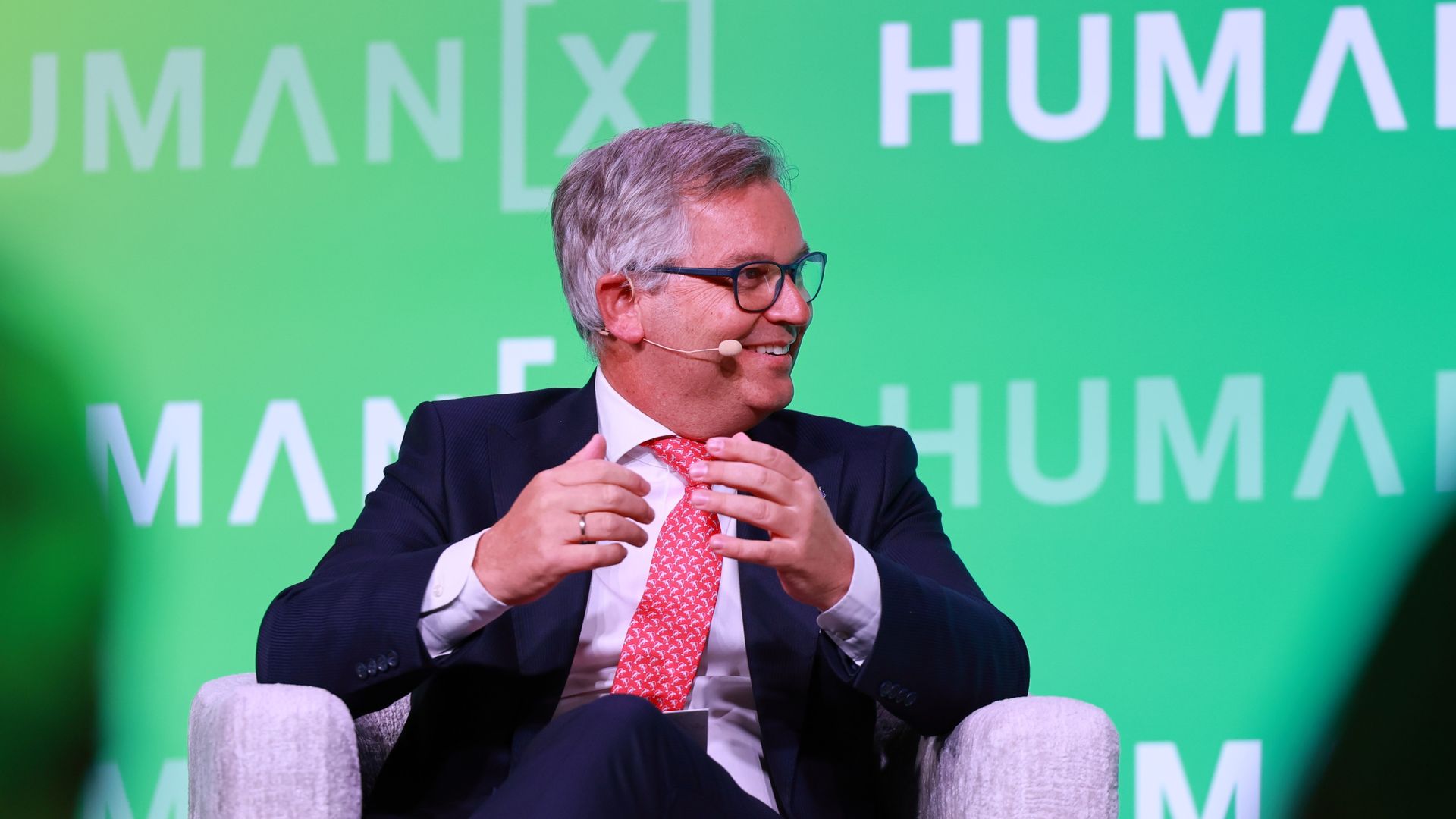
A top European AI policy official pushed back on a common critique that the EU's tech regulation stifles innovation in an interview with Axios at the HumanX conference in San Francisco this week.
Why it matters: Europe is hoping to attract tech innovation and investment by highlighting its stable regulatory environment that may be more restrictive, but is consistent across all EU member states.
AI CEOs' lofty pitches for AI governance may end up being pipe dreams in a town that routinely fumbles tech policy.
Why it matters: From OpenAI's Sam Altman to Anthropic's Dario Amodei, high-profile AI executives are eager to shape how their products are regulated and encouraged, rolling out sweeping policy ideas to manage the technology's impact.
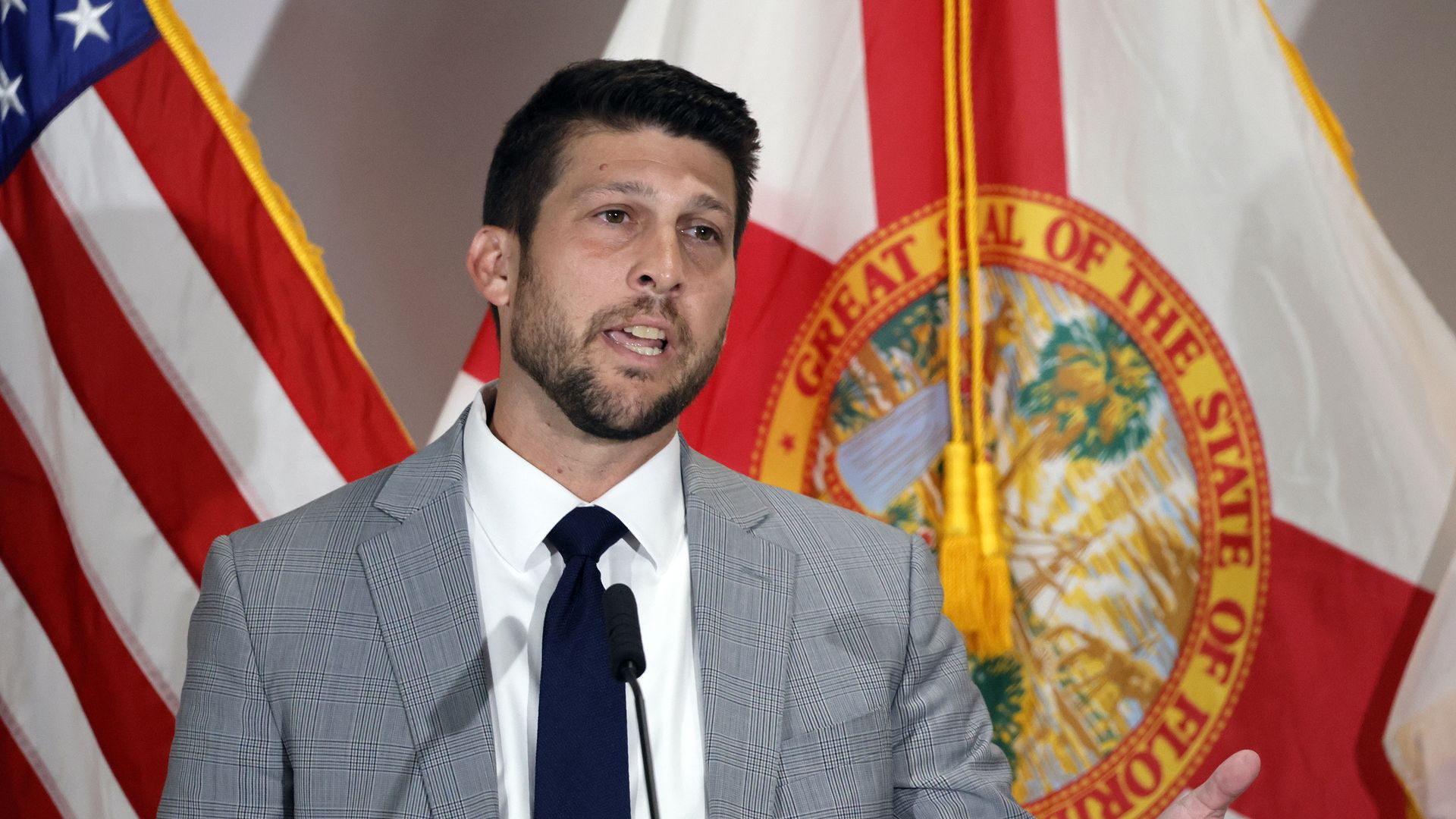
Florida Attorney General James Uthmeier announced Thursday that his office has launched an investigation into OpenAI, citing national security concerns and ChatGPT's alleged role in a mass shooting at Florida State University last year.
Why it matters: The probe could intensify efforts to hold AI companies accountable for how their chatbots are used.
Several major sportsbooks have contributed tens of millions of dollars to a new super PAC to support sports betting throughout the country, Axios has learned.
Why it matters: Traditional sportsbooks have been advocating for broader legalization amid rising competition with prediction markets like Kalshi and Polymarket.
SAN FRANCISCO — AI adoption in the workplace is largely happening on an individual level, boosting employee productivity and unlocking new levels of inspiration, technology experts say.
Why it matters: The result is faster work production, but it comes at the risk of burnout and inequitable advantages.
Axios' Mady Mills and Meg Morrone moderated the April 6 roundtable, which was sponsored by Cox Business and RapidScale.
By the numbers: The top two use cases for AI spending — coding and copilots — are for individual productivity, Automation Anywhere CMO Tim McDonough said.
Coursera sees "one enrollment every four seconds in an AI course," said Greg Hart, the company's CEO.
"91% of the people who take a course on Coursera see a salary increase, [and] most of those people are taking technology-focused courses."
What they're saying: AI lets workers move more efficiently and with more autonomy, but "it's so much busier and more chaotic," Imbue chief technology officer Josh Albrecht said.
"I'm not sure the incentive structure is there for companies to really ensure that … workers are not completely overwhelmed" by what AI provides, said Vanessa Parli, managing director of programs and external engagement at the Stanford Institute for Human-Centered Artificial Intelligence.
There is also a "bifurcation of super-elite AI" users and everyone else, said Writer chief people officer Jevan Lenox, with starkly different career outcomes.
Yes, but: Some are finding it invigorating, WordPress VIP chief technology officer Brian Alvey said.
"There are people who work in tech who are, like, 'I was pretty much going to retire, but now I'm coding again. This is cool. I've got the magic back,'" Alvey said.
The barriers to adoption are "attitudinal more than it is generational," said Sari Factor, Imagine Learning vice chair and chief strategy officer.
What's next: "What does it mean for AI to act in collaborative contexts?" asks Microsoft chief scientist and technical fellow Jaime Teevan.
With tools like Asana, Slack, Google Docs and Zoom integrated, "it's truly a teammate that is collaborating across our teams to get work done," Asana chief marketing officer Prachi Gore said.
Content from the sponsor's remarks: "The true power of AI is cross-functional," Cox Business vice president of marketing Sarah Kim said. "AI is going to rewrite roles and work."
"The education system cannot keep up with the rate of change," and the question facing people entering the workforce now is not "what are the jobs?" She added. It's "What are the skills?"
The Trump administration is pushing back on Republican-led AI bills in Nebraska and Tennessee, with sources familiar with the negotiations describing the outreach as pressure to weaken or abandon the efforts.
Why it matters: This behind-the-scenes push puts GOP state lawmakers who support AI guardrails but don't want to cross the White House in a tough position.
AI-powered monitoring platform PeakMetrics has raised $6 million in a Series A funding round, bringing its total capital raised to $16.3 million, Axios is first to report.
Why it matters: This comes as companies scramble to keep up with reputational risks that are now shaped or accelerated by social media and AI-generated content.
High-quality CEO thought leadership can drive an average of $367 million in shareholder value in a single week, according to a new study by Cardinal40.
Why it matters: This study suggests words themselves can create value, independent of external news or disclosures — something communicators have long believed but haven't been able to prove.
Meta on Thursday began removing advertisements from attorneys who were seeking clients that claim to have been harmed by social media while under the age of 18.
Why it matters: This comes just two weeks after Meta and YouTube were found negligent in a landmark California case about social media addiction.
OpenAI expects to generate $2.5 billion in ad revenue this year and $100 billion by 2030, according to a source familiar with recent presentations to investors.
Why it matters: It's the clearest sign yet that OpenAI sees advertising as a core part of its future business.
OpenAI is finalizing a product with advanced cybersecurity capabilities that it plans to release to a small set of partners, a source familiar told Axios.
Why it matters: AI capabilities have reached a tipping point, at least in terms of autonomy and hacking capabilities. Model-makers are now so worried about the havoc their own tools could cause that they're reluctant to release them into the wild.
Gen Z's sentiment toward artificial intelligence has shifted in the last year, with teens and 20-somethings less excited about the tech — and more angry, according to a newly released report.
Why it matters: Despite a growing share of workplace leaders and some higher ed institutions embracing AI, a generation that's grown up online remains skeptical about its impact on learning and professional skills.