Iran ceasefire clouded by confusion, contradictions

Add Axios as your preferred source to
see more of our stories on Google.
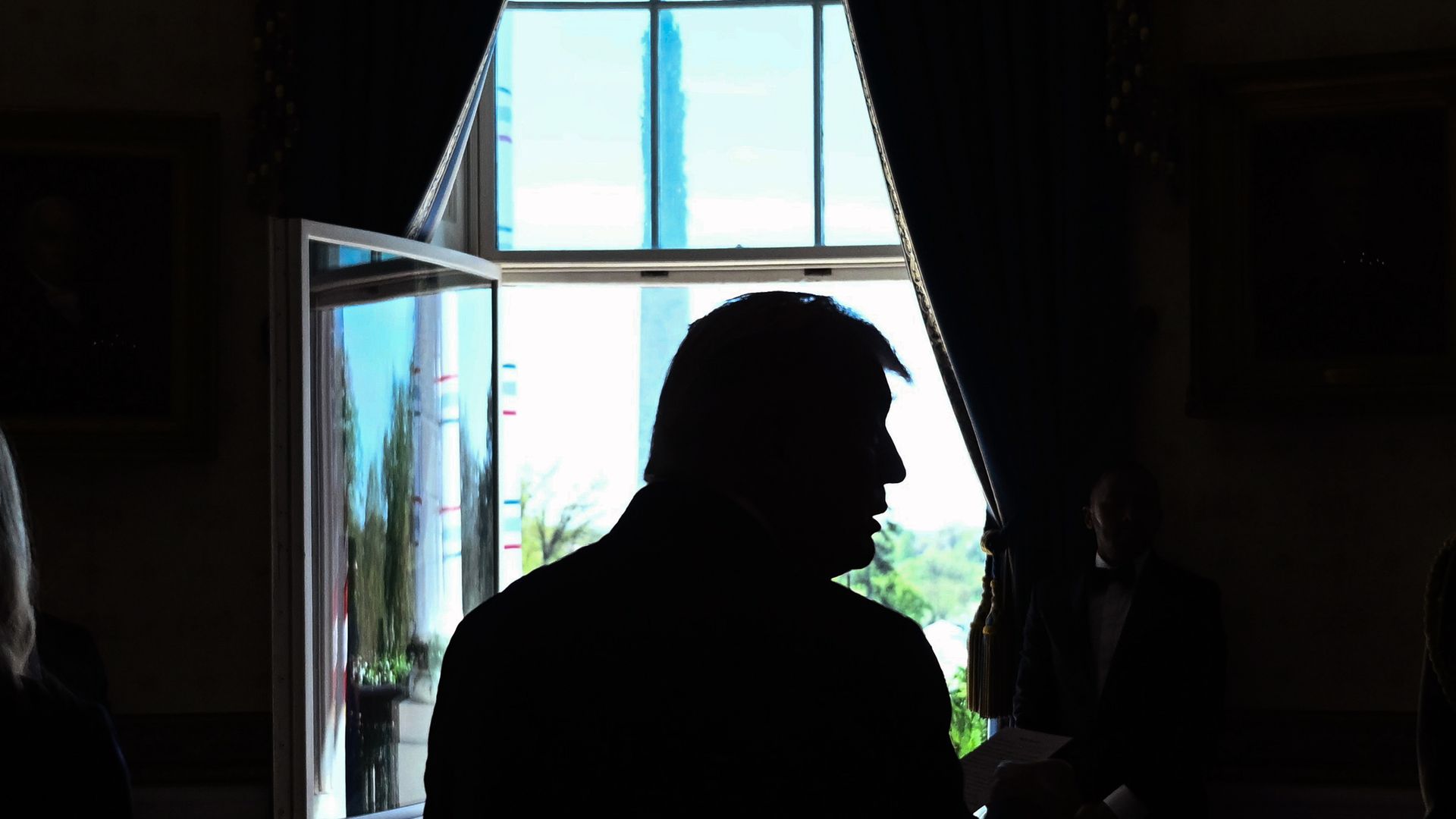
Trump at the White House on Sunday. Photo: Brendan Smialowski/Pool/Getty Images
The U.S., Israel and Iran agree that a ceasefire is now in effect, but they're contradicting each other and themselves in terms of what's actually been agreed to and what happens now.
Why it matters: Those differences will have to be reconciled at the negotiating table, beginning on Saturday in Islamabad. One thing everyone agrees on is that there is no guarantee this war is actually over.
Breaking it down: President Trump's key condition for a ceasefire was the reopening of the Strait of Hormuz, but we still don't know just how "open" it will be or whether Iran will charge ships to pass through.
- Meanwhile, the Pakistani mediators announced that the ceasefire also applied in Lebanon. Israel says it doesn't and has intensified its attacks.
- Attacks have also taken place on oil facilities in Iran, Saudi Arabia, the UAE and Kuwait in the first 12 hours since the ceasefire came into force. Pakistan's prime minister warned that they "undermine the spirit of the peace process."
- Talks are expected in Islamabad on Saturday, but the parties have offered contradictory statements about the basis on which they are negotiating.
Attacks continue
The fighting has reduced significantly, but not ended entirely.
- Iran claimed its missile and drone attacks on Israel and oil facilities in the UAE, Kuwait and Saudi Arabia after the ceasefire was announced were in retaliation for U.S. and Israeli attacks on Iran, including on an oil refinery.
- A U.S. defense official claimed the strike on the Iranian refinery wasn't conducted by the U.S. or Israel.
- Secretary of Defense Pete Hegseth claimed at a press conference on Wednesday that the attacks continued because of poor command and control in Iran, with some commanders out of reach due to communications issues.
- "It takes time for a ceasefire to take hold. We think it will," he said.
State of the strait
Soon after President Trump declared on Tuesday that the Strait of Hormuz would now be open, Iran's foreign minister issued a much more cautious statement: Ships that wanted to pass through would need to coordinate with Iran's military, and there would be limitations on the number.
- Iranian media cited officials as saying ships would need to pay a toll, a scenario that has been worrying officials around the world for weeks.
- Hegseth said that "what we agreed is that the strait is opened."
- Trump added to the confusion, telling ABC's Jon Karl that the U.S. and Iran might jointly operate a toll system in the strait.
What's on the table
Trump surprised some of his hawkish allies by declaring in his statement accepting the ceasefire that Iran's list of 10 conditions for ending the war were a "workable basis on which to negotiate."
- Those conditions included Iran controlling the strait, retaining the right to enrich uranium, having all sanctions lifted and receiving compensation for the war, according to a version published by Iran's Security Council.
- Vice President Vance claimed Wednesday that some members of the Iranian regime "are lying" about what's been agreed.
On Wednesday, Trump published a post on Truth Social that didn't refer to the Iranian 10 points, but rather to the U.S. 15-point proposal for negotiations — which Iran previously rejected. He claimed there was agreement on many of them.
- Trump made clear the U.S. wouldn't accept Iran's right to enrich uranium and wouldn't allow Iran to have a highly enriched uranium stockpile.
- "There will be no enrichment of Uranium, and the United States will, working with Iran, dig up and remove all of the deeply buried ... Nuclear 'Dust,'" he wrote, referring to Iran's stockpile of highly enriched uranium.
- Trump also said that the U.S. would discuss "Tariff and Sanctions relief" with Iran during the negotiations.
The latest: In a second Truth Social post, Trump wrote that the ten points Iran published were different than the ten which were given to the U.S. and would be discussed "behind closed doors during these Negotiations."
- "These are the POINTS that are the basis on which we agreed to a CEASEFIRE. It is something that is reasonable, and can easily be dispensed with," he wrote.
Israeli Prime Minister Benjamin Netanyahu and Republican hawks like Sen. Lindsey Graham (R-S.C.) are highly skeptical of the agreement and concerned about what concessions might be on the table.
- Graham took to X to send a shot across the bow to U.S. negotiators.
- "The supposed negotiating document, in my view, has some troubling aspects, but time will tell. I look forward to the architects of this proposal, the Vice President and others, coming forward to Congress and explaining how a negotiated deal meets our national security objectives in Iran," he wrote.
Lebanon war continues
Meanwhile, Netanyahu rejected the claims from Pakistan and Iran that the ceasefire also applied to Lebanon.
- According to the Lebanese Red Cross, more than 80 people have been killed and 200 wounded. Iranian officials called that a violation and warned it could compromise the ceasefire and lead to the shutting down of the strait.
- The U.S. hasn't clarified its position on this issue so far.
What's next
Joint Chiefs Chairman Gen. Dan Caine defined the ceasefire in a press conference on Wednesday as a "pause" and stressed the U.S. military is ready to resume combat.
- "We will be hanging around to make sure Iran complies. ... We are prepared to restart in a moment's notice," Hegseth said.
- The Iranians sent out the same message on Wednesday. "We are with our hand on the trigger, ready to respond to any attack with more force," the Islamic Revolutionary Guard Corps said in a statement.
- Attention will shift to Islamabad on Saturday, with Vice President Vance likely to lead the U.S. negotiating team.
The bottom line: The confusion over big picture agreements like opening the strait shows how challenging those negotiations will be.
- The parties are far apart on core issues concerning money for Iran's rebuilding, eliminating its nuclear weapons program, and ending the war between Israel and Hezbollah.
