Iran war's economic aftershocks will be felt for some time


Add Axios as your preferred source to
see more of our stories on Google.
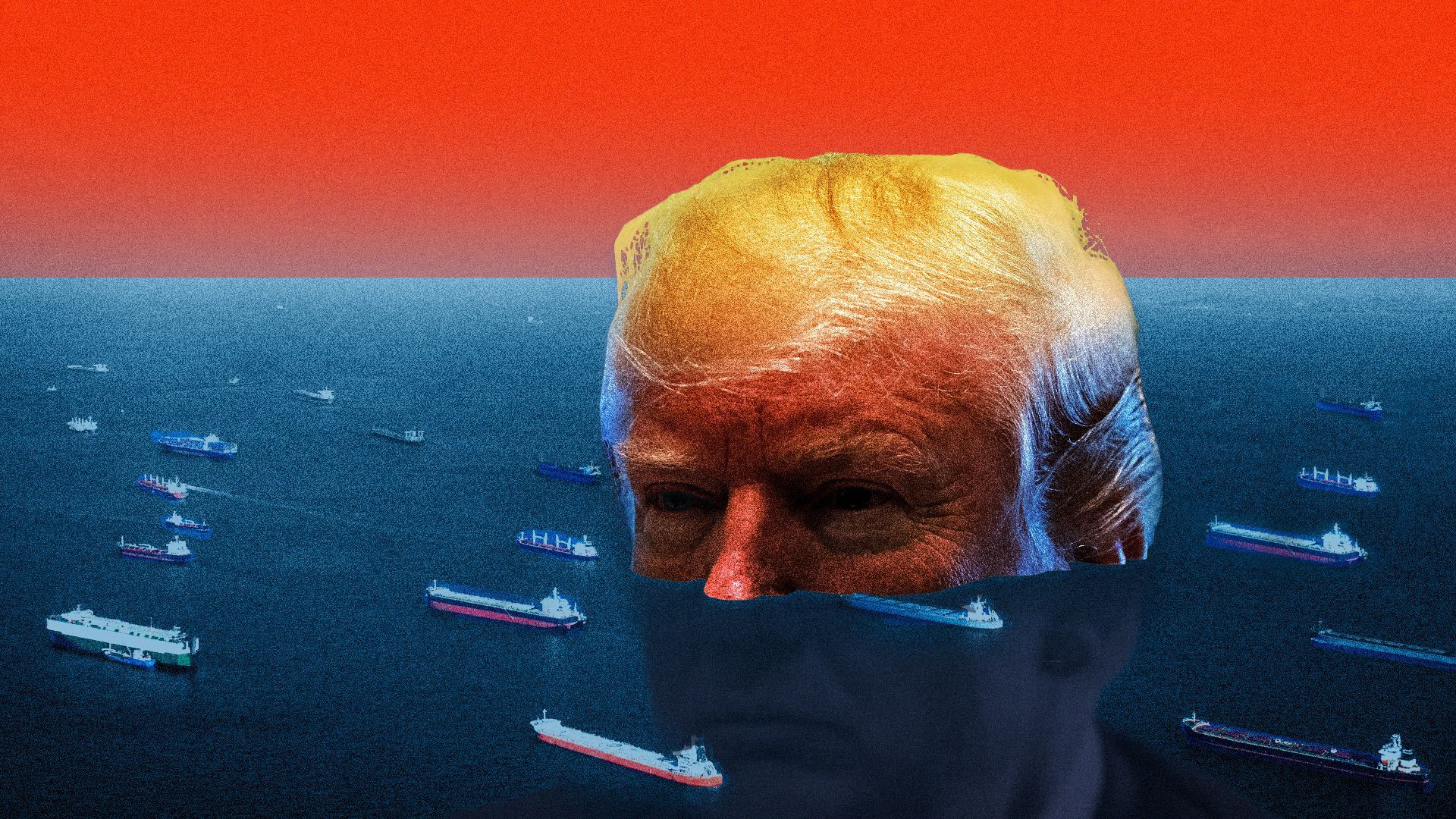
Illustration: Lazaro Gamio/Axios
Iran agreed to reopen the Strait of Hormuz. But the economic fallout from five weeks of effective closure is just beginning.
Why it matters: Supply chains don't unsnarl overnight. The gloomiest forecasts for the U.S. economy from the war may not come to pass, but shortages and price shocks will continue to pinch the world for months.
- Moreover, there's no certainty that the two-week ceasefire will turn into lasting peace.
Context: The backlog of stranded ships could take weeks to clear even under ideal circumstances. Infrastructure damage from attacks in recent weeks has resulted in energy shortages across the globe and could take years to repair. It will take time to restart production at facilities that curtailed output.
- And there are real prospects that Iran will now effectively tax shipments through the strait indefinitely, creating a new constraint on the global supply of oil and other commodities that didn't exist before the war.
What they're saying: "This is a 14-day window, not a permanent policy shift," Nigel Green, CEO of DeVere Group, an independent financial advisory firm, wrote this morning.
- "You have a fifth of the world's oil supply moving through a corridor that is still effectively under the influence of one of the parties to the conflict. That's not stability."
- Maersk, one of the world's biggest container shipping companies, said: "The ceasefire may create transit opportunities, but it does not yet provide full maritime certainty, and we need to understand all potential conditions attached."
Driving the news: Iran last night agreed to allow coordinated passage through the strait for two weeks, the first unambiguous reopening since the war began on Feb. 28.
- The terms are murky. Iran's foreign minister cited unspecified "technical limitations" on passage, while Trump said in a Truth Social post that the U.S. had secured a "COMPLETE, IMMEDIATE, and SAFE OPENING" of the strait.
The big picture: The prospect sent oil prices plunging, with the U.S. benchmark, West Texas Intermediate, tumbling 15% to roughly $96 a barrel as of 11:30am ET — still notably higher than pre-war prices.
- Traders don't see prices falling back to pre-war levels this year, according to forward-looking oil futures contracts, suggesting higher energy prices for months to come.
- The price surge comes alongside shortages for fertilizer, helium and other critical inputs that might continue to hamstring global manufacturers.
The de-escalation removes some of the risk that a surge in inflation might cause global central banks to tighten monetary policy.
Between the lines: Since the war's onset, traders have made a series of hawkish bets that the advent of $100+ oil would feed inflationary pressures to such an extent that it would compel the major central banks to, if not raise rates, at least not proceed with rate-cutting plans.
- That risk is diminished with the war's apparent off-ramp, which would make it more likely that the spike in energy prices will be short-term and manageable — and not the start of a long cycle of rising commodity prices.
- The more contained the price surge turns out to be, the lower the likelihood that the Federal Reserve, European Central Bank and others will see the need to defend their credibility and act to stop a self-fulfilling cycle of price increases from setting in.
By the numbers: The odds of at least one Fed rate cut this year rose to around 35% today on the CME's FedWatch tool, up from 16% yesterday.
- The policy-sensitive two-year Treasury yield was down 0.08 percentage point as of 11:30am ET today.
Yes, but: Even with the ceasefire, the Fed still faces a more treacherous path to getting inflation back down to 2%. Inflation progress had already stalled before the war, and the conflict's lingering effects will make that more difficult.
- In a speech on Tuesday night before the ceasefire, Fed vice chair Philip Jefferson warned that the war and prolonged energy price rises could weigh on consumer and business spending, adding "considerable uncertainty to the global economic outlook."
- Jefferson said the jump in energy prices "will apply some upward pressure on headline inflation, at least in the near term" and cited the geopolitical tensions (along with trade policy uncertainty) as upside risks to his inflation forecast.
The bottom line: The "broad rally in asset prices and lower oil prices reflects a reduction in tail risks, not a material improvement in the underlying outlook," strategists at TD Bank wrote in a new note.
- "Meanwhile, it will take many months for energy supply to return to something closer to normal, and several months of data volatility will leave central banks cautious," they added.
