NYT union tells management its AI standards are "woefully inadequate"

Add Axios as your preferred source to
see more of our stories on Google.
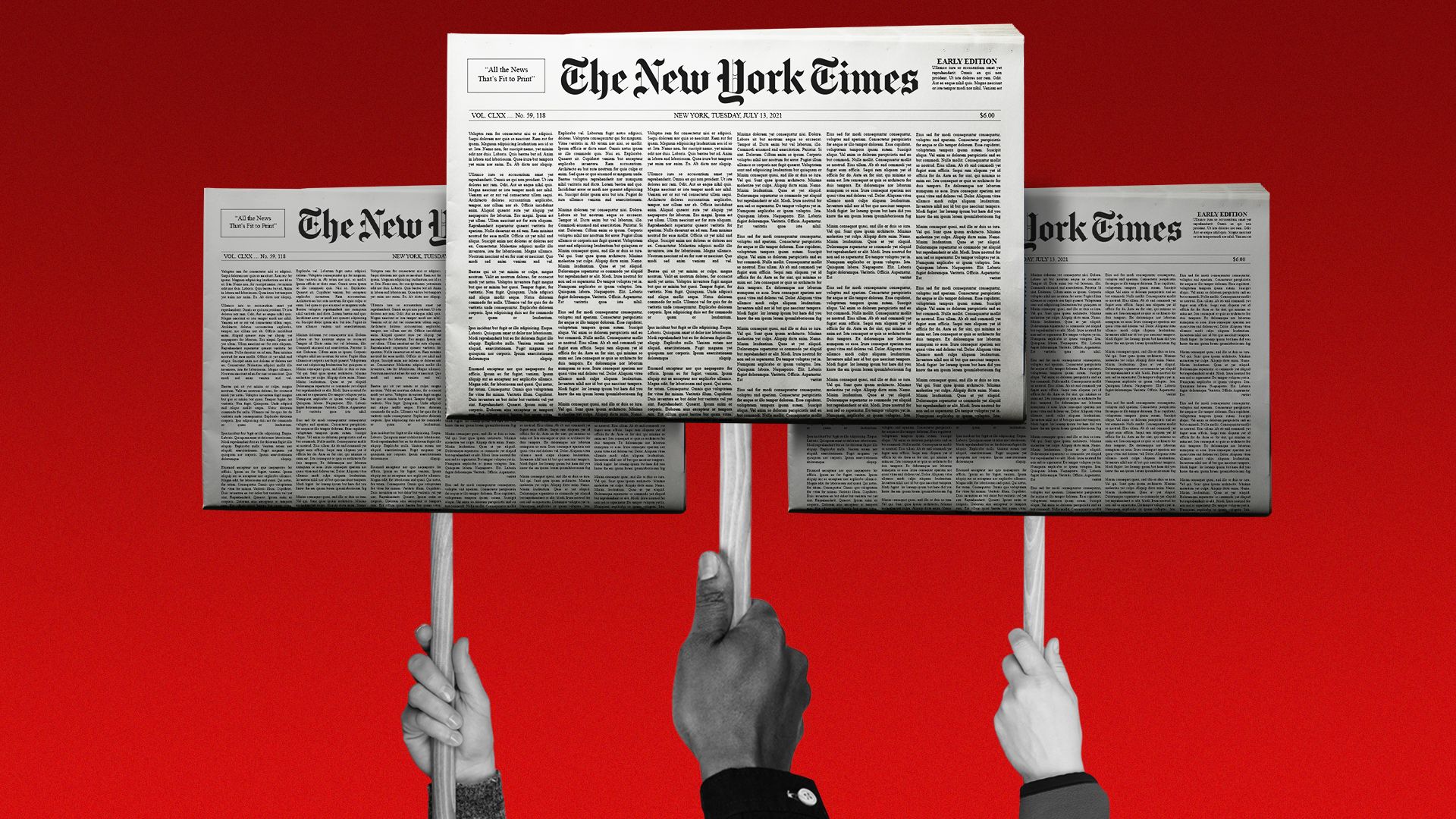
Illustration: Shoshana Gordon/Axios
The New York Times' editorial union leaders on Tuesday sent a letter to management arguing its artificial intelligence standards are "woefully inadequate" and too vague, which has led to editorial problems and trust issues.
Why it matters: AI is one of several sticking points in a contract dispute between management and the guild.
- A recent incident involving AI-driven plagiarism by a freelance book reviewer has pushed the guild to demand more clarity from management around its AI standards as part of the negotiations.
Zoom in: The letter was addressed to publisher A.G. Sulzberger, CEO and president Meredith Kopit Levien, executive editor Joe Kahn, opinion editor Katie Kingsbury, managing editor Marc Lacey and managing editor Carolyn Ryan. It was signed by guild members from its AI subcommittee.
- The letter cites the paper cutting ties with a freelance journalist who used AI to help write a book review that drew phrases from a similar review in The Guardian.
- "We are the leaders of the Times Guild Artificial Intelligence subcommittee, and we are writing to express our serious concerns about the use of A.I. — and the resulting plagiarism — by a freelance book review writer for The Times," the letter reads.
- "Our dedicated human journalists — including and especially the Times Guild's 1,500 members — make this paper a reliable source for millions of subscribers who want quality reporting and commentary. When The Times instead publishes A.I.-generated work, intentionally or not, our readers lose trust in what we do. This is unacceptable," it adds.
Between the lines: The letter doesn't specify proposed changes to the Times' AI standards, but Isaac Aronow, an associate editor for games and guild bargaining committee member, laid them out for Axios in an interview.
- He says the guild wants its contract to include protections against AI use as part of the performance review process.
- It also wants the Times' AI standards to mandate clearer disclosures around the technology's use in its journalism.
- The guild also wants further protections around the way Times journalists' name, image and likeness would be protected. Aronow says the Times struck down most of its requests, except for the last point, for which it proposed a broader standard.
The other side: The Times argues its latest proposal addresses the guild's main concerns, which in addition to AI include health care, wages, remote work and unionizing The Athletic.
- In a note sent in late February to union members, Lacey and Ryan said management's most recent proposal "gave assurances that our use of A.I. would be informed by our current best-in-class guidelines and standards while leaving flexibility to iterate as the technology evolves."
- "We also added strong language that guarantees that The Times would not create a digital replica of a bargaining member's image, voice or likeness without their consent — a provision the Guild had told us was very important to its members."
- In early March, Lacey told NewsGuild-CWA's Jon Schleuss, "Our journalists are among the highest paid in the industry and we structure salaries and compensation to reward them for their contributions to the company's success."
- "Our business has long relied on licensing deals for revenue, which allows us to invest in our newsroom and the journalism. We've added hundreds of roles in recent years while continuing to cover the world and report from 150 countries and all 50 states each year."
Catch up quick: The latest three-year contract between the Times and its editorial union lapsed Feb. 28.
- Management tried to bring its initial proposal to the table in October, following a brutal public spat over their last contract renewal in 2022. The guild provided feedback on its proposal in January.
- The Times told the guild in January that its initial proposal "includes the strongest economic package we have proposed in a first offer" and "forgoes new management priorities."
The big picture: AI has become a bigger flashpoint between newsroom unions and management teams in recent years as more outlets experiment with the tools and strike major deals with AI firms.
- Unionized journalists at Politico and its sister site E&E News won an arbitration case against Politico's management team last year over the company's introduction of AI tools, which they argue violated Politico's editorial standards.
Editor's note: This story was corrected to reflect that the guild said it wants protections against AI use in performance reviews (not against its use as an evaluation metric in the reviews).
