Tesla is discontinuing the Model S sedan and Model X crossover — luxury vehicles that put the company on the map but which have become long in the tooth by automotive standards.
Why it matters: This isn't just belt-tightening. Amazon's pullback from some of its most ambitious projects suggests the company is becoming more selective about its public-facing retail initiatives.
Shares in Meta jumped 10% in after-hours trading Wednesday after the company forecast higher operating income for this year, even as its costs could nearly double this year.
Why it matters: Meta has been pouring billions into AI talent and infrastructure, which executives have said is essential to the company's future and to keep the U.S. competitive in AI.
Capitol Police investigations into threats against members of Congress, their families and staffers, and the U.S. Capitol rose drastically in 2025, according to data released by the department Tuesday.
Driving the news: The new stat dropped just hours after an attack on Rep. Ilhan Omar (D-Minn.) at a town hall Tuesday evening, in which a man sprayed her with an unknown liquid from a syringe.
ServiceNow is deepening its existing partnership with Anthropic, further integrating the AI startup's Claude models to power its own offerings, according to a company memo reviewed by Axios.
Why it matters: A recent funding target valued Anthropic at $350 billion in part due to these kinds of deals: Businesses want access to Anthropic's technology, which puts the Claude-maker further ahead in the AI race.
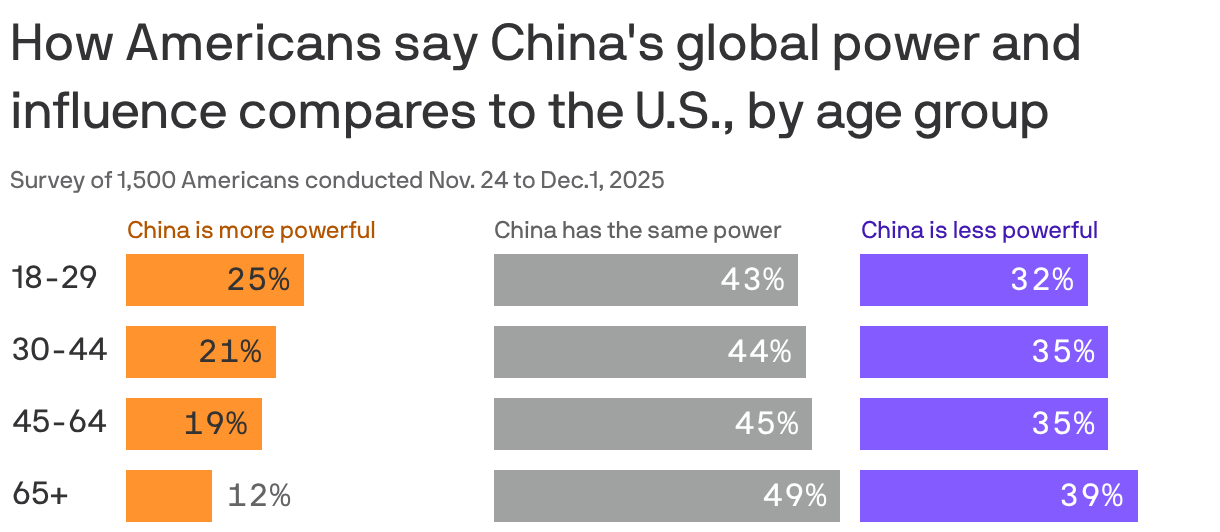
A quarter of young Americans think China has more global power and influence than the U.S., compared to 12% of Americans ages 65 and older, according to a new Carnegie Endowment for International Peace survey.
Why it matters: Political dysfunction, economic pressures and cultural exchanges are helping to reshape how young Americans measure global power — and America's place in it.
There are signs that the so-called vibecession is back for 2026, but with a twist — it's the highest-earning Americans who feel more glum, as the faltering labor market for white-collar workers drives a bit of a doom loop.
Why it matters: The U.S. economy increasingly runs on the spending power of the upper middle-class and wealthy, and if they're anxious that could affect everyone.
It's been an inauspicious start for TikTok U.S., the $14 billion social media spinout whose top backers include Oracle, Silver Lake, MGX, and former owner ByteDance.
Catch up quick: Some users have accused TikTok U.S. of censoring certain content, including mentions of ICE and Jeffrey Epstein.
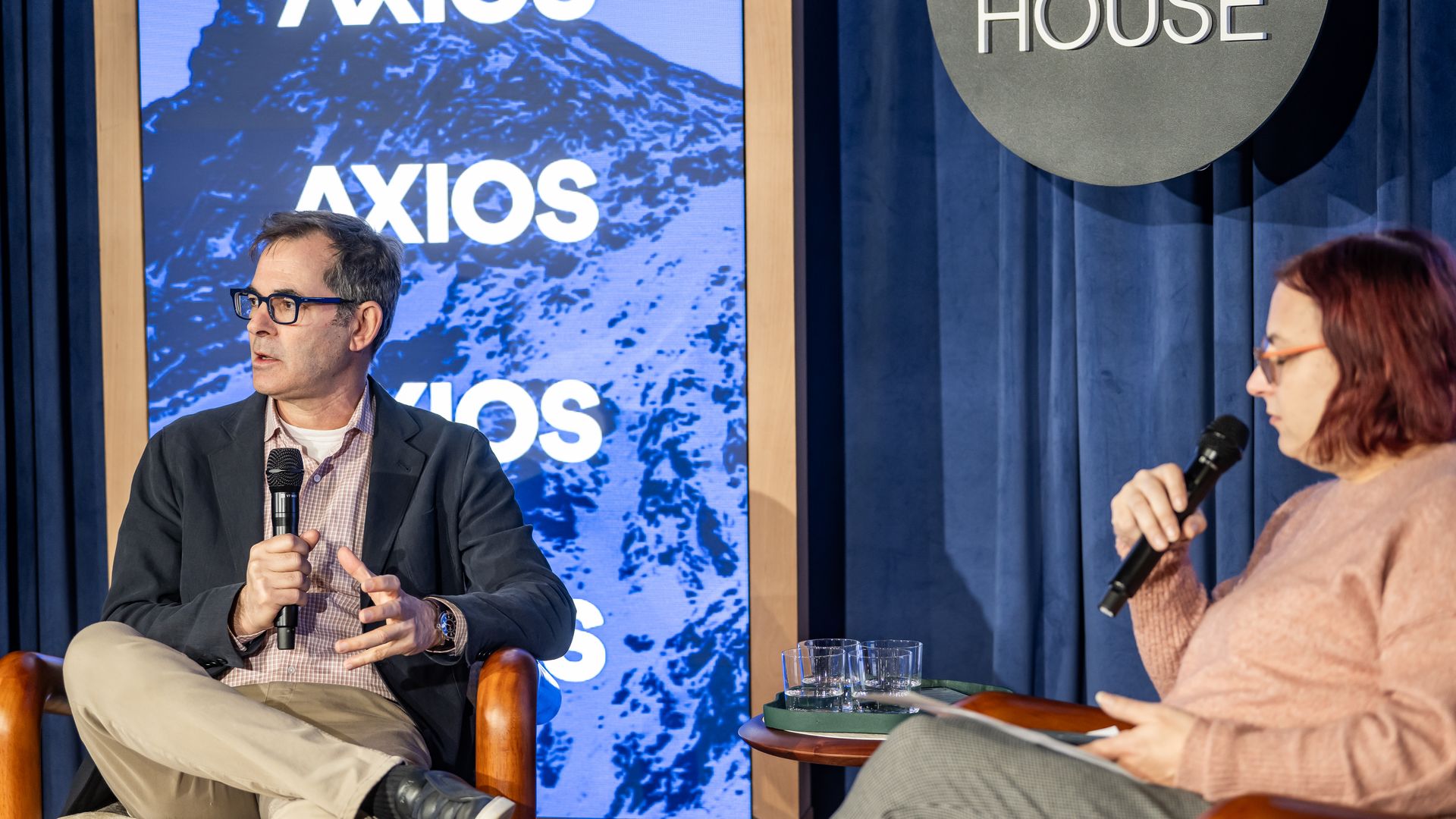
DAVOS, Switzerland — Organizations and corporations should adapt to withstand shifting geopolitical headwinds and insulate themselves from the turbulence,CoreWeave co-founder and CEO Mike Intrator said at the World Economic Forum last week.
The big picture: As geopolitical uncertainty increases and alliances fray, top officials need to build business strategies that diversify portfolios and ensure long-term economic stability.
Axios' Ina Fried and Dave Lawler spoke to Intrator and Ray Dalio, Bridgewater Associates' founder and Dalio Family Office's founder and mentor. The conversations were sponsored by Mubadala Investment Company and MGX.
Driving the news: Chip developer Nvidia announced it would be investing $2 billion in CoreWeave, further solidifying the cloud company's central role in the AI boom.
What they're saying: "We are building our infrastructure in response to signed contracts with long-term demand," Intrator said.
We look at "inference," Intrator explained — a signal that shows an AI model is being actively used — to confirm there's demand before moving forward.
Yes, but: "I'm not buying GPUs until Microsoft or Meta or Nvidia … comes and signs a contract with me," Intrator added.
Relying on the creditworthiness of the organization helps "insulate my company" from pockets of risk, he said.
What's next: "The geopolitical order is changing," Dalio said.
"Whoever wins the technology war will win the military [and] geopolitical war. They're going to win the economic war."
Content from the sponsor's segment:
In View from the Top conversations, Marc Antaki, Mubadala's deputy chief strategy and risk officer, and MGX CIO of artificial intelligence Ali Osman spoke to AI Leadership Lab moderator and host Ryan Heath.
"Resilience at Mubadala comes from three things: a resilient strategy … a resilient portfolio … [and] resilient institutions," Antaki said.
"Making sure that you have compute, the right geographies, the right scale, backed by the right hyperscalers, built by the right developers … is critical to the success of the industry," Osman told Heath.
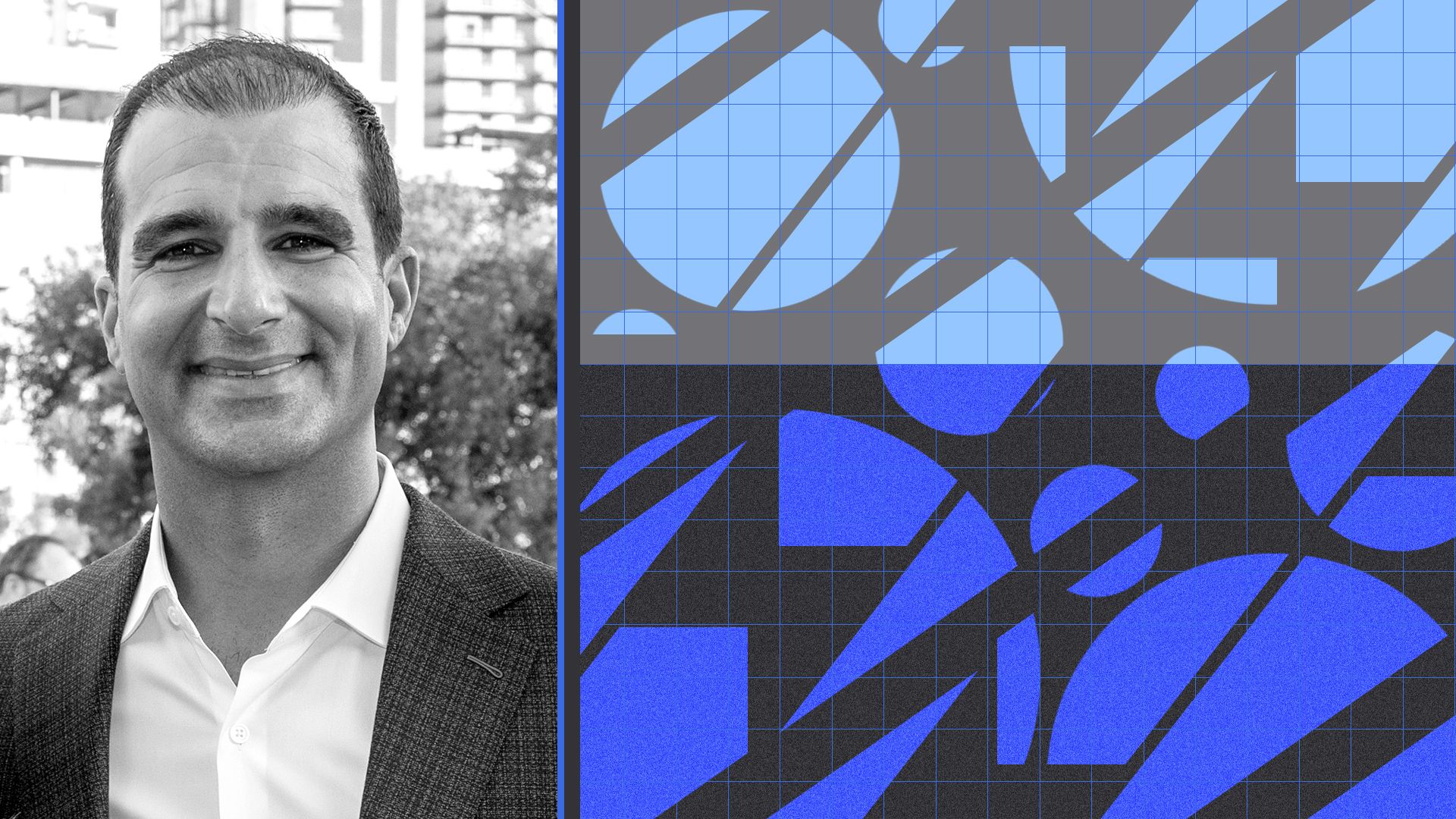
Dino Mavrookas, the chief executive at drone-boat maker Saronic, is "very concerned about the fragile nature of our power grid."
"I think if we lose electricity for more than 24 hours nationwide, chaos would break out," he told Axios when asked about potential national-security threats.
A robot trained to drive an 18-wheeler can now drive a taxi, too, says Waabi — a Canadian autonomous trucking startup that just secured up to $1 billion from investors, including Uber.
Why it matters: Waabi says it's the first company to develop a shared AI "brain" that can operate both trucks and robotaxis — and eventually, other types of physical AI such as drones, warehouse robotics and humanoids.
Amazon said Wednesday it will cut another 16,000 jobs, just three months after slashing 14,000 roles across the company in a broad efficiency drive.
The big picture: Companies have become outspoken about trying to do more with fewer people, for a mix of reasons: AI productivity gains; over-hiring in the post-pandemic job boom; or simply reducing costs amid ongoing inflation pressure.
Google is rolling out an updated "Mayors AI Playbook" with the U.S. Conference of Mayors at the group's Winter Meeting in Washington today, the company first told Axios.
Why it matters: Cities are spending more on technology, but many lack the expertise to deploy AI safely and at scale. Whoever helps them cross that gap could lock in years of government contracts.
Covering the energy demands of AI while increasingly using AI feels like a strange form of immersion therapy.
Why it matters: We're all humans first, and only then journalists, founders, philanthropists or experts. And AI is fast reshaping how we work, think and find meaning.
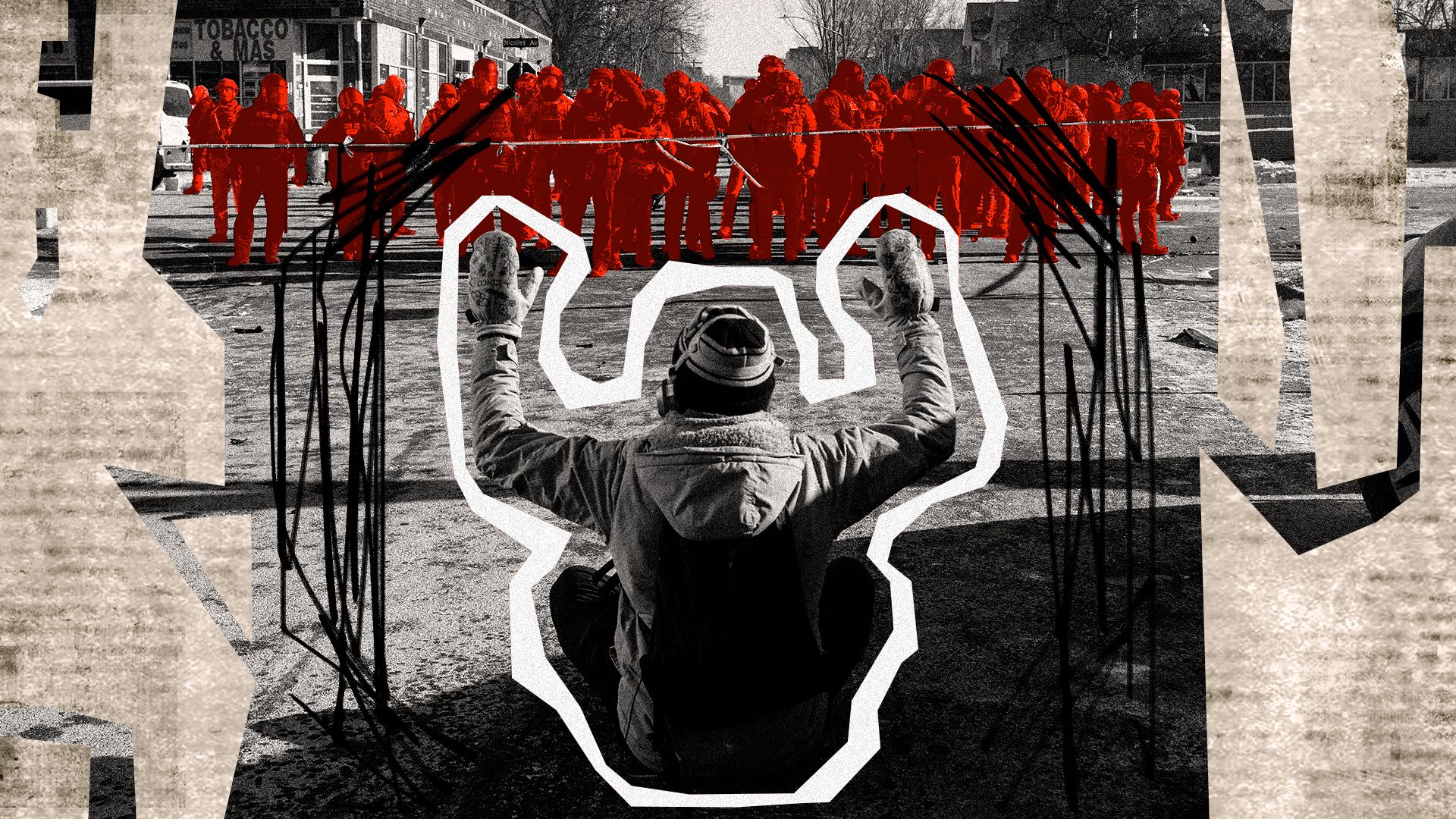
The killing of Alex Pretti has destabilized the cultural settlement that took hold after the 2024 election, dragging non-political actors and institutions back into the eye of a national reckoning.
Why it matters: America may never return to the mass social activism of 2020. But the vocal re-engagement of corporations, athletes and apolitical corners of the internet suggests a red line was crossed in Minneapolis.
I rejoined Axios thisyear as a "boomerang" employee with a clear mission: I'm making videos to grow an Axios YouTube audience that we can build a business around.
We launchedtwo this week:a virtual interview with Anthropic CEO Dario Amodei by Axios co-founders Jim VandeHei and Mike Allen, and a blunt take from Jim on why everyone should dive deep into AI.
Censorship allegations are mounting against TikTok as users find themselves unable to locate content related to ICE raids across the country.
Why it matters: People have been congregating on social media to share information related to the Trump administration's immigration crackdown — especially concerning ICE's killing of twocivilians — with suppression concerns escalating across platforms like TikTok and Facebook.