Don't chase jobs. Chase obsessions.

Add Axios as your preferred source to
see more of our stories on Google.
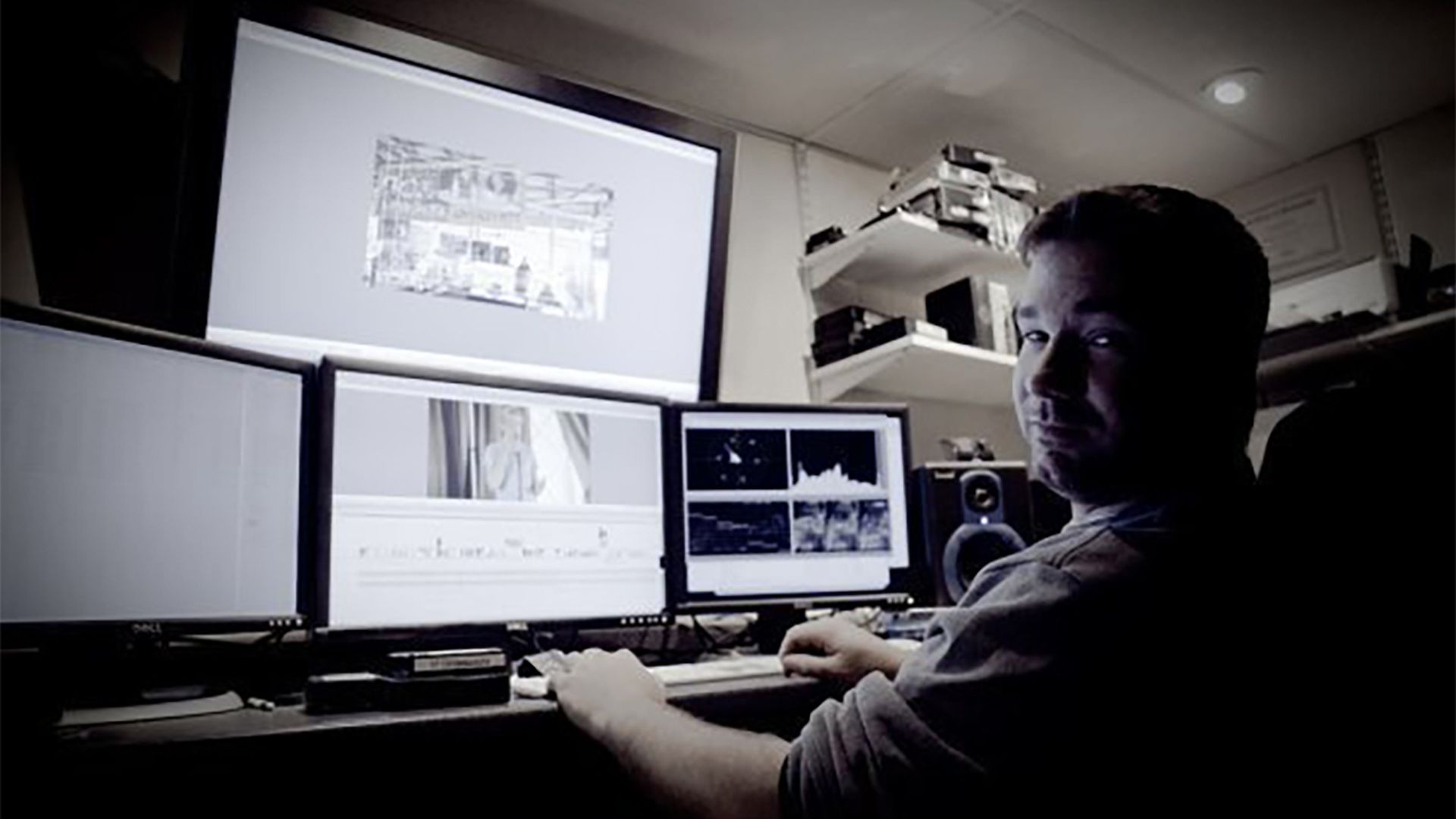
Jimmy editing video in his boss's basement in the Philly suburbs back in 2009.
I rejoined Axios this year as a "boomerang" employee with a clear mission: I'm making videos to grow an Axios YouTube audience that we can build a business around.
We launched two this week: a virtual interview with Anthropic CEO Dario Amodei by Axios co-founders Jim VandeHei and Mike Allen, and a blunt take from Jim on why everyone should dive deep into AI.
- Subscribe, if you're into that sort of thing.
I've been making videos professionally for nearly two decades. It's a path young me could never have foreseen.
- Why it matters: I didn't know, or care, about what my career could be. I worked to make money to socialize. A job was a means to a beer.
Last year, Jim, now my boss, advised the graduating class of his alma mater, the University of Wisconsin—Oshkosh: Find a job you'd do for free.... Maniacally pursue something you'd do just for fun.
Great advice, but I'd like to add my own spin to Jim's wise words:
- Find the people who will pay you for the things you're already doing for free.
I graduated in 2008 from Penn State with a degree in corporate communications and media studies. Not a great time in America to have that degree and enter the job market.
- My first job post-graduation: washing cars.
- Work to live, right?
But in college I had developed a hobby that would change the course of my life: I had become obsessed with editing video.
- I made useless videos of me beating kids in the video game Halo, but poured hundreds, sometimes thousands, of hours into these videos.
- I wrote about this for the video game website Polygon (where I worked) in 2014.
I wasn't getting paid or trying to build a career. I was doing it because I couldn't not do it. And one day, while washing cars, a thought popped up: Will someone pay me to do this thing I already do for free?
A family friend owned a small production company outside of Philadelphia, near where I grew up in a not-rich, not-poor, loving and supportive American family. (Hi mom!)
- I asked if I could help out in the afternoons to see if I had any talent. I told them I'd work for free.
- They started paying me a month later.
All of a sudden, I was living to work and I couldn't get enough of it. Early mornings, late nights, incredibly stressful situations. I loved every second of it.
Between the lines: "Doing what you love" does eventually start to feel like work. That isn't a sign of failure. It's a sign that it's time to find the next thing you'd do for free and integrate it into your role.
My career has moved in 3-4 year phases. For me, it's gone something like this:
- The craft. I became obsessed with the technical skills (shooting, editing).
- The story. I focused on telling stories that move people (my videos have made me cry).
- The strategy. I applied my skills for brands (creative constraints are a gift!).
- The scale. I advanced to leading teams and building sustainable businesses.
If you are starting from scratch or feeling stuck, perform a radical self-audit:
- Identify the "boredom factor." What do you think about when you're bored?
- Assess the value. Are you good at it, or could you be? If you care enough, you can become an expert. Experts get paid.
- The bridge. Stop asking for a job. Ask for a chance to solve a problem using the thing you love.
People will pay for what you care about if you take the time to figure out how to make it useful to them.
Or, as Hank Green, a science communicator and YouTube creator explains: Don't follow your dreams, follow your tools.
Also great advice.
