Monday's technology stories

Axios House: Equity is fundamental to AI's success, execs say
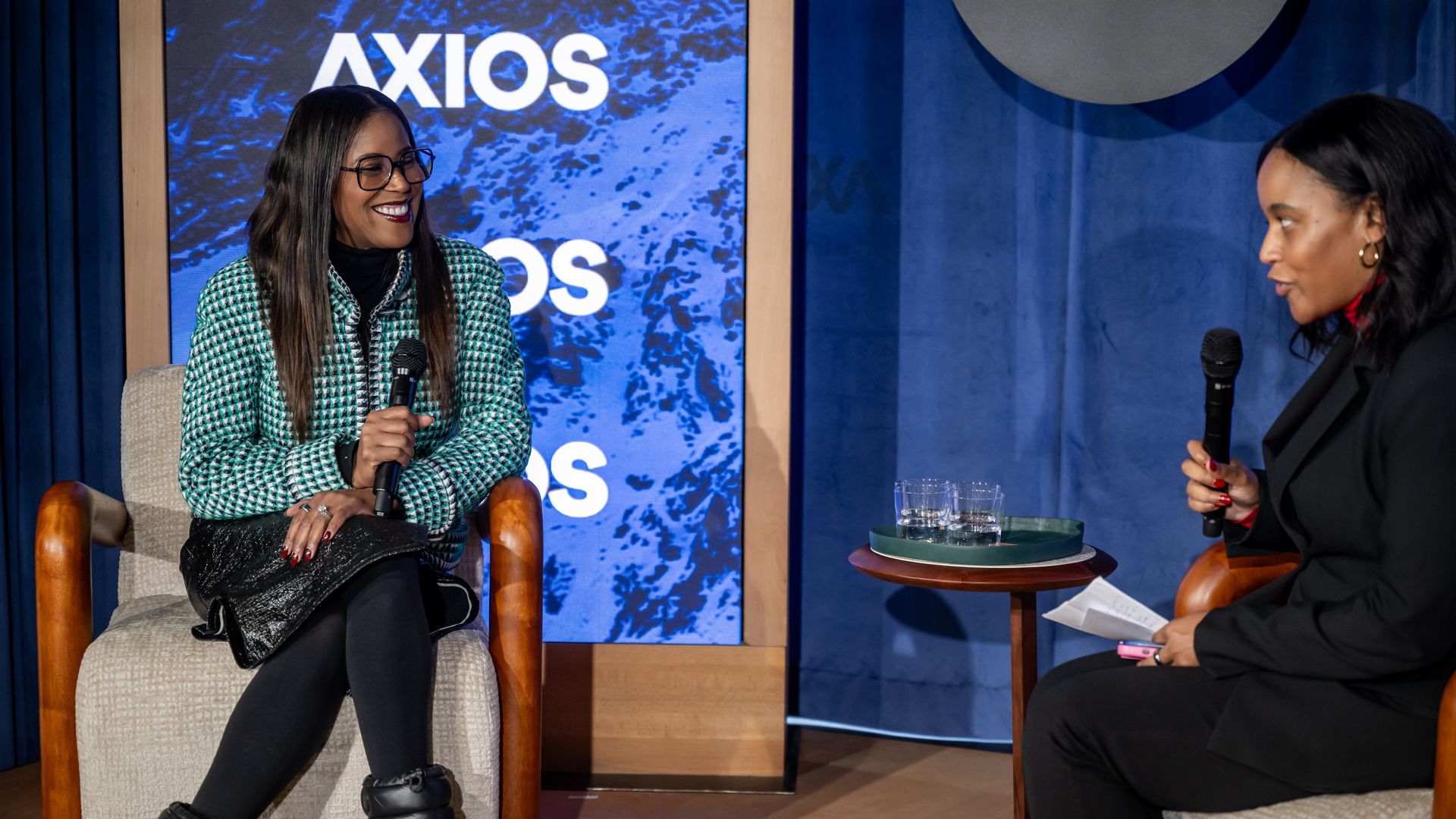
DAVOS, Switzerland — Widespread access to benefits and safety standards around AI is a collective responsibility, said industry leaders at a Jan. 21 Axios House event.
Why it matters: When the public feels the negative consequences but doesn't reap the rewards, "that will be an organ rejection when it comes to embracing the technology," TIAA president and CEO Thasunda Brown Duckett said.
Axios' Courtenay Brown and Ina Fried spoke with Brown Duckett, Google DeepMind co-founder and CEO Demis Hassabis, IBM vice chairman Gary Cohn and U.S. Trade Representative Jamieson Greer. The conversation was sponsored by ServiceNow.
Zoom out: Concerns about equity apply not only to financial benefits but also to resources and community impact.
- "We're starting to see the issue of water. We're starting to see the issue of electricity prices. These are real fundamental issues," Cohn told Brown.
- "We need to get our act together quickly on things like international cooperation, at least some kind of minimal safety standards," Hassabis said.
Zoom in: Preventing AI-exacerbated inequality "starts within your own company," Brown Duckett told Brown.
- "Are you taking a look at your wages? Are they competitive? Are you still recruiting on campuses?"
- "We have to make sure: How will everyone be able to have an opportunity to benefit?"
The bottom line: "There's a bigger picture at stake of safety overall and stewarding AGI safely into the world for the benefit of everyone," Hassabis said.
Content from the sponsor's segment:
In a View from The Top conversation, ServiceNow.org president and ServiceNow chief corporate affairs officer Vanessa Smith warned that failing to address inequality early risks repeating past mistakes: "History tells us what happens when those divides widen."
Go deeper: Watch the full interviews on YouTube.


Behind the Curtain: Anthropic's warning to the world
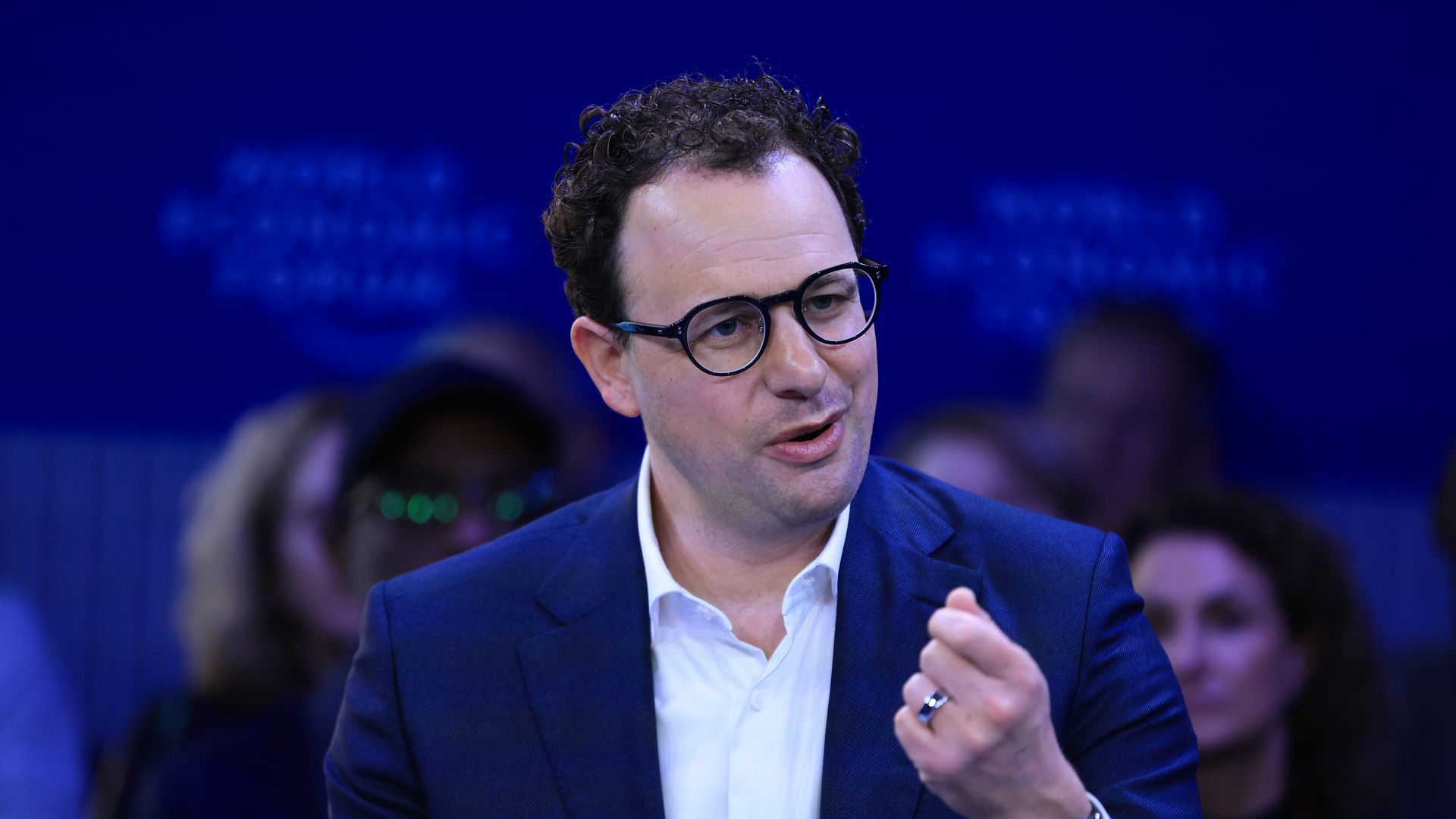
Anthropic CEO Dario Amodei, the architect of the most powerful and popular AI system for global business, is warning of the imminent "real danger" that super-human intelligence will cause civilization-level damage absent smart, speedy intervention.
- In a 38-page essay, shared with us in advance of Monday's publication, Amodei writes: "I believe we are entering a rite of passage, both turbulent and inevitable, which will test who we are as a species."
- "Humanity is about to be handed almost unimaginable power, and it is deeply unclear whether our social, political, and technological systems possess the maturity to wield it."

California easily maintains its startup crown

Some of California's most prominent venture capitalists are quick to slam their state, arguing that fiscal mismanagement and high taxes will cause startups to form elsewhere.
- So far that doesn't seem to be happening.


What Davos' CEO interviews signal about the future of media

Larry Fink, CEO of BlackRock, moderated two of the biggest interviews at Davos this year, with Nvidia CEO Jensen Huang and Tesla CEO Elon Musk.
Why it matters: It's part of a growing trend: Add an interview with a CEO or even a new media podcast to your appearance list.
Axios House: Trust presents the biggest challenge in health care AI, industry leaders say

DAVOS, Switzerland — Leaders in the health care and tech space said transparency, feedback and narrative play a crucial role in building provider and patient trust in AI, during a Jan. 20 Axios event.
Why it matters: Health care AI has the potential to help improve patient outcomes and lower the risk of physician burnout.
Axios' Courtenay Brown moderated the Expert Voices conversation, which was sponsored by Philips.
What they're saying: Trust in health care AI is particularly low, said Vanessa Parli, managing director of programs and external engagement at the Stanford Institute for Human-Centered AI (HAI).
- Using the word "productivity" about AI can be a deterrent to providers because it may imply less time seeing patients, according to Eric Cioè Peña, Northwell Health vice president and the founding director of its Center for Global Health.
- "Trust is a narrative problem first, and a technology problem second," added Hugh Taggart, CEO of Weber Shandwick's EMEA region.
By the numbers: A survey from Philips found a gap between providers (63%) and patients (48%) when it came to optimism about AI improving patient outcomes.
Yes, but: Keeping humans in the loop has been key to successful implementation strategies at Mayo Clinic, said Matthew Callstrom, physician lead of AI and strategy at Mayo Clinic.
- "When you start to explain to patients how we're using AI, they're like, put me in," Callstrom said.
- This has helped on the provider side as well, he said. For instance, a volunteer innovation team at Mayo built and tested an AI-driven handoff tool for the transition between nurse shifts. It has since been adopted by 75% of the nurses, generating hundreds of thousands of summaries.
What's next: The industry should "think about it in terms of what we know, from research, drives trust: accountability [and] transparency," American Psychological Association CEO Arthur Evans said.
- Anthropic's Claude for Healthcare is "building connectors to key data sources that we know are trusted, like the CMS coverage database or the National Provider identification registry," said Elizabeth Kelly, head of beneficial deployments.
- "The systems should be very forthcoming with what they will not do," Peloton CTO Francis Shanahan said.
- "You need to design [the technology] in a way so that the consumer understands what the implications of the technology are," Parli added.
Content from the sponsor's remarks:
"Three out of every four patients say they wait over two months for specialty care," Philips chief innovation officer Shez Partovi said. "Of those, a third of them — while they're waiting — end up in a hospital."
- "We're putting AI into everything … from toothbrushes to MRI scanners and angio equipment, because it actually helps automate the procedure and … improve access."

Exclusive: Grid Aero eyes additional airlift following $20 million raise

Grid Aero raised $20 million and will use the money to build more cargo-hauling drones and refine the autonomy that makes them tick, chief executive Arthur Dubois told Axios.
The big picture: The startup exited stealth a half-year ago — not with an explosives-laden quadcopter or flashy missile, but with Lifter-Lite, an aircraft it thinks can assuage the pains of contested logistics.
Nvidia takes $2 billion stake in CoreWeave

Nvidia, the company at the center of the AI boom, said on Monday that it would invest $2 billion in data center company CoreWeave.
Why it matters: The investment shows that the AI spending spree is far from slowing, even with questions over circular deals growing.

Trump supports U.S. rare earth firm in move to ease China stranglehold
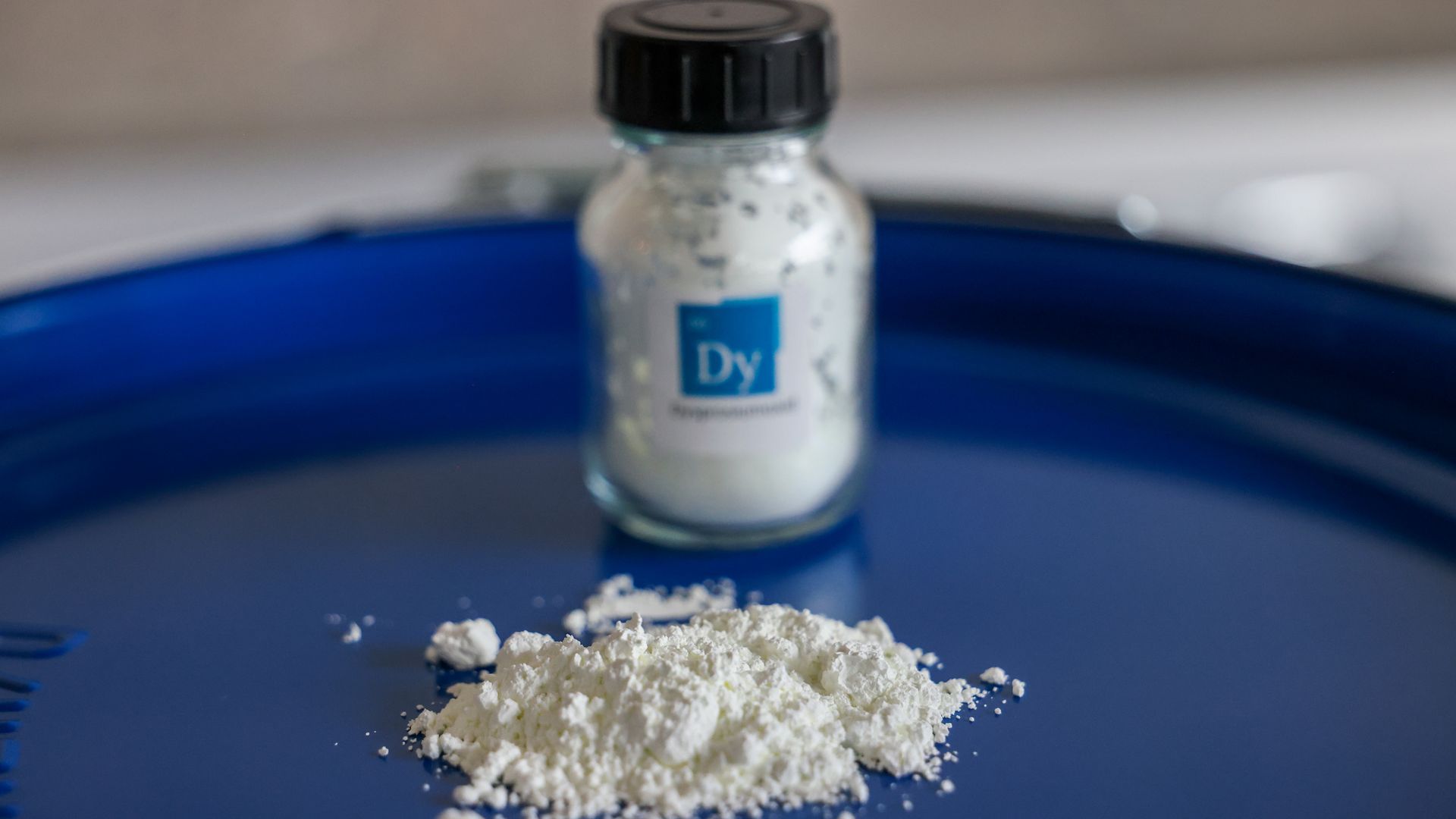
The Trump administration plans to provide USA Rare Earth with $1.6 billion in mostly loan financing to extract and process the materials and manufacture rare earth magnets.
- The agreement will provide the U.S. government a stake somewhere between 8% and 16%, depending on how the agreement is executed, a filing states. The company announced a separate $1.5 billion in private finance.


Tech workers urge CEOs to condemn ICE
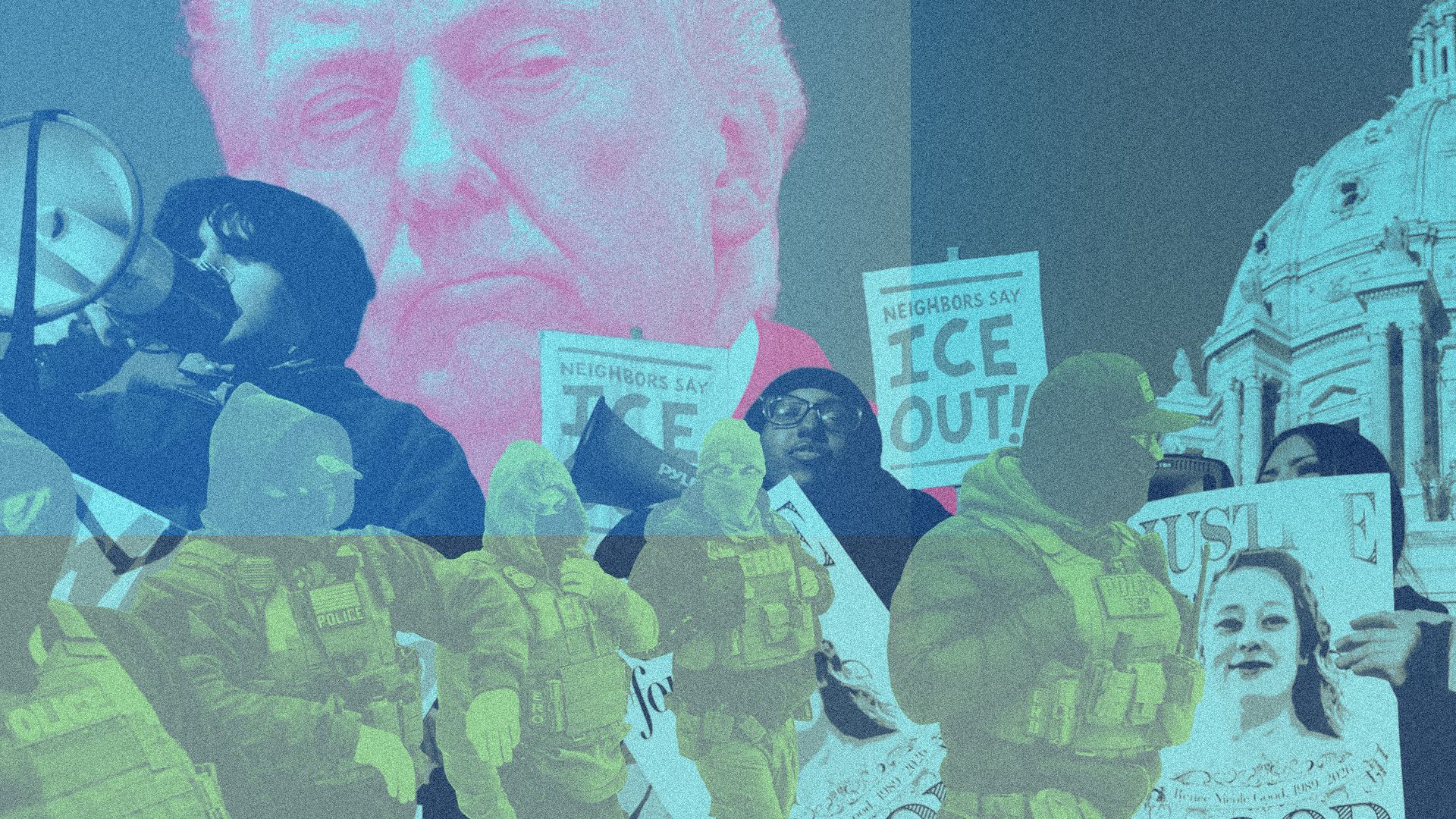
Some tech workers are pressuring the industry's top leaders to speak out against ICE after federal officers killed Alex Pretti in Minneapolis on Saturday, less than a month after the shooting of Renee Good.
The big picture: The world's richest tech companies often wield unique influence over the White House. But in the wake of the fatal shootings in Minneapolis, the companies and their CEOs have largely chosen to stay silent.

The health care hiring boom is losing steam
The health care job growth that's powered the labor market since the COVID pandemic is stalling out.
Why it matters: Republican cuts to federal health programs, AI automation and rising costs are making health systems and other employers level off hiring — including for jobs requiring a professional license like nurses or physical therapists.
Exclusive: OpenAI wants to be a scientific research partner
AI is increasingly being used as a research collaborator for mathematicians and scientists, per a new report from OpenAI shared exclusively with Axios.
Why it matters: OpenAI argues that AI can make scientists more productive by upping the amount of research that can get done, ultimately leading to more life-saving breakthroughs.