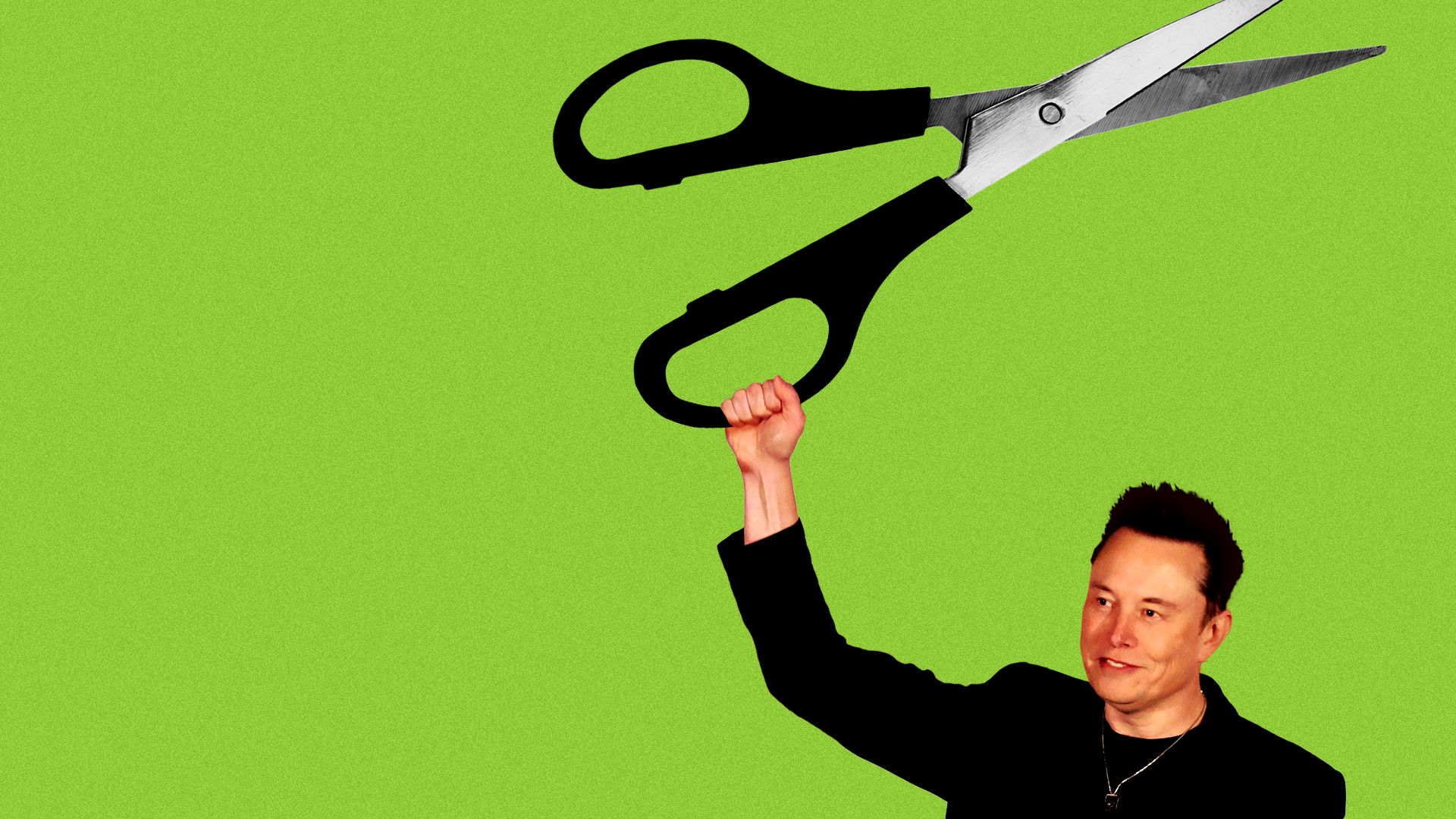
Elon Musk dubbed the Department of Government Efficiency only "somewhat successful," but his meme turned real government agency leaves behind a wrecking ball legacy Washington will feel for years.
OpenAI says the cyber capabilities of its frontier AI models are accelerating and warns Wednesday that upcoming models are likely to pose a "high" risk, in a report shared first with Axios.
Why it matters: The models' growing capabilities could significantly expand the number of people able to carry out cyberattacks.
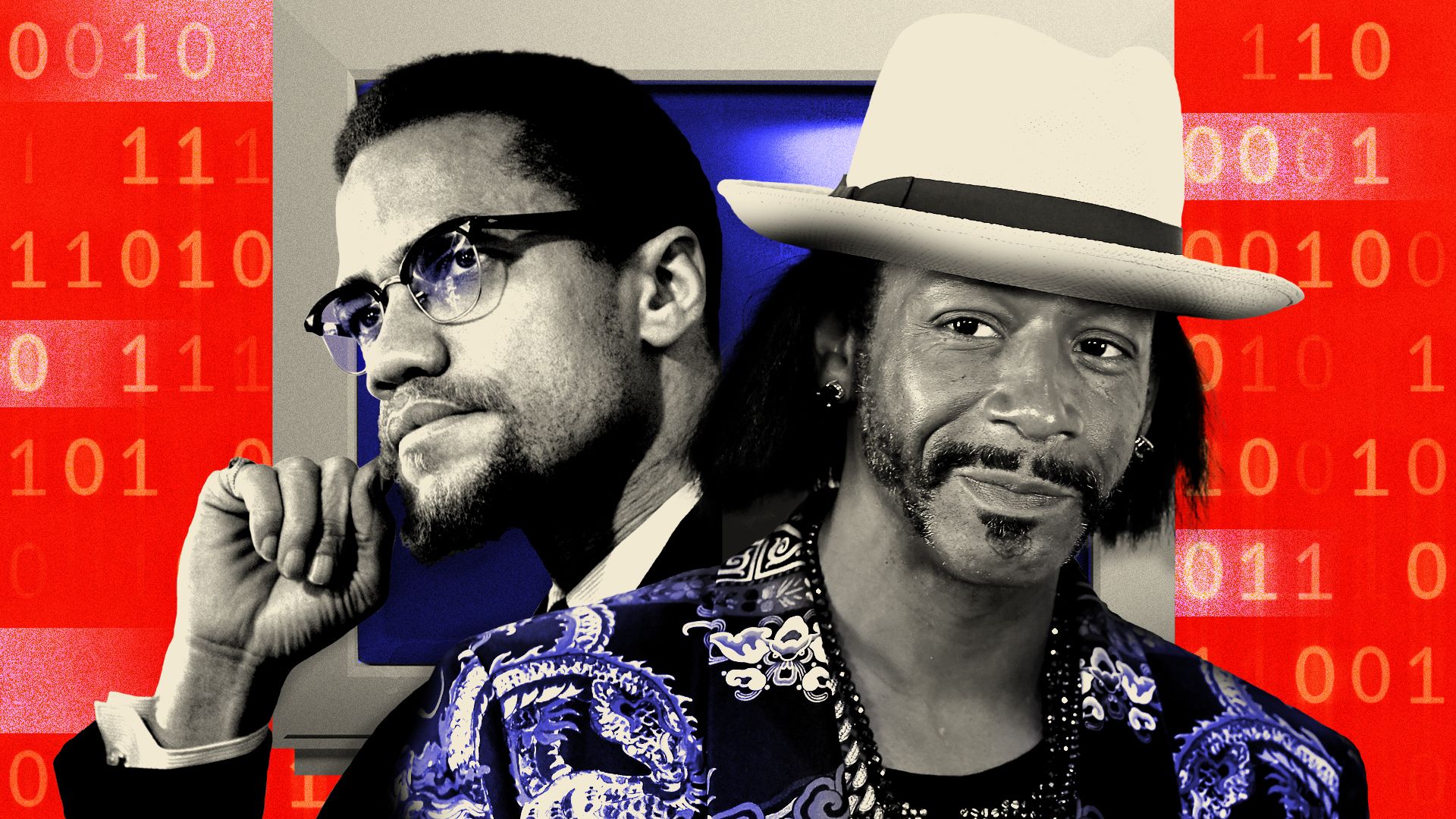
A new rights-and-governance platform is launching after a pilot program with Malcolm X's estate and Katt Williams' studio, bet on helping creators keep their work from being quietly swept into AI training systems — and losing out on pay when it is.
Why it matters: Generative AI systems are being trained on enormous scraped datasets of books, videos, music and cultural archives — often without permission and with no settled legal standard for whether that's allowed.
President Trump is granting China access to more of Nvidia's advanced AI chips, he announced this week, a partial win for Nvidia which has lobbied against U.S. export restrictions first put in place in late 2022.
The big picture: Nvidia warns that blocking its sales has accelerated China's domestic chipmaking push — creating new global rivals and threatening the U.S. lead in the AI race.
SAP is reshaping how government agencies approach IT modernization. As global president of Cloud ERP and acting managing director for SAP U.S. Public Services, David Robinson is leading efforts to bring cloud-native, AI-powered innovation to the public sector.
Foreign tourists from dozens of countries that typically enjoy easier entry requirementsmay soon have to provide five years of their social media history when entering the U.S., according to a U.S. Customs and Border Protection notice published Wednesday.
The big picture: The Trump administration has erected new barriers to legally immigrating and obtaining visas — but this plan, published to the Federal Register, targets tourists who generally don't need a traditional visa to enter the U.S.
People are increasingly turning to Microsoft's Copilot chatbot for advice about their health, careers and relationships, according to data Microsoft first shared with Axios.
Why it matters: Understanding how people use Copilot and similar tools is key to teasing out their benefits versus the risks.
Conversations with more than a dozen strategists and investors on their 2026 outlooks reveal that Wall Street is not worried about an AI bubble, but wants to add portfolio protection just in case.
Why it matters: Hedging was not very profitable in 2025,but the mix of macro uncertainty and AI concerns next year has investors worried that skipping protection could be costly.
A decision concerning the fateof the U.S. Navy's futuristic fighter must be "made quickly," considering how long it will take to build, test and get familiar with such a sophisticated warplane, the chief of U.S. naval operations said.
Why it matters: The service's F/A-XX endeavor has been, at least publicly, stuck in limbo.
Rumors of an imminent contract award have come and gone, as opinions of Trump 2.0 officials clash with those of military leadership.
Pentagon chief technology officer Emil Michael would like to see "five more Andurils and Palantirs and SpaceXs" flourish, he told reporters Monday.
Why it matters: His remarks reflect the growing momentum of neo-prime contractors, the influx of private capital into the defense world and the U.S. military's growing affection for dual-use equipment.
Hypersonic missile-maker Castelionanticipates pumping out Blackbeard munitions at its to-be-built New Mexico factory as soon as 2026, with the ultimate goal of producing thousands per year, according to CEO Bryon Hargis.
Why it matters: "If you want to achieve deterrence, you have to make a lot of munitions," he told Axios on the sidelines of the Reagan National Defense Forum in California.
"It's not suitable to just have high-capability munitions, which is what the country's done a very good job of to date."
A partnership between L3Harris Technologies and Palantir Technologies is producing "significant improvement" in night-vision goggle production, among other payoffs, according to the companies.
Why it matters: American manufacturing is under the microscope.
That's especially true for military contractors, amid calls for additional capacity and reindustrialization.
Google has been on an AI roll, with the latest release of its image and text models beating a host of rivals.
But judging who is winning the AI race is a nuanced exercise; business models and balance sheets are at least as important as who's topping the performance charts.
Why it matters: For all the bravado from across the sector, the generative AI boom won't stay frothy forever. Tech companies are spending billions with little proven revenue, setting the stage for clear winners — and spectacular failures.
The Trump administration is engaged in open hostilities with the European Union, turning long-simmering feuds over free speech, Ukraine and mass migration into official U.S. policy.
Why it matters: The EU's $140 million fine of Elon Musk's X platform lit the fuse on a conflict the Trump administration was already primed for — and which it formalized in a new National Security Strategy that casts Europe as a geopolitical villain.
Nearly seven in 10 Americans have used AI, but concerns around the technology's impact on jobs and education is on the rise, per a new report from AI governance nonprofit Fathom.
Why it matters: People in the U.S. are steadily using AI more, but many say they aren't convinced that it's helping them and that rules would make the tech more trustworthy.
Elon Musk told Katie Miller in an interview for her podcast on Tuesday that DOGE, the Trump administration's cost-cutting department he spearheaded, was "somewhat successful."
Why it matters: It's a rare comment from Musk regarding the work DOGE did earlier this year, and hints at his lingering dissatisfaction with the inner workings of U.S. politics.
Why it matters: The Tennessee-based chain was pulled into a political firestorm that shook its core customer base and forced a redesign reversal — fallout still shaping its recovery.