The companies in Stargate, the new consortium to build out AI infrastructure for OpenAI, are actively considering siting new data center projects in more than a dozen states, OpenAI announced Thursday.
Why it matters: President Trump has thrown his administration's weight behind the $100 billion to $500 billion project involving OpenAI, SoftBank, Oracle and the UAE's MGX.
The White House is announcing Thursday a fresh call for public input on actions the federal government should take regarding artificial intelligence, Axios has learned.
Why it matters: President Trump has revoked former President Biden's executive order on AI, replacing it with one that calls for a focus on U.S. leadership in the sector, including a new "AI Action Plan."
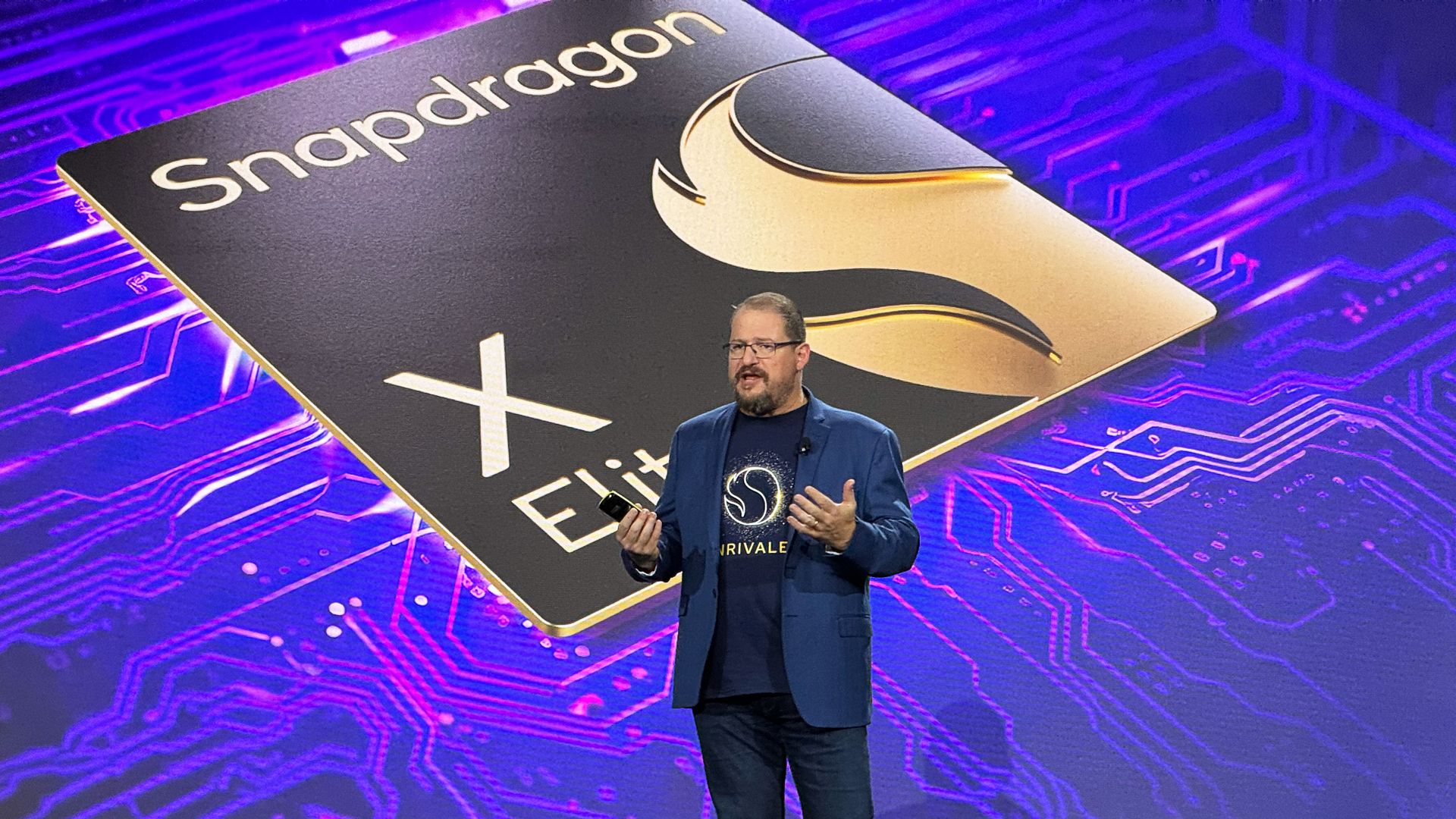
Qualcomm has reached a key milestone in its effort to crack the PC business, the company said Wednesday: Its chips now power more than 1 in 10 high-end laptops sold at U.S. retail stores during the holidays.
Why it matters: Qualcomm has been trying for years to grab a slice of the computer chip market, but its most recent chips are the first to truly compete against those from Intel and Apple.
Tech giants and startups are ramping up efforts to unleash chatbots into group settings like video meetings and messaging platforms, even as many users find them unsettling.
State of play: AI is becoming a workplace staple, but a good chunk of employees still don't like it — and many who use it do so secretly.
Democratic lawmakers are raising alarms about the security implications of Elon Musk's DOGE team's potentially unsanctioned access to sensitive government databases.
Why it matters: Several questions remain about the legality of the Department of Government Efficiency's work, including whether the staffers had proper security clearances and if their work violated federal privacy laws.
Google said on Wednesday it is ending its goal to boost its ranks of people from historically underrepresented groups and will also review its other diversity efforts as it looks to comply with various Trump Administration rules for government contractors.
Why it matters: The move follows a similar push from rival Meta, though that company has also loosened its restrictions on hate speech and taken other moves to roll back inclusion efforts.
Verizon's 2024 Consumer Connections Report reveals how Americans are embracing connectivity like never before, using digital tools to enhance experiences, simplify routines and ensure security.
Apple this week introduced the Apple Invites app to iPhone users with iCloud+ subscriptions, allowing them to create and share custom invitations that anyone can RSVP to, even if they don't have an Apple account or device.
Why it matters: With Apple Invites, the company further encourages its users to remain within the Apple ecosystem, reducing the need to flock to RSVP sites like Eventbrite, Evite and Partiful while driving subscriptions to its products.
Neil Jacobs, the new nominee to lead NOAA, faces different challenges compared to his stint as acting NOAA boss during Trump 1.0. Then, he was ensnared in the "Sharpiegate" scandal.
Why it matters: NOAA's work affects Americans daily, from weather forecasting and alerts to ensuring safe navigation in coastal waters.
Drone-boat maker Seasats plans to hire more people and expand its overseas sales on the heels of a $10 million funding round.
Why it matters: From monitoring U.S. borders to mapping oil spills to sinking Russian ships in the Black Sea, demand for autonomous vessels is soaring.
The cross-country chatter these past weeks, at the Surface Navy Association conference and at WEST, proves one thing: The unmanned obsession is very real inside the U.S. Navy.
Why it matters: Look at Ukraine and the Black Sea beatings it hands out. Look at the Red Sea and Houthi persistence. Look at the Pentagon's J-books, the online think pieces and where elite units are splurging.
The future — mechanical, intelligent, overwhelming — is today smacking us in the face.
As part of their effort to streamline government, Elon Musk and his Department of Government Efficiency have proposed using artificial intelligence to identify waste and fraud, but those efforts have been secretive to date.
The big picture: It's almost impossible to introduce AI successfully overnight — and the less carefully and transparently it's rolled out, the more likely it is to go awry.
Nearly every computer system draws a line between the right to look at files and the right to change them — but till now, the details barely mattered to most non-programmers.
The big picture: The early days of Trump's second administration — as Elon Musk and his Department of Government Efficiency (DOGE) crew execute a hostile takeover of the federal government's digital infrastructure — are giving Washington a crash course in the importance of system permissions.






/2025/02/05/1738787042556.gif?w=3840)