AI bots enter the group chat

Add Axios as your preferred source to
see more of our stories on Google.
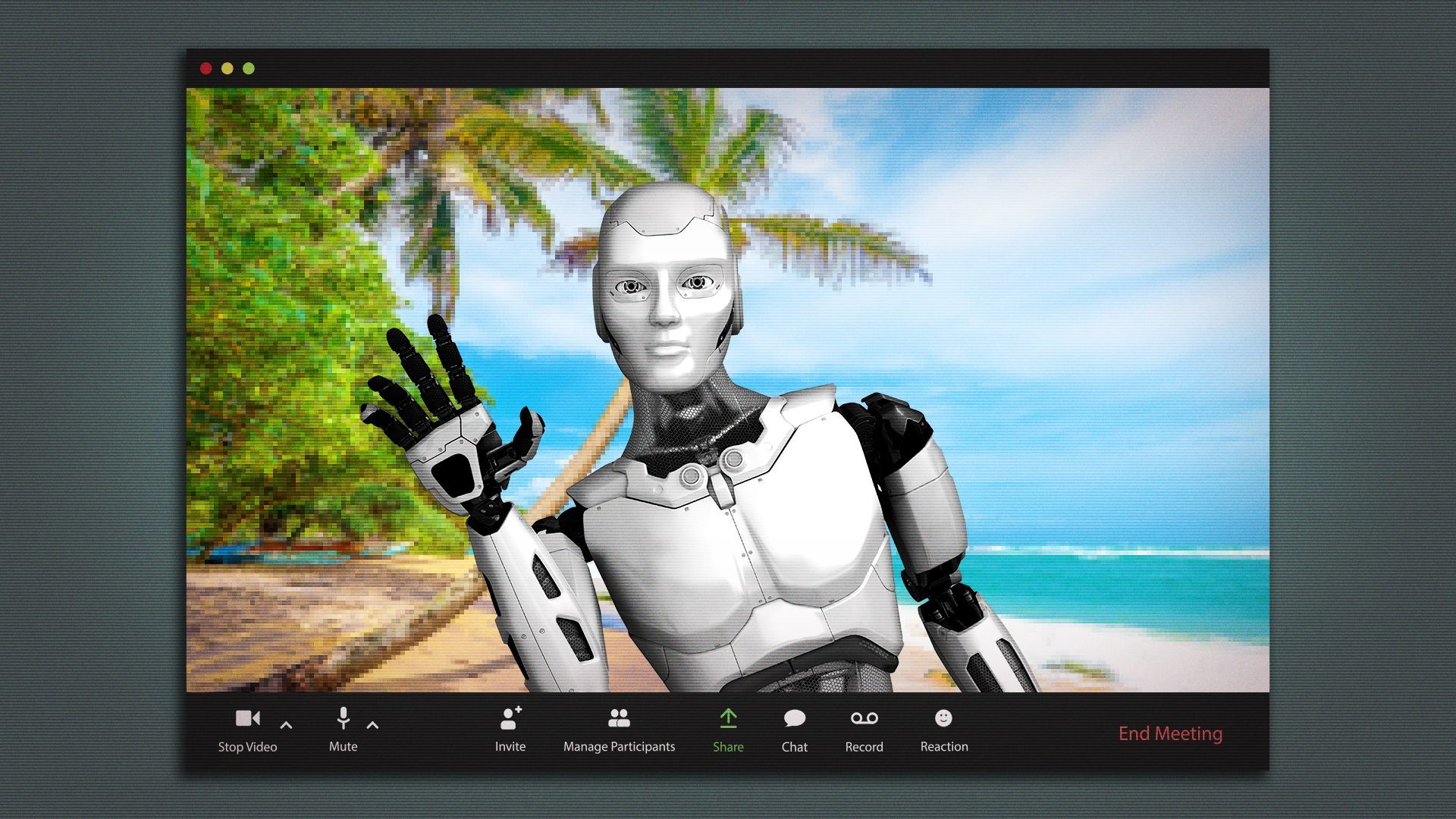
Illustration: Allie Carl/Axios
Tech giants and startups are ramping up efforts to unleash chatbots into group settings like video meetings and messaging platforms, even as many users find them unsettling.
State of play: AI is becoming a workplace staple, but a good chunk of employees still don't like it — and many who use it do so secretly.
The big picture: Zoom, Slack, Meta and transcription tool Otter are already incorporating AI chatbots into group messaging for collaboration, automated meeting notes, real-time transcription, translation and task follow-ups.
Yes, but: Chatting with bots either by text or voice has mostly been a one-on-one experience to date. Many users find it awkward or annoying to be expected to interact with bots in front of other people.
Between the lines: AI is moving so fast that social norms can't keep up, William Allen, head of media and privacy products at Cloudflare, told Axios.
- "The world is going to get weird," Allen said. "I think a good litmus test for all things AI, is just to think, 'Does it feel a little weird?' And if so, it's probably going to be the way it's going to shake out."
Cloudflare has developed a prototype of a video messaging tool that lets you summon a chatbot into meetings to answer questions.
- Instead of everyone stopping to simultaneously Google a fact or dig through company messages to answer a question, they can just ask the bot to get the information.
- Cloudfare isn't planning to release its meeting bot as a product — it's intended to inspire other firms to build on its infrastructure.
Mixus, a startup entering the AI group-chat business, is developing a "co-intelligence platform" allowing users to "chat simultaneously with artificial intelligence and intelligent people."
- Co-founders Shai Magzimof and Elliot Katz suggest looking at group AI not as a matter of bots barging into chats but instead as humans inviting other humans into the message conversations we're already having with AI.
Instead of adding bots to formats we already know and use — like Instagram or Zoom — we need a whole new product, Katz told Axios.
- "AI is such a shift that it's not something that you can essentially bolt on after the fact to a pre-existing tool," Katz told Axios.
How it works: Think of Mixus as Reddit, but with bots.
- Users enter a prompt and then choose among ChatGPT, Claude, Perplexity and Gemini to get an answer. Then the user has the option to invite humans — other Mixus users who have volunteered their expertise — into the discussion to fact-check the AI answers and contribute their own knowledge.
- The Stanford School of Engineering is currently using Mixus in an entrepreneurship class.
Between the lines: AI optimists want us to see generative AI bots and agents as our co-workers and not just our assistants.
- But more bots in workplace conversations could heighten anxiety for those already wary of AI.
Flashback: Meta introduced its AI chatbot into group chats on Instagram, WhatsApp and Facebook last year.
- Commenters flooded the Instagram and Threads launch announcements of the bot with requests to turn off the feature, calling it "literally useless as a real utility" and asking "Have you never seen an episode of 'Black Mirror'?"
- A Meta AI bot on Facebook entered a private group for parents and posted a personal experience of having a disabled child. Axios' Ina Fried reported that this was part of a since-scrapped test, and that Meta AI does not currently post on its own.
The bottom line: The history of Silicon Valley is full of weird or useless product ideas that failed — while other products that once seemed weird or useless to many have become the AirPods we know and love and lose.
- "As with any technology that pushes the frontier, things that feel strange today might be normal tomorrow," Allen says. "Or they'll just stay weird and never get adopted. It's hard or impossible to tell in advance."
