The Elon-ification of the federal government

Add Axios as your preferred source to
see more of our stories on Google.
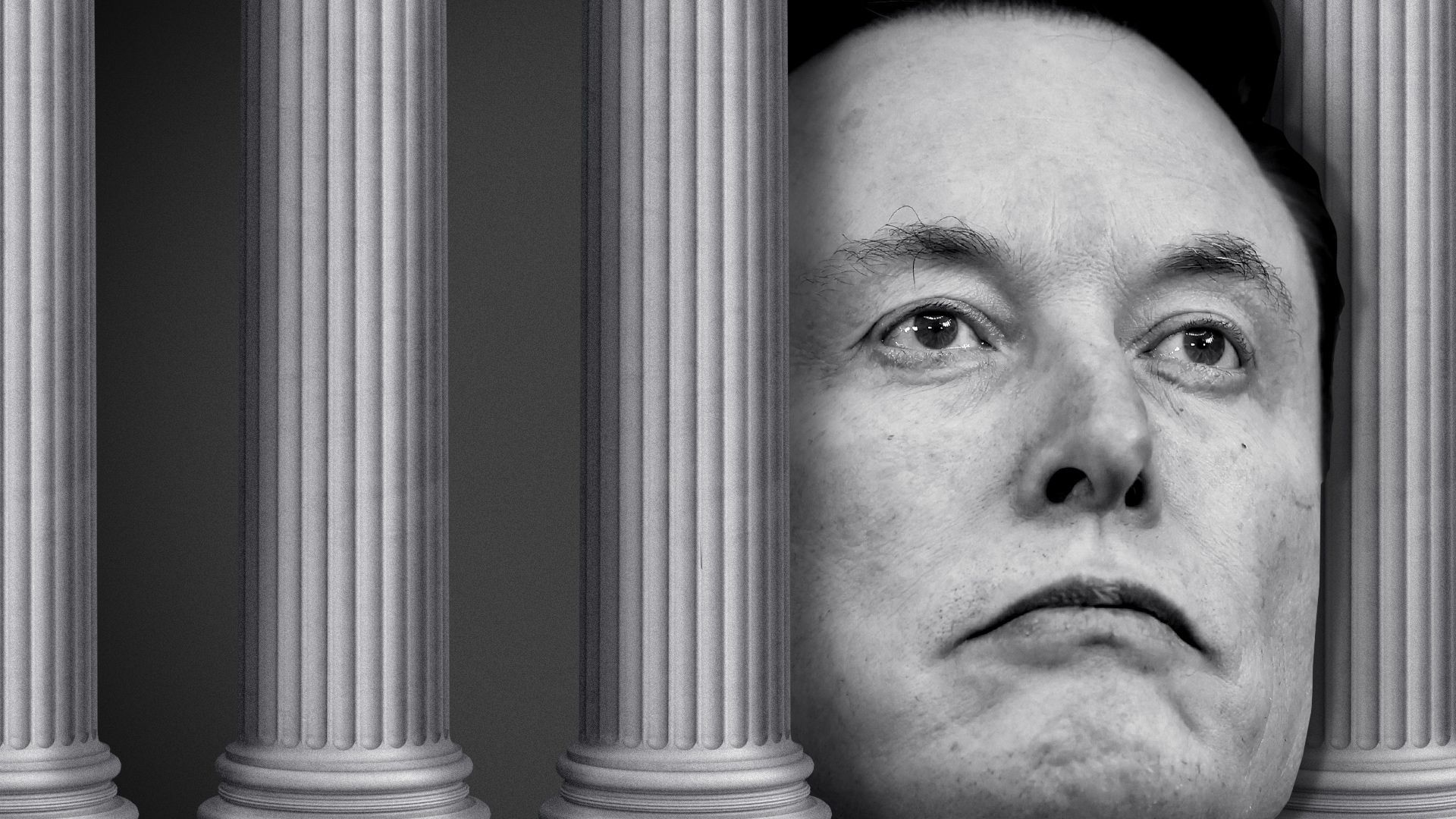
Photo illustration: Aïda Amer/Axios. Photo: Chip Somodevilla/Getty Images
A workforce discombobulated by chaotic recent events receives an email with the subject line "Fork in the Road." Inside, a deadline to quit or commit to the new mission.
- That's the scenario Twitter employees faced in November 2022 — and the one now confronting some 2.3 million government workers.
Why it matters: If Musk's takeover of Washington is anything like his takeover of Twitter, federal workers — and Americans more generally — had better buckle up. His "slash first, ask questions later" management style has already been reflected in some of President Trump's biggest moves.
The big picture: Federal workers received that email on Tuesday from the Office of Personnel Management, effectively the executive branch's HR department.
- The upper echelons of that fairly obscure agency are now packed with Musk allies and loyalists, many of whom have worked at his companies or in tech more broadly, the NYT reports.
- Cutting the federal workforce is part of Musk's mandate at DOGE, and he appears to see the OPM — which he visited last Friday — as a key vehicle.
- The email, scooped by Axios, gave federal workers nine days to quit and be paid through September or embrace a new "performance culture" — and accept the risk their jobs could be cut or downsized later. It had Musk's fingerprints all over it.
Flashback: Some Twitter employees who left in the chaotic period after Musk purchased the company, renamed it X and fired or drove out thousands of workers say they were promised severance packages that failed to materialize. Some have sued, Axios' Scott Rosenberg notes.
- There are key differences here: Musk doesn't own the U.S. government and can't just order mass firings. Also, many federal workers belong to unions.
- "We are all shaking our heads in disbelief at how familiar this all feels," former top Twitter engineer Yao Yue told Wired. "Except, the federal government and its employees have specific laws in terms of spending, hiring, and firing."
State of play: Some unions and Democratic lawmakers have urged workers not to take the buyouts.
- "If you accept that offer and resign, he'll stiff you," Sen. Tim Kaine (D-Va.) warned, referring to Trump's history of refusing to pay contractors.
- The offer also sparked immediate concerns about how government departments will continue to function properly if large numbers of highly knowledgeable workers leave.
Similar "brain drain" concerns loomed large over the Twitter saga.
- While Musk and his allies claimed vindication in how Twitter continued to function after the employee exodus, the platform was plagued by tech glitches and frustrations over the non-responsive support team.
- Musk ultimately asked some employees he fired to come back, and some blue chip advertisers fled the platform after Musk's radical changes.
- Still, the site survived and X today undoubtedly remains a powerful platform — albeit a very different one.
Zoom out: Applying such radical, sudden changes at the scale of the federal government is far more difficult — as the second Trump administration learned this week when it issued then rescinded a sweeping memo freezing hundreds of billions in spending.
