Microsoft is overhauling its entire production line to prioritize cybersecurity and incorporate recommendations from a recent government investigation, the company's top security executive said Friday.
Why it matters: Microsoft has come under fire in recent months after a wave of nation-state attacks targeted the company's products, resulting in Chinese and Russian spies accessing email inboxes tied to a cabinet secretary and senior Microsoft executives.
Cyber investors are heading to the annual RSA cybersecurity conference next week ready to write checks for artificial intelligence security startups.
Why it matters: Cybersecurity funding has been harder to secure in recent years as customers have slimmed down their tech stacks and investors have reassessed which types of security tools they want in their portfolios.
The big picture: So far, new generative AI security products have primarily focused on synthesizing threat intelligence for defenders or scanning known vulnerability lists.
Investors told Axios they're eager to hear from companies that are taking these ideas a step further, including by focusing on securing AI models themselves or developing tools to detect deepfakes and other AI-generated content.
✍🏻 The Cybersecurity and Infrastructure Security Agency is asking tech companies to sign a pledge to abide by new secure-by-design principles. (Wired)
🏛 Rep. Andrew Garbarino (R-N.Y.), head of the House Homeland Security cyber subcommittee, is renewing his push to loosen the Securities and Exchange Commission's recent cyber disclosure rules. (Nextgov)
🚨 A top U.S. Cyber Command official warned that other nation-states could try to mimic China's Volt Typhoon hacking campaign against U.S. critical infrastructure. (C4ISRNET)
@ Industry
🧳 LastPass is now an independent company after spinning out of its parent company, GoTo. (The Verge)
Carmakers could soon offer vehicle entertainment systems that seamlessly blend the real world with the digital world.
Why it matters: As cars become more automated and connected, passengers will be looking to enhance their entertainment experience with technologies like mixed reality — whether it's to play high-tech video games or to invite virtual passengers on a real road trip.
Major news outlets are taking opposite approaches toward future-proofing their businesses against the threat of AI — some are opting to partner with AI firms, and others are suing them.
Why it matters: Unlike music and book publishers, news outlets are struggling to present a unified front in their fight for copyright protection, and that could weaken their leverage in negotiations with Big Tech to license their content.
China leads the U.S. as a top producer of research in more than half of AI's hottest fields, according to new data from Georgetown University's Center for Security and Emerging Technology (CSET) shared first with Axios.
Why it matters: The findings reveal important nuances about the global race between the U.S. and China to lead AI advances and set crucial standards for the technology and how it is used around the world.
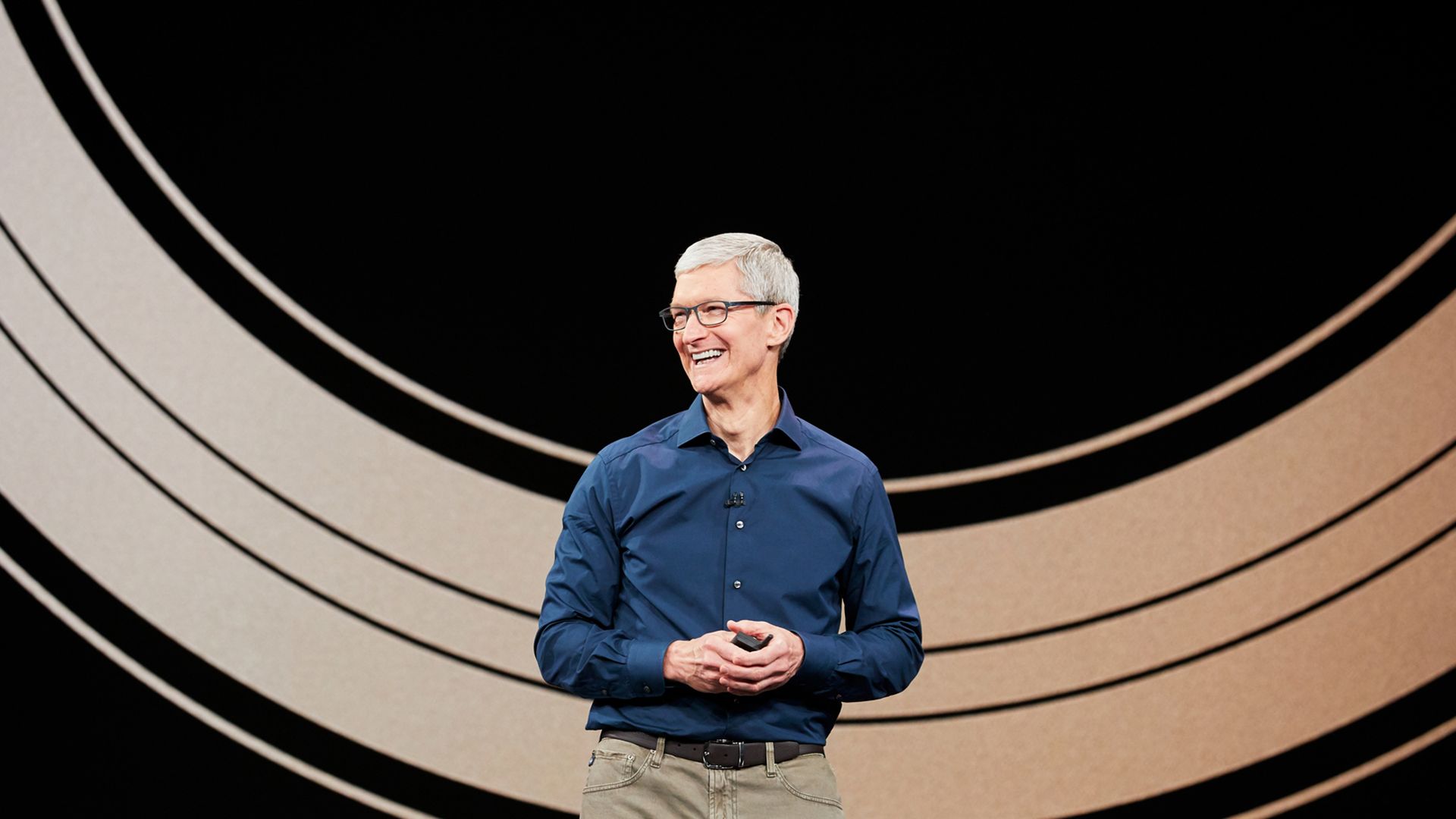
Apple on Thursday reported that quarterly sales dropped 4% from the same period a year ago, but the company narrowly topped expectations for both revenue and per-share earnings.
Why it matters: The iPhone maker is a bellwether for the broader tech industry, given its size and the fact that it is a major consumer of displays, chips and other components.
The launch of commercialoperations at Georgia Power's Vogtle Unit 4 marks a 21st-century rarity: a big new reactor opening in the U.S.
Why it matters: The two new Vogtle units, well over 2 gigawatts together, are likely the last two large-scale reactors to come online for many years — at least.
Utilities are no longer planning these kinds of massive projects, which have faced huge delays and cost overruns.
The Vogtle project ultimately ballooned to over $30 billion, roughly twice the original estimates, the Energy Information Administration notes.
What's next: Today the action in the nuclear sector centers on approval and future deployment of small modular reactors and, longer term, fusion projects.
A new ad campaign that targets antisemitism and disinformation online features Holocaust survivors who are visibly shaken as they read a series of social media posts denying the massacre of Jews.
Why it matters: The online videos arrive at a time when antisemitic incidents in the U.S. surged last year amid the Israel-Hamas war — and as pro-Palestinian protests on some college campuses have left some Jewish students feeling threatened and harassed.
New York City's business leaders are all in on AI, according to a new report from Accenture.
Why it matters: While far behind the Bay Area as a center for AI innovation and venture capital funding, New York City is home to more Fortune 500 companies than anywhere else, making it a critical venue for AI adoption.




/2024/04/03/1712181036783.gif?w=3840)

/2024/05/03/1714699248701.gif?w=3840)




/2024/05/01/1714594326549.gif?w=3840)