Friday's technology stories

SolarWinds hackers are making a comeback

The Russian hackers behind the SolarWinds cyber espionage campaign are believed to have hacked several companies in recent months, Microsoft warned Thursday.
Driving the news: Microsoft said in a blog post that it has started notifying other organizations that it believes the Russian hacking group Midnight Blizzard targeted recently.

Schools use surveillance tech to punish vaping

High schools across the country are using advanced technology to monitor whether students are vaping — and they're sometimes handing down severe punishments when someone gets caught.
The big picture: Districts have set up sensors and surveillance cameras to detect vaping, often without informing students.
Ivanti flaws could hurt defense contractors
/2024/01/24/1706125205829.gif?w=3840)
Weeks into the mass exploitation of security flaws in some Ivanti VPN products, defense and intelligence officials are still trying to piece together whether hackers are burrowing into military contractors' networks.
Why it matters: Nation-state spies and cybercriminals are continuing to exploit unpatched flaws in Ivanti software that the Department of Defense and many of its contractors use in their systems.

Science taps blockchains to understand origins of life on Earth

Of all the potential use cases for crypto technology, you seldom hear the phrase: "helping to understand the origins of life."
Why it matters: A shoutout to blockchains from the scientific community is a win for the industry, helping to validate the technology's wide range of application possibilities.

Axios Finish Line: Lead like IMAX CEO Rich Gelfond
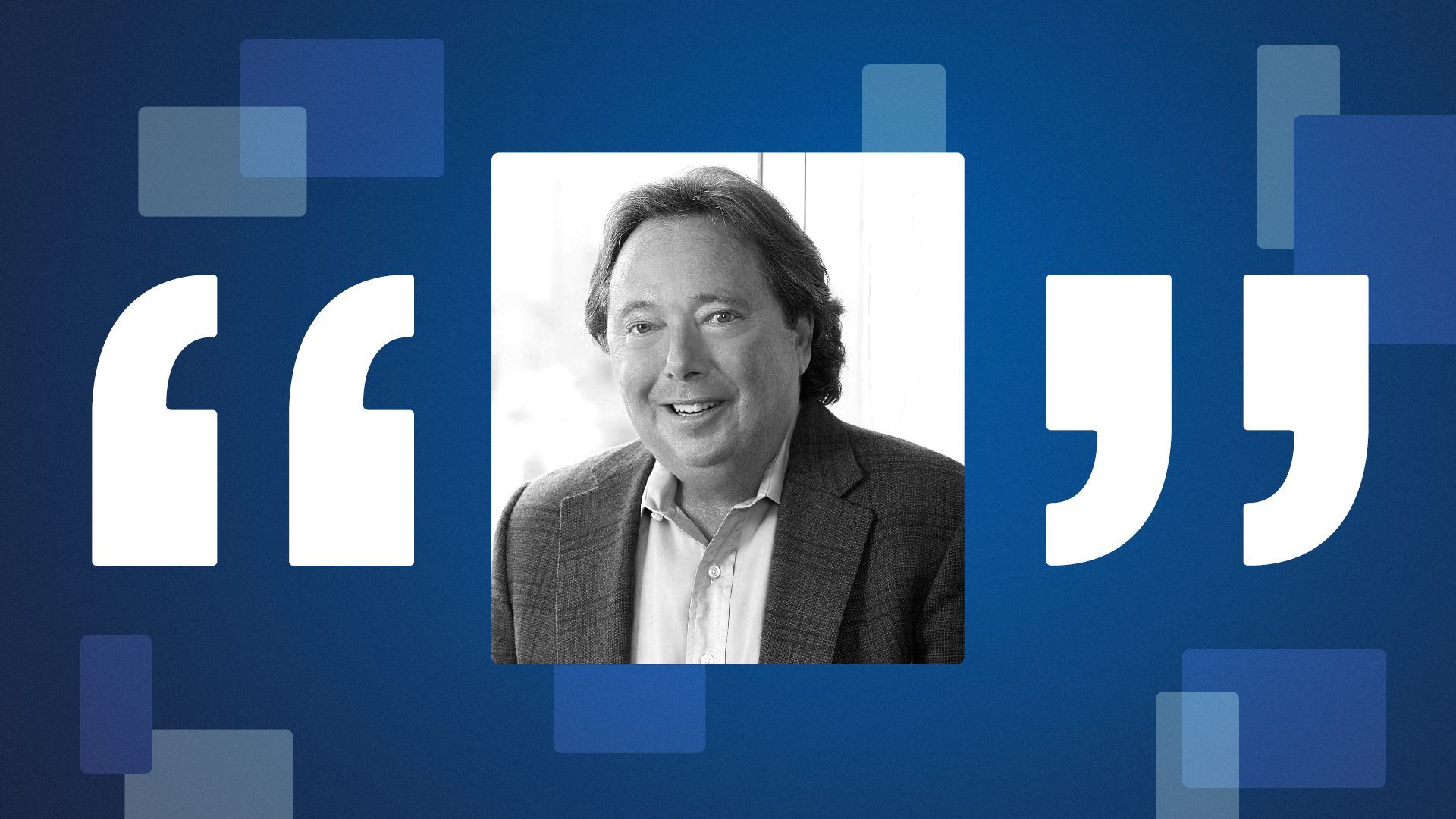
Rich Gelfond is the 68-year-old CEO of IMAX — best known for designing theater projection systems for some of the largest video resolution formats in the world. The company also manufactures digital and film camera equipment.
Why he matters: Gelfond, a former lawyer and investment banker, bought IMAX with a partner in 1994.
- Over the past nearly 30 years as co-CEO and then CEO, he has steered the company through several crises, including near-bankruptcy, and has grown IMAX from a museum-focused service with 110 locations to about 1,700 theaters globally.
- And while box offices continue to struggle to rebound, the IMAX format has been driving an increasing share of growth.
Hope King talked with Gelfond at his office in Manhattan in December. Here's Part 1 of their interview.
1. Christopher Nolan has been arguably the highest-profile champion for the IMAX film format (his "Oppenheimer" drove IMAX to a near-record year). Who's the next director that you see taking up the mantle?
- Denis Villeneuve, director of "Dune"; Jordan Peele, director of "Nope"; Cary Joji Fukunaga, director of the 25th Bond title "No Time to Die"; Todd Phillips, director of the "Joker" series, as well as Hoyte van Hoytema, a cinematographer who worked with Peele and collaborates frequently with Nolan.
2. What was the first IMAX film you ever watched?
- "To Fly" during Presidents Day weekend in 1993.
- When Gelfond got back to work, there was a booklet on his desk pitching the sale of the company.
- "It was like some kind of karma in the world."
3. You often cite "It's never as good as it looks, or as bad as it seems" as your motto. How does that describe your leadership style?
- "I try and be levelheaded … because it's very easy to lose perspective," he said.
- When "Oppenheimer" soared at the box office, he reined in the company's exuberance by reminding the team that they had "a lot of movies," and that "it's a long year."
- When other movies flopped or when the company's stock was 55 cents, he had to stand up in front of "employees looking like they were going to a funeral" and say, "Tomorrow's another day."
4. How much of IMAX is Richard, and how much of IMAX is going to be IMAX after Richard? (The average tenure of public company CEOs is about 7 years.)
- "I've thought a lot about that question. … I think our brand is so well known [globally] that I think IMAX will do just fine and probably really great after I'm no longer here."
5. Why haven't you left?
- "I have a mission and I haven't fulfilled it. … I'm [also] intensely loyal to the people who work for me here. And they're intensely loyal to me. At some level, and maybe I'm crazy, I would think it would be a betrayal to leave before we accomplished our mission."
- His dream for IMAX — which he sees as "a platform for awe-inspiring content" — has been for people to "wake up and say, 'I'm not doing anything today. I want to go to the IMAX theater — what's going on there?'" rather than, "Oh, Dune 2 is out — I want to go see it in IMAX."
🎞️ 1 fun thing: Where do you sit in the Lincoln Square IMAX?
- "In the back row, in the center of the theater" because it's more convenient to get to during public screenings.
- Gelfond also agreed with Hope, though, that the center of theater, two-thirds back from the screen "is probably the ideal seat."
- "When we first bought the company, and I looked at rough cuts of movies, I'd walk around the theater [during the movie] to look at it from different perspectives, just to see if it worked as well from different seats."
Subscribe to Axios Closer to read Part 2 of the interview.
This story is from an Axios Finish Line interview series on leadership. ... More from the series: Robinhood CEO Vlad Tenev ... Brooks Brothers CEO Ken Ohashi ... Recent Walgreens CEO Roz Brewer ... Accenture CEO Julie Sweet.
Florida House passes bill that would ban children under 16 from social media
Florida's House passed a bill that would limit youth access to social media by banning new and existing accounts of users younger than 16 years old.
Why it matters: The Republican-backed bill, which hones in on social media's addictive features, would be one of the strictest social media restrictions in the country, if passed by the Senate and signed into law by Gov. Ron DeSantis.

Apple announces sweeping EU App Store changes

Apple will allow alternative app stores and other new options for app developers in order to comply with Europe's Digital Markets Act, the company said Thursday.
Driving the news: Europe's major tech competition law, set to go into effect March 7, requires Apple to loosen its strict rules requiring developers to rely on the App Store for distribution and payment processing.

FTC opens inquiry into Big Tech AI investments
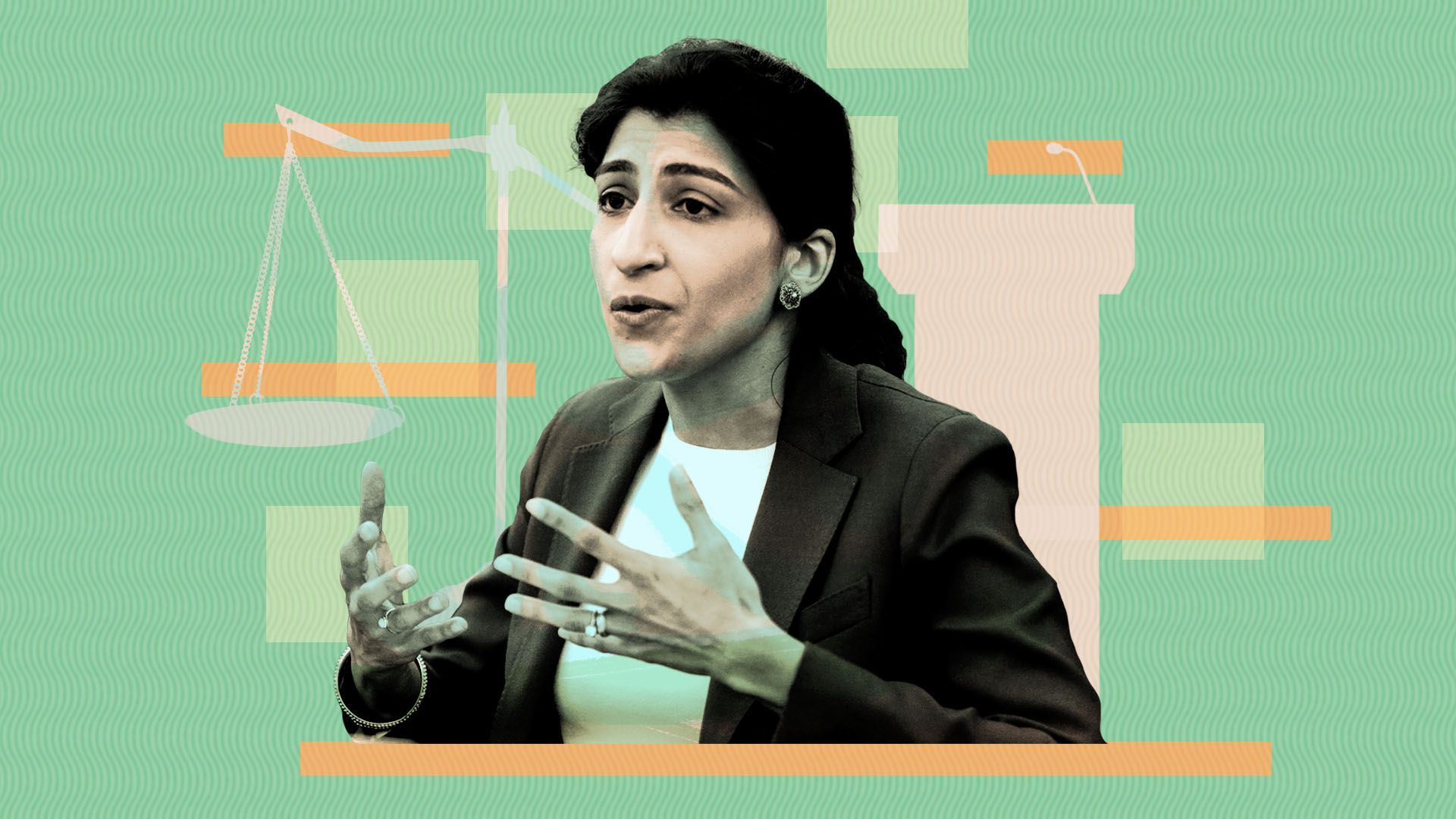
The Federal Trade Commission opened a broad new investigation of competition in the nascent AI industry by issuing orders to five key companies that they provide it with private information about their investment deals.
Why it matters: The inquiry, aimed at Alphabet/Google, Microsoft, Amazon, OpenAI and Anthropic, could lead to action by the regulator, which under chair Lina Khan has sought to pursue anti-monopoly measures in emerging tech markets.
Exclusive: Goldman Sachs leads $44M round in Bastille Networks

Goldman Sachs is leading a new round of funding in Bastille Networks, a company that uses hardware sensors in offices to stop corporate and nation-state espionage.
Why it matters: The fresh funds can help Goldman raise awareness inside corporate America about an issue that's primarily been a priority inside the intelligence community.

AI is helping school districts navigate bus driver shortages

A handful of school districts nationwide are piloting a new AI-powered tool meant to help them optimize bus routes and other transportation options in the face of perennial driver shortages.
Why it matters: Bus driver shortages caused chaos in all 50 states this past back-to-school season, leaving many students (and their families) without a reliable way to get to and from class.

AI puts every CEO on the hot seat

AI is shaking up the role of chief executive officer — with boards and employees putting CEOs on notice that they expect clear leadership around AI efforts and a cottage industry forming to support CEOs struggling with these new demands.
Why it matters: CEOs are in the hot seat because fast-developing generative AI has put tech back at the top of business agendas.