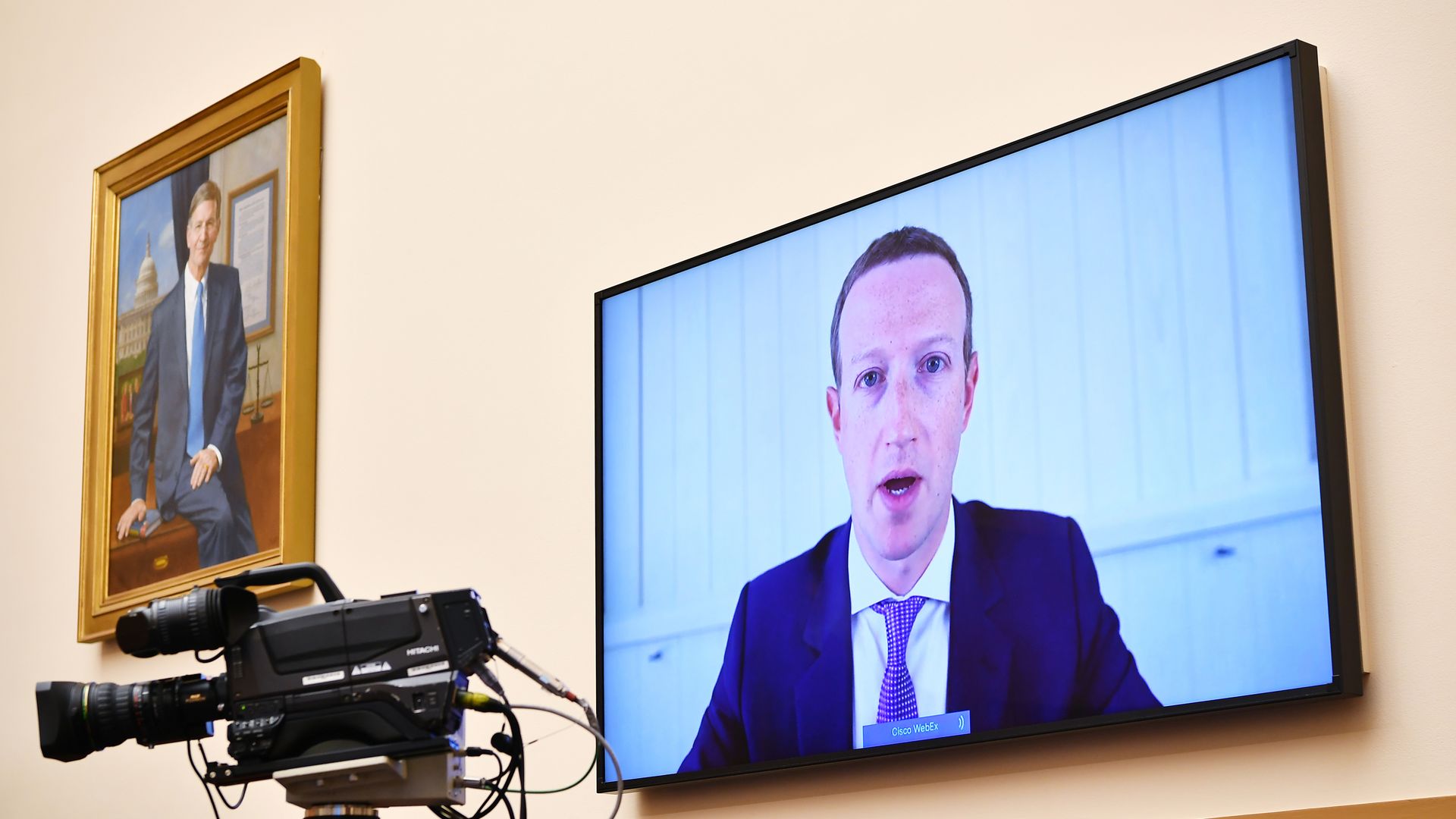
The chairman of the House Judiciary antitrust subcommittee Wednesday told Facebook CEO Mark Zuckerberg that Facebook has grown too big to contain dangerous content.
Why it matters: Facebook has grappled with high-profile cases of dangerous misinformation, such as a recent video with debunked coronavirus information that got to 20 million views before Facebook took it down. Rep. David Cicilline is suggesting Facebook as currently constituted may be fundamentally incapable of responsible moderation.
Smartphone sales continue to be lower than a year ago, but the market is recovering faster than expected Qualcomm CEO Steve Mollenkopf told Axios on Wednesday. Meanwhile, a patent deal with Huawei is adding an extra $1.8 billion to the company's revenue, with the combined news sending shares soaring in after-hours trading.
Why it matters: The announcement suggests that the market impact of the coronavirus may be less than initially feared.
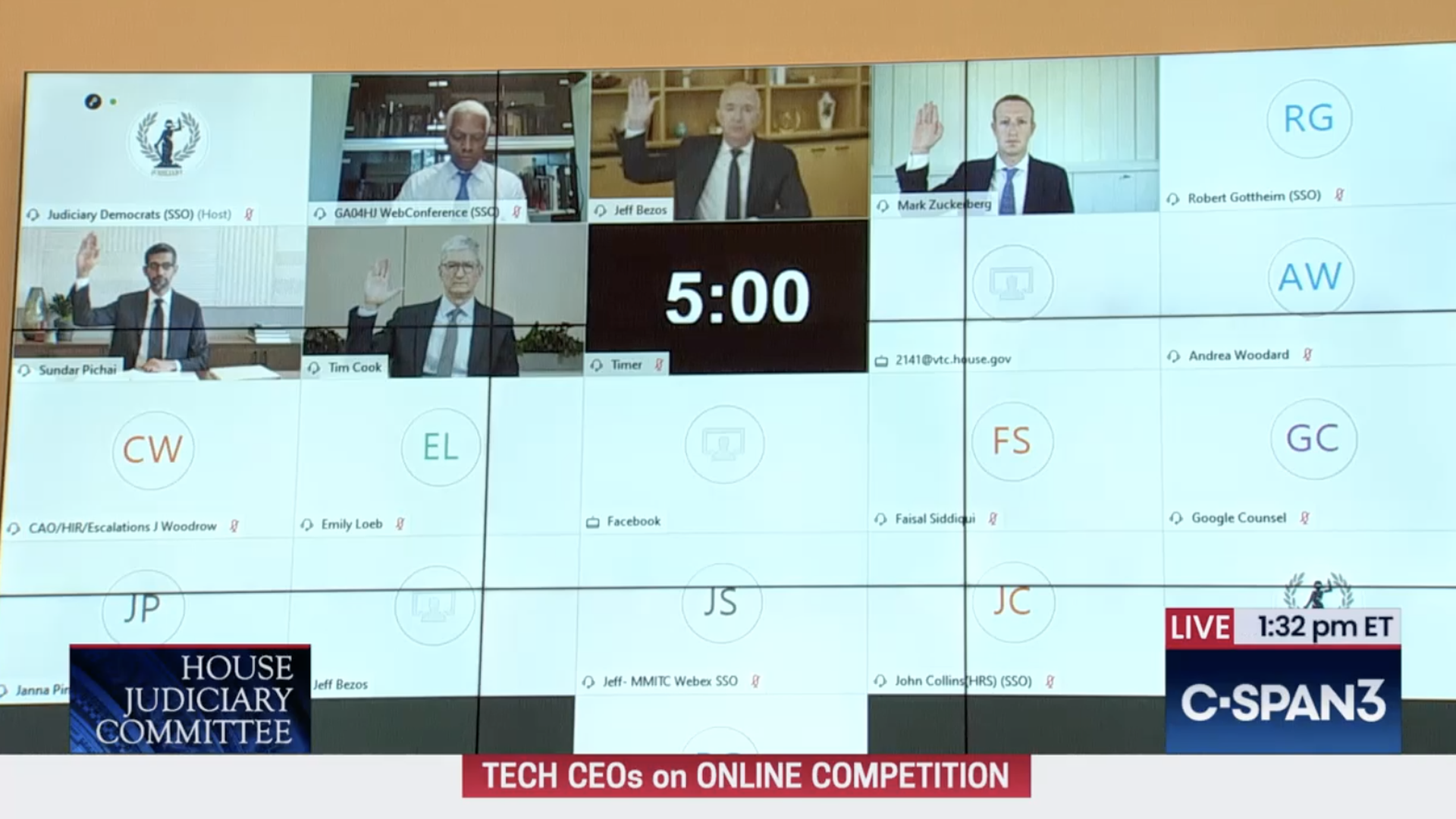
Wednesday's House antitrust hearing with the CEOs of Facebook, Google, Amazon and Apple went down some politically fraught rabbit holes, but also saw tech's most powerful figures face sharper questions than they've seen before from Washington.
What's happening: Republicans slammed the companies for alleged anti-conservative bias, but Democrats largely narrowed their focus to possible competitive abuses, putting the CEOs on their back feet and producing some surprising admissions.
Amazon CEO Jeff Bezos said Wednesday he can't guarantee employees have never used sales data from individual third-party sellers to develop the company's own products, despite a policy against that practice and past denials that Amazon engages in it.
Why it matters: Lawmakers and Amazon competitors and sellers have repeatedly hammered the e-commerce giant over accusations that Amazon accesses data on third-party sellers to boost its own house-label products. Bezos is admitting he can't rule out that this has happened.
Snapchat on Wednesday released its first-ever diversity report, showing that the company is still slightly behind its peers in terms of equal representation of people of color and women, especially on its technology teams, but that it's made progress adding more women to its leadership team.
Why it matters: It's taken a while for the 9-year-old Los Angeles-based tech firm to publicly confront its diversity shortcomings on paper. But incidents, like settlement payouts to laid-off women, have pushed the firm to take the issue much more seriously.
Rep. Jim Sensenbrenner (R-Wis.) and Jim Jordan (R-Ohio) — the two highest-ranking Republican members on the House Antitrust committee — used their first few minutes during their opening statements at the hearing with Big Tech CEOs Thursday to call out tech companies for unproven allegations of political bias against conservatives.
Why it matters: Previous hearings with tech executives have devolved into partisan bickering over political bias, instead of focusing on serious issues. The hope was that this hearing, conducted by a specialized subcommittee, would be more substantive.
It is a universally accepted international convention that diplomatic facilities can be used as cover for espionage activities. But the system only works if states pretend not to acknowledge it.
The state of play: A decision last week by the Trump administration to shutter the Chinese consulate in Houston over allegations that China used it for spying set off a predictable diplomatic firestorm.
Garmin, a major fitness tech company that tracks many users’ workout routines and GPS coordinates, was the victim of a ransomware attack, the company confirmed Monday.
The big picture: The attack, first reported by TechCrunch, froze “the company’s online services for millions of users, including Garmin Connect, which syncs user activity and data to the cloud and other devices.” Garmin’s “aviation navigation and route-planning service” was also affected, says TechCrunch.
In a prominent spy case, U.S. prosecutors in San Francisco have greatly expanded charges against three men, including two ex-Twitter employees who allegedly worked as Saudi intelligence agents and used their Twitter credentials to gather information about dissidents on the social network.
Details: The new indictment, which replaces the original 2019 one, deepens the spying-related charges against the men and also alleges a series of financial and other crimes.
Antitrust laws don't need updating, big isn't bad and American success should not be punished, argues a new conservative coalition pushing back on Republicans who view antitrust action as the remedy for their grievances with Big Tech.
Why it matters: A fragile bipartisan consensus that there's too much power concentrated in Silicon Valley is helping to propel federal and state antitrust investigations of major tech firms. Right-leaning groups troubled by that development are looking to rally like-minded conservatives to their side.
In his first public statement as CEO of TikTok, former Disney exec Kevin Mayer says the company will be releasing that code that drives its content-moderation algorithms so that experts can observe how its policies are enforced in real time. He says TikTok will also reveal its data flows to regulators, and is calling on its rivals to do the same.
Why it matters: It's an unprecedented move that could help defuse concerns from U.S. lawmakers that the app is a data-harvesting tool for the Chinese government. It would also place TikTok ahead of its peers in terms of transparency.
When CEOs testify before Congress, as tech's leaders will Wednesday, they have one job: to demonstrate their firms are good corporate citizens by enduring questioning without offending or putting their feet in their mouths.
The big picture: In recent history, CEOs have failed in one of two ways — making self-serving statements that are transparently untrue, or letting their contempt for the machinery of democracy show.