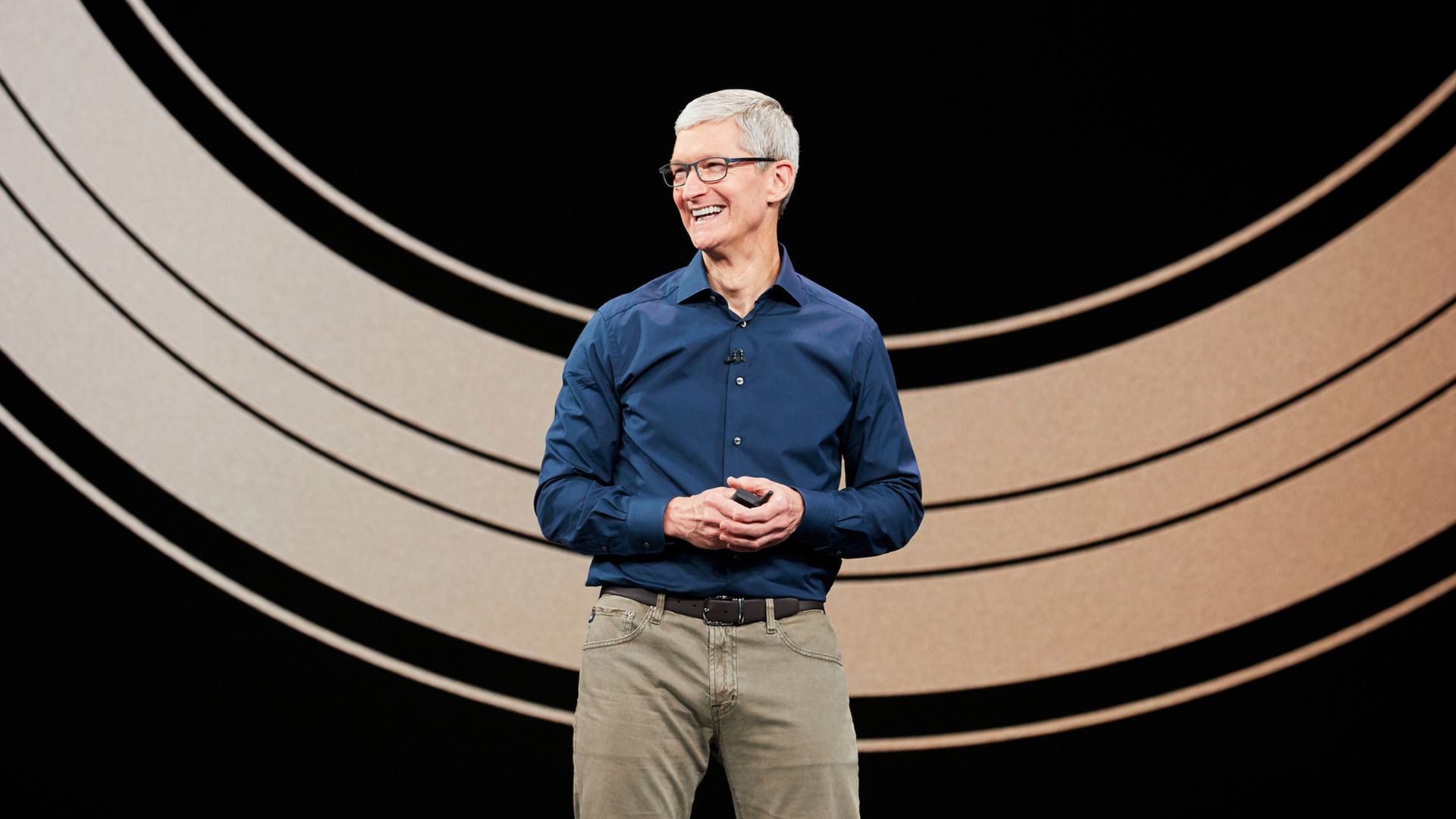
Apple's financial chief said Thursday that this year's new iPhone models will arrive a few weeks later than they have in years past, confirming earlier news reports and supplier comments.
Why it matters: The move means some revenue that typically comes at the end of September won't come until the final quarter of the year, but also reassures investors and customers that the delay won't be longer.
Alphabet revenue dropped 2% from last year, the company announced in second-quarter earnings Thursday, beating Wall Street expectations a day after Google CEO Sundar Pichai appeared before the House Judiciary antitrust subcommittee to face allegations of anticompetitive behavior.
Yes, but: Despite beating expectations on revenue, the company still reported its first-ever decline, thanks to a reduction in the advertising growth rate thanks to the coronavirus pandemic. Stock rose slightly in after-hours trading.
Amazon smashed top- and bottom-line analyst expectations in the second quarter, sending shares climbing in after-hours trading Thursday.
The big picture: The earnings report suggests Amazon's growth and dominance are only expanding, just as calls to rein in the company rise from Washington.
Facebook's stock was up more than 6% in after-hours trading on Thursday, after the tech giant reported strong revenue growth, despite a global ad slowdown due to the pandemic and a growing advertiser boycott.
Why it matters: Facebook's ability to beat top and bottom line revenue expectations amid the coronavirus crisis and the boycott speaks to the strength of the company's appeal to marketers despite serious challenges.
Triller, a short-video making app, sued rival TikTok for allegedly infringing on some of its patents.
Why it matters: This is the latest in a series of problems for TikTok, which is battling government and corporate critics of its ties to China. It's also the latest in the intellectual property wars among apps, following the dispute between Eko and Quibi.
The Census Bureau has placed a big bet on digital outreach, especially on social media networks, as it enters the last big push to get people to respond to the 2020 count.
The big picture: Not only is this year the first online census count, it's also a giant experiment in how to reach people virtually in a fragmented media environment during a public health crisis that sidelined in-person field operations.
Rep. David Cicilline (D-R.I.), who ended Wednesday's hearing by saying some Big Tech companies need to be broken up, told Axios that Facebook in particular lacks significant competitors and should not have been allowed to buy Instagram and WhatsApp.
Why it matters: Cicilline chairs the antitrust subcommittee, which has been looking into competition issues in the digital space.
General Electric on Thursday will announce an agreement to sell investments in eleven startups to 40 North Ventures, an affiliate of Standard Industries.
Why it matters: GE was once among the most active corporate investors in startups, but now is in exit mode.
Congress' antitrust hearing featuring TikTok's biggest rivals didn't stop the Chinese-owned karaoke app from grabbing some of the spotlight Wednesday.
Driving the news: TikTok debuted its biggest Washington offensive yet, releasing its new CEO's first public statement and sending letters to the Hill from the new head of its policy office. Meanwhile, Treasury Secretary Steve Mnuchin confirmed TikTok was under national security review, and President Trump said he's looking at banning the app.
House lawmakers aired an enormous array of grievances with the CEOs of Facebook, Google, Amazon and Apple Wednesday, throwing everything in their arsenal at four of the most powerful men in the world for six hours.
Quick take: The antitrust hearing didn't nail a case that these companies are harmful monopolies. But the representatives succeeded in wringing some surprising admissions from the executives about how they wield their market power, providing ammunition for regulators now conducting investigations — and possibly a spur for Congress to strengthen antitrust law for the digital era.
Chief executives of Apple, Amazon, Facebook and Google testified in front of a House Judiciary subcommittee on Wednesday, ostensibly about antitrust issues. It was the highest-profile showdown to date in the increasingly fraught relationship between Washington, D.C., and Silicon Valley, which could culminate in efforts to break up one, or more, of the companies.
Axios Re:Cap speaks with Rep. David Cicilline (D-R.I.), chair of the subcommittee on antitrust, about what he learned, why he wanted the quartet to testify together, and which companies he thinks should be broken up.