Stock for Google's parent company, Alphabet, was up over 6% in after-hours trading Thursday after the company reported that it met Wall Street expectations revenue and earnings per share.
Yes, but: The company continued to report major losses for its "other bets" category, which includes Alphabet-owned side projects like Waymo and Verily. In total, Google lost nearly $1 billion dollars on its moonshot projects.
Apple on Thursday agreed to buy the majority of Intel's smartphone-modem chip business for $1 billion.
Why it matters: Apple will get to control more of its own supply chain. It's also a disappointment for Qualcomm, which is just now getting back Apple's modem business after settling its long-running legal dispute with the iPhone maker.
Amazon's shares were down 1–2% after hours Thursday after the e-commerce giant reported $5.22 in earnings per share, missing Wall Street's projected $5.57. Amazon did, however, beat revenue expectations for the second quarter, reporting $63.4 billion, compared to the projected $62.5 billion, per CNBC. AWS revenue was $8.38 billion, falling short of the expected $8.5 billion.
The backdrop: This quarter's earnings report comes as Amazon is facing regulatory scrutiny in the U.S. and Europe. The company recently had its most successful Prime Day to date, and has invested more than $800 million to speed up 2-day delivery to 1-day.
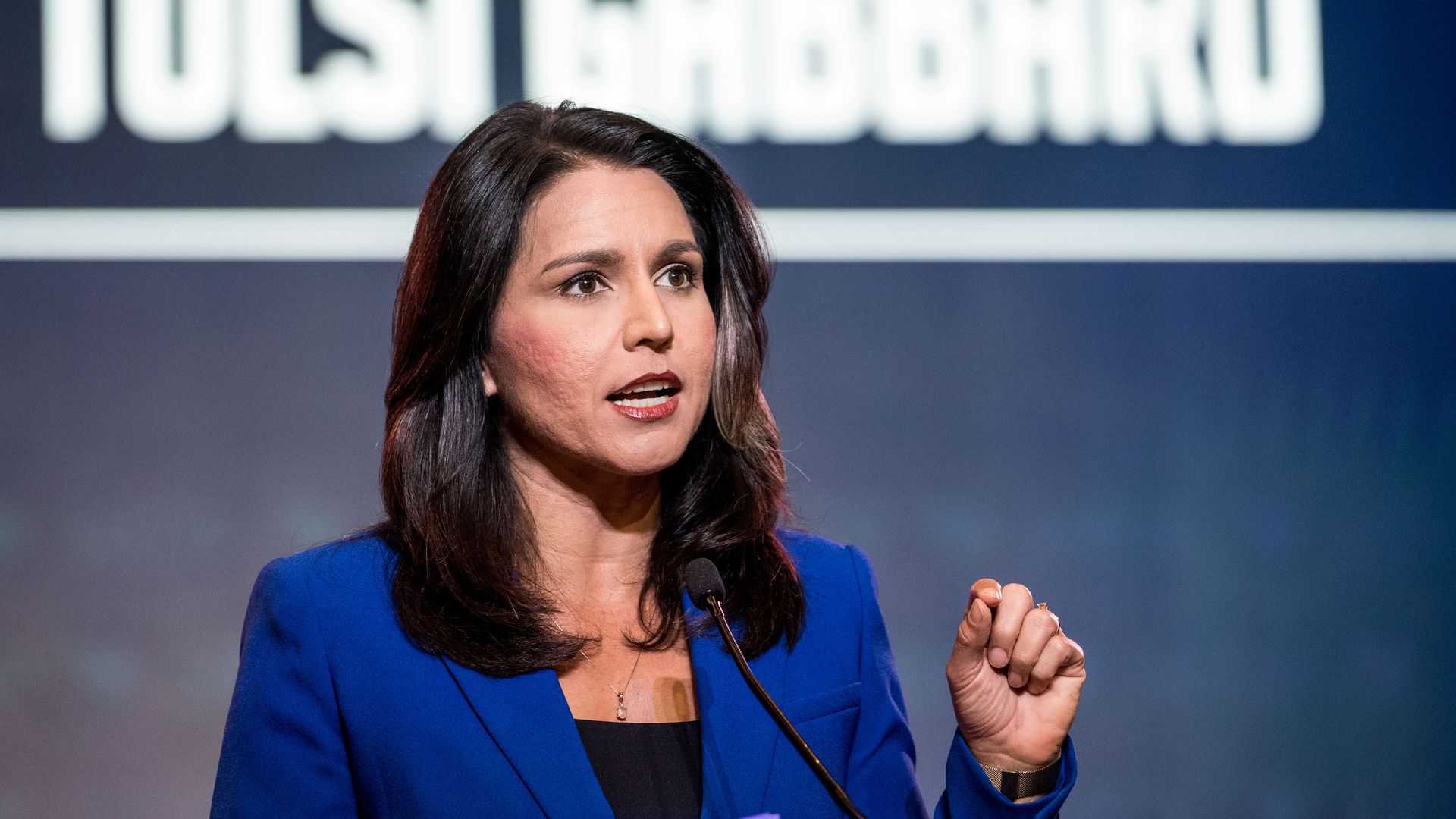
2020 presidential candidate Rep. Tulsi Gabbard (D-Hawaii) is suing Google for allegedly infringing on her free speech rights after her campaign ads were temporarily suspended following the first round of Democratic primary debates, reports the New York Times.
Why it matters: The lawsuit likely marks the first time a presidential candidate has sued a Big Tech company, according to the Times, and comes amid growing outcry among Republican lawmakers that platforms like Google and Twitter are censoring conservative speech. Gabbard, who identifies as a progressive on most issues, has attracted cross-party attention — including from right-wing outlets like Breitbart and Fox News — as a result of her anti-war message.
Why it matters: Regulators in the past have blocked any deal that would have eliminated one of the current Big 4 mobile networks. An asset sale allows them to claim, at least on paper, that there will still be four players. But analysts have their doubts just how big a player Dish would be.
Moguls, big minds and heads of state will join Michael R. Bloomberg and Bloomberg Philanthropies for the third annual Bloomberg Global Business Forum, at New York's Plaza Hotel on Sept. 25, during the UN General Assembly.
Some big names include Snap CEO Evan Spiegel, former top White House economic adviser Gary Cohn, the IMF's Christine Lagarde, World Bank CEO Kristalina Georgieva and Uber CEO Dara Khosrowshahi.
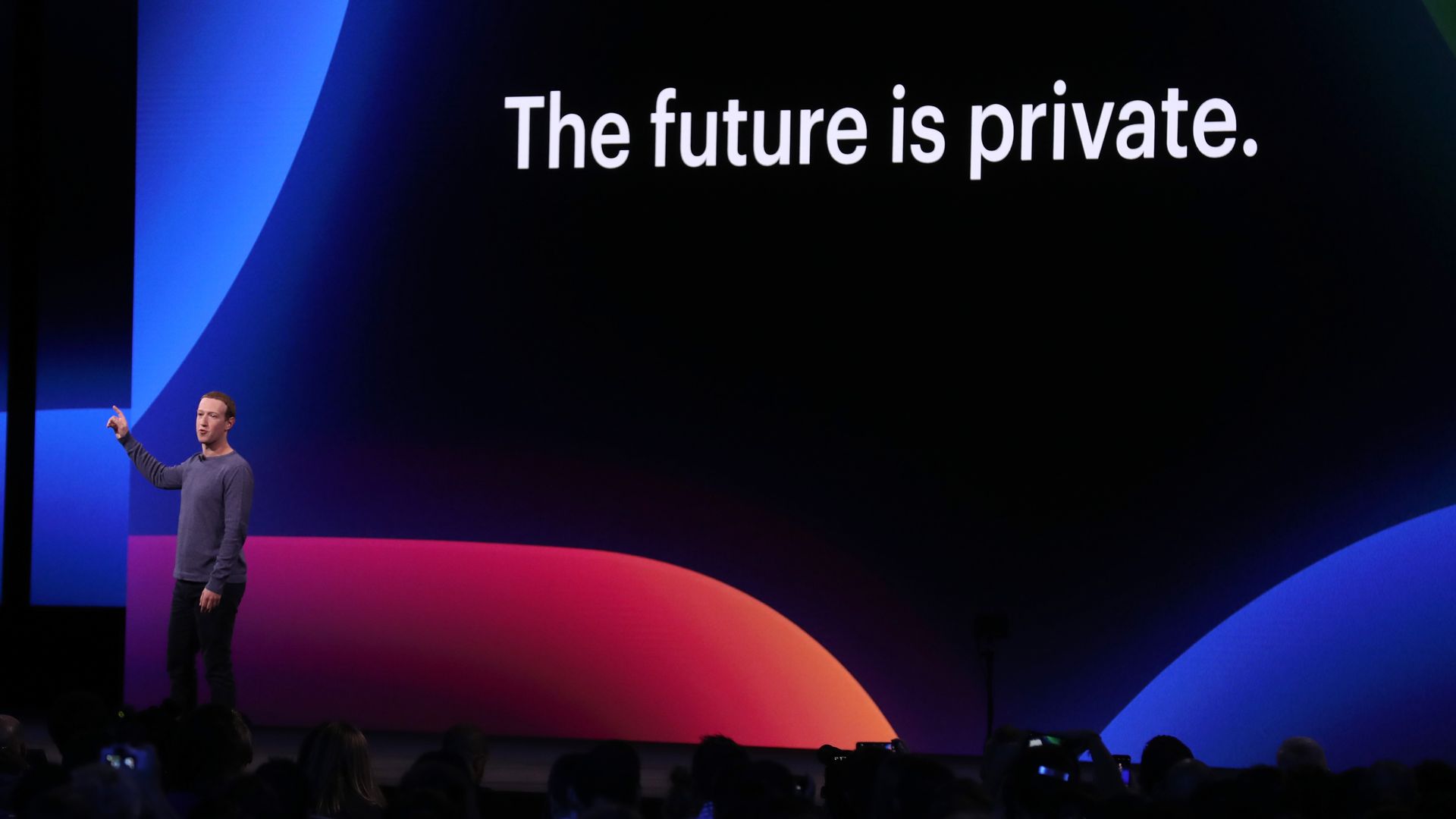
While Facebook's privacy settlement with the Federal Trade Commission includes a record $5 billion fine, its most important provisions lie in new restrictions it places on the company's practices.
Why it matters: The settlement's effectiveness will lie in whether these terms end up protecting consumers — yet policymakers on both sides of the aisle are already saying they don't go far enough.
This week's series of big government moves against big tech platforms dropped a curtain on the era of hands-off regulatory policy that shaped the firms.
Why it matters: A generation of firms led by Google and Facebook that grew rich and powerful while the Feds stayed out of their way must now adjust to government action as a way of life. Meanwhile, legislators and regulators will have to figure out how to protect the public while preserving the industry's vitality and creativity.
Samsung announced Wednesday night that it will begin shipping its delayed Galaxy Fold smartphone in September, after making changes to the device.
Why it matters: The nearly $2,000 smartphone was supposed to usher in a whole new era of foldable devices. However, Samsung delayed the launch after reviewers found their units failed within days.
Facebook's stock was up nearly 4% in after-hours trading Wednesday after the company beat investor expectations for earnings, user growth and revenue.
Yes, but: The positive earnings were accompanied by several pieces of bad news.
Facebook announced that the Federal Trade Commission told it in June that the agency had opened an antitrust investigation into the company.
It also will set aside $2 billion, on top of $3 billion set aside last quarter, to pay a historic $5 billion fine that the FTC officially levied on the company today.
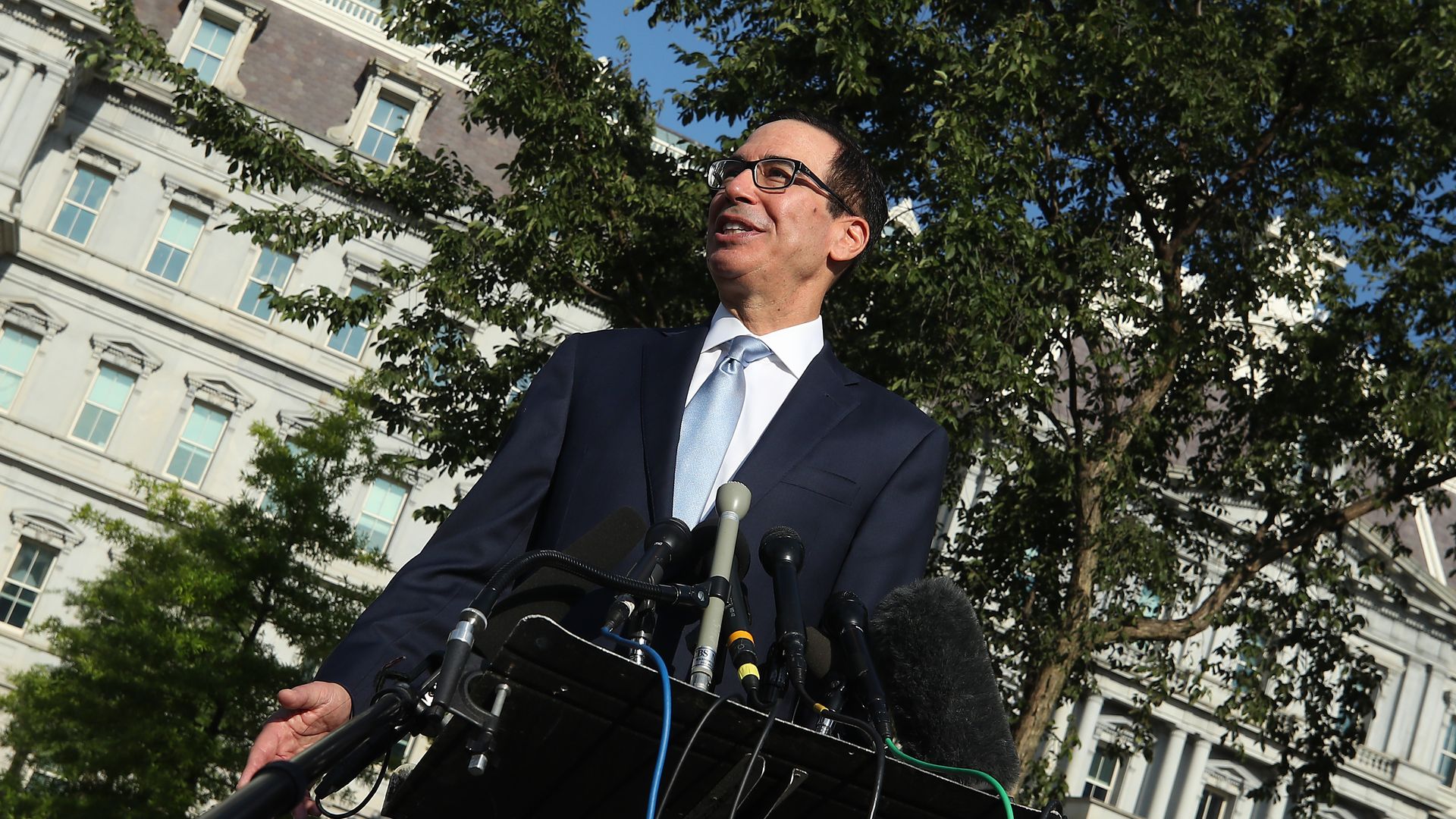
U.S. Treasury Secretary Steven Mnuchin said Wednesday that it's "absolutely right that the attorney general is looking into" Amazon because it "has destroyed the retail industry across the U.S."
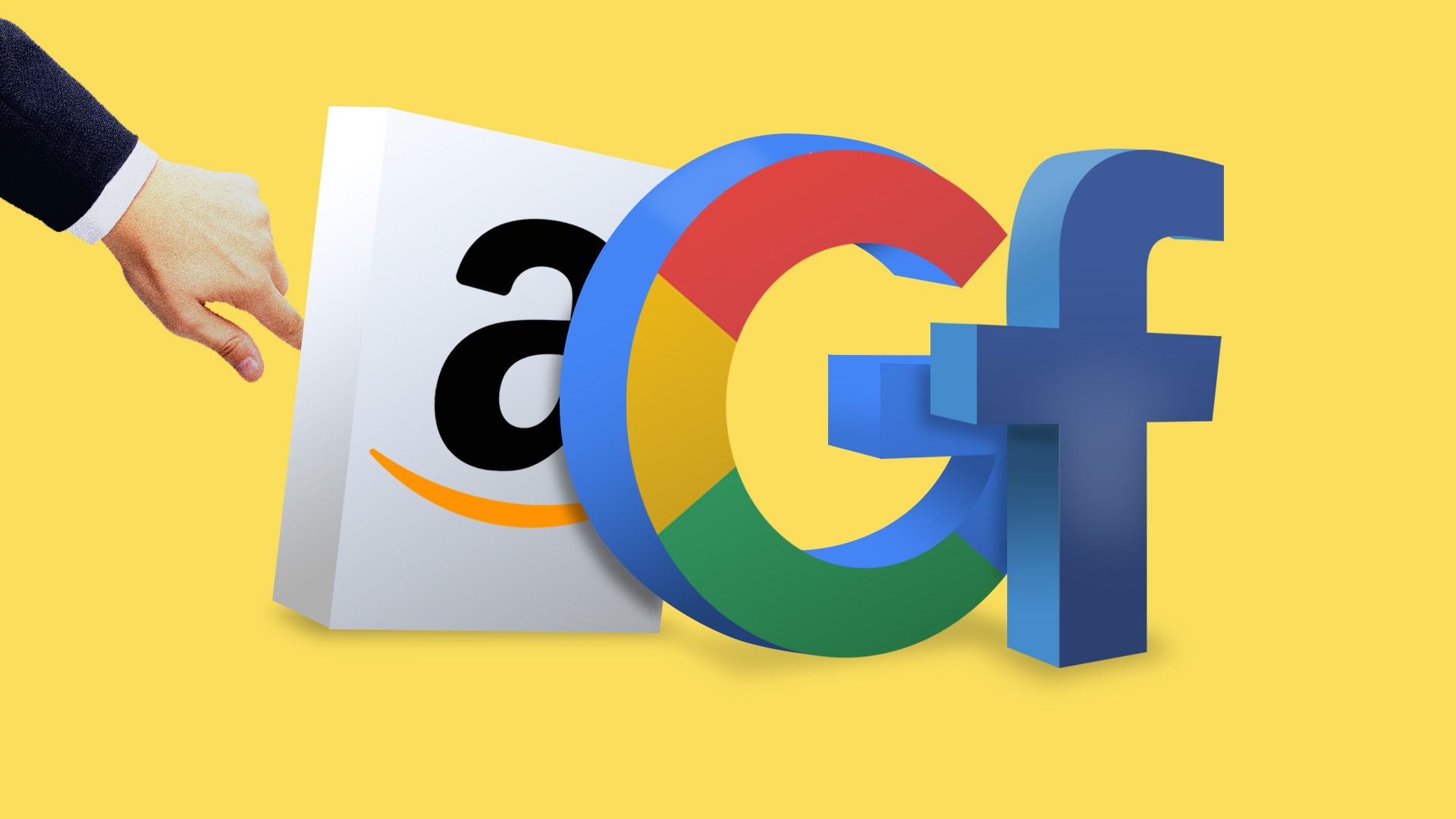
The big picture: Amazon, along with Facebook and Google, appears to be the subject of a Justice Department probe into the market power of online platforms. Mnuchin, an administration official, is weighing in and suggesting that Amazon is stifling competition before the antitrust investigation has really even started.
The U.S. Department of Justice has launched an antitrust review that could sweep up Amazon, Google and Facebook. Dan and Axios tech policy reporter David McCabe dig in.
Expectations are that a deal between Sprint, T-Mobile and Dish Network will be announced within the next 48 hours, whereby Dish would pay around $3.5 billion for wireless spectrum from the two carriers to push through their merger.
Why it matters: In addition to America's mobile market no longer consolidating from four major national carriers to three, this could embolden top U.S. antitrust regulator Makan Delrahim, who looked to be on his heels after being handed his legal hat on the AT&T/Time Warner deal. This comes just as the Justice Department confirmed that it will launch an investigation into the power and behavior of online platforms.
Residents of major American cities are constantly watched by ubiquitous cameras, mushrooming license plate readers and a battery of new smart city sensors.
But, but, but: It's not just the government keeping tabs. An explosion of private surveillance — set up by businesses, landlords and neighbors — is being driven by increasingly cheap but powerful technology. And what these observers see could make its way back to law enforcement.
A Russian military contractor tied to 2016 U.S. election interference is behind a spate of mobile phone surveillance programs, researchers at Lookout mobile security have determined.
Driving the news: The mobile spyware, dubbed Monokle, was disguised as several different Android apps — ranging from pornography to Google. Monokle may have been in use since 2015.
The Federal Trade Commission has settled with Facebook over allegations that it "repeatedly used deceptive disclosures and settings to undermine users’ privacy preferences," in a deal that will apply some new oversight to its practices and force it to pay $5 billion.
Why it matters: Revelations last year that the political consultancy Cambridge Analytica had gathered a large trove of Facebook user data, and failed to get rid of it, set off a broader reckoning around data privacy in the era of Big Tech.
Cruise today acknowledged it will not meet a 2019 target to deploy driverless cars in an urban robotaxi service.
The big picture: The news is likely a bit embarrassing for General Motors, Cruise's majority owner, whose ambitious timetable helped fuel some of the hype around self-driving cars in recent years. But it also shows GM is sticking to CEO Mary Barra's vow not to deploy automated vehicles before it can prove they're safer than a human driver.
Snapchat's parent company has had a bumpy ride through a series of product and corporate setbacks in 2018. But now it's slowly making a comeback.
Why it matters: Snap's story is yet another example of the harsh realities of going public and facing comparisons to expansive rivals—in this case, Facebook. Now that Snap is regaining momentum, investors' enthusiasm for the company's long-term potential is also creeping back.
The Justice Department's announcement Tuesday that it will probe the market power of online platforms is the latest sign of deepening trouble in Washington for major tech companies.
Why it matters: Antitrust action is one of the most significant steps a government can take to rein in a company — and Justice's announcement is the kind that can kick off years-long probes.











/2019/07/23/1563917580063.gif?w=3840)