After more than a year-and-a-half probe, the Federal Trade Commission voted to approve approximately $5 billion in settlement fees with Facebook this week, a source familiar with the case confirmed to the Wall Street Journal.
Why it matters via Axios' David McCabe:A settlement of the long-running investigation would move the global debate over online privacy into a new phase, sparked, in part, by revelations about Facebook's treatment of user data. The $5 billion fine would represent the largest ever of its kind.
The big picture: Retirement communities are expecting an influx of new residents, many of whom are likely to be non-drivers and require transportation to maintain their independence. The demand for AVs, if they're accessible, could explode.
Uber, Lyft and transportation agencies across the U.S. are encouraging customers to combine ride-hailing with public transit, ultimately to try to streamline travel options and payment.
Why it matters: These partnerships could fill in gaps in public transportation without worsening congestion. But they could also expose public transit riders to data privacy risks, and upend transit's business model.
Volkswagen is investing $2.6 billion in self-driving startup Argo AI, joining Ford as an equal partner in the Pittsburgh-based company, while Ford announced plans to build at least 600,000 vehicles for Europe using Volkswagen's electric vehicle technology.
Why it matters: By expanding an existing alliance, the new deal allows two of the world's largest automakers to collaborate on the most expensive pieces of technology in a rapidly changing global auto industry. It also provides an important validation for Argo, now valued at more than $7 billion.
There is a pitched struggle underway between the makers of fake AI-generated videos and images and forensics experts trying desperately to uncover them. And the detectives are losing.
Why it matters: Their effort is the leading edge in a massive scramble to stave off a potential landscape in which it's impossible to know what's true and what isn't.
President Trump said Thursday he doesn't trust social media companies to "self-correct" their alleged conservative bias, according to multiple sources in the room.
Why it matters: It's another strong signal that Trump would support harsh regulations or antitrust action against social media companies.
A researcher has demonstrated how to exploit Europe's privacy protection laws to violate other people's privacy — and new privacy rules on the way in the U.S. could be vulnerable in the same way.
The state of play: Privacy laws, including Europe's mammoth General Data Protection Regulation (GDPR) and California's recently passed regulations, often include provisions to allow people to request the personal information that companies have compiled on them.
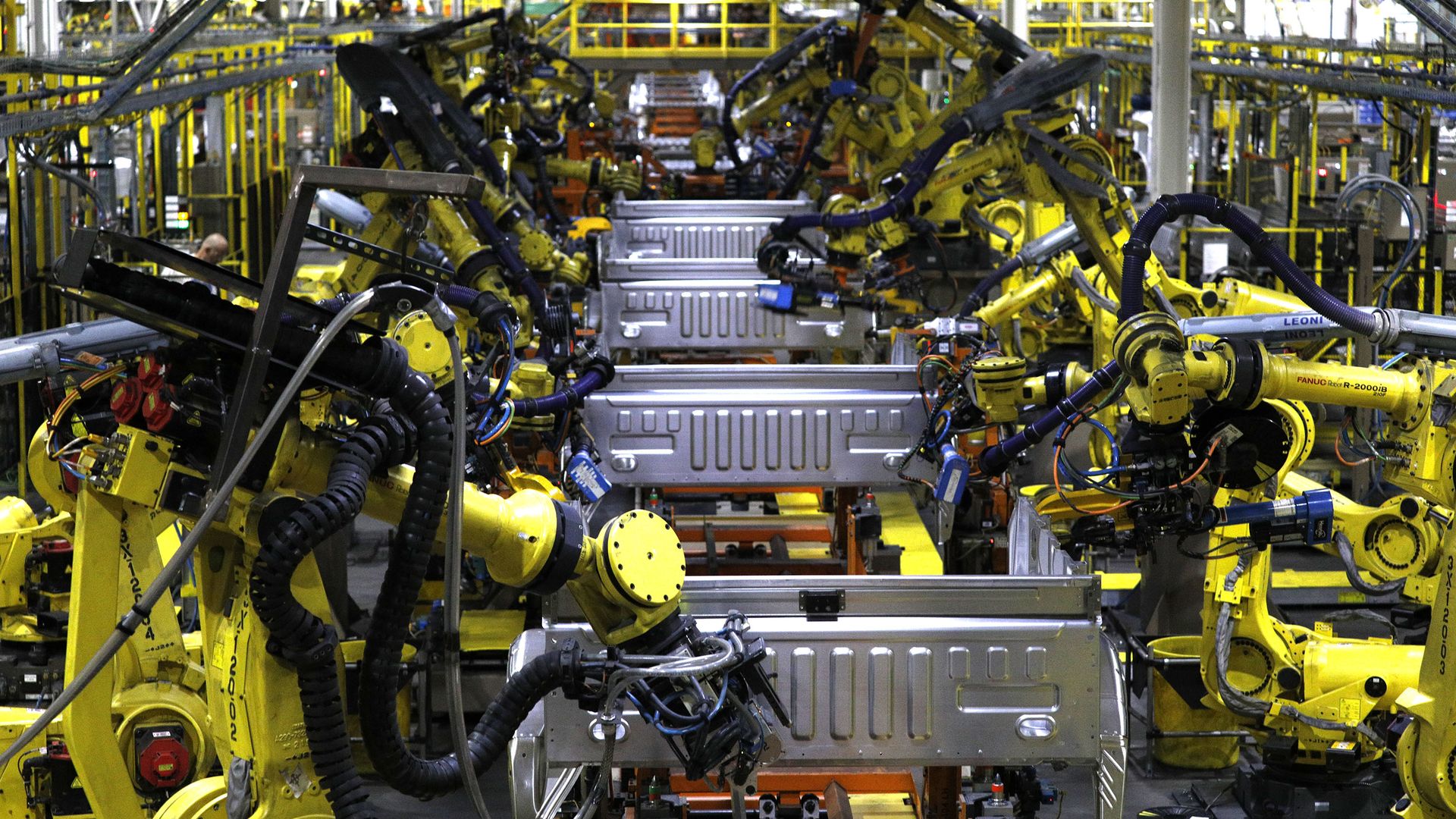
Automation will have the biggest impact on entry-level and older workers, because more of their jobs tend to be routine or physical in nature and are most likely to be taken over by machines and algorithms, according to a forthcoming McKinsey Global Institute report.
Why it matters: Almost 40% of U.S. jobs are in categories expected to shrink between now and 2030.
Four years ago, Amazon held its first Prime Day, offering steep discounts and deals on its site. Since then, not only has Prime Day ballooned to a two-day affair, it has also gotten much bigger than Amazon.
Why it matters: Per new research from Adobe Analytics, Amazon's competitors will see revenue jump by 79% on Monday and Tuesday, this year's Prime Days. That's the strongest-ever projected bump.
In a rare move, Apple silently updated the Mac operating system Wednesday to remove a controversial hidden Web server installed by the Zoom Web conferencing app.
The bottom line: The moves undo the damage, but as we reported yesterday, the bigger question is: when will tech companies stop prioritizing features over privacy in the first place?
Think polarization and inequality are bad now? Buckle up: big cities are poised to get bigger, richer and more powerful — at the expense of the rest of America, a new report by McKinsey Global Institute shows.
Why it matters: McKinsey's analysis of 315 cities and more than 3,000 counties shows only the healthiest local economies will be able to successfully adapt to disruptions caused by the next wave of automation. Wide swaths of the country, especially already-distressed rural regions, are in danger of shedding more jobs.