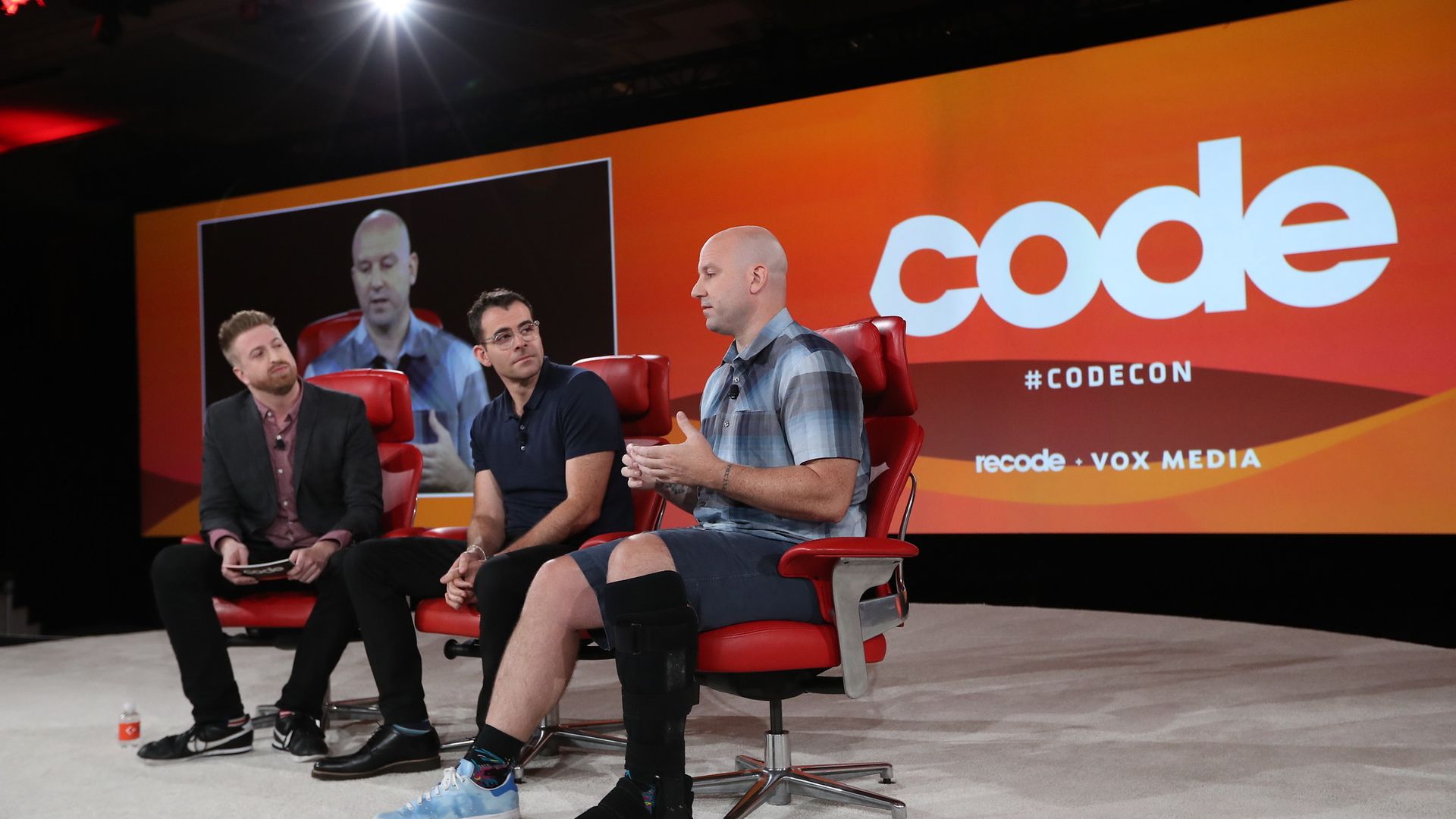
It's been a rough few weeks for YouTube, which is facing increased criticism over its handling of controversial content. Dan digs in with Axios' Ina Fried, who this week interviewed Google's CEO for "Axios on HBO" and questioned YouTube's CEO yesterday at the Code Conference.
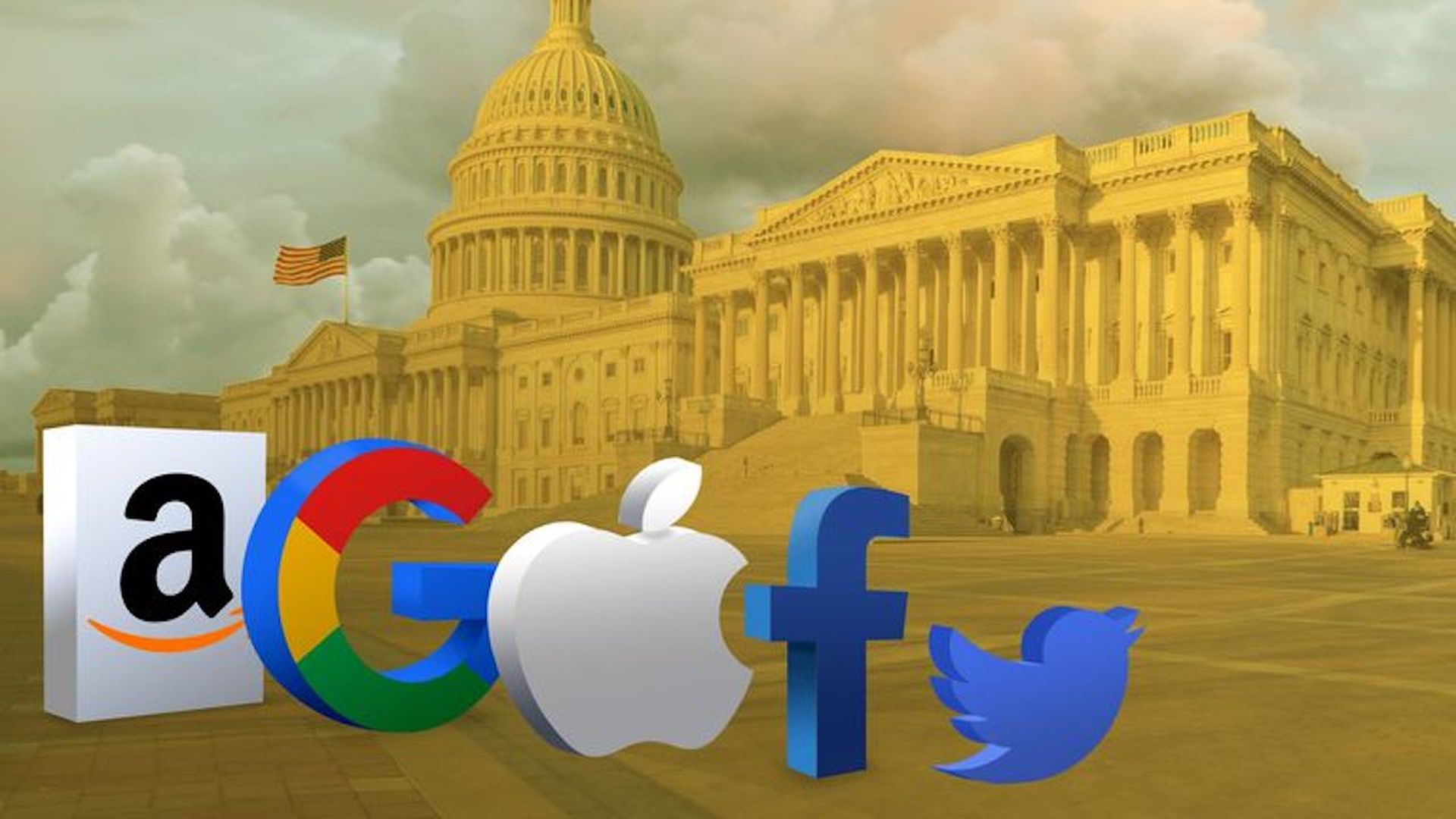
News companies that have been lobbying for legislation that makes it easier to negotiate with companies like Google and Facebook will testify before Congress on Tuesday, in the first of several hearings probing the power of Big Tech.
Why it matters: The advertising-supported business model that underpinned journalism for decades has collapsed, leading to the closure of hundreds of newspapers across America.
Apple pitches itself as the most privacy-minded of the big tech companies, and indeed it goes to great lengths to collect less data than its rivals. Nonetheless, the iPhone maker will still know plenty about you if you use many of its services: In particular, Apple knows your billing information and all the digital and physical goods you have bought from it, including music, movie and app purchases.
A different approach: But even for heavy users, Apple uses a number of techniques to either minimize how much data it has or encrypt it so that Apple doesn't have access to iMessages and similar personal communications.
Instagram head Adam Mosseri rejected the notion that Facebook should be split up, claiming that doing so would hurt the social networks' ability to fight election fraud and other big issues.
Why it matters: Some critics and regulators, including 2020 candidate Sen. Elizabeth Warren, have called for breaking up Big Tech companies.
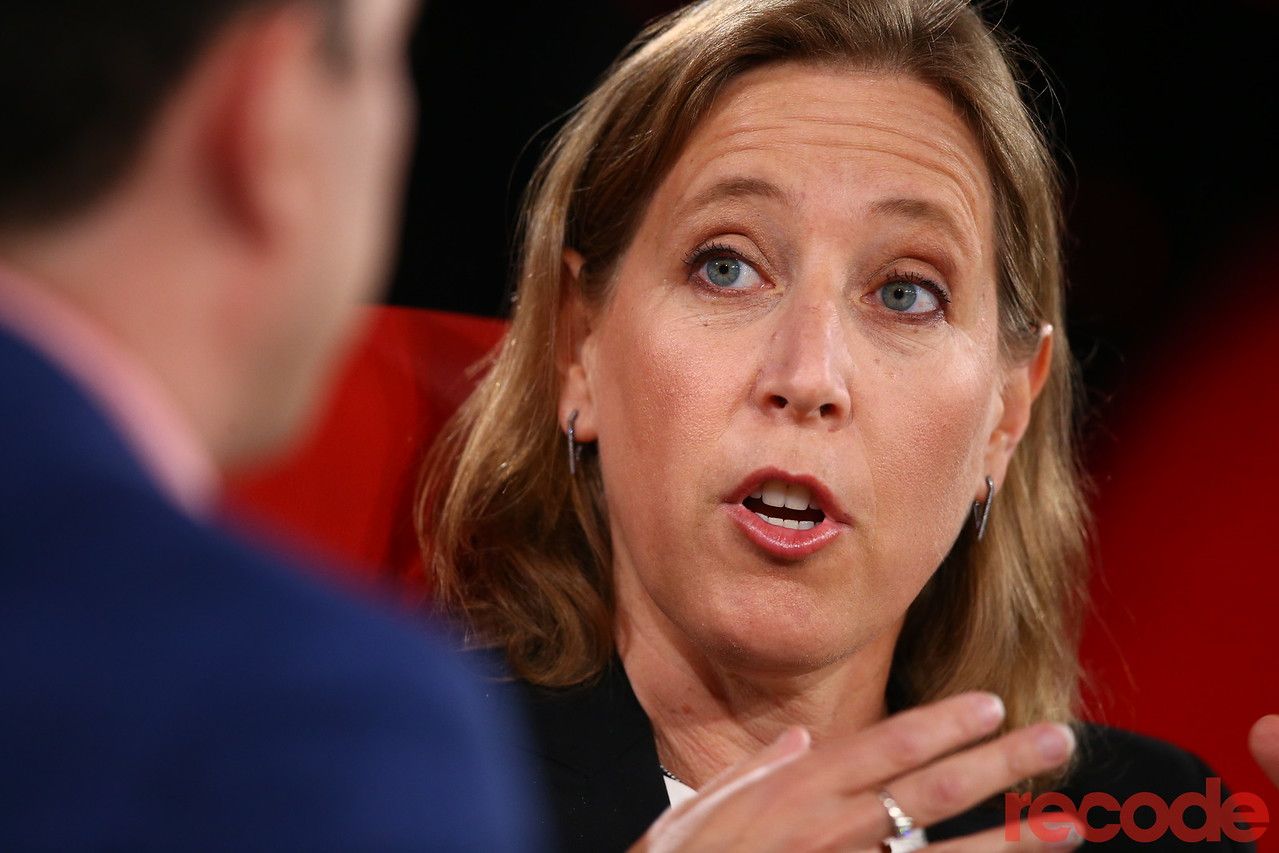
YouTube CEO Susan Wojcicki apologized Monday to members of the LGBTQ community who were offended by the company's response to antigay comments by Steven Crowder aimed at Vox journalist Carlos Maza. At the same time, she defended the company's handling of the issue.
Why it matters: YouTube has been under fire for a variety of issues, including the spread of hate and misinformation and enabling of child predators.
A bipartisan consensus has emerged that antitrust law is antiquated, written for an analog world of railroad and tobacco giants. The market no longer knows best, but there is not yet consensus on what should come next.
The big picture: Today's antitrust law focuses almost exclusively on the short-term welfare of consumers, in terms of price and product competition. In other words, a merger is problematic — in the broadest terms — if it leads to higher prices or otherwise hurts consumers by severely limiting their choices.
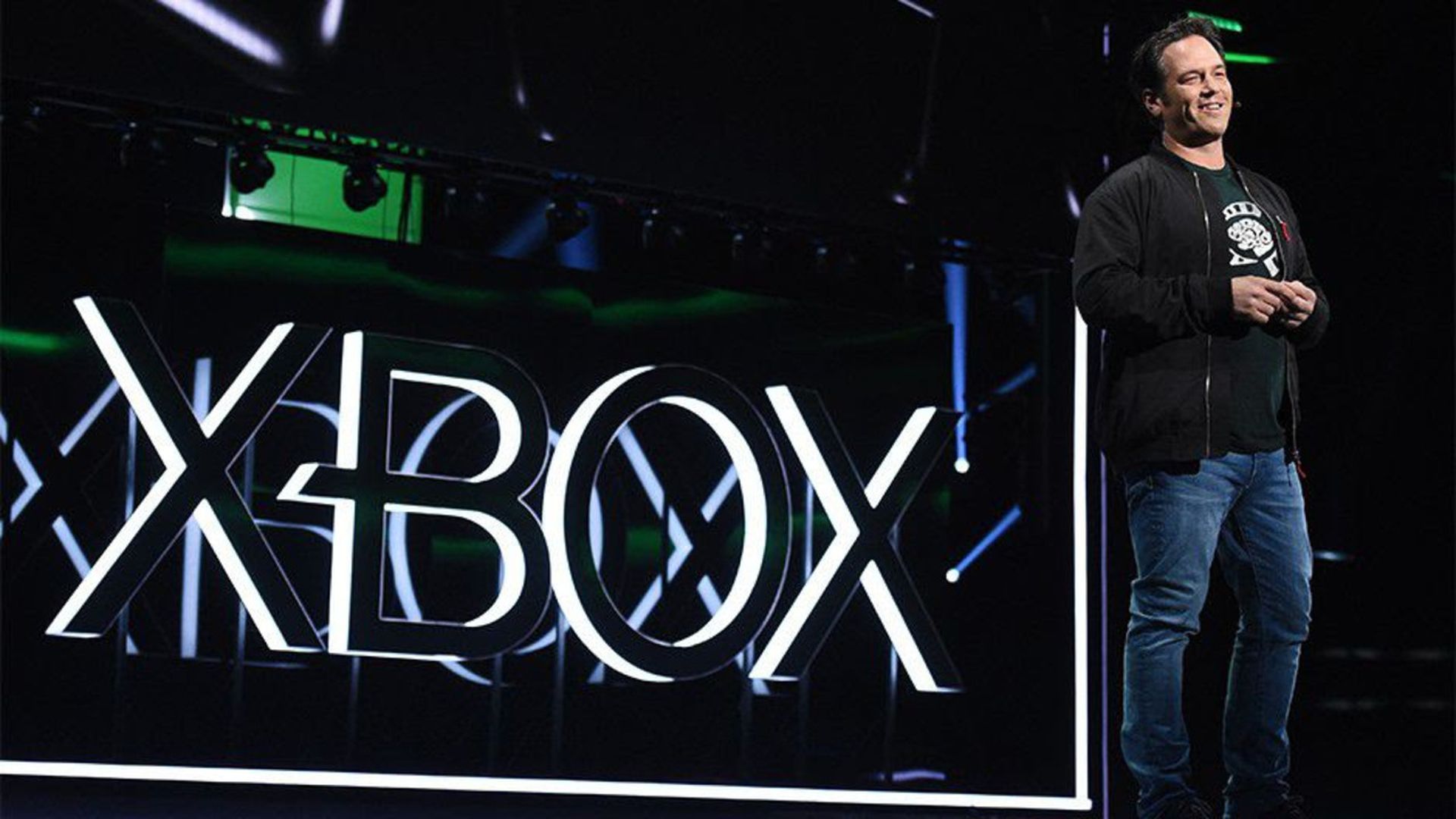
Microsoft used its E3 press conference to unveil the first details on Project Scarlett, the successor to the Xbox One that is due out next year.
Details: The console will feature 8K video support and be up to four times as powerful as the current Xbox One X. And it will support games written for earlier Xbox consoles.
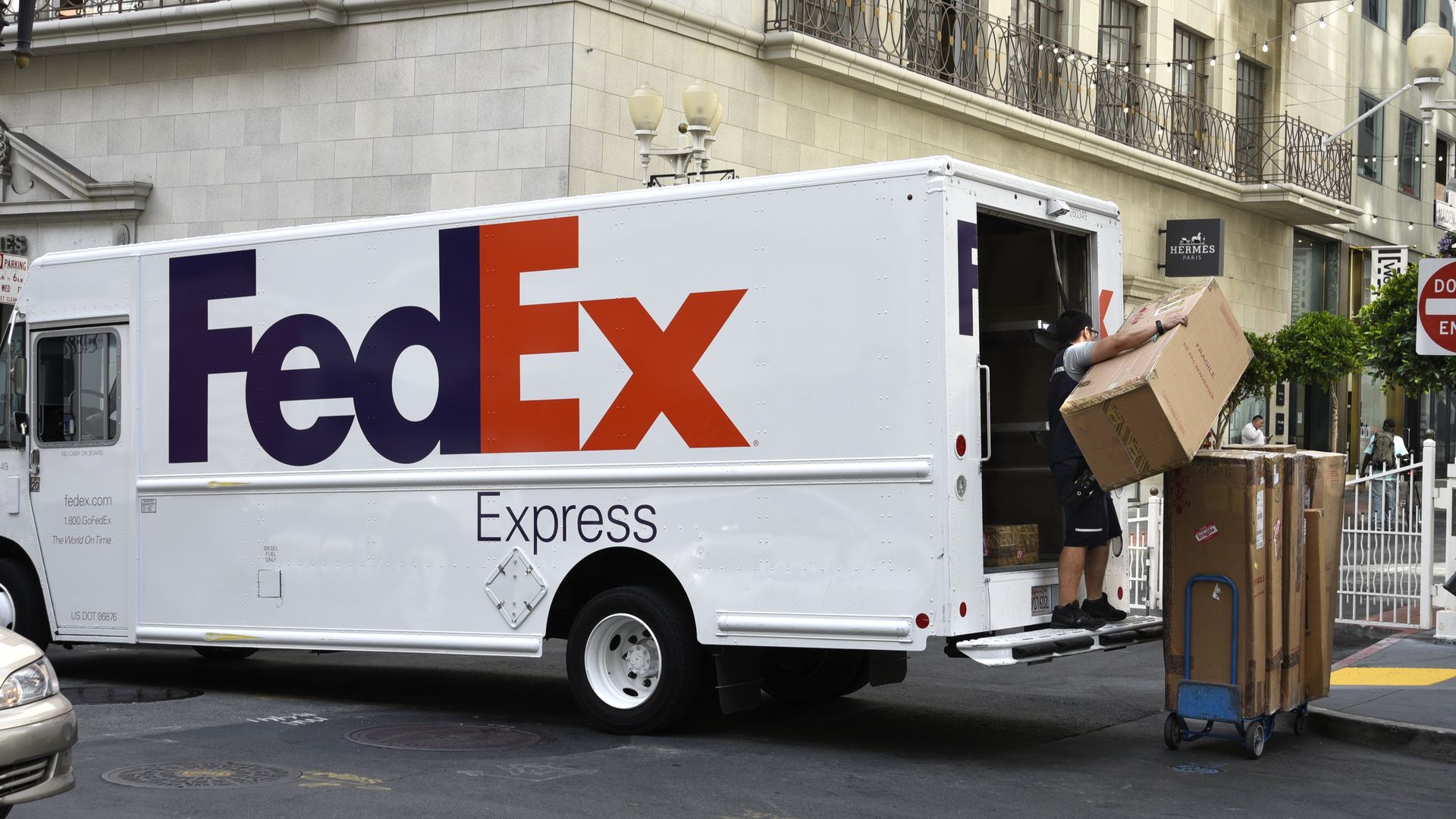
FedEx announced last week it would not renew its contract to provide express shipping service for Amazon in the U.S., passing up on $850 million in annual revenue.
Why you'll hear about this again: As Amazon muscles into FedEx's turf on shipping — with its online trucking platform already undercutting the the industry's big players' average shipping rates by up to 33%, according to FreightWaves — the shipping giant sent a signal that it was getting behind Amazon's biggest rivals.
Salesforce on Monday announced it will acquire data analytics company Tableau Software for $15.7 billion in stock.
The bottom line: This is about deepening customer engagement via data analytics in the cloud, much like what we saw last week when Google paid $2.6 billion to buy Looker.
Fiat Chrysler Automobiles and Aurora will be teaming up to develop self-driving commercial vehicles, according to statements released by the companies.
Why it matters: Commercial vehicles are likely the first major target of autonomous vehicle developers due to the potential for autonomous deliveries. FCA CEO Mike Manley wrote in a statement that "Aurora brings a unique skillset combined with advanced and purposeful technology that complements and enhances [FCA's] approach to self-driving.”







/2019/06/10/1560175539835.gif?w=3840)