Facebook announced on Wednesday a fresh slate of news shows for its video tab "Watch," along with updates on strategy and monetization on the platform. It added that its audience for "Watch" has roughly doubled since December, signaling that its plan to take on YouTube as the world's premier social video destination is taking shape.
Why it matters: Watchintends to help Facebook grow its audience and ad business. To date, Facebook has made most of its money from display ads — which mainly cater to advertisers trying to sell things. Expanding its video platform will allow Facebook to sell more TV-like "brand" ads, which help businesses increase awareness.
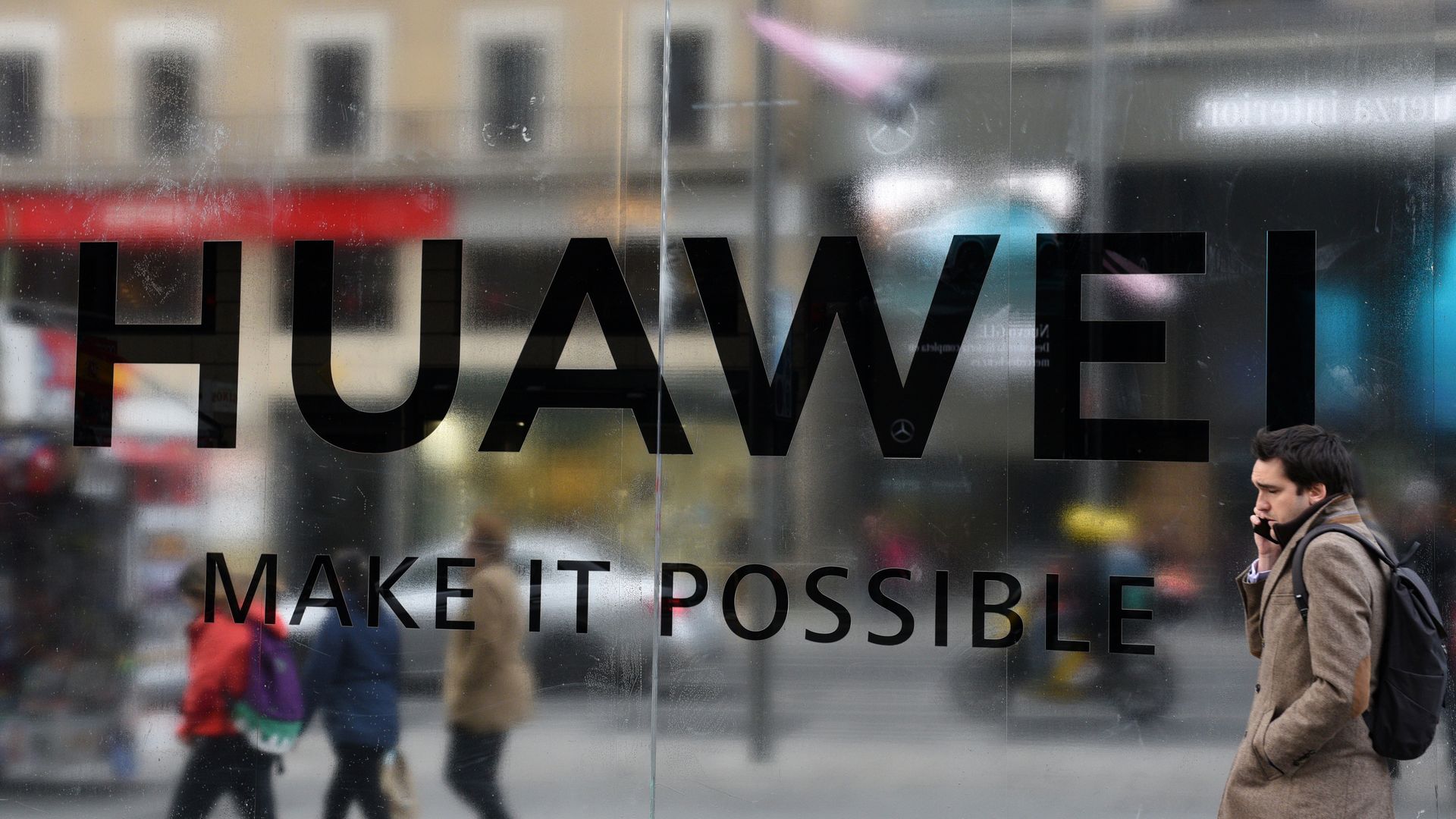
In a new filing to the Federal Communications Commission on Wednesday evening, Huawei argued that a proposed FCC ban on federal subsidies to telecoms using Huawei equipment would cause severe harm to rural providers.
The big picture: The FCC's proposal is not to be confused with last year's defense authorization bill, a recent executive order or a presidential declaration of emergency, each of which either restricted or laid the groundwork for restrictions on Huawei. But Huawei officials told Axios they suspect the FCC filing will be read by all parties that have put the Chinese telecom manufacturer on the defensive.
Huawei canceled a Windows laptop launch this week after being blacklisted from buying products from American companies by the U.S. Department of Commerce, the CEO of Huawei's consumer division confirmed to CNBC.
Why it matters: This is one of the first instances of the Chinese-owned Huawei delaying or canceling products since the Trump administration effectively barred all U.S. telecommunications firms from using Huawei equipment and blocked its access to U.S.-made goods.
Dan digs into facial recognition with Axios artificial intelligence reporter Kaveh Waddell, including where the technology currently stands and how we’re being surveilled.
Uber looked more like an aviation company than a ride-sharing provider at a conference this week where it was showcasing concepts and partnerships as it tries to seed an ecosystem to support the world's first urban air taxi network.
The big picture: Barely a decade old, Uber today is synonymous with ride-hailing. But the company is creeping further into daily life, with ambitions to help manage everything from how people get to work to what meals they order when they get home.
The top Justice Department official in charge of antitrust on Tuesday laid out more details of how he is evaluating competition in digital markets.
Why it matters: DOJ and the Federal Trade Commission have already divided up who would have authority to examine the major tech firms for competition violations. DOJ has reportedly claimed Google and Apple.
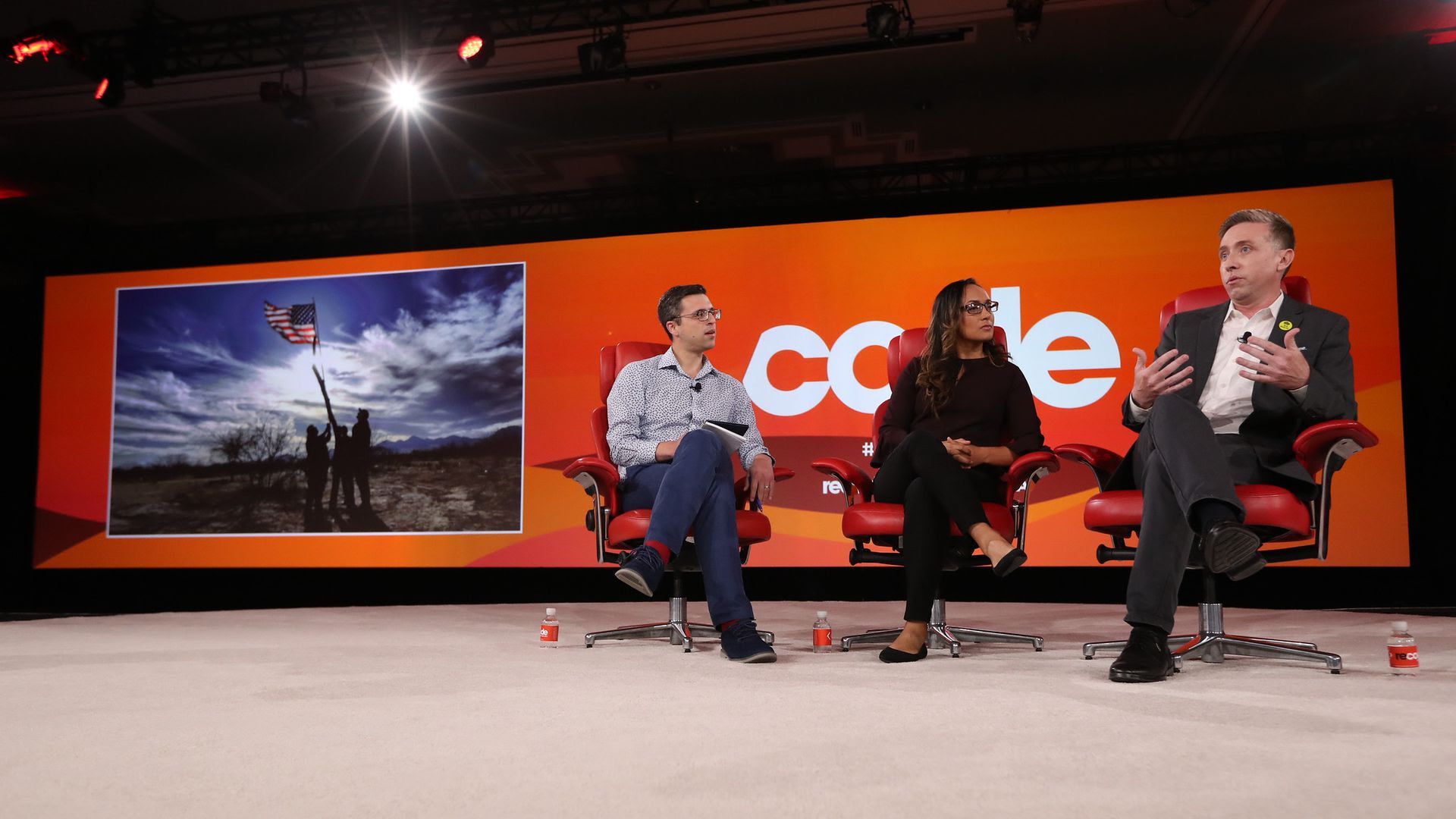
The attacks on the tech industry were many and frequent throughout the first two days of the Code Conference.
Why it matters: There has always been a measure of skepticism on stage at Code, but this year the negative side of tech was the primary focus, with only occasional mentions of new products or technology.
In an eye-catching video, Ford and Agility Robotics recently touted their partnership and vision for autonomous delivery, illustrating the need for a system that can navigate from a parked vehicle up a set of stairs to reach the front door, for example.
The big picture: Autonomous vehicles are expected to decrease delivery costs by eventually removing drivers from the equation entirely, but the logistics of last meter delivery in particular remain intractable.
There are two kinds of enforcement mechanisms. Silicon Valley is a world of 1s and 0s and naturally gravitates towards rules-based systems: If this, then that. Once you set the rules, the job of enforcing them becomes routine.
The state of play: The alternative is a principles-based system. You start with a set of high-level principles (if you're causing someone significant harm, that's bad; if you're causing pleasure and enjoyment, that isn't), and then try to police your domain according to those principles. In the legal system, principles can be found in areas like sentencing guidelines or even the "reasonable doubt" test.
Facing a widely predicted onslaught of fake political videos before the 2020 election, social media companies are the bulwark that will either keep the videos at bay or allow them to flood the internet.
But, but, but: These platforms are loath to pass judgment on a clip's veracity on their own — an approach experts say could lead to a new election crisis.







/2019/06/10/1560199626249.gif?w=3840)