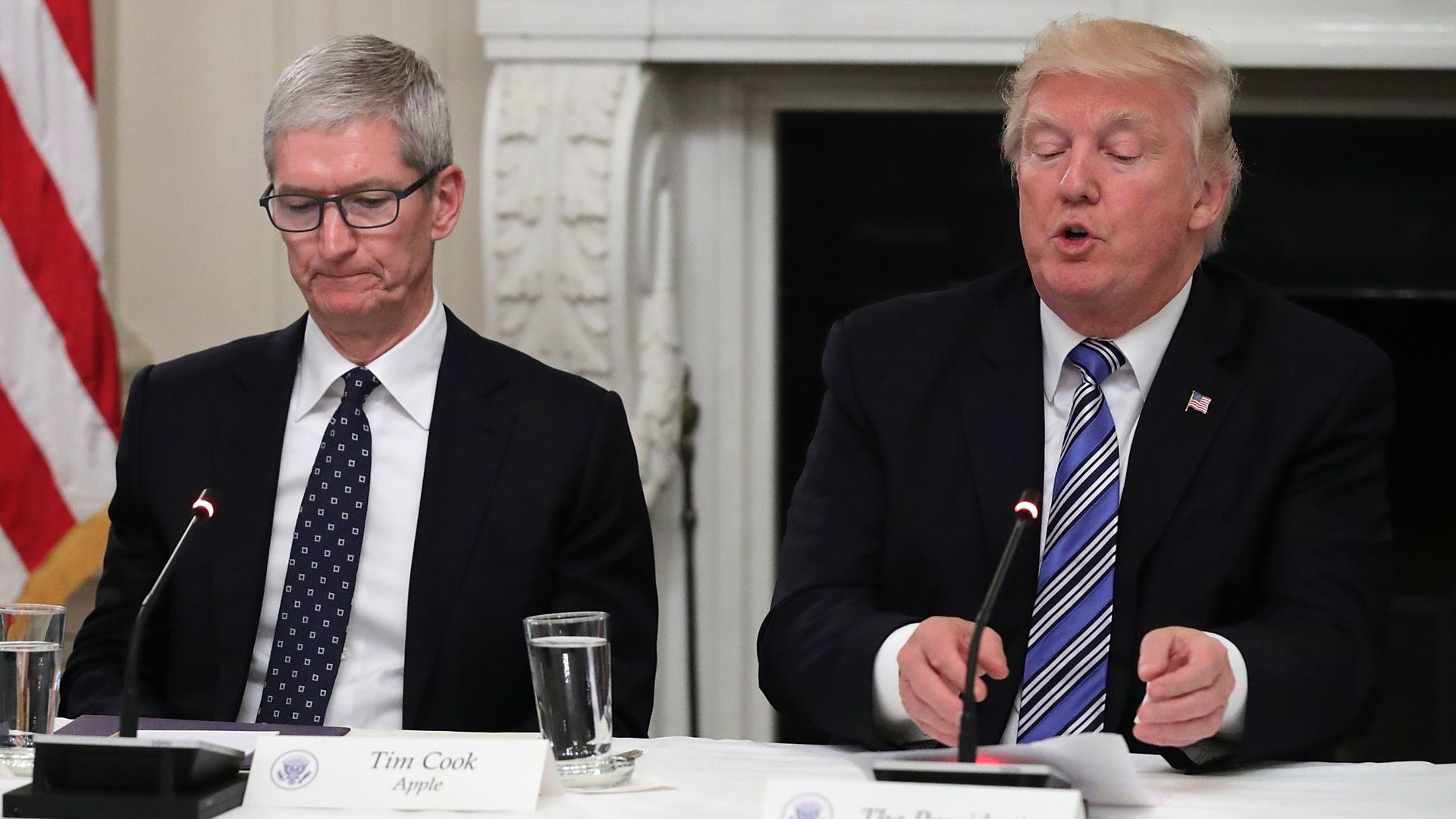
Driving the news: It's not clear what was discussed, but it's hard to believe trade relations with China wasn't on the agenda — given the president's threat to impose an estimated $300 billion in tariffs on Chinese-made goods, including the iPhone.
Huawei's U.S. security chief Andy Purdy says the U.S. is right to want to make sure its networks are secure. But he maintains that, in the quarrel the Trump administration has picked with his company, it has focused on the wrong things and mixed up trade issues with security concerns.
What they're saying: "I don’t trust anybody. We cannot and should not trust anybody," said Purdy, who was an assistant U.S. attorney and acting director of the U.S. national cybersecurity division before joining Huawei in 2012. "That’s the way we make America safer."
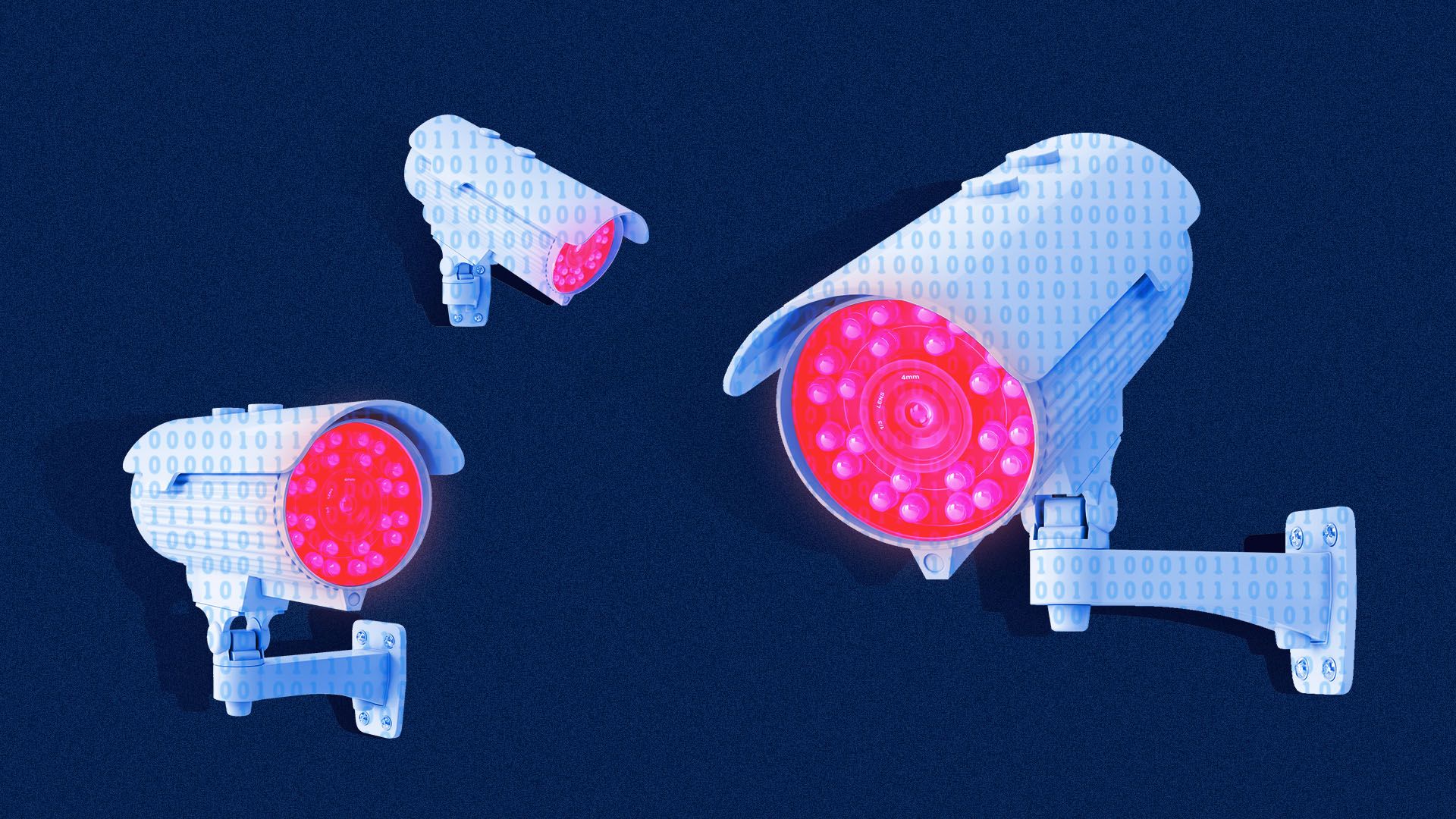
There are millions of surveillance cameras in the U.S., but not nearly enough eyes to watch them all. When you pass one on the street, you can rightly expect your actions to go unnoticed in the moment; footage is instead archived for review if something goes wrong.
What's happening: Now, AI software can flag behavior it deems suspicious in real-time surveillance feeds, or pinpoint minute events in past footage — as if each feed were being watched unblinkingly by its own hyper-attentive security guard. The new technology, if it spreads in the U.S., could put an American twist on Orwellian surveillance systems abroad.
For all the talk of antitrust investigations, the bigger threat to tech platforms like Google and Facebook is an intensifying call from Congress to revamp a law that shields them and other web companies from legal liability for users' posts.
Driving the news: House Intelligence Chairman Adam Schiff today joined a motley group of policymakers calling to reconsider the legal protections afforded to tech platforms. It's a broadening of a line of attack that caught fire last year when a new law made it easier to sue tech platforms for hosting sex-trafficking ads.
Jigsaw, the public service company owned by the parent company of Google, purchased a commercial social media trolling service to study its actions last year, Wired reports.
Why it matters: The campaign, which Jigsaw had conducted in Russia around the least consequential issue they could find, netted some interesting results. But it also raises a question of the ethics of purchasing such a campaign.